Introduction
In today’s digital age, reliable internet connectivity is a necessity rather than a luxury. In particular, homeowners living in two-story houses often encounter challenges related to Wi-Fi coverage. Given the multiple levels and walls within such designs, Signal strength can vary significantly from one room to another, leading to frustrating dead zones that hinder online activities. This brings us to the discussion of solutions that can enhance wireless signals: the Wi-Fi extender and the mesh system.
When weighing the options in the context of a two-story house, the comparison of a Wi-Fi extender vs mesh system becomes crucial. A Wi-Fi extender amplifies the existing signal, effectively broadening its reach throughout the residence. While this can address specific dead zones, it is worth noting that extenders may also reproduce weaker signals, potentially compromising overall performance. Additionally, the setup of a Wi-Fi extender can sometimes introduce complications, particularly in terms of network management and seamless transitions between signal sources.
On the other hand, mesh Wi-Fi systems offer a comprehensive solution designed to eliminate dead zones through a network of interconnected nodes. Each node communicates as part of a unified system, ensuring consistent coverage throughout the home. In the Wi-Fi extender vs mesh system two story house debate, many homeowners find that mesh networks not only provide wider coverage but also maintain higher speeds and reliability as they eliminate the interference often caused by physical barriers in two-story layouts.
Ultimately, understanding the key differences and benefits of each solution is essential for homeowners aiming to improve their Wi-Fi experience. By addressing the specific needs of a two-story house, individuals can make informed decisions to eliminate dead zones and enjoy stable, fast internet access throughout their homes.
Overview of the mesh network and Wi-Fi extender
In today’s homes, stable and reliable internet connections are essential, particularly in two-story houses where coverage can often be a challenge. Two primary solutions that address such connectivity issues are Wi-Fi extenders and mesh systems. Each technology operates fundamentally differently, catering to diverse needs and preferences.
Wi-Fi extenders function by amplifying the existing wireless signal from a router, effectively expanding its reach. These devices capture the Wi-Fi signal and rebroadcast it, which can improve connectivity in areas that are typically hard to reach, such as bedrooms or basement spaces. However, while this method can enhance signal strength, it often leads to a reduction in bandwidth, as the extender utilizes the same channel to receive and send data. This means that users may experience slower speeds when connected via the extender compared to direct connections to the main router.
On the other hand, mesh network systems adopt a more sophisticated approach by implementing a network of interconnected nodes. Each node communicates with one another, creating a cohesive and expansive Wi-Fi coverage area. This distributed network allows for seamless transitions between nodes as a user moves around the house, maintaining strong and consistent signal strength throughout. Mesh systems typically involve several satellites placed around the home, ensuring that every corner is covered without the significant loss of speed that can accompany extenders. This technology is particularly beneficial in larger two-story residences, where traditional routers may struggle to reach every floor effectively.
According to recent studies, homes utilizing mesh networks can experience up to 25% better coverage than those with extenders. Anecdotal evidence also supports this, as many users report significantly improved connectivity and speed when upgrading from extenders to a mesh network. Therefore, understanding the differences in functionality between Wi-Fi extenders and mesh systems is vital for homeowners seeking to enhance their internet experience in a two-story home.
Key Comparison between Wi-Fi Extenders and Mesh Systems
When considering solutions for improving Wi-Fi coverage in a two-story house, both Wi-Fi extenders and mesh systems present distinct advantages and disadvantages. Here is a comparative analysis of the two options based on crucial factors such as setup processes, coverage efficiency, and performance under load.
- Setup Process:
- Wi-Fi Extenders: Installation is generally straightforward, requiring minimal technical expertise. Users usually follow a simple procedure—plugging in the device and connecting via a web interface or an app to configure settings.
- Mesh Systems: While modern mesh systems also strive for user-friendliness, the setup may involve a more comprehensive configuration. Users often need to establish a network from multiple units, which may take slightly longer.
- Coverage Efficiency:
- Wi-Fi Extenders: These devices effectively increase the range of an existing network but can sometimes produce a weaker signal in coverage areas furthest from the main router.
- Mesh Systems: Built to provide seamless coverage, mesh systems offer better network management. They use multiple nodes, ensuring consistent speed and connectivity across larger areas.
- Performance Under Load:
- Wi-Fi Extenders: Performance can degrade when multiple devices connect, as bandwidth is shared among them, leading to slower internet speeds.
- Mesh Systems: These systems typically manage high device loads more effectively, providing stable connections even with numerous online activities.
Factors such as the architectural design of the home and internet usage patterns greatly influence the choice between these two solutions. For instance, if the home has multiple floors and thick walls, a mesh system may be more effective in maintaining strong signals. Conversely, for lighter internet usage or smaller homes, a Wi-Fi extender may suffice.
Pros and Cons
When deciding between a Wi-Fi extender and a mesh system for improving connectivity in a two-story house, it is essential to evaluate the advantages and disadvantages of each option. Below is a structured overview of the pros and cons associated with both technologies.
Wi-Fi Extender
- Cost-Effectiveness: Wi-Fi extenders are generally more affordable than mesh systems, making them a viable option for those on a budget.
- Ease of Installation: Most extenders can be set up effortlessly with minimal technical knowledge required, often involving just plugging into an outlet.
- Decent Performance: For smaller areas or houses with light usage, extenders can effectively eliminate Wi-Fi dead zones.
- Limited Coverage: However, the range provided by a single extender may not be sufficient for larger homes, leading to potential weak signals.
- Network Reliability: Using extenders can sometimes result in reduced speeds and reliability due to the connection being rebroadcasted through the device.
Mesh System
- Wide Coverage: Mesh systems are designed to provide seamless Wi-Fi coverage throughout larger spaces, making them ideal for multi-story houses.
- Strong Performance: With multiple nodes working together, these systems maintain strong speeds and are less likely to suffer from connection dropouts.
- Easy Management: Many mesh systems come with user-friendly apps for network management, allowing easy monitoring and adjustments.
- Higher Cost: The initial investment for a mesh system is noticeably higher compared to extenders, which may deter some users.
- Complexity: Although generally straightforward, the installation of a mesh system can be more complicated than that of an extender, requiring some basic networking knowledge.
Ultimately, the decision will hinge on individual needs such as budget, home layout, and internet usage patterns.
Best Use Cases
When considering whether to purchase a Wi-Fi extender or a mesh system for a two-story house, it is essential to evaluate the specific use cases for each solution. Understanding the layout of the home, the number of devices connected, and the types of activities performed online can help determine the most suitable option.
Wi-Fi extenders are most effective in large homes with multiple floors where signal strength diminishes due to distance or obstructions such as walls. For instance, if a homeowner has a spacious two-story house with a router located on the first floor, the wifi signal may struggle to reach the bedrooms on the second floor. In such a scenario, a Wi-Fi extender can effectively boost the existing signal, providing adequate coverage to areas that the main router struggles to reach, without the need for significant investment in additional hardware.
On the other hand, mesh systems are ideal for larger properties with extensive layouts or for homes with multiple levels that require robust connectivity in every room. Mesh systems use several access points that communicate with each other to create a seamless network, eliminating dead spots and providing consistent service throughout the house. For example, in a family home where multiple devices are used simultaneously for activities like streaming and online gaming, a mesh network can facilitate a stable and high-speed internet connection across all levels of the home. This is especially crucial in environments where disruptions caused by buffering or connectivity loss could hinder important tasks.
Ultimately, the decision between a Wi-Fi extender and a mesh system will depend largely on the size and configuration of the home, as well as the specific internet usage requirements. By assessing these factors, homeowners can make informed choices that effectively enhance their internet connectivity.
Cost or Performance Analysis
When considering the best solution for enhancing Wi-Fi coverage in a two-story house, one must evaluate both cost and performance of Wi-Fi extenders and mesh systems. Understanding these factors can assist homeowners in making an informed decision that best fits their internet needs.
Wi-Fi extenders typically come at a lower price point compared to mesh systems. On average, Wi-Fi extenders range from $30 to $150, depending on their capabilities and features. Basic models may provide sufficient coverage for smaller homes but can often suffer in performance when it comes to larger or multi-story environments. Alternatively, mesh systems generally start around $150 and can exceed $500 for high-end options. These systems consist of multiple nodes that work together to create a seamless network, often resulting in better performance across larger areas.
In terms of performance, Wi-Fi extenders work by amplifying the existing signal, which may lead to lower speeds in areas farthest from the main router. In contrast, mesh systems provide multiple access points that can distribute internet signals more evenly throughout a multi-level dwelling. This often results in better overall connectivity and reliability. User ratings reflect these differences; many users of mesh systems often report higher satisfaction regarding network speed and reliability, particularly in challenging layouts.
| Product Type | Average Price | Performance Metric (Mbps) | User Rating (out of 5) |
|---|---|---|---|
| Wi-Fi Extender | $30-$150 | Up to 300 Mbps | 3.5 |
| Mesh System | $150-$500 | Up to 1200 Mbps | 4.5 |
This analysis highlights the trade-offs between cost and performance when choosing between a Wi-Fi extender and a mesh system. While Wi-Fi extenders may offer a budget-friendly option, the performance benefits of a mesh system may justify the higher initial investment for multi-story homes.
Amazon Product Recommendations
Disclaimer: I may earn small commotions from affiliate links with no extra costs to you.
When considering a Wi-Fi extender or a mesh system for your two-story house, Amazon offers several high-quality options that cater to various needs. Here are some of the best products currently available:
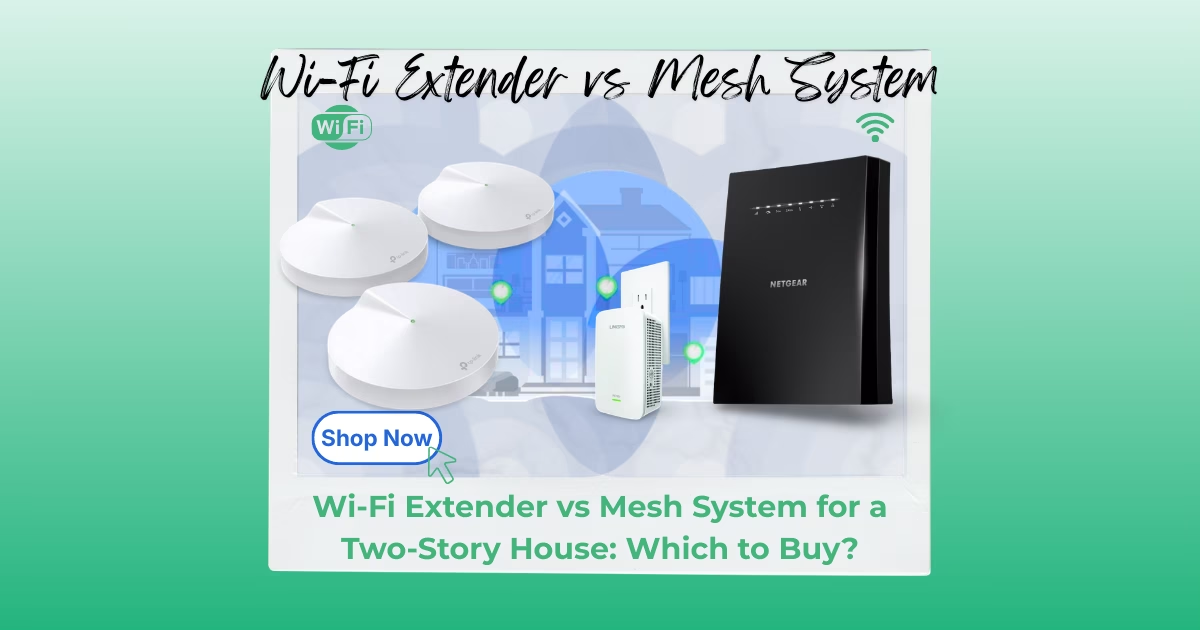
1. NETGEAR Nighthawk X6S Tri-band Wi-Fi Mesh Extender (EX8000)
This high-performance extender is designed for those who demand robust connectivity. With a tri-band connection and speeds up to 3000 Mbps, it can handle multiple devices simultaneously without compromising performance. Key features include Smart Roaming and Smart Connect, which help optimize your Wi-Fi experience.

- Extended wireless coverage: Adds Wi-Fi range coverage up to 2500 square feet, and connects up to 50 devices such as lapt…
- Seamless smart roaming: Uses your existing network SSID name so you never get disconnected as you move around your home …
- Ac3000 Wi-Fi speed: provides up to 3000mbps performance using tri band and patented fastlane3 (TM) technology for heavy …
Pros: Easy to set up, extensive coverage suitable for large homes.
Best For: Families with heavy internet usage across several devices. Check current prices on Amazon.
2. TP-Link Deco M5 Whole Home Mesh Wi-Fi System
The Deco M5 is an ideal choice for those seeking a compact and efficient mesh system. Offering coverage of up to 5,500 square feet, it supports multiple devices seamlessly, while its parental controls and antivirus features provide added security for families. With speeds up to 1300 Mbps, it’s perfect for streaming and gaming.

- If you’re looking to ditch your traditional router extender setup for a whole Home Wi-Fi system, put the TP-Link Deco M5…
- Better coverage than traditional Wi-Fi routers: Deco M5 uses 3 units working seamlessly to create a mesh network that ca…
- Seamless and Stable Wi-Fi: Rather than Wi-Fi range extender that need multiple network names and passwords, Deco M5 allo…
Pros: User-friendly app, solid security features.
Best For: Users focused on security and ease of installation. Check current prices on Amazon.
3. Linksys RE7000 Max-Stream AC1900+ Wi-Fi Range Extender
This extender is perfect for those who want to maintain strong Wi-Fi signals across multiple floors. It offers dual-band coverage with speeds of up to 1900 Mbps and is compatible with any Wi-Fi router. The RE7000 features beamforming technology, which directs signals to where they are needed most.

- ELIMINATE DEAD ZONES AND BOOST AC1900 plus WIFI RANGE: Extend your home WiFi to hard-to-reach locations in your home suc…
- EXTEND NEXT-GEN AC WIFI TO MULTIPLE USERS WITH MULTI USER-MIMO: Next-Gen AC with MU-MIMO (Multi-User, Multiple-Input, Mu…
- ROOM-TO-ROOM WIFI WITH SEAMLESS ROAMING: The AC1900 plus Range Extender offers Seamless Roaming as you move around your …
Pros: Compatible with any router, compact design.
Best For: Budget-conscious consumers wanting solid performance. Check current prices on Amazon.
These products on Amazon represent some of the best options for improving your Wi-Fi connectivity in a two-story house. Each product comes with its own unique features to suit different lifestyle needs, making them worthwhile investments for enhanced internet performance.
Frequently Asked Questions
What is the main difference between a Wi-Fi extender and a mesh system?
A Wi-Fi extender amplifies an existing signal to improve coverage in certain areas, while a mesh system uses multiple nodes to create a unified network that covers larger spaces seamlessly. Mesh networks are typically more efficient and provide better performance in multi-story homes compared to extenders.
How do I determine whether to choose a Wi-Fi extender or a mesh system?
Consider the layout and size of your two-story house. If you have dead zones or weak signals in specific areas, a Wi-Fi extender may suffice. However, for larger spaces or multiple floors, a mesh system is preferable as it distributes the signal more effectively, ensuring reliable coverage throughout.
Can I use a Wi-Fi extender with a mesh system?
It is not recommended to use a Wi-Fi extender with a mesh system. Mesh systems are designed to work as a cohesive unit, and adding an extender can complicate the network and reduce overall performance. Stick to one system for optimal efficiency and user experience.
Will a Wi-Fi extender slow down my internet speed?
In many cases, a Wi-Fi extender can reduce internet speed, especially if the extender is far from the main router. This happens due to the way extenders communicate—they take the existing signal and relay it, potentially losing bandwidth in the process. A mesh system generally maintains higher speeds across its nodes.
Can I install a mesh system myself?
Yes, most modern mesh systems are designed for easy installation and can be set up by users without technical expertise. Detailed instructions accompany these devices, allowing you to connect to your network and establish coverage across your two-story house with minimal hassle.
Conclusion
In summary, understanding the differences between Wi-Fi extenders and mesh systems is crucial for homeowners, especially in a two-story house. Wi-Fi extenders function by amplifying the existing Wi-Fi signal, which can be effective in small to medium-sized homes where the distance between the router and devices is not too extensive. However, in a two-story house, the limitations of extenders may become apparent, leading to inconsistent coverage, particularly on the upper levels.
On the other hand, mesh systems provide a more comprehensive solution for larger spaces. They operate through multiple nodes that create a seamless blanket of coverage, eliminating dead zones common in multi-story environments. This interconnected approach allows devices to switch effortlessly between nodes, ensuring a stable connection throughout the house. For families with multiple devices or high bandwidth requirements, mesh systems can represent a notable advantage due to their ability to distribute bandwidth efficiently across various nodes.
Choosing the best option ultimately depends on your specific needs. If you’re looking for a cost-effective solution for a smaller area with moderate internet usage, a Wi-Fi extender might suffice. However, if your two-story house is plagued by connectivity issues or if you require reliable access across multiple floors, investing in a mesh system would be the more prudent decision. Evaluate your home’s layout, the number of users, and the intensity of internet use when making your selection. Thus, recognizing these factors will guide you towards the most suitable product for your unique circumstances.
Read more related topics on Technology from here