The best smart water leak detectors are the cheapest insurance a homeowner can buy — a puck of plastic that turns a hidden drip into a phone alert in seconds. We compared seven of the most popular options sold on Amazon — from an $18 single sensor to a $250 whole-home flow monitor — on how fast they flag water, whether their alerts actually reach you, how far they transmit, how long they last on a battery, and what it really costs to cover a normal three-bedroom house. Whether you want one sensor under the water heater or a network that blankets every appliance, one of these seven fits.
Affiliate disclosure: As an Amazon Associate I earn from qualifying purchases. We earn commission from qualifying purchases made through links on this page. This never affects our rankings or what we recommend.
Our Picks at a Glance
- 🥇 Top Pick — Whole-Home Coverage: YoLink Water Leak Sensor 1 Kit: 4-Pack + Hub
- 🥈 Best App Experience: GoveeLife Smart Water Leak Detector 2, 4 Pack
- 🥉 Best Budget & Freeze Alarm: Kidde WiFi Water Leak Detector & Freeze Alarm
- 💧 Best for the Flo Ecosystem: Moen Flo Detector, 920-004
- 💰 Cheapest Per Sensor: Aqara Water Leak Sensor
- 🌊 Best Whole-Home Monitor: Flume 2 Smart Home Water Monitor
- 🔊 Best Range & Alarm Volume: GoveeLife Upgraded Leak Detector 1s, 3 Pack
Our Verdict: After weighing detection speed, alert reliability, range, and whole-home cost, the YoLink Starter Kit earns our top pick — its long-range LoRa sensors reach places Wi-Fi never will, and four sensors plus a hub arrive in one box. If you would rather skip hubs entirely, the GoveeLife Leak Detector 2 four-pack delivers a loud local alarm and the friendliest app of the group. And if budget rules every decision, the Kidde leak-plus-freeze detector protects one trouble spot for roughly the price of a takeaway dinner.
How to Choose the Best Smart Water Leak Detector
Why You Need Leak Detection Before the Drip Starts
Water damage is one of the most common and expensive homeowner insurance claims, and insurers increasingly discount monitored leak protection. The U.S. Environmental Protection Agency puts hard numbers on the waste: on its WaterSense Fix a Leak Week pages it reports that the average household’s leaks waste more than 9,300 gallons of water a year, that nine percent of homes have leaks wasting 50 gallons or more per day, and that fixing easily corrected household leaks can save homeowners about 10 percent on their water bills. Those figures describe water going down the drain slowly. The more expensive version — a burst supply hose or a failed ice-maker line — arrives on its own schedule, usually while you are at work, asleep, or on holiday. A sensor that costs less than a dinner out converts that surprise into a five-second notification.
Spot Sensors vs. Cable Sensors vs. Flow Monitors
Three hardware styles dominate. Spot sensors — the discs and squares that make up most of this list — trip when water bridges two electrical contacts exactly where they sit. Cable sensors stretch several feet of rope along a baseboard or across a water-heater pan to watch an entire strip of floor. Flow monitors such as the Flume 2 clamp onto your water meter and infer leaks from movement inside the pipes, covering the whole house at once but never touching actual moisture. Most homes blend styles: probes at known risk points plus a flow monitor for everything unseen.
Connectivity Explained: Wi-Fi, LoRa, and Zigbee
Direct-Wi-Fi sensors like the GoveeLife and Kidde units pair with your router and nothing else, which keeps starting costs minimal — just remember they attach only to 2.4GHz bands. LoRa systems like YoLink trade the hub requirement for reach: sensors whisper to a base station over a long-range radio that punches through walls Wi-Fi cannot. Zigbee devices like Aqara ride an ecosystem mesh shared with your other smart gear. Choose direct Wi-Fi for simplicity, LoRa for large or spread-out properties, and Zigbee when you already run that ecosystem.
Alerts That Actually Reach You
An alarm nobody hears is a paperweight, so scrutinize the notification chain. Every pick here pushes app alerts; the differences appear downstream. GoveeLife adds email routing, YoLink bundles SMS and email with its hub, and Moen keeps everything inside its polished app. Local siren loudness matters just as much if family members sleep through phone buzzes — Tom’s Guide measured the FirstAlert L1 at roughly 80 dB from six feet while the Moen detector it also recommends registered about 50 dB, a genuine night-and-day difference in a basement. Freeze sensing on the Kidde adds a second failure mode worth catching in cold climates.
Placement: The Seven Spots That Matter Most
Coverage beats brand choice, so map your home before ordering. The highest-yield placements are the water-heater pan, behind the washing machine, under every bathroom and kitchen sink, beneath the dishwasher door line, behind each toilet, beside the sump pit, and under the refrigerator’s ice-maker line. Two-story homes should add a sensor under upstairs bathrooms where supply lines feed downward. Basements collect every failure from above, making them the single best room to blanket first. If you can only afford three sensors today, start there and expand outward.
Smart Integrations and Automatic Shutoff
Notifications are reactive; integrations make protection proactive. Pairing Moen Flo detectors with the brand’s Flo Smart Water Monitor and Shutoff lets the system close your water main the moment any probe trips, capping damage at minutes instead of hours. YoLink supports similar automation through its motorized valve controller, triggered by any sensor in the network. Aqara and Apple Home users can build scenes that flash lights and pause smart plugs feeding washing machines. Even if you never automate a valve, tying detectors into Alexa routines ensures announcements on every Echo speaker in the house.
Installation Tips From Our Research
Small habits separate sensors that work from sensors that nag pointlessly. Place probes with the metal contacts facing up in drip pans so condensation does not cause phantom alarms. Keep Wi-Fi units within honest router range — a sensor behind three plaster walls drops connections that apps blame on the device. Label every sensor in its app the day you install it; a 3 a.m. alert reading simply “leak” helps nobody. Finally, calendar a quarterly test: pour a tablespoon of water on each probe and confirm the alert lands on your phone.
7 Best Smart Water Leak Detectors Compared at a Glance
The table below is built from the live Amazon listings we re-checked on September 15, 2026, plus each manufacturer’s own specifications. Battery figures are the makers’ claims, not measured results.
| Award | Model | Type | Hub needed | Alert types | Battery (claimed) | Est. price* |
|---|---|---|---|---|---|---|
| Top Pick — Whole-Home | YoLink Water Leak Sensor 1 Kit (Hub + 4) | LoRa spot sensors | Yes — included | App push, SMS, email | ~2 years | ~$60 |
| Best App Experience | GoveeLife Leak Detector 2 (4-pack) | Wi-Fi spot sensors | No | App push, email, ~100 dB alarm | ~2 years | ~$46 |
| Best Budget & Freeze | Kidde Leak + Freeze Alarm | Wi-Fi spot sensor | No | App push, Alexa, local alarm | ~1 year | ~$35 |
| Best for Flo Ecosystem | Moen Flo Detector (920-004) | Wi-Fi spot sensor | No — Flo valve for shutoff | App push, local alarm | ~2 years | ~$50 |
| Cheapest Per Sensor | Aqara Water Leak Sensor | Zigbee spot sensor | Yes — sold separately | Push via Aqara hub | ~2 years | ~$18 |
| Best Whole-Home Monitor | Flume 2 | Meter flow monitor | No — Wi-Fi bridge | App push, email | ~3 years | ~$250 |
| Best Range & Alarm | GoveeLife Leak Detector 1s (3-pack) | Sub-1GHz + Wi-Fi spot sensors | No | App push, email, loud alarm | up to 5 years | ~$40 |
*Estimated US street prices at the time of writing; Amazon prices move with sales, coupons, and regional offers. Detection behaviour, alert options, and battery claims are taken from the live listings and manufacturer specifications re-checked on September 15, 2026.
What Smart Leak Detection Actually Costs
Prices cluster into four bands, and the jumps between them buy very different things.
- Under ~$25 — one sensor, no siren. The Aqara sensor sits here. You get a reliable contact probe and nothing else: no audible alarm, no hub, and a separate gateway before the phone in your pocket knows anything happened.
- ~$35–$50 — a useful single room, or a loud pair. The Kidde adds freeze sensing and a local alarm; the GoveeLife 1s three-pack puts the loudest alarm and the longest claimed range of the group on three separate floors.
- ~$46–$65 — a real starter network. Here you stop buying one detector and start covering a house: the GoveeLife 2 four-pack or the YoLink four-sensor hub kit, both of which land at roughly the same money as a single premium sensor at a big-box store.
- ~$250 — whole-home visibility or a shutoff valve. The Flume 2 straps to your meter and reads the whole house from one point; a Flo shutoff system goes further and actually closes the main.
Where paying more stops buying protection. Detection speed is a function of two metal contacts and a radio — not price. A $18 probe and a $250 monitor both report the moment water completes the circuit at their sensing point. Above roughly $65 per network you are buying range, integrations, shutoff automation, and reporting polish, not a faster alarm. If your goal is simply “tell me before the ceiling comes down,” spend the money on more sensors in more places rather than one expensive sensor in one place. That is the whole reason our top pick is a four-pack kit rather than a single premium puck.
Where Our Picks Differ From Other Reviewers
We are not the only outlet ranking these devices, and we do not always agree with the others — which is useful to know if you are cross-checking. Popular Mechanics names the D-Link Wi-Fi Water Leak Sensor and Alarm Starter Kit its best overall and gives the Moen Flo Detector its best-value nod. Tom’s Guide leads with Flo by Moen as best overall, naming the FirstAlert L1 as the loudest alarm and IKEA’s Klipbok as the budget pick. Wired’s top pick is the Moen Smart Water Detector, with the Moen Flo Shutoff as its upgrade pick. PCMag’s guide names the First Alert L1 as its top pick.
We rank the YoLink kit first instead. The reasoning is simple: every one of those outlets optimises for a single sensor in a single room, and Tom’s Guide’s own testing undercuts the case for the most-recommended single puck — it measured the Moen detector’s siren at about 50 dB, roughly half the volume of the L1. A detector is only doing its job if somebody hears it. Most homes that actually flood have more than one risk point (the water heater and the washing machine and the ice-maker line), so we would rather start with four sensors on one long-range radio than one handsome puck near one appliance. Where we do agree with the crowd: the Moen detector is the nicest to live with day to day, the L1 really is the loudest alarm in this class, and the Flume 2 is the best way to see your whole house from one device.
The Failure Modes Owners Report Most
None of these devices fails by missing a flood directly under its contacts. They fail in the gaps around it. The recurring themes across owner reviews and the tester write-ups we checked:
- Silent by default. Many hub-based kits ship with silent sensors, so nothing audible warns anyone nearby — the alert only exists on the phone. If a phone is charging in another room, the leak keeps running.
- 2.4GHz pairing trouble. Wi-Fi sensors refuse to join 5GHz-only networks and sometimes struggle behind mesh systems that shuffle bands. This is the single most common “it won’t connect” complaint.
- Power loss equals alert loss. Hub kits and meter monitors need mains power, and most hubs have no battery backup. During a storm-driven outage, the one time water is most likely to get in, remote alerts stop.
- Awkward battery compartments. Sealed coin-cell doors and screw-fastened backs make routine battery swaps a chore, and a dead detector is a silent detector.
- Placement-induced phantom alarms or blind spots. Probes resting directly on metal drip pans can behave unpredictably, and a puck hidden behind a cabinet never sees the drip that misses it by six inches.
- Over-trusting a flow monitor. Meter-based monitors infer leaks from flow patterns. A slow drip collecting under a cabinet may never move the meter enough to register, so a contact probe still belongs at the known worst spot.
Who should skip which pick: skip the Aqara sensor if you have no hub and want an audible alarm; skip the Kidde if you need to cover more than one room on one purchase; skip the Flume 2 if you rent or your water meter is not a compatible style; and skip the YoLink kit if every risk point in your home already sits within easy Wi-Fi range and you refuse to own another hub.
The 7 Best Smart Water Leak Detectors of 2026
1. YoLink Water Leak Sensor 1 Kit: 4-Pack + Hub

- Complete plug-and-play kit: hub plus Leak Sensor 1 units for whole-home coverage at toilets, sinks, water heaters, laund…
- Long-range LoRa: reliable coverage where Wi-Fi struggles (up to 1/4-mile open air); get app, email, and SMS/text alerts …
- Works even without internet: with YoLink Control-D2D, sensors can directly trigger YoLink sirens or shutoff valves for l…
What We Like
- LoRa radios reach far beyond Wi-Fi, so sensors work in detached garages, crawl spaces, and outbuildings where a router will never reach
- App, SMS, and email alerts keep flowing even when a sensor sits nowhere near the router
- Four sensors included — mix in a siren-enabled model where you want an audible blast
- Roughly two-year sensor batteries with an early low-charge flag in the app
What Could Be Better
- The hub must be plugged into power and your router before anything works
- Included sensors are silent, so audible warning requires the SpeakerHub or a siren variant
- Utilitarian gray plastic next to sleeker competitors
Flaws but not dealbreakers: the starter sensors ship silent by design, so plan on adding one siren or SpeakerHub unit for rooms you rarely walk through, and first-time setup involves a few more app steps than a pure Wi-Fi sensor.
Best For: Homeowners who want whole-property coverage — including outbuildings — without buying Wi-Fi extenders.
2. GoveeLife Smart Water Leak Detector 2 with 1968ft Ultra-Long Range, 4 Pack

- SMS, APP & Email Real-time Alerts: Connect the gateway to Wi-Fi, and it will instantly send SMS, APP, and email notifica…
- Voice Assistant Reminder: Intelligent voice control allows more freedom if you don’t want to look at your phone at home …
- Extremely Long Range: Powered by LoRa technology, the long-range low-power system offers the industry’s longest receivin…
What We Like
- Pairs directly with 2.4GHz Wi-Fi, so there is no hub to buy
- The local alarm carries through a finished basement
- IP66-rated sealing survives damp utility rooms and splash-prone drip pans
- Four sensors cover a typical home’s trouble spots out of the box
What Could Be Better
- Connects only to 2.4GHz networks, not 5GHz
- Native alerts are app push and email; SMS forwarding takes extra configuration
- Four-pack pricing stings if you truly need just one sensor
Flaws but not dealbreakers: alerts arrive through the Govee Home app rather than as default text messages, and the headline 1,968-foot range describes the sub-gigahertz radio, which means adding the brand’s optional gateway.
Best For: Renters and homeowners who want loud local alarms plus instant push alerts without any hub hardware.
3. Kidde WiFi Water Leak Detector & Freeze Alarm, Alexa Device

- Water sensor provides early detection of water leaks or freezing conditions, so you can take steps to avoid damage
- Detects freezing conditions when temperature reach 37 degrees Fahrenheit or when there is a rapid temperature drop
- Battery powered: 2 AA batteries are included for simple operation & replacement
What We Like
- Senses both standing water and freezing temperatures, which is rare at this price
- Sends phone alerts through the Kidde app and responds to Alexa voice checks
- Comes from a century-old safety brand with dead-simple one-button setup
- Runs on included AA batteries in a compact under-sink footprint
What Could Be Better
- Alarm volume trails the 100 dB class leaders
- One pack means one location — whole-home coverage multiplies cost fast
- The companion app feels basic next to dedicated smart-home brands
Flaws but not dealbreakers: expect battery life closer to a year than two in busy networks, and there is no cable-probe accessory for reaching tight drip pans.
Best For: Budget buyers who want freeze protection for cabins, vacation homes, and garage utility closets.
4. Moen Flo Detector, WiFi Enabled Water & Moisture Sensor, 1 pc, 920-004

- PROTECT YOUR HOME: Place in areas at risk for water damage like basements, washing machines, or water heaters to help de…
- 24/7 LEAK DETECTION: Smart monitoring technology continuously detects moisture to help reduce the risk of water damage w…
- REAL-TIME ALERTS: Receive instant notifications through the Moen Smart Water Network App when leaks are detected, helpin…
What We Like
- Teams with the Flo Smart Water Monitor and Shutoff to close your main valve automatically
- Tracks humidity and temperature alongside floor-level water contact
- Crisp app with device health history and diagnostic readouts
- Premium build quality backed by a century-old plumbing brand
What Could Be Better
- Costs roughly double the budget picks for a single sensor
- Full automatic-shutoff magic requires the separate Flo monitor and valve
- Alerts live in the Flo by Moen app, with no native SMS
Flaws but not dealbreakers: standalone value is modest unless you already own or plan to add the Flo shutoff valve, the siren is quiet compared with the loudest models here, and the sealed battery compartment takes real effort to open when the time comes.
Best For: Flo shutoff owners extending protection room by room, and anyone consolidating water gear into one app.
5. Aqara Water Leak Sensor 1 Pack, Zigbee Water Leak Detector
- [Notes] An Aqara Hub is required and sold separately. Not compatible with hubs from other brands. Requires a secure 2.4G…
- [Proximity] To ensure a stable connection, keep the Aqara Water Leak Sensor within 400 inches (approximately 10 meters) …
- [Drip and Leak Detection] Equipped with highly sensitive probes that detect water levels as low as 0.5 mm (approximately…
What We Like
- Cheapest dependable sensor of the group at under twenty dollars
- IP67 rating survives full submersion during a genuine flood
- Dual probes trigger on water as thin as 0.5 mm
- Plays nicely with Apple Home, Alexa, Google Home, and Home Assistant through an Aqara hub
What Could Be Better
- Needs an Aqara Zigbee hub that is sold separately
- No onboard siren — audible alerts depend entirely on your hub
- Coin-sized body is easy to lose sight of behind appliances
Flaws but not dealbreakers: the hub dependency raises the true starting cost if you are beginning from zero, and thick masonry walls may call for a Zigbee repeater plug between hub and sensor.
Best For: Existing Aqara, Apple Home, or Home Assistant users adding inexpensive sensors to an established ecosystem.
6. Flume 2 Smart Home Water Monitor & Leak Detector
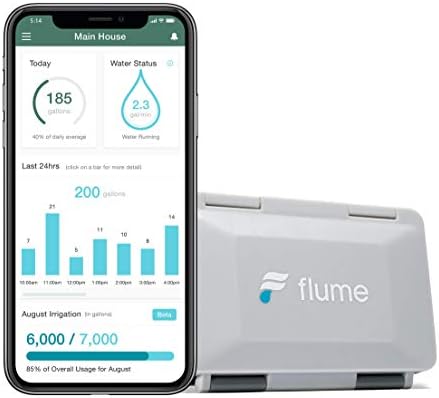
- COMPATIBLE WITH 95% OF RESIDENTIAL WATER METERS: Works with most standard meters nationwide. Requires Wi-Fi and an Andro…
- SMART WATER USAGE MONITORING & SAVINGS: Get detailed water use insights beyond what your standard bill provides, deliver…
- EASY INSTALLATION – NO PLUMBING REQUIRED: Mounts directly to your compatible water meter in minutes with included straps…
What We Like
- Straps onto your existing water meter in about ten minutes with zero pipe cutting
- Flags abnormal flow anywhere in the house, from a running toilet to a slow slab leak
- Live dashboard breaks usage down to individual fixtures and irrigation cycles
- Battery stretches to roughly three years between changes
What Could Be Better
- Premium price towers over every spot sensor here
- Requires a compatible meter style, which covers most but not all US homes
- Infers leaks from flow patterns, so pinpointing the exact room takes some sleuthing
Flaws but not dealbreakers: it complements rather than replaces a contact sensor — a probe still beats flow analysis for a known problem spot, and very slow seeps take longer to register.
Best For: Whole-home visibility and usage tracking for houses with compatible meters, especially rental properties.
7. GoveeLife Upgraded Smart Water Leak Detector 1s with High Alarm, 3 Pack

- Breakthrough 1804 ft Connectivity: Engineered with advanced Sub-1G long-range wireless tech, our leak detector maintains…
- Multiple Reminder Methods: Our water leak sensor supports multiple remote alarm. It can instantly send SMS, APP, and Ema…
- Feature-Rich App: Receive instant push notifications. Use the “Find Device” feature to quickly trigger audible beeps to …
What We Like
- Sub-1GHz radio is rated to reach up to 1,804 feet, the strongest direct-to-Wi-Fi figure we found
- Its local alarm is the loudest in this roundup
- Advertised battery life leads the category
- Free SMS and email alert options layer on top of app push
What Could Be Better
- Noticeably larger body than the slimmer Leak Detector 2
- Setup still locks you to 2.4GHz Wi-Fi
- Plain white-disc design will not win style awards
Flaws but not dealbreakers: the chunky footprint crowds shallow drip pans, and enabling the fuller email-alert menu takes some digging through settings.
Best For: Basements, sump corners, and vacation homes where maximum range and a piercing siren matter most.
Frequently Asked Questions
1. Do smart water leak detectors require a hub?
Some do and some do not. Wi-Fi models like the GoveeLife detectors and the Kidde connect straight to your router, while LoRa systems like YoLink and Zigbee devices like Aqara need a powered hub plugged into that router. Hub-based kits cost a little more upfront but reward you with longer wireless range, better battery life, and backup paths for delivering stored alerts.
2. Where should I install water leak detectors?
Prioritize the water-heater pan, behind the washing machine, under every sink, along the dishwasher, behind toilets, next to the sump pump, and beneath the refrigerator’s ice-maker line. Homes in cold climates should add one near exterior-wall plumbing where freeze warnings matter. Placement choices influence protection more than any spec sheet, so map your risk points before unboxing.
3. How long do detector batteries last?
Most spot sensors claim one to three years on coin cells or AA batteries, and the GoveeLife 1s advertises up to five. Flow monitors like Flume average about three years. These are manufacturer figures rather than measured results — expect shorter life in cold rooms and after frequent alerts — but every detector in this guide pushes low-battery warnings through its app well before power dies. A quick glance at notifications each month keeps the network healthy.
4. Can a leak detector shut off my water automatically?
Certain systems can. Pairing Moen Flo detectors with the Flo Smart Water Monitor and Shutoff closes the main valve automatically whenever a probe trips. YoLink offers comparable automation through its motorized ball-valve controller. Standalone spot sensors — including every budget pick here — sound alarms and send notifications but cannot stop water flow on their own.
5. Will leak detectors still work if my Wi-Fi goes down?
Local protection never stops: every unit here sounds its onboard siren with no network involved. Remote delivery is the variable. Direct-Wi-Fi and hub-based systems alike queue events during an outage and forward them when connectivity returns, which is why hub platforms with logged histories recover most gracefully after a router reboot. Just remember that most hubs have no battery backup, so a power cut takes the hub offline too.
6. What is the difference between a spot sensor and a flow monitor like Flume?
A spot sensor reacts to water exactly where it sits, which makes it ideal for known risk points under sinks and behind appliances. A flow monitor such as the Flume 2 attaches to your water meter and infers trouble from unusual movement anywhere in the plumbing. Many homes benefit from both approaches: one monitor for whole-house awareness, probes stationed at the likeliest failure spots.
7. Are smart leak detectors worth it for renters?
Absolutely. Renters face the same burst hoses and overflowing drains as owners, and gradual water damage is a common exclusion dispute on renter’s insurance claims. A twenty-dollar Wi-Fi sensor installs in seconds, needs no wiring your landlord must approve, travels with you at lease end, and can save both your security deposit and your belongings.
How We Chose and What We Do Not Claim
This guide is built from listing- and specification-level analysis, not from a test lab. For each of the seven picks we re-checked the live Amazon listing (nine-point rating pool, advertised type, connectivity, and claimed battery life), then compared the device’s stated behaviour against independent hands-on testing published by Tom’s Guide, Wired, and Popular Mechanics, against PCMag’s roundup, and against the U.S. EPA’s WaterSense material on household leaks. Where a manufacturer claim cannot be verified — line-of-sight range figures, “up to five years” battery life, peak alarm decibels measured at a few centimetres — we say so rather than repeating it as fact. Prices move constantly and vary by region, so treat every dollar figure here as an estimate, not a quote.
For the full picture of how we research and rank products — including what we do not claim — read our How We Test & Choose Products page. It sets out our six research steps and an explicit “what we do not claim” section: we are not a lab, we do not invent experts or measurements, we do not put a star rating on our own verdict, and prices move.
Sourcing note: two of the seven listings in this roundup show a regional shipping restriction when viewed from outside the United States (“this item cannot be shipped to your selected delivery location”). That is a shipping-geography message, not an out-of-stock flag; all seven products were confirmed live and purchasable in their home market when this guide was updated.
Sources & Further Reading
- U.S. EPA WaterSense — Fix a Leak Week (leak statistics and the Know Your Flow detection-device guide)
- Tom’s Guide — Best water leak detectors (hands-on testing and decibel measurements)
- Wired — Best Water Leak Detectors (2026) (subscription may be required)
- Popular Mechanics — The Best Water-Leak Detectors
- PCMag — The Best Smart Water Leak Detectors (named for reference; page is script-blocked)