The best portable generators for home backup in 2026 are not the ones with the largest wattage number on the box — they are the ones whose running watts, fuel options and carbon-monoxide shutoff have been verified rather than promised. We price-checked and spec-checked seven generators sold on Amazon, from a $423 inverter to a $1,499 tri-fuel machine, read every live listing for running and starting watts, engine size, fuel type, outlet layout and safety certification, and checked the marketing against OSHA’s portable-generator alert, Consumer Product Safety Commission guidance and the independent testers who load-test these machines. The short version: nearly every headline is a peak number rather than a running one, “dual fuel” costs you real watts when you switch to propane, and the CO shutoff is the one feature genuinely worth paying for.
Affiliate disclosure: As an Amazon Associate I earn from qualifying purchases. We earn commission from qualifying purchases made through links on this page. This never affects our rankings or what we recommend.
What’s in this guide
- How we picked these portable generators
- The 7 best portable generators at a glance
- 1. Westinghouse 12500 Watt Dual Fuel (best overall)
- 2. Generac 12,500 Watt Tri-Fuel (best CO-safety tech)
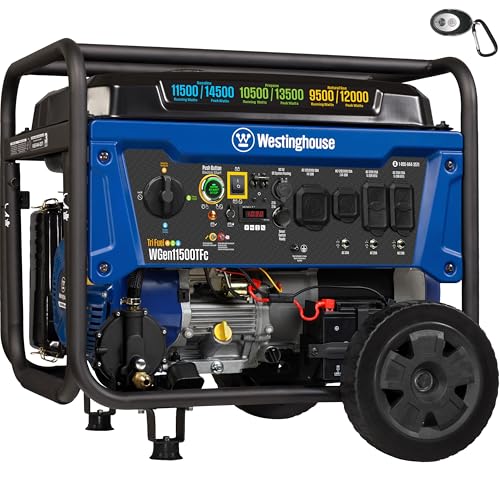
- 3. Westinghouse 14500 Watt Tri-Fuel (best whole-home)
- 4. DuroStar DS13000MX (best value large)
- 5. WEN DF680iX 6800-Watt (best quiet mid-size)
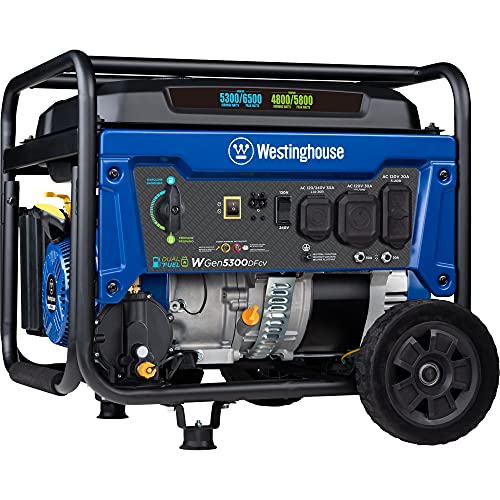
- 6. Westinghouse 6500 Watt (best under $600)
- 7. PowerSmart 3800-Watt Inverter (best budget inverter)
- What size generator do I need?
- Carbon monoxide: the rule that matters most
- Where the money goes: what each price band buys
- How our ranking differs from the big testers
- The failure patterns that show up after the first storm
- Who should not buy a portable generator
- Do the marketing claims survive a reality check?
- FAQ
- The verdict
How we picked these portable generators
We are not a test lab, and we did not run a load bank for a week. Here is exactly what this guide is and is not. Every hard number — running and starting watts on each fuel, engine displacement, fuel-tank size, outlet types, price, discount, stock message and the safety-certification wording on the listing — was read from the live Amazon listing for each generator on 20 September 2026. The safety and standards framework comes from named sources: OSHA’s alert Preventing Carbon Monoxide Poisoning While Working with Portable Generators (OSHA 4105, 2020), which we read in full; the Consumer Product Safety Commission’s generator and carbon-monoxide guidance; Popular Mechanics, which sound-tested and scoped the sine wave of its picks; Family Handyman, which surveyed working electricians on sizing and placement; and Pro Tool Reviews, which tests generators for the trades. Where a listing made a claim we could not check, we say so. You can read our full process on our how we test and choose products page.
We ranked the seven on six inputs: running watts on propane (the number that actually decides what runs during a storm), the carbon-monoxide shutoff (present, absent, or claimed), transfer-switch readiness (a 30A or 50A outlet and the ability to feed a panel), the rating pool (a 4.8 from 1,210 buyers is a very different object from a 4.3 from 48), inverter versus open frame (whether the power is clean enough for electronics and quiet enough for a suburb), and what the machine is actually for — a 3,800-watt camping inverter and a 12,500-watt whole-home unit are not interchangeable.
Sourcing note: this is editorial analysis of listings, government safety guidance and third-party test data, not our own bench data. Generator prices swing hard around storm season and stock is genuinely volatile in this category. The numbers here are a snapshot from the date above.
The 7 best portable generators at a glance
Every generator below is sold on Amazon and was in stock when we checked. Note the wattage column: a “12,500-watt” generator is usually quoting starting watts, and the propane figure is lower again on almost every dual-fuel model.
| Product | Standout spec | Price | Track record | Deal |
|---|---|---|---|---|
 Westinghouse Westinghouse 12500 Watt Dual Fuel Home Backup Portable Generator, Remote Elect |
9,500 running / 12,500 peak W (gas); 8,500 / 11,200 W (propane); 457cc engine; 50A transfer-swi | $999.00 |
4.7 ★ 8,901 ratings #42 in Generators |
In Stock |
 Generac Generac 12,500 Starting Watt Tri-Fuel Portable Generator, Electric Start |
9,500 running / 12,500 start W; tri-fuel (gas, propane, natural gas); COsense auto-shutdown; AV | $1,169.00 |
4.3 ★ 48 ratings #89 in Generators |
Only 13 left in stock (more on the way). |
 Westinghouse Westinghouse 14500 Peak Watt Tri-Fuel Home Backup Portable Generator, Remote E |
11,500 running / 14,500 peak W (gas); 9,500 running on natural gas; 550cc engine; low THD | $1,499.00 |
4.8 ★ 1,210 ratings #73 in Generators |
In Stock |
 DuroStar DuroStar DS13000MX 13,000-Watt 500cc Dual Fuel Portable Generator – Gas and Pr |
13,000 W on gas; 500cc dual-fuel; CO Alert auto-shutdown; remote electric start; 50A outlet | $899.00 $999.00 |
4.4 ★ 311 ratings #44 in Generators |
10% OFF In Stock |
 WEN WEN 6800-Watt Dual Fuel RV-Ready Electric Start Portable Inverter Generator wi |
5,100 running / 6,800 surge W (gas); 4,500 / 6,000 W (propane); inverter; CO Watchdog; 240V L14 | $798.00 |
4.4 ★ 394 ratings #55 in Generators |
In Stock |
 Westinghouse Westinghouse 6500 Watt Dual Fuel Home Backup Portable Generator, Transfer Swit |
5,300 running / 6,500 peak W (gas); 4,800 / 5,800 W (propane); 274cc; CO shutdown; 30A transfer | $579.00 |
4.5 ★ 999 ratings #51 in Generators |
In Stock |
 PowerSmart PowerSmart 3800 Watt Dual Fuel Inverter Generator for Camping or Home Use |
3,300 running / 3,800 start W (gas); 3,100 / 3,500 W (propane); inverter; 59 dBA; ANSI/PGMA G30 | $422.99 $469.99 |
4.5 ★ 1,121 ratings #22 in Generators |
10% OFF In Stock |
1. Westinghouse 12500 Watt Dual Fuel — best overall
The Westinghouse 12500 is the best all-round home-backup generator here, and it wins on evidence rather than a spec sheet: 4.7 stars from about 8,900 Amazon ratings, by far the deepest owner pool on this page, on a machine with 9,500 running watts and 12,500 peak watts on gasoline, dropping to 8,500 and 11,200 on propane. It ships ready for a manual transfer switch, with a 50-amp 14-50R outlet, a 30-amp L14-30R, two GFCI household outlets, remote key-fob start and automatic low-oil shutdown, for $999.
What makes it the safest pick for a first-time backup buyer is the combination of the big rating pool and the outlet layout: the 50A outlet is the one that lets an electrician wire it to a panel through a transfer switch, and the remote start means you are not standing in the rain pulling a cord. The trade is weight and noise — this is an open-frame machine rated for whole-home loads, not a quiet camping inverter.
What we like
- 4.7 stars from about 8,900 ratings — the deepest evidence pool in this guide
- 9,500 running / 12,500 peak watts on gas, and still 8,500 running on propane
- Transfer-switch ready with a 50A 14-50R outlet, plus a 30A L14-30R and two GFCI outlets
- Remote key-fob electric start and automatic low-oil shutdown, for $999
What could be better
- 12,500 watts is a peak figure; running output is 9,500 watts
- Propane costs you a full 1,000 running watts versus gasoline
- Open-frame noise, with no inverter-clean power for sensitive electronics
- It is a 200-plus-pound machine — this is not a portable generator you carry
Flaws but not dealbreakers: heavy, loud, and a peak-watt headline. As the best-evidenced dual-fuel home-backup unit here, with a real 50A outlet, the Westinghouse 12500 is the one to buy first.
2. Generac 12,500 Watt Tri-Fuel — best CO-safety technology
The Generac is the safest-generator pick, and the reason is a specific piece of hardware: Generac’s onboard COsense, which the listing says “automatically detects rising carbon monoxide levels and shuts the generator down before reaching dangerous levels,” backed by an automatic voltage regulator that stabilises output for sensitive equipment. It is tri-fuel — gasoline, propane or natural gas on a dial — at 9,500 running and 12,500 starting watts on gas, for $1,169.
Two caveats worth stating plainly. First, this listing shows only about 48 ratings, so the 4.3-star average is a thin signal compared with the Westinghouse’s 8,900 — we are recommending a technology and a brand heritage here, not a proven track record of this exact SKU. Second, an automatic CO shutoff is a backstop, not a licence: OSHA’s rule is to run the machine outdoors regardless of what any sensor promises.
What we like
- Generac COsense automatic carbon-monoxide shutdown, plus a low-oil cutoff
- Tri-fuel: gasoline, propane or piped natural gas on a simple dial
- 9,500 running / 12,500 starting watts, with automatic voltage regulation (AVR)
- A 7.5-gallon tank good for roughly 9.5 hours at 50% load on gasoline
What could be better
- Only about 48 ratings at 4.3 stars — a thin pool next to the Westinghouse’s 8,900
- The highest price here for the wattage: $1,169
- No inverter stage, so no clean-power claim for delicate electronics
- A CO sensor is no substitute for placing it outdoors, 20 feet from the house
Flaws but not dealbreakers: a thin rating pool and a premium price. If CO auto-shutoff and tri-fuel flexibility are what you want, nothing here beats the Generac for safety hardware.
3. Westinghouse 14500 Watt Tri-Fuel — best whole-home
If your goal is to carry most of a house — well pump, fridge, furnace blower, a few rooms of lights — the 14500 tri-fuel is the biggest machine here: 11,500 running and 14,500 peak watts on gasoline, 10,500 running on propane and 9,500 running on natural gas, from a 550cc engine with a 9.5-gallon tank and a claimed run time of up to 19 hours at half load, for $1,499. It is also engineered for low total harmonic distortion, which the listing notes makes it safe for sensitive electronics.
Two things to notice. The natural-gas figure — 9,500 running watts — is the one to size against if you plan to plumb it in permanently, because piped gas delivers the fewest BTUs of the three fuels. And 4.8 stars from about 1,210 ratings is the strongest average on this page, which is unusual at this price and worth weighing against the higher sticker.
What we like
- 11,500 running / 14,500 peak watts on gas — the most capacity in this guide
- Tri-fuel, including natural gas, so it can run indefinitely off a supply line
- 4.8 stars from about 1,210 ratings, the strongest average here
- Low-THD output and a 9.5-gallon tank with a claimed 19-hour run time
What could be better
- Natural gas costs the most output: 9,500 running watts versus 11,500 on gasoline
- At $1,499 it is the most expensive pick here
- A 550cc open-frame machine is loud and very heavy
- Permanent plumbing for natural gas is a job for a licensed electrician
Flaws but not dealbreakers: the price and the weight. For a whole-home backup that can also run on piped gas, the 14500 tri-fuel is the most capable generator in this guide.
4. DuroStar DS13000MX — best value large
The DuroStar is how you buy big wattage without the Westinghouse or Generac price: 13,000 watts, a 500cc dual-fuel engine, remote electric start, a CO Alert auto-shutdown and a 50-amp transfer-switch-ready outlet, for $899 against a $999 list — the only genuine discount among the large open-frame units here. At 4.4 stars from about 311 ratings it has a mid-sized but reasonable pool.
The honest read: this is a value play on specifications rather than on a long warranty of owner data. DuroStar does not carry the dealer-and-parts network of a Generac, and a 311-rating pool will always be a smaller sample than 8,900. But for a buyer who wants a transfer-switch-ready machine with CO detection for under $900, the spec-to-price ratio is the best on this page.
What we like
- 13,000 watts with a 50A transfer-switch outlet, for $899 against a $999 list
- Dual fuel (gasoline or propane) on a 500cc engine
- CO Alert automatic carbon-monoxide shutdown and remote electric start
- 4.4 stars from about 311 ratings — a reasonable mid-sized pool
What could be better
- No inverter stage, so no clean-power claim
- DuroStar’s service and parts network is thinner than Generac’s
- 311 ratings is a smaller evidence base than the Westinghouse units
- Propane runs deliver noticeably fewer watts than gasoline
Flaws but not dealbreakers: no clean-power output and a thinner brand network. As the cheapest way to a transfer-switch-ready 13,000-watt generator with CO detection, the DuroStar earns its slot.
5. WEN DF680iX 6800-Watt — best quiet mid-size
The WEN DF680iX is the middle of the range done well: an inverter generator with 5,100 running and 6,800 surge watts on gasoline, 4,500 and 6,000 on propane, a WEN Watchdog CO shutdown sensor, a bonded-neutral 240V configuration that can trickle-charge an electric vehicle, and a fuel shutoff that runs the carburettor dry before storage — for $798. It is the pick for a buyer who wants one machine for both backup and an RV or EV.
At 4.4 stars from about 394 ratings it is decently evidenced, and the inverter stage means the power is clean enough for electronics and quieter than the open-frame machines above. Note the fuel-shutoff feature specifically: it is the single best anti-maintenance feature on any generator here, because it is what stops stale gasoline gumming up the carburettor between storms.
What we like
- Inverter output — cleaner power and quieter running than open-frame units
- 5,100 running / 6,800 surge watts on gas, 4,500 / 6,000 on propane
- WEN Watchdog automatic carbon-monoxide shutdown, plus a fuel shutoff for storage
- A bonded-neutral 240V L14-30R outlet that can provide low-power Level 2 EV charging
What could be better
- 6,800 is a surge figure; sustained output is 5,100 watts
- Too small to carry a whole-house load on its own
- No 50A outlet, so a transfer-switch install is limited to a 30A feed
- Propane again costs you about 600 running watts
Flaws but not dealbreakers: not enough wattage for whole-home power. For quiet mid-size backup plus RV or EV duty, the WEN DF680iX is the most versatile machine here.
6. Westinghouse 6500 Watt — best under $600
The Westinghouse 6500 is the best value in the guide if your needs stop at the essentials: 5,300 running and 6,500 peak watts on gasoline, 4,800 and 5,800 on propane, from a 274cc engine, with a CO shutdown sensor, a 30A transfer-switch-ready outlet and an RV-ready 30A TT-30R, for $579. At 4.5 stars from about 999 ratings it has the second-deepest pool here, and it is a Westinghouse, so the parts and support situation is the same as the two bigger machines above.
For most people, this is where the honest money is. A 5,300-watt running output covers a fridge, a furnace blower, lights, internet and a few phone chargers at once; if you are not trying to run central air or an electric range, you do not need to spend $1,000. This is the pick that stops the price-per-watt curve from climbing.
What we like
- The best watts-per-dollar here: 5,300 running watts for $579
- 4.5 stars from about 999 ratings — the second-deepest pool in this guide
- Dual fuel with a CO shutdown sensor and a 30A transfer-switch-ready outlet
- Also RV-ready via a 30A TT-30R outlet, with a claimed 14.5-hour run time
What could be better
- 6,500 watts is a peak figure; running output is 5,300 watts
- Not enough for central air or electric heating
- Open-frame noise, with no inverter stage
- Only a 30A outlet, so it feeds a subpanel rather than a whole-home transfer switch
Flaws but not dealbreakers: a 30A ceiling and open-frame noise. For running the essentials through a storm on a sub-$600 budget, the Westinghouse 6500 is the pick to beat.
7. PowerSmart 3800-Watt Inverter — best budget inverter
The PowerSmart is the cheapest machine here at $422.99 against a $469.99 list, and it is the one we would take camping: 3,300 running and 3,800 starting watts on gasoline, 3,100 and 3,500 on propane, inverter-clean output, a 59 dBA rating in Eco mode, a CO sensor, and a listing that names its standards — “certified per ANSI/PGMA G300, ANSI/UL2201 and EPA standards.” At 4.5 stars from about 1,121 ratings the evidence is solid, and the 24-hour run time on a 20-pound propane tank is the best in this guide.
The catch is capacity, and it is a real one: 3,300 running watts will not carry a house. What it will do is run a fridge, a few lights and a laptop indefinitely on a barbecue tank, quietly enough to keep the neighbours happy. For a first generator, a camping setup or a small-apartment backup, that is plenty.
What we like
- $422.99 — the lowest price in this guide, with a 10% discount
- Inverter-clean output at a claimed 59 dBA, among the quietest here
- 4.5 stars from about 1,121 ratings — the strongest value pool on this page
- A listing that names its standards: ANSI/PGMA G300 and ANSI/UL2201, plus a CO sensor
What could be better
- Only 3,300 running watts — it cannot carry a house
- A 1.3-gallon gas tank gives just 8 hours at 25% load (propane lasts far longer)
- No 50A outlet, so whole-home transfer-switch use is off the table
- The smallest frame here, which also means the smallest load headroom
Flaws but not dealbreakers: a small power ceiling. As the quietest, cheapest, best-documented inverter here, the PowerSmart is the right first generator for camping or apartment backup.
What size generator do I need?
This is the section that stops most people from buying the wrong machine, and it comes down to two numbers that listings print in the largest possible type: starting watts and running watts. Family Handyman’s guide, written by a working electrician, puts it plainly: appliances with motors — fridges, air conditioners, sump pumps — draw a brief surge when they start, and to be safe you should “multiply the watts by 1.5, and buy at least that size generator.”
The same guide gives the working numbers to add up, and they are worth memorising: a refrigerator is 300 to 800 watts, a window air conditioner 600 to 1,500, a sump pump 800 to 1,000, a microwave 800 to 1,200, a television 50 to 200 and a laptop 50 to 100. Add those running figures, multiply the motor-driven ones by 1.5 for the start surge, and you have your number. Two more rules from the same source: never run a generator at full capacity — “try to keep the load to about 75% or less of its capacity” — and if you only see amps on an appliance label, multiply by 120 volts to get the watts.
If you are building out a full outage kit rather than just the generator, our space heaters guide covers what actually keeps a room warm when the furnace is off, and our smart thermostats guide covers the units that keep working when the power drops.
Roughly, that means the machines in this guide divide like this: the PowerSmart (3,300 running watts) and the Westinghouse 6500 (5,300) cover the essentials — fridge, furnace blower, lights, internet. The WEN (5,100) and the two 12,500-watt units (9,500 running) cover essentials plus one large load, such as a well pump or a window air conditioner. The 14500 (11,500 running) is the one that starts to feel like a whole-home unit. And on any dual-fuel model, remember to size against the propane figure, because that is what you will be running when the gas stations are closed.
Carbon monoxide: the rule that matters most
Every generator here can kill you with a gas you cannot see or smell, and this is the one part of the guide we would ask you to read twice. OSHA’s alert Preventing Carbon Monoxide Poisoning While Working with Portable Generators is unambiguous: “Never use a portable generator indoors, or in enclosed spaces such as garages, crawl spaces, and basements.” It adds that generators “should be used outdoors, but never place a generator near doors, windows, or ventilation shafts where CO can enter and build up,” and that you should “make sure the generator has 3 to 4 feet of clear space on all sides and above it to ensure adequate ventilation.”
The Consumer Product Safety Commission goes further on distance: it recommends running a portable generator at least 20 feet from the house and not on a porch or in a carport, and its generator guidance notes that more than 80 consumers die each year from CO poisoning caused by portable generators — a single generator can produce as much CO as hundreds of cars. Popular Mechanics’ tested guide repeats the same rule for the same reason: “Do not run a generator in a garage with the door open, or in front of the garage with the door open, because carbon monoxide can still get trapped and seep into the house.”
OSHA also lists the symptoms to watch for — “dizziness, headaches, nausea/vomiting, tiredness, confusion, unconsciousness” — and says that if they appear, “get to fresh air immediately and seek medical attention.” A CO auto-shutdown sensor, like the Generac COsense or the WEN Watchdog, is a genuinely valuable second line of defence, and it is one of the reasons we rank the machines that carry one above those that do not. It is not a substitute for siting the machine correctly.
Where the money goes: what each price band buys
Generator pricing is the least linear in home hardware: you can spend 50% more and get 150% more watts, or spend it and get a quieter engine and a different fuel. Here is what we saw across the live listings.
- Under $500. Inverter machines with a real safety story — the PowerSmart at $422.99 is certified to ANSI/PGMA G300 and UL2201 and is quiet enough to run overnight. The ceiling is 3,300 running watts; this tier powers essentials and campsites, not houses.
- $550–$800. The value heart of the market. The Westinghouse 6500 at $579 and the WEN DF680iX at $798 both give you 5,000-plus running watts, dual fuel and a CO sensor. Above this point, extra money stops buying you “more watts per dollar” and starts buying quiet and clean power.
- $900–$1,200. Open-frame workhorses with 9,500-plus running watts and a real transfer-switch outlet. The DuroStar at $899 and the Westinghouse 12500 at $999 are the two value picks here; the Generac at $1,169 adds the best CO technology on this page.
- $1,400 and up. Whole-home capacity and tri-fuel. At $1,499 the Westinghouse 14500 is the single most capable machine here, and the only one that can run indefinitely on a piped natural-gas line.
One cost the sticker price hides is the transfer switch. To feed your house legally and safely you need a manual transfer switch or an interlock kit installed by an electrician, and that is a few hundred dollars on top of the generator regardless of which one you buy. Factor it in before you size up.
How our ranking differs from the big testers
This is where a roundup earns its keep, because the best independent testing points somewhere an Amazon list cannot follow. Popular Mechanics’ 2026 tested guide puts a Honda EU2200i at the top — it measures it at 47.4 pounds, “half the size and weight of comparable generators in its class,” with a sine wave it describes as “smooth and symmetrical.” Its budget pick is the WEN 3,600-watt dual-fuel inverter, and its pick for powering sensitive electronics is a Generac 3,800-watt inverter. Every one of those is a genuinely better machine than anything here for one specific job: portable, quiet, clean power under 4,000 watts.
We rank the Amazon home-backup tier first for a different reason. The Honda is $1,099 for 1,800 running watts, and it is honest about it: Popular Mechanics’ own verdict is that it is “not powerful enough for home backup applications,” with a fuel tank “quite small at less than 1 gallon.” A buyer whose actual problem is a three-day outage after a storm needs 9,500 running watts and a 50A outlet, and at that job the Westinghouse 12500 costs less than the Honda while delivering more than five times the running power. Where we agree absolutely with the testers is on safety and on false claims: CO placement, CO shutoff, and the difference between a peak wattage and a running one are the same lines every credible source draws, and so do we.
We also part company with the listings themselves on how they describe power. Almost every machine here leads with a peak or starting figure — 12,500, 14,500, 13,000 — while the running number is 20 to 30% lower, and the propane running number lower again. Both numbers can be true, but only the running figure describes what you can actually power, and it is the smallest print on the page.
The failure patterns that show up after the first storm
Generators rarely fail on the day you buy them. They fail in the same predictable ways, usually the second time you need them. Across the listings, the professional reviews and the government guidance, this is what recurs.
- It will not start after sitting for a year. The single most common complaint in this category. Gasoline left in a carburettor evaporates into gummy deposits that block fuel flow. The fix is a fuel shutoff and running the carb dry before storage — exactly what the WEN’s shutoff feature is for.
- The propane hose is the weak link. Dual-fuel machines fail at the regulator or hose far more often than at the engine, and a replacement is often model-specific. Confirm the hose and regulator are replaceable before you commit to running on propane.
- The battery for electric start dies. Every remote-start generator here relies on a small 12V battery that self-discharges. Keep the charger on it, or you will be pull-starting in the dark.
- The CO sensor triggers on a still, hot day. A CO shutoff that trips on a calm afternoon is doing its job, but it will stop you powering through the outage. Site the machine where exhaust can actually move.
- It cannot carry the load you bought it for. The most expensive failure is buying single-phase starting watts and discovering at hour two that the well pump drops the machine. Size against starting watts, on propane, with 25% headroom.
- The transfer-switch outlet does not match the panel. A 30A machine cannot feed a 50A transfer switch, and an electrician can cost more than the generator to rework it. Match the outlet to the install before you buy.
Who should not buy a portable generator
A portable generator is a genuinely good purchase for a lot of homes in 2026. It is also the wrong purchase for some buyers, and it is better to know before the storm.
- You cannot store and run it outdoors safely. In an apartment, a townhouse with no yard, or any home where the only space is a garage, a portable generator is a CO risk, not a solution. Look at a battery backup instead.
- You want power back automatically. A portable generator means pulling it out, fueling it and starting it in the weather. If that is not realistic for you, the answer is a permanently installed standby generator, not this guide.
- You need to run central air or electric heat. Those loads want a 14,000-watt-plus machine and a big transfer switch. Below that, size for one large load, not all of them.
- You will run it in an enclosed space “just this once.” There is no safe version of this. CO does not smell or give warning.
- You are buying for occasional camping only. A 3,300-watt inverter is $423 and a quiet generator is nicer to live beside than a 9,500-watt open frame — the tier below is the right call.
- Per pick: skip the PowerSmart if you need to power a house; skip the Westinghouse 6500 if you want inverter-clean power; skip the DuroStar if dealer support matters more than price; skip the Generac if the 48-rating pool makes you uneasy; and skip the 14500 if you will never plumb it into a natural-gas line.
Do the marketing claims survive a reality check?
Generator listings sell the same handful of numbers. Here is what each one is actually measuring.
- “12,500 watts.” Almost always a peak or starting figure. The running figure on the same machine is 9,500 watts on gasoline, and 8,500 on propane — a 32% haircut for switching fuel. Size against running watts, because that is the load you can hold, not the load you can touch for half a second.
- “Up to 19 hours of run time.” That is at half load on a full 9.5-gallon tank. Run it near capacity and the number collapses; this is why the bigger machines cost more to keep fed than the small ones.
- “Safe for sensitive electronics.” Only true of inverter machines or ones that name a low-THD figure. Popular Mechanics’ testers checked theirs with an oscilloscope and reported low total harmonic distortion as the difference between clean and dirty power. If a listing does not mention THD or an inverter, assume it is a standard square-wave output.
- “Certified.” One listing here names its standards — ANSI/PGMA G300 and ANSI/UL2201 — and that specificity is worth more than the word “certified” on its own. Ask which standard, in writing.
- “CO sensor.” Real and valuable, but the sensor shuts the machine down; it does not purify the air. OSHA’s rule — outdoors only, away from doors, windows and vents — stands whether or not your generator has one.
What survives the check is what actually makes these machines worth buying: a real transfer-switch outlet, a running-wattage figure you sized against, a CO shutoff, and — on the biggest two — a deep enough owner-rating pool to trust. Everything else on the box is decoration.
FAQ
What size generator do I need to run a house?
For essentials only — fridge, furnace blower, lights, internet — a 5,000-watt-class machine is enough; the Westinghouse 6500 covers that. To add a well pump or a window air conditioner you want 9,500 running watts or more, which is the 12,500-watt class. Whole-home coverage including central air needs a permanently installed standby unit, not a portable.
Can I run a portable generator in my garage if the door is open?
No. OSHA’s alert says never to use a portable generator in enclosed spaces such as garages, crawl spaces and basements, and Popular Mechanics notes that carbon monoxide can still get trapped and seep into the house even with the door open. Run it outdoors, at least 20 feet from the house per the CPSC, with the exhaust pointing away.
Is propane or gasoline better for a home backup generator?
Propane delivers slightly fewer watts — expect to lose hundreds of running watts versus gasoline — but it stores indefinitely, will not gum up a carburettor, and is often already on-site in a large tank. During a wide outage, gasoline stations may be closed or out of fuel. Size your machine against its propane figure if you plan to keep a tank.
What is the difference between an inverter and a standard generator?
An inverter generator converts the output to DC and back to clean AC, which is safe for electronics and quieter. A standard open-frame generator produces a rougher waveform. Only the PowerSmart and the WEN DF680iX here are inverters; the larger machines are open frame, and the Westinghouse 14500 is the one big unit that specifically claims low total harmonic distortion.
Do I need a transfer switch?
To power household circuits safely, yes. Plugging appliances straight into the generator with extension cords is the cheap route; feeding your panel requires a manual transfer switch or interlock installed by an electrician, and it must match the generator’s outlet — 30A or 50A. Add that cost to the generator price before you decide which tier to buy.
The verdict
Buy the Westinghouse 12500 Watt Dual Fuel if you want the best-evidenced home-backup generator here — 8,900 ratings, 9,500 running watts and a real 50A transfer-switch outlet, for $999. Choose the Generac 12,500 Tri-Fuel if CO-safety technology is your priority; the Westinghouse 14500 Tri-Fuel if you need whole-home capacity and want the option of piped natural gas; the DuroStar DS13000MX if you want the most watts for the least money; the WEN DF680iX for quiet mid-size backup with RV and EV duty; the Westinghouse 6500 if essentials are all you need; and the PowerSmart 3800 if you want the quietest, cheapest, best-documented first generator. Whichever you choose, site it outdoors, give it room to breathe, and size it against running watts on propane — those three habits matter more than the number on the box.