The best space heaters are the ones that warm the room you are actually sitting in — quietly, safely, and without turning a $30 purchase into a $200 winter electricity bill. We checked seven space heaters sold on Amazon in 2026, read each live listing for wattage, heat settings, tip-over protection, certification, weight and the coverage claims, tested those claims against the arithmetic and against the standard that governs portable heaters, and compared our ranking with the labs that have actually run these machines under load. The short version: a $35.99 ceramic heater is the one we would buy for most rooms, the cheapest pick here is the one three separate labs also single out, and the coverage numbers on the boxes do not survive the maths.
Affiliate disclosure: As an Amazon Associate I earn from qualifying purchases. We earn commission from qualifying purchases made through links on this page. This never affects our rankings or what we recommend.
What’s in this guide
- How we picked these heaters
- The 7 best space heaters at a glance
- 1. DREO Portable Ceramic Heater with Remote (best overall)
- 2. Amazon Basics Ceramic Space Heater (best budget)
- 3. BLACK+DECKER Personal Ceramic Heater (best personal heater)
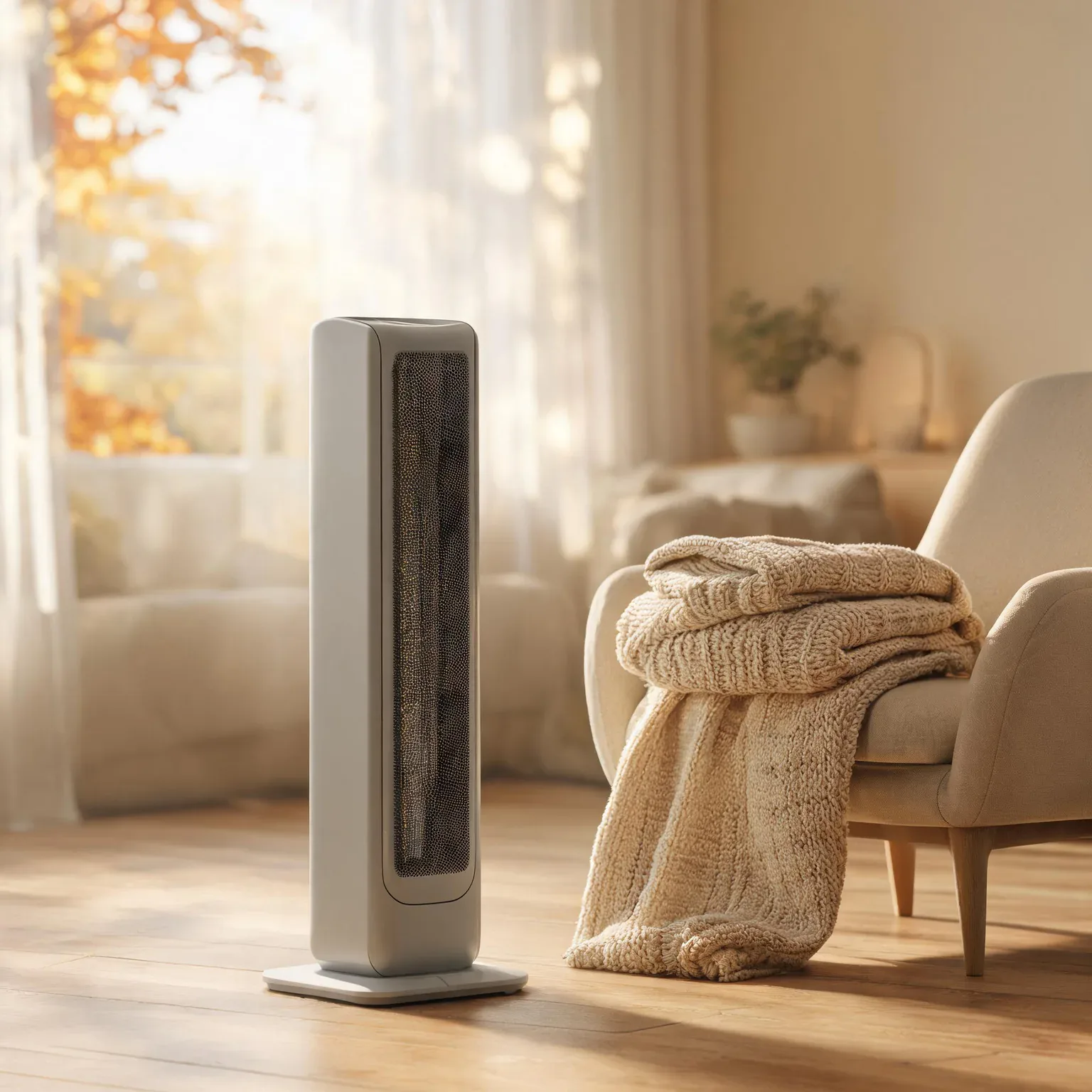
- 4. Lasko 23-Inch Ceramic Tower (best tower)
- 5. DREO 25-Inch Tower Heater (best for large rooms)
- 6. Amazon Basics Oil Radiator Heater (best silent, all-night heat)
- 7. Honeywell Slim Ceramic Tower (best slim design)
- How many watts your room actually needs
- Safety: what the standard actually requires
- Where we disagree with the big reviewers
- Where paying more stops buying better
- The failure modes to watch for
- Who should skip these heaters
- Frequently asked questions
- Sources and methodology
How we picked these heaters
Every pick below was checked against its live Amazon listing on September 17, 2026, so the wattage, heat settings, safety features, weight, certification and coverage claims here match what the page actually said that day, and the prices and stock come from Amazon’s product API on the same afternoon. We then set those claims against three things: the standard that governs these machines — UL 1278, “Movable and Wall- or Ceiling-Hung Electric Room Heaters,” whose current edition (4, published March 21, 2014, last revised May 29, 2025) is the document behind the ETL and UL marks you see on the boxes; the published lab testing, TechGearLab’s space heater guide (nearly 50 heaters tested over a decade, 10 in the current scored line-up) and Tom’s Guide’s tested heater round-up (updated May 22, 2026); and Bob Vila’s tested heater comparison, which measures and tabulates each unit’s wattage, weight and dimensions.
Sourcing transparency: what this guide is and isn’t. We did not put these heaters in a test room, measure their sound levels, or run them on a power meter, and we do not claim to have. What we did is read each live listing (wattage, settings, safety features, certification, weight, quoted decibel figures and coverage claims on September 17, 2026), check the coverage and energy claims against the arithmetic and against UL 1278, and compare our ranking with the labs that test heaters under load. Where our ranking differs from a bigger outlet, we say so by name and explain why. Our full process lives on the How We Test & Choose Products page.
The 7 best space heaters at a glance
Prices, discounts, stock and best-seller ranks below were pulled live from Amazon on September 17, 2026. Star averages are the listing figures; as with every category we cover, treat the exact review counts as approximate.
| Product | Standout spec | Price | Track record | Deal |
|---|---|---|---|---|
 DREO DREO Space Heater, Portable Electric Heaters for Indoor Use with Remote |
Powerful heat that fits everywhere: DREO space heaters for indoor combines Hyperamics 1500W adv | $35.99 $39.99 |
#1 in Electric Space Heaters |
10% OFF In Stock |
 Amazon Basics Amazon Basics Ceramic Space Heater, Portable Indoor Heating Solution, With Ove |
CUSTOMIZABLE HEATING OPTIONS: Choose from three settings to suit your needs – High (1500W), Low | $20.69 $23.88 |
#2 in Electric Space Heaters |
13% OFF In Stock |
 BLACK+DECKER BLACK+DECKER Personal Ceramic Heater, 1500 Watts, BHDC201, Black |
Personal Heater: Our heaters for indoor use help keep your personal space at home or in the off | $22.99 $26.99 |
#11 in Electric Space Heaters |
15% OFF In Stock |
 Lasko Lasko 23" Ceramic Tower Space Heater with Remote Control – Silver – 751320 |
POWERFUL ELECTRIC SPACE HEATER: Trade the extra layers for real warmth. 1500W of quiet ceramic | $70.99 $79.99 |
#15 in Electric Space Heaters |
11% OFF In Stock |
 DREO DREO 25 Inch Electric Space Heater for Indoor Use, Large Room, Thermostat |
The Ultimate Heating Experience: DREO's upgraded 25" space heaters for indoor use brings 11.5 f | $79.96 $89.99 |
#13 in Electric Space Heaters |
11% OFF In Stock |
 Amazon Basics Amazon Basics Portable Oil Radiator Heater, Indoor Use, 3 Heat Settings, Over- |
POWERFUL & ADJUSTABLE HEATING: Offers three heat settings—High (1500W), Medium (1000W), and Low | $71.99 |
#33 in Electric Space Heaters |
In Stock |
 Honeywell Honeywell Slim Ceramic Tower Heater, Large Room, Black |
Two heat settings with programmable thermostat: Choose between 1500W (high) and 750W (low) heat | $47.99 $54.99 |
#64 in Electric Space Heaters |
13% OFF In Stock |
Spec truth: what each listing claims, and what it leaves out
Wattage and settings decide what a heater can do. Everything else on this table decides whether you will actually enjoy using it. All of it was read off the live product page on September 17, 2026.
| Pick | Watts / settings | Type | Safety features the listing states | Coverage or noise claim | What the listing never says |
|---|---|---|---|---|---|
| DREO Portable Ceramic with Remote | 1,500 W; Power/Eco/Fan modes | Portable ceramic, PTC element | Tilt-detection tip-over sensor, overheat protection | None published | No room-size figure and no decibel figure — unusually, this listing makes no coverage claim at all |
| Amazon Basics Ceramic | 1,500 W high / 900 W low / fan only | Compact ceramic, 3 lb | Tip-over and overheat protection | “43 dB noise level” | How that decibel figure was measured, and where the 900 W low setting is appropriate |
| BLACK+DECKER Personal Ceramic | 1,500 W high / 750 W low / fan only | Personal ceramic, 2.8 lb | Automatic tip-over shutoff and overheat shutoff | None published | Any room-size guidance — it is sold as personal heat and stays silent on square footage |
| Lasko 23" Ceramic Tower | 1,500 W | Tower ceramic, oscillation | Self-regulating element, overheat protection, cool-touch housing; ETL-listed | “Medium-sized rooms” | A square-footage number behind “medium-sized rooms”, and the tower’s own weight |
| DREO 25" Tower | 1,500 W; four heat levels | Tower ceramic, 70° oscillation | V-0 flame-retardant housing, reinforced plug, 45° tip-over and overheat protection | “100–270 sq ft”; “as low as 25 dB” | How 1,500 W reaches the top of that range (the maths says otherwise) and the method behind 25 dB |
| Amazon Basics Oil Radiator | 1,500 / 1,000 / 600 W | Oil-filled radiator, 7 fins, no fan | Tip-over and overheat protection; ETL-certified | “No fan noise” | Heat-up time, weight, and any coverage figure — radiators are slow by design and the page does not say so |
| Honeywell Slim Ceramic Tower | 1,500 W high / 750 W low | Slim ceramic tower | Dual overheat protection (sensor + cut-off fuse), 360° tip-over switch, cool-touch housing, auto-off timer | “Save up to $276 per year” | The assumptions behind that saving, and it is sold without a remote control |
1. DREO Space Heater, Portable Ceramic with Remote — best overall
The current number one best seller in Amazon’s electric space heater category costs $35.99 and does the three things that matter: 1,500 W of ceramic heat, a real thermostat rather than three fixed positions, and both tip-over and overheat protection. The listing adds a tilt-detection sensor, a brushless motor with a winglet fan for quiet operation, an ECO mode, a fan-only mode and a carry handle. That is the feature set of a $70 tower for a little over $35.
What we like about it most is not the spec list; it is that this listing makes no coverage claim at all. There is no “heats 300 sq ft” badge, no decibel figure, no invented efficiency number — just wattage, modes and safety. In a category where the marketing is largely unfalsifiable, that restraint is worth something. Tom’s Guide separately rated the Dreo Whole Room 714 its pick for safety features, calling it “super quiet” with child lock and cool-touch housing — a sibling model that confirms the brand is building the same safety-first formula rather than winning on price alone.
What we like
- Number one best seller in Amazon’s electric space heater category at $35.99, with a 10% discount applied
- 1,500 W ceramic PTC heat with a thermostat and Power, ECO and fan-only modes
- Tilt-detection tip-over sensor plus overheat protection — the two features that matter most in a portable heater
- Brushless motor and winglet fan design aimed at quiet operation, and a carry handle for moving it room to room
- The listing makes no coverage or decibel claim, which is more honest than the numbers printed on rivals’ boxes
What could be better
- No remote-holding stand or wall-mount option — it lives on the floor
- 1,500 W is a full circuit load; you cannot run this and a kettle on the same breaker
- No published room-size guidance, so you have to do the wattage maths yourself (see below)
Flaws but not dealbreakers: it is a floor-standing portable with no coverage claim to hide behind, but a thermostat, both safety cut-offs and a $35.99 price make it the easiest recommendation in this guide.
2. Amazon Basics Ceramic Space Heater — best budget
At $20.69 with 13% off, this is the cheapest way into the category, and it is not a compromise pick: three settings (1,500 W high, 900 W low, fan only), tip-over protection, overheat protection, a power indicator light, and 3 lb at 7.5 × 6.3 × 9.5 inches. It is also the only heater here that three separate reviewers rate as a value standout: TechGearLab names the Amazon Basics Ceramic 1500W its “Best Bang for the Buck” and scores it 9.0 out of 10 on direct heat — the joint-highest direct-heat score in its ten-model lab line-up, matching a $115 Honeywell. Bob Vila makes an Amazon Basics ceramic its best-budget pick too.
The listing is honest about one limit that matters and vague about another. Honest: “NOT FOR HUMID ENVIRONMENTS: Please avoid using this heater in Bathrooms, Laundry Rooms, or other high-moisture areas” — a real warning you rarely see on a budget heater. Vague: the “43 dB noise level” figure, which is presented without a measurement distance or method and is the kind of number you should treat as marketing until you hear the unit. The low setting is a genuinely useful 900 W, which is what makes this safe for an older circuit where a full 1,500 W load trips the breaker.
What we like
- $20.69 — less than a third of the most expensive pick here, with three useful settings
- TechGearLab’s best-bang-for-the-buck heater and a 9.0 direct-heat score in its ten-model lab test
- Tip-over protection, overheat protection and a power indicator light at the budget price
- 3 lb and small enough to move without thinking about it
- The low setting is a genuine 900 W, not a token eco mode
What could be better
- The listing explicitly excludes bathrooms and laundry rooms, so it is not a damp-room heater
- “43 dB” is published with no measurement method behind it
- No thermostat — you get three positions, not a target temperature
- The 13% discount is modest and this heater is routinely discounted further
Flaws but not dealbreakers: there is no thermostat and no remote, but a lab-scored direct-heat performer at $20.69 is the cheapest sensible way to heat one room.
3. BLACK+DECKER Personal Ceramic Heater — best personal heater
This is the heater for the person, not the room: 2.8 lb, a carry handle, 750 W and 1,500 W settings plus fan-only, and an adjustable manual thermostat. It sits on a desk, points at a chair, and costs $22.99 after a 15% discount. Automatic tip-over shutoff and overheat shutoff are both present, the power-on indicator is there for the obvious reason, and the listing is explicit that this is for personal space rather than a whole room.
It earns its slot because small-space heating is genuinely different work. A 6,000-square-foot-open-plan marketing sentence does not help you when what you need is warm ankles at a desk from November to March; a 750 W setting on a low draw, a quiet fan and a thermostat you can nudge is exactly the tool for that job. It also has the highest star average in this guide at 4.6.
What we like
- 2.8 lb with a carry handle — genuinely portable between desk, sofa and bedside
- 750 W low setting, which is friendlier to older wiring and shared office circuits
- Tip-over shutoff, overheat shutoff and a power-on indicator light
- Highest star average here (4.6) and only $22.99 after a 15% discount
- Sells itself as personal heat rather than pretending to warm a whole floor
What could be better
- It will not warm a room — this is a directional, personal-heat product
- The thermostat is a manual dial rather than a digital set-point
- No remote, no oscillation, no timer
Flaws but not dealbreakers: it heats a person rather than a room and the thermostat is analogue, but at $22.99 for a 2.8 lb heater with both safety cut-offs, that is precisely what a desk heater should be.
4. Lasko 23-Inch Ceramic Tower Space Heater — best tower
If you want a heater that lives in a corner and behaves like furniture, the tower format is the answer, and Lasko has been making this one since the format was invented — the listing dates the company to 1906. This is 1,500 W of ceramic heat with wide oscillation, a remote that handles heat settings, oscillation and a 7-hour timer, a self-regulating element, overheat protection, cool-touch housing and an ETL listing. It is $70.99 after an 11% discount.
TechGearLab rates a different Lasko tower — the Ceramic Digital Tower 755320 — as its best feature-rich tower, which is the same design brief at a different price point; note that the lab’s tower scores only 5.6 on room heating while scoring 7.5 on direct heat, and that tension is exactly what a tower is: excellent at projecting heat at a person or a seating area, less impressive at dragging a whole room up to temperature. Buy the tower for directed warmth and the 7-hour timer, and set your expectations accordingly.
What we like
- Remote control for heat settings, oscillation and a 7-hour timer — the most usable controls in this guide
- Wide oscillation and cool-touch housing, so it can sit in a corner and sweep a seating area
- ETL-listed with a self-regulating ceramic element and overheat protection
- Tower footprint takes up less floor than a radiator and looks intentional in a living room
What could be better
- “Medium-sized rooms” is the only coverage guidance, with no square footage behind it
- Towers characteristically heat the air they point at rather than the whole room
- $70.99 buys a lot of budget heaters, and this one will not warm a large open space
Flaws but not dealbreakers: the coverage claim is vague and towers are directional by nature, but the remote, timer and oscillation make this the most comfortable heater here to live with.
5. DREO 25-Inch Tower Space Heater — best for large rooms
When the room is genuinely big and you want one machine to do the work, this is the pick: a 25-inch tower with 1,500 W, four heat levels, 70° oscillation, a thermostat that reads the room temperature, a V-0 flame-retardant housing, a reinforced plug and 45° tip-over protection, at $79.96 after an 11% discount. The listing claims a 11.5 ft/s air speed and coverage of 100–270 square feet.
That square-footage claim is the one to be sceptical about, and we say so directly: at the 10-watts-per-square-foot rule of thumb that Tom’s Guide also publishes, 1,500 W is a 150-square-foot heater, not a 270-square-foot one. The lower end of the range is realistic; the upper end is marketing. The same caution applies to the “as low as 25 dB” figure, which is a best-case measurement that no independent lab here has reproduced. Buy this for the oscillating airflow and the thermostat; treat both headline numbers as aspirational.
What we like
- 25-inch tower with 70° oscillation, so a large seating area gets swept rather than blasted
- Four heat levels and a thermostat that measures room temperature instead of guessing
- Unusually complete safety detail: V-0 flame-retardant housing, reinforced plug, 45° tip-over and overheat protection
- Quieter airflow design than a typical fan heater, with the brand’s quietest claims attached to this model
What could be better
- The 270-square-foot upper coverage claim does not survive the 10 W per square foot rule
- “25 dB” is a best-case figure with no published method
- The most expensive ceramic pick here at $79.96 — more than two of the budget heaters combined
Flaws but not dealbreakers: the coverage and decibel claims are the most optimistic on this page, but the thermostat, oscillation and safety build are real and the price is still under $80.
6. Amazon Basics Portable Oil Radiator Heater — best silent, all-night heat
Every other heater in this guide moves air, and moving air makes noise. An oil-filled radiator does not: seven fins of sealed oil, three settings (1,500, 1,000 and 600 W), tip-over and overheat protection, an ETL listing and caster wheels, no fan anywhere. At $71.99 it is the pick for a bedroom or a nursery where the sound of a fan is the entire problem, and the listing makes the correct promise: because the oil stays warm, the fins keep releasing heat “even after the heater is turned off”.
That is also the trade-off, and the listing does not spell it out: a radiator is slow. It takes time to bring the oil up to temperature, and it is at its best running on a low setting for hours rather than blasting a room for twenty minutes. That is why it earns a slot here as a different tool rather than a better one — and it is interesting to note that Bob Vila goes further and makes an Amazon Basics oil radiator its overall winner, praising it as “runs almost silently” and strong at heating larger rooms.
What we like
- No fan at all — the quietest way to heat a room overnight
- Three heat settings (1,500 / 1,000 / 600 W) including a genuinely low overnight draw
- Seven oil-filled fins keep releasing heat after the thermostat switches off
- Tip-over and overheat protection with an ETL certification, on caster wheels
- Bob Vila’s best-overall heater pick, independently tested
What could be better
- Slow: a radiator takes far longer to reach temperature than a ceramic fan heater
- Heaviest format here — the trade-off for silent, steady heat
- No thermostat display, no remote and no published coverage figure
Flaws but not dealbreakers: it warms slowly and it is bulky, but for a bedroom you want to leave running quietly all night, nothing else here comes close.
7. Honeywell Slim Ceramic Tower Heater — best slim design
Honeywell’s slim tower is the pick for tight spaces: 1,500 W and 750 W settings with a programmable thermostat, a 360-degree tip-over switch, dual overheat protection (an electronic sensor plus a backup cut-off fuse), a cool-touch plastic housing and an auto-off timer, in a footprint that fits a dorm room or a narrow gap beside a desk. At $47.99 after 13% off it lands between the budget heaters and the towers.
Two things are worth flagging. There is no remote control, which the listing states plainly rather than hiding. And the energy claim — “Save up to $276 per year in heating costs” — is the classic zone-heating argument dressed as a product feature: it is true in the sense that heating one room instead of a whole house saves money, and it is not a measurement of this heater. If you are replacing central heating with a zone heater, make sure you actually turn the central system down, or you will pay for both.
What we like
- Slim tower footprint that fits where a radiator or a wide ceramic box will not
- 360-degree tip-over switch — a more thorough version of the usual tip-over cut-off
- Dual overheat protection with an electronic sensor plus a backup fuse
- Programmable digital thermostat and an auto-off timer at $47.99
- Cool-touch housing on the exterior, which matters in a small room
What could be better
- No remote control, and the listing says so — worth knowing before you buy for a bedroom
- “Save up to $276 per year” is a zone-heating argument, not a measured result for this heater
- The weakest best-seller rank here (#64) and no published coverage figure
Flaws but not dealbreakers: no remote and an inflated savings headline, but the 360-degree tip-over switch and dual overheat protection make this the safest-feeling small-space tower in the guide.
How many watts your room actually needs
Almost every heater in this guide is 1,500 W, which is the maximum a standard 15-amp US household circuit will carry continuously, and it is also the number that decides the room size:
- 10 watts per square foot is the working rule of thumb that Tom’s Guide also publishes. So 1,500 W ≈ 150 square feet of “average” room — a small bedroom or a home office. A 900 W setting ≈ 90 sq ft; a 600 W setting ≈ 60 sq ft.
- Adjust for the room, not just the number. High ceilings, poor insulation, single-glazed windows and an exterior wall all move the effective figure down. A drafty Victorian room at 150 sq ft will not behave like a sealed modern one.
- Treat every “heats X sq ft” badge as the best case. The maths above is why a 1,500 W tower claiming 270 square feet is the most optimistic claim on this page.
- Check your circuit before you buy. A 1,500 W heater draws about 12.5 amps. On a shared 15-amp circuit with a kettle, an air fryer or a hair dryer, you will trip the breaker — and that is the real reason the 750 W and 900 W low settings exist.
Zone heating is the other half of the maths, and it is why space heaters are worth owning at all: heating the one room you are in, while the thermostat for the rest of the house sits lower, is the cheapest form of the savings these listings advertise — see our guides to electric fireplaces and patio heaters if you are thinking about the rest of the year.
Safety: what the standard actually requires
The ETL and UL marks on these boxes are the visible end of UL 1278, “Movable and Wall- or Ceiling-Hung Electric Room Heaters”, the standard for this product class — edition 4 is current, published March 21, 2014 and last revised May 29, 2025, with ANSI approval. That is the document that defines the tip-over and overheat behaviour being tested; when a listing says “ETL certified” or “ETL listed,” it means an independent lab has tested the heater against a standard of that kind.
- Tip-over protection is not optional. Every heater in this guide has it, and the listings compete on its sophistication — a tilt-detection sensor (DREO) or a 360-degree switch (Honeywell) is a more thorough implementation than a simple cut-off.
- Overheat protection comes in layers. The cheapest units use a cut-off; Honeywell’s listing adds a backup thermal fuse and DREO’s adds a V-0 flame-retardant housing and a reinforced plug. More layers is better, not marketing.
- Give it space and never plug it into an extension lead. Portable heaters draw near-continuous high current, and the failure mode that actually starts fires in practice is overloaded wiring, not the cabinet — which is exactly the sort of thing UL 1278 and your home insurance policy both care about.
- Cool-touch housing is a real feature if there are children or pets, and it is listed explicitly on the Lasko, Honeywell and DREO units here.
Where we disagree with the big reviewers
Heater reviews diverge more than they agree, mostly because the labs grade “room heating” and “direct heat” differently. Here is where we land relative to them.
- TechGearLab’s best overall is the Vornado AVH10 at $100; we do not include it. Their own scorecard explains why we rank a $36 heater first instead: the AVH10 scores 7.3 for room heating and 9.5 for consistent warmth, but only 4.0 for direct heat — it is a whole-room stirrer rather than a heater that warms you quickly, and it costs nearly three times our top pick. If you want the best slow-and-even whole-room heater and do not mind $100, that is a fair choice.
- TechGearLab’s best tower and ours are different Lasko towers. They pick the Ceramic Digital Tower 755320 for features; we pick the 23-inch 751320, which is the same brief at a lower price. We are not claiming ours tests better — only that it delivers the tower experience (remote, oscillation, timer, ETL listing) at $70.99.
- Bob Vila makes an Amazon Basics oil radiator its overall winner; we rank it sixth. Both of us are right about different jobs. They are ranking for silent, steady, large-room heat; we rank for the median buyer who wants a room warm in ten minutes. A radiator is not slow because it is worse — it is slow because it is a radiator.
- Tom’s Guide’s top pick is the Lasko FH500, which is not Amazon-focused, and its best-value pick (Morento, around $30) is not the same unit as the Amazon Basics ceramic that TechGearLab and Bob Vila both score as the budget standout. Where three outlets converge on a budget ceramic heater, we follow them — it is our number two.
Where paying more stops buying better
- Under $25: the Amazon Basics ceramic ($20.69) and the BLACK+DECKER personal heater ($22.99). Both scored or rated as value standouts, both have the two essential safety cut-offs.
- $25–$50: the DREO portable with remote ($35.99) and the Honeywell slim tower ($47.99). This is where thermostats, remotes, timers and refined tip-over sensors appear — and it is where most people should buy.
- Above roughly $70: towers and radiators — the Lasko at $70.99, the Amazon Basics radiator at $71.99, the DREO 25-inch at $79.96. What you are buying is format, oscillation, quietness and the ability to leave it in a room as furniture. Heating per dollar stops improving here; the Vornado at $100 in TechGearLab’s test demonstrates the ceiling of that curve.
Our stop point is around $80. Past that, you are paying for design and quietness rather than more heat — and if quiet is the priority, the $71.99 oil radiator beats every fan-driven heater here at any price.
The failure modes to watch for
- Fan noise that turns out to be the whole point. Fan-forced heaters make noise; a $35 ceramic box is not silent, whatever the box says. If you need quiet, the radiator format is the answer.
- Thermostat drift. Cheap mechanical thermostats overshoot, so a room set to 70°F cycles between too warm and too cold. Digital set-points (DREO, Honeywell) hold better than dials.
- The tip-over switch that stops working. It is a mechanical or tilt-sensing switch on a moving part, so test it once a season by tipping the (unplugged, cool) unit and confirming it cuts out.
- Dust in the ceramic element. A ceramic heater that smells scorched in its second season is usually dust burning off the element. Vacuum the intake before the first cold week, not after the smell starts.
- Warm plugs and cords. A plug that feels hot under load is a warning about the socket or the wiring, not the heater. Never run a 1,500 W heater through an extension lead or a power strip.
- Coverage claims that never materialise. A 1,500 W heater in a large, open, poorly insulated room will run constantly and still feel cool. That is a sizing failure, not a defective product, and it is why the maths above matters more than the badge on the box.
Who should skip these heaters
- Skip the DREO portable if you need a remote and a timer for a bedroom — buy the Lasko tower or the Honeywell slim instead.
- Skip the Amazon Basics ceramic if you plan to use it in a bathroom or laundry room; the listing warns against humid spaces.
- Skip the BLACK+DECKER personal heater if you want to heat a room rather than the person sitting in it.
- Skip the Lasko tower if your room is large and open — towers project heat rather than filling a space.
- Skip the DREO 25-inch tower if you are buying on the 270-square-foot claim; size it at 150 square feet like every other 1,500 W unit.
- Skip the Amazon Basics oil radiator if you want heat in ten minutes, or if you have to lift it often — it is the heaviest format here.
- Skip the Honeywell slim tower if you need a remote control, because it does not include one.
Frequently asked questions
What size space heater do I need? Roughly 10 watts per square foot. A 1,500 W heater suits about 150 square feet of average room; step down to a 750 W or 900 W setting for personal or very small spaces, and treat any “heats X sq ft” claim above that as best case.
Are ceramic, oil-filled or infrared heaters better? Ceramic fan heaters heat a room fastest and are the best all-round choice; oil-filled radiators are silent and steady but slow; infrared heats objects and people directly and is best for spot warmth. This guide leads with ceramic because it suits the most people.
Do space heaters need tip-over protection? Yes — every heater in this guide has it, and it is part of what the UL 1278 standard for movable electric room heaters covers. Check that the switch works once a season.
Can I run a space heater on an extension lead? No. A 1,500 W heater draws about 12.5 amps continuously, which is near the limit of a 15-amp circuit; extension leads and power strips are a common cause of heater-related fires. Plug it directly into a wall socket.
How much does a space heater cost to run? A 1,500 W heater on high uses 1.5 kWh per hour, so at a typical US rate of roughly $0.16 per kWh that is about 24 cents an hour — which is why zone heating one room beats heating an empty house, and why the lower settings on these units matter more than their peak output.
What does “ETL certified” mean on a space heater? It means an independent testing lab has evaluated the unit against a product safety standard of the kind UL 1278 defines for movable electric room heaters. It is the safety mark worth looking for, alongside UL itself.
Sources and methodology
Standards and certification: UL 1278, “Movable and Wall- or Ceiling-Hung Electric Room Heaters,” edition 4 (published March 21, 2014; last revised May 29, 2025), UL Standards & Engagement — the standard behind the ETL and UL listings quoted on these product pages.
Independent lab testing and specialist reviewers: TechGearLab, “The Best Space Heaters” (nearly 50 heaters tested over a decade; 10 scored models; best overall Vornado AVH10, best direct heat Honeywell HCE322V, best bang for the buck Amazon Basics Ceramic 1500W, best tower Lasko Ceramic Digital Tower 755320); Tom’s Guide, “Best space heaters in 2026” (updated May 22, 2026; Lasko FH500 top pick, Dreo 714 best for safety features, and the 10-watts-per-square-foot sizing rule); Bob Vila, “The Best Space Heaters” (tested picks, with measured wattage, weight and dimensions for each unit).
What we did: read seven live Amazon listings on September 17, 2026 for wattage, heat settings, safety features, certification, weight, quoted noise figures and coverage claims; verified price, discount, stock and best-seller rank through Amazon’s product API the same day; checked the coverage and energy-saving claims against the 10 W per square foot rule and the standard above; and built the spec-truth table by hand from those live pages. What we did not do: we did not measure sound levels, power draw or heat-up times on any unit, and no figure here comes from a test we did not run. Prices, discounts and ranks are a September 17, 2026 snapshot. If you are also buying for the colder parts of the house, see our heating pad and electric fireplace guides, and our full process on the How We Test & Choose Products page.