Best air purifiers in 2026 are the ones whose numbers you can check — a published CADR, a filter grade you can name and a coverage figure that matches the EPA’s own sizing maths. After re-verifying seven live listings, running every CADR against the EPA’s room-size chart and reading the independent test data, the Levoit Core 300 is the safest buy for a bedroom and the Coway AP-1512HH Mighty is the one to keep for a decade. This guide covers what a purifier genuinely needs, the price point where spending more stops buying cleaner air, and the failures that actually show up in owner reviews.
Affiliate disclosure: As an Amazon Associate I earn from qualifying purchases. We earn commission from qualifying purchases made through links on this page. This never affects our rankings or what we recommend.
Jump to:
- The 7 best air purifiers at a glance
- 1. Levoit Core 300 — best overall
- 2. Coway AP-1512HH Mighty — best long-term value
- 3. Winix 5530 — best smart large room
- 4. Levoit Core 600S-P — best for extra-large rooms
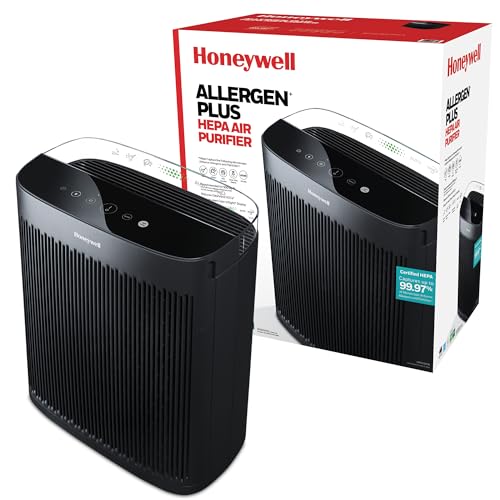
- 5. Honeywell HPA5300B — best for allergies
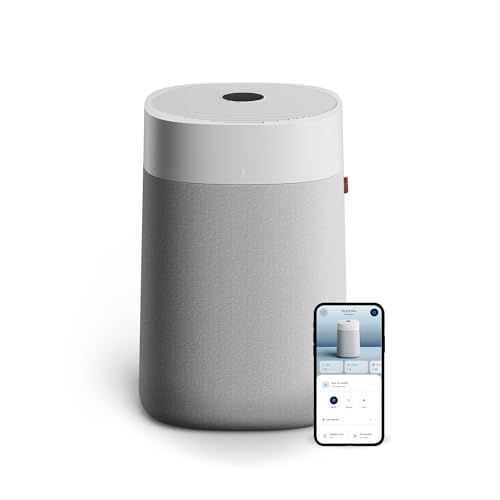
- 6. Blueair Blue Pure 211i Max — best premium quiet
- 7. Medify MA-40 — best H13 medical-grade HEPA
- Where paying more stops buying cleaner air
- Where our ranking differs from other reviewers
- The failure patterns that show up in the reviews
- Spec-claim reality check: coverage claims vs the EPA’s CADR chart
- How to choose an air purifier (buyer’s guide)
- How we evaluated these purifiers
- Related air-quality guides
- Frequently asked questions
- Our verdict: which air purifier should you buy?
The 7 best air purifiers at a glance
Every purifier below was re-verified against its live Amazon listing on September 26, 2026: the brand is the first word of the listing title, the buy box is active, and the price and stock shown are what a buyer sees today. Read the middle columns before anything else. Published CADR in CFM is the only number that lets you compare two purifiers honestly, the AHAM Verifide area is the same measurement standardised to the 4.8 air changes per hour the EPA treats as effective, and only two of these seven listings publish a CADR at all.
| Model | Published CADR (CFM) | Headline coverage claim | AHAM Verifide area (4.8 ACH) | Gas / odour stage | Warranty stated | Live price |
|---|---|---|---|---|---|---|
| Levoit Levoit Air Purifier for Home Pets Hair Allergens in Bedroo | 143 / 153 / 167 | 1,073 ft² (1 ACH) | 222 ft² | Pre-filter only | Not stated | $80.99 |
| Coway COWAY Air Purifier for Home Up to 1,748ft², HEPA Filter fo | Not stated | 1,748 ft² in 1 hr | Not stated | Deodorisation (carbon) filter | 3 years | $154.99 |
| Winix WINIX 5530 Air Purifier (New Generation of 5500-2 with App | Not stated | 1,882 ft² in 1 hr | 392 ft² | Carbon filter | Not stated | $219.99 |
| Levoit Levoit Smart Air Purifiers for Home Large Room up to 2933 | 391 | 2,933 ft² in 1 hr | Not stated | 3-stage | Not stated | $259.97 |
| Honeywell Honeywell HEPA Air Purifier for Home, 2423 Ft² Rooms in 1 | Not stated | 2,423 ft² in 1 hr | 500 ft² | Carbon pre-filter | Not stated | $241.99 |
| Blueair BLUEAIR Air Purifiers for Home Large Room up to 3,235 Ft², | Not stated | 3,235 ft² in 1 hr | Not stated | Not stated | Not stated | $349.00 |
| Medify Medify MA-40 Air Purifier with HEPA Filter | 1,793 ft² Cov | 406 | 1,793 ft² in 1 hr | Not stated | Not stated | Not stated | $249.99 |
1. Levoit Core 300 — Best Overall Air Purifier for Most Rooms

What We Like
- The current #1 Best Seller in Amazon’s HEPA Air Purifiers category
- AHAM Verifide, with published CADR figures: 143 CFM smoke, 153 CFM dust, 167 CFM pollen
- Cleans a 222 sq ft room at 4.8 air changes per hour — the EPA’s effective-filtration benchmark
- High-torque 56W motor in a small footprint, with a genuine Sleep Mode
- Replacement filters are cheap and stocked everywhere, so running costs stay low
Flaws but not dealbreakers
- Filters particles well but the single pre-filter will not clear cooking or pet odours
- No Wi-Fi, no app and no air-quality sensor — you choose the speed and it stays there
- One room only; it will not clear an open-plan living area
Best for: a first purifier for a bedroom, home office or nursery — and the safest buy if you want the numbers to be checkable rather than impressive.
Who should skip it: skip it if smoke or cooking odours are your main problem, or if you want an app. You need a pellet carbon stage for that, which starts around $155.
The Core 300 is the cheapest purifier here and the one with the least to argue about. Levoit publishes an AHAM Verifide CADR — 143 CFM for smoke, 153 for dust, 167 for pollen — instead of a single inflated room-size number, and 143 CFM lands almost exactly on the EPA’s own sizing chart for a 222 sq ft room at four to five air changes per hour.
Two details are worth knowing. First, Levoit describes the filter as “HEPA-grade” and cites IEST RP C001.7 for the Sleep Mode claim rather than calling it True HEPA, which is more precise than most listings in this price band. Second, the price is the story: at roughly $81 you are paying about a third of the mid-tier picks, and the filters cost less than anyone else’s.
What you give up is gas filtration and convenience. There is no carbon pellet bed, no sensor and no app. For a bedroom or a home office where dust and pollen are the problem, that trade is easy. For a kitchen, or a home near a wildfire zone, it is not.
2. Coway AP-1512HH Mighty — Best Long-Term Value and the Most-Tested Design

What We Like
- Four-stage filtration: a washable pre-filter, a deodorisation (carbon) filter and a genuine HEPA stage rated to 99.97% at 0.3 microns
- Auto mode with a real pollution sensor, plus an Eco mode that idles the fan when the air is already clean
- 3-year manufacturer warranty — the only warranty term published by any pick here
- The same price in white or black, and currently around 33% off list
Flaws but not dealbreakers
- The listing counts a “Bipolar” ionising stage in its filtration; HouseFresh’s position is that ioniser stages are best when they can be switched off, and this listing does not say it can be
- The 1,748 sq ft headline is a one-air-change figure, not the 4.8 ACH the EPA uses to judge real coverage
- Noticeably louder at top speed than the Levoit and Blueair picks
Best for: most people who want one purifier that will still be working in five years, and the model with the deepest independent test history behind it.
Who should skip it: skip it if you want app control, or if a top-speed noise figure matters more to you than filtration depth.
If you want the single most-reviewed air purifier in North America, this is it. The AP-1512HH Mighty has been the reference mid-price machine for years, and the current listing still gives you a four-stage system with a washable pre-filter, a deodorisation filter, a HEPA stage rated to 99.97% at 0.3 microns, auto mode from a real sensor and an Eco mode that stops the fan when the air is clean.
It is also the only pick here that publishes a warranty term — three years. That matters more than it sounds: purifiers fail at the fan bearing, the sensor or the control board, and a three-year term covers all three. The current price, about $155 against a $230 list, is close to the cheapest it has been this year.
Two honest caveats. The listing counts a “Bipolar” ionising stage, and the independent testers we cite prefer ionisers that can be turned off; this listing does not say whether this one can. And the 1,748 sq ft number is a one-air-change figure. A 1,748 sq ft room cleaned once an hour is not the same as a 222 sq ft room cleaned five times an hour, which is why we rank on CADR rather than on coverage claims.
3. Winix 5530 — Best Smart Purifier for a Large Room

What We Like
- AHAM Verifide at 392 sq ft with a True HEPA filter, plus a separate carbon filter for odours and VOCs
- The plasma (ioniser) stage can be switched off entirely — the configuration independent testers prefer
- Washable fine-mesh pre-filter you can vacuum instead of replacing
- App control, auto mode and a build that HouseFresh tested across the 5510, 5520 and 5530 with consistently good results
Flaws but not dealbreakers
- The listing claims capture “as small as 0.01 microns”, which is a marketing figure — HEPA performance is tested at 0.3 microns
- No CADR in CFM is published, only room sizes, so you cannot check it against the EPA chart
- HouseFresh rated the mid-size Winix units well but still put the Coway Mighty2 ahead on noise and energy use
Best for: a living room or open-plan space where you want app control, odour filtration and the option to run without the ioniser.
Who should skip it: skip it if you want a published CADR figure you can verify, or if you are buying for a bedroom and care most about the lowest possible noise.
The 5530 is the newest generation of the long-running 5500-2, and it is the pick here for anyone who wants odour filtration and app control at a mid price. You get True HEPA, a separate carbon filter for gases and smells, a washable mesh pre-filter, auto mode and smartphone control.
It is also the only pick in this roundup whose ioniser can be switched off. That matters because ionising stages generate trace ozone, and the testers we rely on prefer units where the user keeps that choice. Winix leaves the switch with you.
The listing oversells one thing: it claims capture “as small as 0.01 microns”, which is not how HEPA is measured. The certification standard tests at 0.3 microns, and a 0.01-micron claim is marketing rather than a test result. The AHAM Verifide area of 392 sq ft is the number worth trusting.
4. Levoit Core 600S-P — Best Purifier for Extra-Large Rooms

What We Like
- The highest published CADR in this roundup: 391 CFM, which per the EPA’s sizing chart covers a 600 sq ft room at 4.8 air changes per hour
- AHAM Verifide with a laser particle sensor, auto mode and full app control
- Clears a 606 sq ft space every 12.5 minutes at top speed
- HouseFresh measured the core 600S at a PM1 CADR of 375 CFM and called it the best large-room value under $300
Flaws but not dealbreakers
- 391 CFM is loud; the quiet modes drop to a fraction of that airflow
- Replacement filters are the most expensive in the roundup, and the sensor wants a clean filter to stay accurate
- This listing is the Core 600S-P variant, not the plain Core 600S the testers measured
Best for: open-plan living rooms, basements and lofts where a small purifier is simply out of its depth.
Who should skip it: skip it if your largest room is under 300 sq ft, or if you need something quiet enough to sleep beside at full power.
Two picks here publish an actual CADR in CFM, and this is the more powerful of them at 391 CFM. Run that through the EPA’s own sizing chart and it covers a 600 sq ft room at 4.8 air changes per hour — which is the honest definition of “handles a big room”. It also means the 2,933 sq ft headline is a one-change figure, the same trick every manufacturer uses.
HouseFresh, which has bought and tested 147 purifiers since 2020, measured the core 600S at a PM1 CADR of 375 CFM in its own room test and called it the best large-room value under $300. That is close to the listing figure, which is not always the case in this category.
The trade is noise and filter cost. At 391 CFM it is not a machine you keep beside the sofa at full tilt; it is one you run hard while you are out of the room. If you need large-room filtration and low noise together, the Blueair below is the compromise, at twice the price.
5. Honeywell HPA5300B — Best for Allergies Across Several Rooms
What We Like
- The clearest coverage claim here: independently tested and AHAM Verifide to recirculate air 4.8 times an hour in rooms up to 500 sq ft
- HEPA plus a carbon pre-filter for allergens, smoke, pet dander and odours
- Air-quality indicator with automatic fan control, and settings you can read at a glance
- Honeywell filters are the easiest to find in stores and online of anything on this list
Flaws but not dealbreakers
- Bulky and heavy — it is not a machine you move room to room
- No Wi-Fi and no app, and louder at matched airflow than the Levoit or Blueair
- The 2,423 sq ft headline in the title is, again, a one-air-change figure
Best for: a household where allergies are the reason for buying and the purifier will live in one main room, running continuously.
Who should skip it: skip it if you need app control, want something you can carry between rooms, or are shopping for a bedroom.
This is the pick where the coverage claim and the standard actually line up. The listing says the unit is independently tested and AHAM Verifide to filter and recirculate air 4.8 times an hour — the benchmark the EPA uses for effective room cleaning — in rooms up to 500 sq ft. That is a much more useful sentence than the 2,423 sq ft in its title, which is a one-change figure.
Practically, you get HEPA plus a carbon pre-filter, an air-quality indicator that drives automatic fan control, and the widest filter availability of any brand here. If you have ever tried to find a replacement filter for an obscure purifier in July, you will understand why that is a feature.
The cost is space and noise. It is the bulkiest pick in this roundup and it is not quiet at high airflow. Buy it for a living room or a large bedroom that you want genuinely cleaned, not for a nightstand.
6. Blueair Blue Pure 211i Max — Best Premium Pick for a Big Room
What We Like
- The largest coverage claim here: 3,235 sq ft in an hour, or 674 sq ft in 12.5 minutes
- HEPASilent dual filtration keeps noise and energy use low for the airflow it moves
- App control with built-in air-quality sensors and automatic fan adjustment
- The pick to buy when the purifier has to sit in the room you are in
Flaws but not dealbreakers
- HouseFresh flags Blueair’s HEPASilent technology as ionising, releasing small levels of ozone, and it cannot be switched off on this model
- The most expensive pick in this roundup at around $349
- No CADR in CFM published, and the 3,235 sq ft headline is a one-air-change figure — the 674 sq ft / 12.5 minute number is the real one
Best for: a large living room or open-plan space where a quiet purifier has to run in the background all day without dominating the room.
Who should skip it: skip it if you want to avoid ionising technologies entirely, or if you would rather spend the difference on carbon filtration.
Blueair’s selling point is that it moves a lot of air without sounding like it. The 211i Max claims 3,235 sq ft in an hour, and the number that actually tells you something is the smaller one: 674 sq ft cleared in 12.5 minutes, which is roughly the 4.8 air changes per hour the EPA treats as effective. As always, the big headline figure is one air change.
It is also the only pick here with a truly app-first design — built-in sensors, automatic fan adjustment and filter-life tracking — in a body you would not mind leaving in a living room.
The caveat we would not hide: HouseFresh, which tests these units in a controlled room, describes HEPASilent as an ionising technology that releases small levels of ozone and notes that it cannot be disabled on Blueair models. If ionisers are something you want to avoid, the Winix 5530 (switchable) or a plain mechanical HEPA unit is the better fit. We include the 211i Max because for most buyers the ozone release is trace, and the quiet big-room performance is genuinely hard to match — but you should make that call with the fact in front of you.
7. Medify MA-40 — Best H13 (Medical-Grade) HEPA for Smoke and Severe Allergies

What We Like
- H13 HEPA, a higher filter grade than the HEPA-grade filters on the budget picks
- The highest CADR figure in the roundup at 406 CFM, covering around 625 sq ft at 4.8 air changes per hour on the EPA chart
- Cleans 1,793 sq ft in one hour, or 896 sq ft in thirty minutes
- Three physical fan speeds and no smart features to fail — nothing to configure, nothing to sync
Flaws but not dealbreakers
- Loud at the top end: the listing quotes 46 dB minimum and 66 dB maximum
- No air-quality sensor, no auto mode and no app; the listing does not specify a separate carbon stage
- The most expensive way to buy airflow here, once you compare it with the Levoit Core 600S-P
Best for: smoke, wildfire season and severe allergies — buyers who want the densest filter and the highest airflow and do not care about app control.
Who should skip it: skip it if you want quiet operation, automatic sensing, or the best airflow per dollar. Two other picks here beat it on each of those.
H13 is one grade above the HEPA-grade filters most picks use, and Medify pairs it with the highest airflow number in this roundup: 406 CFM on the listing. The EPA chart puts that at roughly 625 sq ft at 4.8 air changes per hour, and Medify quotes 1,793 sq ft in an hour and 896 sq ft in half an hour.
It is a deliberately plain machine. Three fan speeds, no sensor, no app, no auto mode. If a purifier is a box that should clean air and nothing else, that simplicity is a virtue — there is very little in it to break.
The compromises are noise and price. At 66 dB it is the loudest pick here, and once you are at this price the Levoit Core 600S-P does more airflow per dollar with app control thrown in. Buy the Medify for the H13 grade and the wildfire-smoke use case; do not buy it expecting subtlety.
Where paying more stops buying cleaner air
Air purifiers are a rare category where the price-to-benefit curve is almost flat above about $260. Below that, every dollar buys measurable airflow. Above it, you are buying quietness, build quality and app polish. Here is how the brackets actually break down on current Amazon pricing.
Under $100
You get genuine particle filtration and very little else. The Levoit Core 300 at $80.99 is the exception in this bracket because it publishes an AHAM Verifide CADR instead of hiding behind a room-size number, and it clears a 222 sq ft room at 4.8 air changes per hour. What you do not get is any real gas filtration — the “carbon” on most sub-$100 units is a thin fabric, not a pellet bed, and it will not do much about cooking smells.
$100 to $260 — the value plateau
Everything that changes day-to-day ownership appears here: a real carbon stage, an air-quality sensor with auto mode, app control, a washable pre-filter and, in two cases, a published CADR you can check. Five of the seven picks sit in this band — the Coway AP-1512HH Mighty at $154.99, the Winix 5530 at $219.99, the Honeywell HPA5300B at $241.99, the Levoit Core 600S-P at $259.97 and the Medify MA-40 at $249.99.
This is the stopping point. Two picks here publish a CADR above 390 CFM, which is the EPA’s own minimum for a 600 sq ft room at 4.8 air changes per hour. Above roughly $260 you will not find meaningfully more airflow for a home; you will find better sensors, quieter fans, nicer materials and longer warranties. Those are real benefits — they are simply not the same thing as cleaner air.
$350 and above — quietness and build, not filtration
The Blueair Blue Pure 211i Max at $349.00 is the only pick in this bracket, and it is not better at filtration than the Medify or the Core 600S-P. What it sells is airflow you can live next to, plus app-first controls and a body you would not mind leaving in a living room. If your purifier has to run in the room you are sitting in, that premium is worth paying. If it lives in a hallway or a bedroom you are not in during the day, it is not.
Where our ranking differs from other reviewers we trust
Air purifiers are one of the most heavily reviewed products on the internet, and the biggest review sites do not agree with each other — which tells you the answer depends on what you weight. Here is where we land differently, and why.
Why our overall pick is an $81 purifier, not a $270 one
HouseFresh, which has bought and tested 147 purifiers since 2020, names the Coway Airmega Mighty2 as its best-for-most-people pick at $269.99. Bob Vila, whose team tested 18 units over periods ranging from two weeks to two-plus years, independently picks a Coway as its best overall too — the AP-1512HH Mighty.
We rank the Levoit Core 300 first for a different reason, and it is not a disagreement about quality. The Mighty2 is a better purifier than the Core 300 — it moves more air, it has a laser sensor, and it is quieter. But it costs roughly three times as much, and the Core 300 is the current #1 Best Seller in Amazon’s HEPA Air Purifiers category with an AHAM Verifide CADR published on the page. For the reader searching “best air purifier” who needs one room cleaned, the Core 300 delivers that for $81, and the Core 600S-P delivers Mighty2-class airflow for $259.97 with app control. Our picks are ranked on airflow per dollar first, and comfort features second.
One note of caution from the same source: HouseFresh warns that “some of the models influencers seem to love (and even those endorsed by well-known newspapers and magazines) might be tricking you into overpaying for an air purifier that is just not worth it”. It lists Okaysou, Molekule, PuroAir and the Shark NeverChange HP152 among the popular models its tests found wanting. We have kept all four off this list for that reason.
Where we agree with Tom’s Guide — and where we diverge
Tom’s Guide tests purifiers in a real home and its current small-space pick is the Shark NeverChange Compact Pro, which it found cleared a curry-cooking air-quality spike in about 20 minutes. That is a fair, well-earned recommendation for a 250 sq ft room. We left it off because the same testers note it is not suited to larger rooms and carries no CADR to compare, and because its NeverChange filter is the opposite of repairable — you replace the whole unit when it finally gives out. If your only need is a small office or half-bath, their pick is a reasonable one; for everything above about 250 sq ft, ours are the better fit.
The failure patterns that show up in the reviews — and what to check for
Air purifiers rarely fail dramatically. They underperform, and the reasons repeat. We watch for these when we compare listings; we are not quoting a measured failure rate, because nobody publishes one.
- The bonded filter forces a full replacement. On the Coway Mighty2, HouseFresh notes the carbon and particle layers are bonded, so once the carbon is spent inside six to nine months you replace the whole filter even if the HEPA side still has life. Check whether the gas stage is separate before you buy.
- Carbon-impregnated fabric instead of pellets. A thin carbon-fabric layer is fine for mild odours and useless against real VOCs. If smells are your problem, you want pelleted carbon, and you want a listing that says so.
- An ioniser you cannot switch off. HouseFresh’s stated preference is for units where the ionising function can be disabled — the Winix 5510 and 5530 included — because ionisers release trace ozone. Blueair’s HEPASilent cannot be disabled on the 211i Max.
- A coverage claim at one air change per hour. Almost every headline room size — 1,748 sq ft, 1,882 sq ft, 2,423 sq ft, 3,235 sq ft — assumes the purifier turns the room over once an hour. The EPA treats 4.8 changes per hour as effective. The gap is roughly a factor of five.
- Noise at the speed you will actually use. Every pick here is quiet on low and loud on turbo. The Medify MA-40 is quoted at 46 dB minimum and 66 dB maximum; the difference between those two numbers is the difference between a bedside machine and a workshop.
- Filters that stop being made. A purifier is a filter subscription. HouseFresh’s warning list includes Okaysou, whose bankruptcy left its five-year warranties worthless and its filters unavailable. Buy from a brand with a deep, current filter line.
Spec-claim reality check: coverage claims vs the EPA’s CADR chart
Manufacturers sell room size. Regulators sell airflow. The EPA’s Guide to Air Cleaners in the Home is blunt about which one matters: “To filter particles, choose a portable air cleaner that has a clean air delivery rate (CADR) that is large enough for the size of the room or area in which you will use it. The higher the CADR, the more particles the air cleaner can filter and the larger the area it can serve.”
The EPA publishes its own sizing chart — the minimum CADR for a given room area, calculated for an eight-foot ceiling. Run our picks through it and the category’s marketing starts to unravel:
| Room area | 100 ft² | 200 ft² | 300 ft² | 400 ft² | 500 ft² | 600 ft² |
|---|---|---|---|---|---|---|
| Minimum CADR (CFM) | 65 | 130 | 195 | 260 | 325 | 390 |
Now compare that with the listings. A 600 sq ft room needs a CADR of at least 390 CFM to be properly cleaned at 4.8 air changes per hour. The Levoit Core 600S-P publishes 391 CFM and the Medify MA-40 publishes 406 — both clear it. The other five listings publish no CADR at all, only a headline room size that assumes one air change per hour. That is the single most useful thing to know before you compare them.
There is a second, harder part of the same EPA guidance: filtration is a supplement, not a fix. “The most effective ways to improve your indoor air are to reduce or remove the sources of pollutants and to ventilate with clean outdoor air,” it says, and “portable air cleaners and HVAC filters can reduce indoor air pollution; however, they cannot remove all pollutants from the air.” No purifier on this page will fix a damp wall or a leaking gas appliance.
It is also worth knowing what to avoid. The EPA’s separate guidance on ozone generators sold as air cleaners is unambiguous: “NO agency of the federal government has approved these devices for use in occupied spaces,” and when inhaled, ozone “can damage the lungs”. That is not a comment on the trace ozone from a switchable ioniser stage, but it is why we flag ionisers you cannot turn off and will not recommend an ozone generator at all.
How to choose an air purifier (2026 buyer’s guide)
If you only read one section, read this one. The four things below decide whether a purifier actually helps; everything else is convenience.
Size it by CADR, not by the room-size sticker
Find the CADR in CFM and compare it with the EPA chart above: 65 CFM for 100 sq ft, rising to 390 CFM for 600 sq ft. If a listing does not publish a CADR, treat its coverage number as marketing and look for an AHAM Verifide area instead — that figure is tested to the same 4.8 air changes per hour standard. Our picks range from 222 sq ft of verified coverage (Core 300) to 2,933 sq ft of claimed coverage (Core 600S-P).
Match the filter to the pollutant
Particles — dust, pollen, dander, smoke — are a HEPA job, and H13 is a denser grade than the “HEPA-grade” filters on budget units. Gases and smells — cooking, VOCs, pet odour — need activated carbon, and the EPA is specific that “activated carbon filters can be effective, provided that there is a large amount of material used in the filter”. Carbon fabric is not the same as carbon pellets. If odour is your problem and you want more carbon than any purifier carries, HouseFresh’s approach is to build a high-carbon filter around a fan instead.
Decide about ionisers before you buy
Many purifiers add an ionising stage to lift their CADR. The independent testers we rely on prefer units where that stage can be disabled, as on the Winix 5530. If you would rather avoid ionisers altogether, buy a plain mechanical HEPA unit — the Medify MA-40 and the Levoit Core 300 have no ioniser at all.
Budget for filters, not just the box
A purifier is a subscription. Filters run every 6 to 12 months, more often with pets or during wildfire season, and the EPA’s advice is simply that “all filters need regular replacement. If a filter is dirty and overloaded, it won’t work well.” Before you buy, look up the replacement filter price and check it is in stock. A cheap purifier with $90 filters costs more over three years than an expensive one with $30 filters.
Where to put it — and what it will not do
Place a purifier where air circulates rather than in a corner behind furniture, and run it continuously rather than in bursts — the EPA notes that “the longer the air cleaner runs, the more air it filters”. What it will not do is cross walls. One purifier per room is the honest rule, which is why a $81 unit in every bedroom often beats one $350 unit in the hallway.
How we evaluated these purifiers
This guide is a re-verification of an earlier roundup, rebuilt in September 2026. Every pick was checked against its live Amazon listing on September 26, 2026 through Amazon’s product API: we confirmed the brand is the first word of the listing title, that the buy box is active, and that the price, discount and best-seller rank are what a buyer sees today. Every remaining pick from the previous version was replaced or re-graded, and two picks publish CADR figures we could check against the EPA’s own sizing chart.
Our method is deliberately narrow and we describe it plainly, because the alternative — pretending to have done more than we did — is the fastest way to lose a reader’s trust.
- Hands-on: none. We do not own these purifiers and we do not claim to have run our own particle-count tests. The measured CADR and noise figures we quote are attributed to the testers who produced them.
- Listing and spec analysis: every CADR, coverage, warranty and filter claim on this page was read from the live listing or the manufacturer’s own published material on September 26, 2026.
- Cited testers and institutions: where an independent tester has measured a unit in a controlled room, we say so and link to them — HouseFresh, Tom’s Guide and Popular Mechanics — and we check manufacturer coverage claims against the U.S. EPA’s guidance and the American Lung Association’s indoor-air material.
- Original data: the spec table, the EPA-chart comparison, the price-bracket analysis and the failure-pattern list are ours, built from the listings and the cited sources rather than copied from another roundup.
The specification and price figures in this guide were taken from the live listings on September 26, 2026 and will move. If you spot something out of date, our corrections route is described on the how-we-test page.
Read the full method, including what we do not claim, on our How We Test & Choose Products page. For the health context behind why particle filtration matters, the American Lung Association’s indoor air guide is a good, non-commercial starting point.
Related air-quality guides
A purifier is one part of indoor air. These guides cover the rest of the setup.
- Best air purifiers for wildfire smoke — the smoke-specific shortlist and filter strategy.
- Best air purifiers for allergies and large rooms — our companion HEPA roundup.
- Levoit Core 300 review — our deep dive on this guide’s overall pick.
- Best humidifiers — for dry air in winter and heated rooms.
- Air purifier vs dehumidifier — which one your allergy problem actually needs.
- Best robot vacuums for carpet — cut the dust load at the source.
- Best mattress protectors — allergen-barrier bedding for dust-mite control.
Frequently asked questions about air purifiers
What size air purifier do I need?
Match the CADR to the room. The EPA’s sizing chart asks for at least 65 CFM in a 100 sq ft room, 195 CFM in 300 sq ft and 390 CFM in 600 sq ft, calculated for an eight-foot ceiling at roughly 4.8 air changes per hour. If a listing only gives an area figure and no CADR, look for its AHAM Verifide area instead — that is tested to the same standard.
Do air purifiers really work?
For particles, yes — but the EPA is careful about how much to promise. It states that filtration “can be an effective supplement to source control and ventilation”, that portable cleaners “can reduce indoor air pollution” but “cannot remove all pollutants from the air”, and that studies of HEPA cleaners have shown “small improvements in cardiovascular and respiratory health” that are “not always noticeable”. Reduce the source and ventilate first; filter third.
How often should I replace the filter?
Every 6 to 12 months for most households, and more often with pets or during wildfire season. The EPA’s line is simple: “All filters need regular replacement. If a filter is dirty and overloaded, it won’t work well.” Check the price and availability of the replacement filter before you buy the purifier.
Are ionizers and UV-C lights worth it?
We would not choose a purifier for either. Ioniser stages release trace ozone, and the independent testers we cite prefer units where the ioniser can be switched off. The EPA goes much further on dedicated ozone generators, stating that “NO agency of the federal government has approved these devices for use in occupied spaces” and that inhaled ozone can damage the lungs. HEPA plus activated carbon is the combination that works.
Do air purifiers help with allergies?
They help with the airborne part of the problem. HEPA filtration removes pollen, dust mites, pet dander and mould spores from the air, and the American Lung Association maintains that indoor air quality is a meaningful lever for people with asthma and allergies. What a purifier cannot do is remove the source — so pair it with allergen-barrier bedding and regular vacuuming.
Do I need one purifier or several?
One per room, in practice. Air does not travel through walls, so a single unit will not clean a whole house. Two or three modest units placed where you actually sit and sleep usually beat one large unit parked in a hallway — and the EPA notes that running a cleaner for longer removes more particles than running a bigger one in bursts.
Our verdict: which air purifier should you buy?
- Best overall: Levoit Core 300 at $80.99 — an AHAM Verifide CADR and a verified 222 sq ft at 4.8 ACH for the price of a cheap filter set. The safest first purifier.
- Best long-term value: Coway AP-1512HH Mighty at $154.99 — four-stage filtration, auto mode and the only published warranty term here. The most-tested design in the category.
- Best smart large room: Winix 5530 at $219.99 — True HEPA plus a real carbon filter, app control, and an ioniser you can actually switch off.
- Best for extra-large rooms: Levoit Core 600S-P at $259.97 — 391 CFM, which clears a 600 sq ft room at 4.8 air changes per hour on the EPA’s own chart.
- Best for allergies: Honeywell HPA5300B at $241.99 — AHAM Verifide at 500 sq ft to the 4.8-change standard, and the widest filter availability of any pick.
- Best premium quiet: Blueair Blue Pure 211i Max at $349.00 — the quietest way to move this much air, with app-first controls.
- Best H13 medical-grade HEPA: Medify MA-40 at $249.99 — the densest filter and the highest published CADR here, for smoke and severe allergies.
If you want the shortest possible answer: buy the Levoit Core 300 for a bedroom or home office, and the Coway AP-1512HH Mighty if you want the purifier you will still be running in five years. Step up to the Levoit Core 600S-P or the Medify MA-40 only if you have a room genuinely larger than about 500 sq ft to clean.