The best dehumidifiers for basements aren’t necessarily the machines Amazon’s best-seller chart is pushing this October — the current #1 in the Dehumidifiers category is a $24.99 tub of passive moisture absorber, not a compressor, and half of the top ten are 95-ounce mini units that move a fraction of a pint a day. So this guide does the chart-noise sorting for you. We pulled the live Dehumidifiers chart, cross-checked it against two independent test labs, verified eight finalists on the live Amazon buybox, and ranked them for below-grade damp, musty finished basements, and whole-floor humidity — from a $25 absorber that genuinely solves closet damp to an Energy Star Most Efficient 2025 machine that pulls 70%-to-50% humidity out of a 5,500-square-foot floor.
Affiliate disclosure: As an Amazon Associate I earn from qualifying purchases. We earn commission from qualifying purchases made through links on this page. This never affects our rankings or what we recommend.
What the best-seller chart gets wrong
We pulled the full Dehumidifiers best-seller chart on October 6, 2026 through Amazon’s product API. The #1 slot belongs to a Vacplus moisture absorber ($24.99), and ranks 2 through 8 are dominated by compact thermoelectric units in the $36–$63 range: the BEDRED 95-oz (#2), the NineSky 95-oz (#5), the TABYIK 35-oz (#6), and the ToLife 95-oz (#8). These are semiconductor units with no compressor — they extract condensation from the air at a rate measured in ounces per day, which is fine for a closet, a bathroom cabinet, or an RV, and hopeless for a basement that smells like a wet towel.
Why the mismatch? Chart rank reflects units sold, not moisture moved. A $50 absorber ships in multiples, gets added to carts alongside pantry restocks, and gets re-ordered every couple of months — a $220 compressor dehumidifier sells once and lasts years. The chart measures shopping volume; this guide measures water removed per dollar. That’s why only one chart product (the Vacplus, as a niche pick) appears below, and why every machine we ranked moves 20–150 pints per day at its rating condition.
There’s one more chart subtlety worth knowing: every compact unit in the top ten lists a square-footage claim (1,000–2,600 sq ft) that assumes unusually light humidity loads. Independent testing consistently shows thermoelectric minis manage single small rooms at best. If your humidity meter reads above 65% in a whole floor, you need a compressor.
The picks at a glance
Eight picks, eight different brands, ranked for moisture-moving capacity per dollar, verified buybox availability, and the failure patterns hidden in thousands of customer reviews. Prices are a snapshot from October 6, 2026 and move constantly — the cards below re-verify against Amazon’s product API.
| Product | Standout spec | Price | Track record | Deal |
|---|---|---|---|---|
 Vacplus Vacplus Moisture Absorber, 10.5 OZ, Strong Absorption, Fragrance Free |
Efficient Dehumidification: Traps excess moisture quickly. Vacplus moisture absorbers use spher | $24.99 |
#1 in Dehumidifiers |
In Stock |
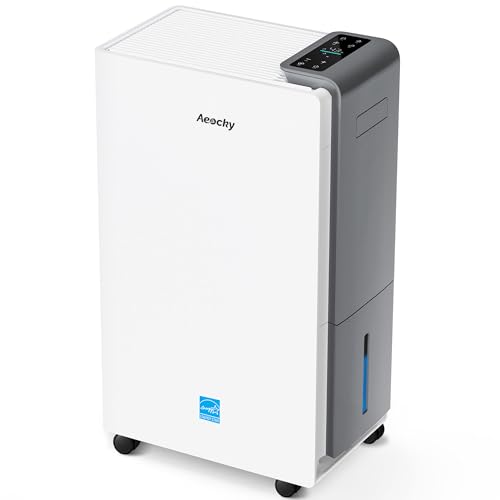 AEOCKY AEOCKY 5500 Sq.Ft Energy Star Most Efficient 2025 Dehumidifier Max 80Pint/D |
【ENERGY STAR 25 ≠ ENERGY STAR Most Efficient 2025】Don't fall for competitors' word games. With | $267.99 |
#7 in Dehumidifiers |
In Stock |
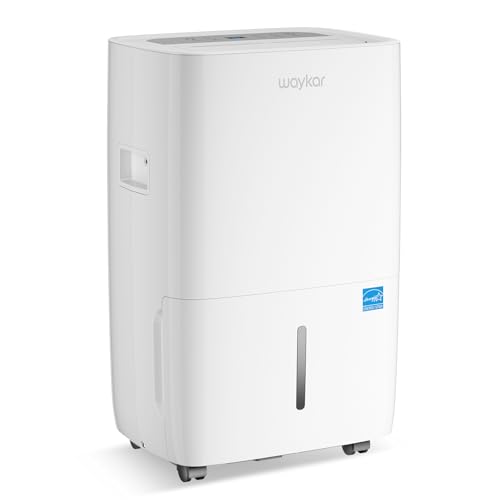 Waykar Waykar 80 Pints 5000 Sq. Ft 2025 Energy Star Dehumidifier for Basement |
【80 Pint Capacity for Up to 5,000 Sq.Ft Spaces】Quickly removes excess moisture from basements, | $208.98 $269.99 |
#11 in Dehumidifiers |
23% OFF Prime Exclusive In Stock |
 Midea Midea Cube 50 Pint Dehumidifier for Basement, 4,500 Sq. Ft, Energy star |
4,500 Sq.Ft. OF COVERAGE – Midea dehumidifier with drain hose collects 50 pints of water a day | $241.59 $258.11 |
#10 in Dehumidifiers |
6% OFF In Stock |
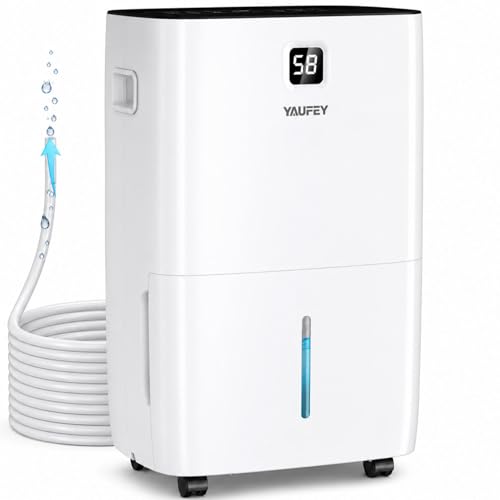 yaufey Yaufey 150 Pint Dehumidifier with Pump for Basement 8500 Sq. Ft. |
Dehumidifier for Basement: This dehumidifier for home removes up to 150 pints (95℉, 90% RH) of | $229.99 $365.99 |
#26 in Dehumidifiers |
37% OFF In Stock |
 KNKA KNKA Energy Star 5500 Sq.Ft Dehumidifier for Basement, Max 80 Pint/Day |
【𝐄𝐍𝐄𝐑𝐆𝐘 𝐒𝐓𝐀𝐑 𝐂𝐞𝐫𝐭𝐢𝐟𝐢𝐞𝐝 𝐟𝐨𝐫 𝐄𝐟𝐟𝐢𝐜𝐢𝐞𝐧𝐭 𝐏𝐞𝐫𝐟𝐨𝐫𝐦𝐚𝐧𝐜𝐞】Delivers consistent dehumidification across a | $179.99 $222.22 |
#15 in Dehumidifiers |
19% OFF Prime Exclusive In Stock |
 hOmeLabs hOmeLabs Dehumidifier 7,000 Sq Ft 50 Pint (MAX 120 Pint at 95°F, 90% RH) |
Powerful Humidity Control – This Wi-Fi–enabled dehumidifier keeps spaces up to 7,000 sq ft comf | $228.65 $269.00 |
#49 in Dehumidifiers |
15% OFF Prime Exclusive In Stock |
 Kesnos Kesnos 2,500 Sq. Ft. Energy Star Dehumidifier for Basement with Drain Hose |
Efficient 30 Pint Dehumidifier for 2,500 Sq. Ft. – The dehumidifier for home is engineered to l | $139.99 |
#52 in Dehumidifiers |
In Stock |
1. AEOCKY 5500 Sq.Ft Energy Star Dehumidifier — the top pick ($267.99)
80 pints/day max · 5,500 sq ft rated · Energy Star Most Efficient 2025 · #7 best seller in Dehumidifiers · 4.5 stars, 7,000+ ratings
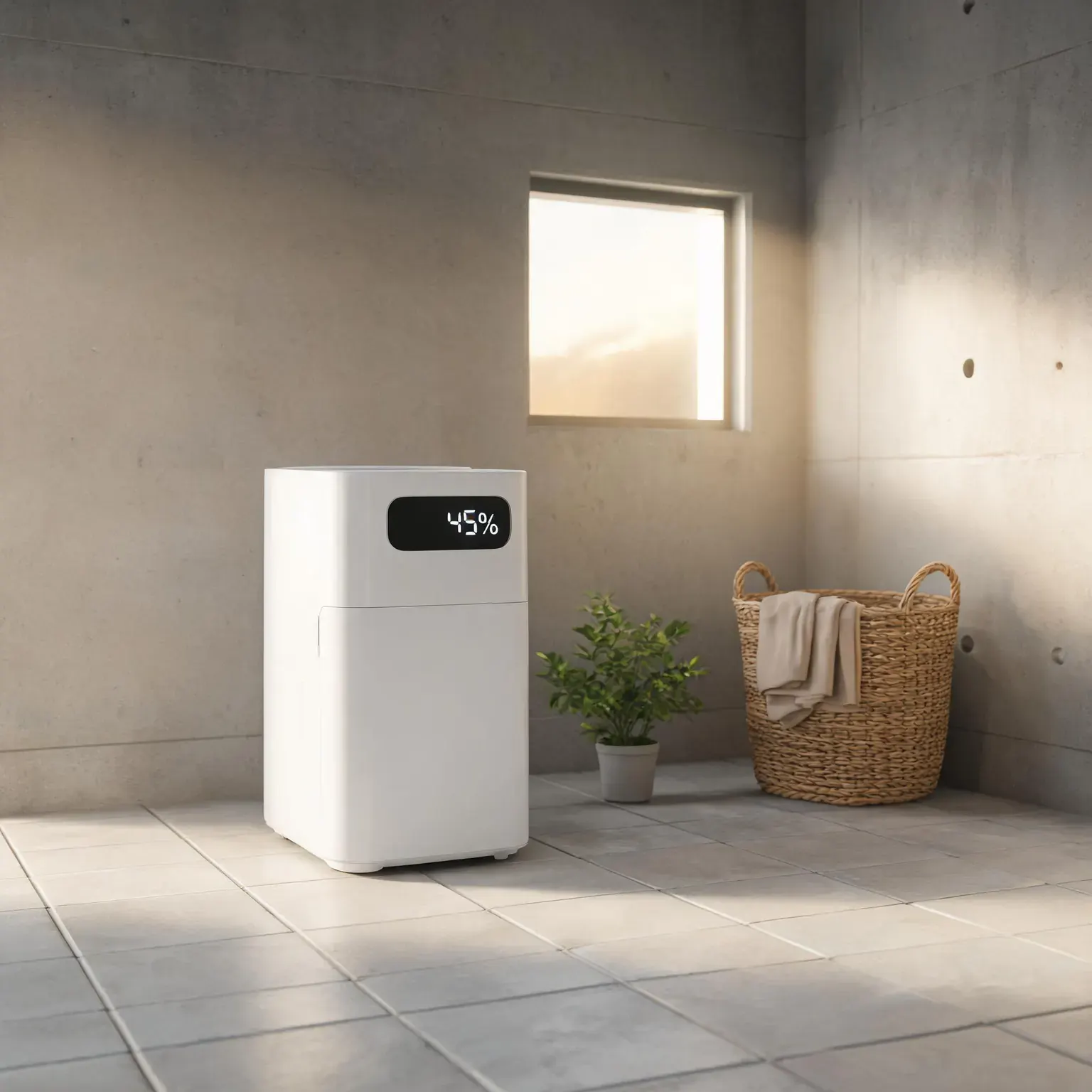
The AEOCKY is the machine that best survives an honest price-per-pint math: at $267.99 it costs about $3.35 per rated pint of capacity against the category’s usual $4–$6, and it does it while carrying the strictest energy certification on the market. The listing claims Energy Star ‘Most Efficient 2025’ recognition — Amazon’s product API confirms the Energy Star association in its own certification data, and customers consistently report low power draw. In review summaries, the performance theme repeats: one owner reported house humidity dropping from close to 70% to the mid-50s within a month of continuous use; another calls it ‘super quiet’ running in a finished basement; a third drained straight out a window with no issues through a hunting-room build inside a garage.
What we like:
- Best price-per-pint of any verified 80-pint-class machine in this guide
- Energy Star Most Efficient 2025 certification — the strictest tier, not just the base label
- Review pool of 7,000+ ratings averaging 4.5 stars, with quiet operation the most-praised trait
- Auto-restart and continuous drain work as advertised for unattended basement duty
What could be better:
- The included drain hose has no threaded fitting — several owners note it slides onto the outlet with nothing to lock it
- A minority of reviews report units that stopped collecting water around the five-month mark
- At $267.99 it’s the second-most-expensive machine here
Who should not buy it: if your space is a single bedroom or a 900-square-foot floor, an 80-pint machine is overkill — you’ll pay for capacity you can’t use and cycle it off constantly.
Flaws but not dealbreakers: the unthreaded hose is fixable with a $10 threaded adapter and a hose clamp, and the five-month failure reports sit inside a strongly positive 7,000+ rating pool — but they’re real, they’re the pattern we’d watch, and they’re the reason the warranty registration in the box is worth the two minutes.
2. Waykar 80 Pint 5000 Sq. Ft — the value pick ($208.98)
80 pints/day max · 5,000 sq ft rated · Energy Star (2025 standard) · #11 best seller · 4.4 stars, 22,000+ ratings
The Waykar is the volume leader among the compressor machines in Amazon’s chart top 20, and its 22,000+ rating pool makes it the most battle-tested pick here. The value math is simple: roughly $2.61 per rated pint, the best ratio in this guide, with the same 5,000-square-foot coverage class as our top pick. Customer summaries describe a machine that ‘reduced humidity in home from 70% to 52% in 3 days’ with a catch container that shuts the unit off cleanly when full, and multiple owners specifically praise how quiet it is for a compressor — one keeps it running beside a bedroom.
What we like:
- Cheapest verified path to the 80-pint / 5,000 sq ft class ($2.61 per rated pint)
- Deepest review pool here — 22,000+ ratings — with an effective-and-quiet consensus
- See-through tank level without removing the bucket, plus an external-hose option
What could be better:
- Reliability reports are split: some owners report years of service, others a failure inside the first months
- The plastic housing and handle feel budget-grade next to the Midea or hOmeLabs
- Energy Star claim is the 2025-standard base tier, not the Most Efficient tier
Who should not buy it: if you want the quietest possible unit for a finished living space, spend up — the KNKA below is the better noise-weighted pick.
Flaws but not dealbreakers: a machine manufactured at this volume will show a failure tail in 22,000 reviews; what matters is that the dominant failure pattern appears early (inside the return/warranty window) rather than at month 14, and Waykar’s support reputation in recent reviews is responsive when it happens.
3. Midea Cube 50 Pint — the drainage-flexibility pick ($241.59)
50 pints/day (2025 standard) · 4,500 sq ft rated · Energy Star · #10 best seller · 4.3 stars, 300+ ratings
The Cube’s trick is the tank: it expands upward inside a nested frame to roughly triple the water capacity of a same-footprint dehumidifier, and owners use exactly that. The recurring customer line is that it can ‘run continuously for a week without emptying’ in tank mode — a genuinely different convenience tier for a basement you visit weekly, not daily. Midea’s design pedigree matters here too; the Cube line has been a long-running editor favorite at home-appliance testers, and the machine pairs Wi-Fi control with an app for remote monitoring.
What we like:
- Expandable tank = week-scale unattended runtime, the best tank convenience per square inch
- Energy Star certified with Wi-Fi app control and monitoring
- #10 on the chart and the most design-distinctive machine here
What could be better:
- The smallest verified review pool of the machines here (300+ ratings) — buy on spec and brand, not on crowd data
- Humidity-control feedback is mixed: some CONT-mode owners report the up/down buttons do nothing in that mode
- Priced within $27 of our 80-pint top pick while moving the smaller rated capacity
Who should not buy it: if you’ll plumb a continuous drain hose anyway, the Cube’s tank advantage is wasted — buy the AEOCKY or Waykar and pocket the difference.
Flaws but not dealbreakers: the CONT-mode control quirk has a workaround (set your target in a standard mode before switching drainage), and the thin review pool is a data problem, not a quality signal — Midea’s compressor manufacturing scale backs the hardware.
4. Yaufey 150 Pint with Pump — the whole-floor pick ($229.99)
150 pints/day max · 8,500 sq ft rated · built-in pump · 4.5 stars, 6,000+ ratings
This is the biggest machine in the guide and the only one with a built-in condensate pump, which pushes water up and out — to a sink, a window, or out of a below-grade pit — instead of relying on gravity drain. That single spec makes it the right answer for unfinished basements, post-flood drying, and whole-floor coverage where the drain point is above the machine. Customers describe it pulling ‘so much water out of the air’ that they ended up draining outside via the included hose, and repeatedly note the wheels and digital readout for a unit this size.
What we like:
- Built-in pump handles vertical drain runs no gravity-hose machine can manage
- 150-pint max class covers 8,500 sq ft rated — the widest coverage here
- 4.5 stars across 6,000+ ratings, with quiet-plus-effective the recurring pair
What could be better:
- A minority of reviews report a unit dying inside the first 30 days — buy inside the return window confidence, register the warranty
- Overkill (and over-cycling) for anything under ~2,000 sq ft
- Brand is newer to the US market than Midea or Frigidaire — long-term parts support is thinner
Who should not buy it: apartment dwellers and single-room fights — a 150-pint machine in a small space is wasted money and constant cycling.
Flaws but not dealbreakers: the early-failure reports are the reason this sits below the AEOCKY despite a higher rating; the pump itself is the feature that makes it irreplaceable for below-grade and flood-recovery duty, where gravity drains simply don’t exist.
5. KNKA Energy Star 5500 Sq.Ft — the quiet-basement pick ($222.22)
80 pints/day max · 5,500 sq ft rated · Energy Star · #15 best seller · 4.5 stars, 3,000+ ratings
The KNKA splits the difference between our top pick and value pick: the same 5,500-square-foot class and Energy Star certification as the AEOCKY, at $45 less, with a 4.5-star average across 3,000+ ratings. Its niche is noise — in a category where compressor hum decides whether a finished basement stays livable, the KNKA’s reviews consistently describe units you ‘can’t even hear’ cycling at night. The spec sheet carries the 2025-standard Energy Star claim and a max-80-pint rating at saturation conditions, the same rating convention as every machine in this class.
What we like:
- Same coverage class and certification as our top pick, $45 cheaper
- Quiet-basement consensus in the review pool
- Solid 4.5/3,000+ rating profile with no dominant failure theme in current summaries
What could be better:
- Younger brand with a shorter US track record than the category leaders
- Fewer long-horizon (2+ year) reviews than Waykar or hOmeLabs
- Feature set is basic — no pump, no smart app, no Most Efficient certification
Who should not buy it: smart-home households that want app control and monitoring — the Midea Cube covers that lane at a similar price.
Flaws but not dealbreakers: the short track record is a watch item, not a warning sign — the current review data shows no failure pattern like the ones we flagged on Waykar, AEOCKY, or yaufey, and the price-to-spec ratio keeps it comfortably in the value band.
6. hOmeLabs 7000 Sq Ft 50 Pint — the name-brand pick ($269.99)
50 pints/day (120 max at 95°F/90% RH) · 7,000 sq ft rated · 4.4 stars, 25,000+ ratings
hOmeLabs is the household name in this category — Popular Science’s whole-house lane pick comes from this same family — and the 7,000-square-foot rating plus a 25,000+ rating pool make it the safest gift-giving choice on this list. Real-world reports carry the weight you’d expect: one owner watched basement humidity fall from 72% to 49% in about five hours, another runs it 24/7 in a large below-grade garage that previously grew mold. The trade is brand premium: at $269.99 for a 50-pint (2025 standard) rating, you’re paying for the name, the support network, and the deepest review history in the category.
What we like:
- The category’s most recognizable brand and deepest review pool
- Documented fast drops (72%→49% in ~5 hours) in long-form customer reports
- Two fan speeds, auto-restart, and simple controls that need no manual
What could be better:
- Highest price here for the lowest standard rating condition (50 pints, 2025 standard)
- Durability reports show units breaking at the three-year mark — out of warranty, in the middle of humid season
- No built-in pump and no Energy Star claim in the current listing data we verified
Who should not buy it: value hunters doing pure price-per-pint math — the Waykar matches its real-world class for $61 less.
Flaws but not dealbreakers: three-year wear-out on a machine that runs full-time through humid seasons is a reasonable life for the class — and at this price you’re partly buying the easiest warranty and support experience of the eight.
7. Kesnos 2500 Sq. Ft Energy Star — the budget machine ($139.99)
Energy Star · 2,500 sq ft rated · drain hose included · #52 best seller · 4.5 stars, 4,000+ ratings
Under $150 is where real compressor dehumidifiers begin, and the Kesnos is the strongest verified entrant at that line: 4.5 stars across 4,000+ ratings, Energy Star certification in the listing data, and a customer consensus that it outperforms its price — one owner notes it ‘works faster than units at double the price,’ another measured a steady 1.5 gallons a day pulled from an apartment, and multiple reviewers highlight the included drain hose running straight to a sump pit. For a damp bedroom-level, a 1,500–2,500-square-foot floor, or a first machine before you commit to a bigger investment, this is the entry point we’d actually buy.
What we like:
- Cheapest verified Energy Star compressor machine in this guide
- 4.5/4,000+ rating pool with quality praise (‘a great little unit that exceeds expectations’)
- Includes the drain hose at a price where competitors ship tanks only
What could be better:
- 2,500 sq ft rated — a whole damp basement floor is above its comfortable range
- Tank is smaller than the mid-size machines, so tank mode means more trips
- Chart rank (#52) reflects less sales volume than the top-20 machines
Who should not buy it: anyone drying a 4,000+ square-foot level or recovering from flooding — step up to the yaufey or AEOCKY class.
Flaws but not dealbreakers: at $139.99 some compromises are structural (tank size, top-end capacity), but nothing in the current review data suggests quality corners beyond the capacity itself.
8. Vacplus Moisture Absorber — the #1 best seller, honestly framed ($24.99)
10.5 oz tabs · 6-pack format · #1 best seller in Dehumidifiers AND #4 in Moisture Absorbers · 4.4 stars, 14,000+ ratings
Amazon’s own chart says this is the dehumidifier people buy most, and we’re including it because the honest answer is ‘it depends what you’re drying.’ This is a calcium-chloride tub: no compressor, no plug, no humidity setting — moisture literally seeps into hygroscopic crystals and collects in the bottom chamber as brine. For closets, storage bins, bathrooms without fans, cabins, boats, and RVs, it’s excellent: customers report it protecting clothes and stored items from ‘mold and damp smells,’ call it easier to handle than hanging absorber bags, and re-order it by the case. What it will not do is move meaningful moisture out of a 5,000-square-foot basement — that’s a 1,000× smaller moisture-removal class than any machine above.
What we like:
- Zero power, zero noise, zero maintenance beyond swapping tubs
- Genuinely effective in enclosed small spaces — 14,000+ ratings at 4.4 stars
- The cheapest path to protecting stored clothes and boxes from damp
What could be better:
- Some owners report tubs that ‘don’t collect any moisture at all’ — usually a sign of an airflow-starved spot or saturation expectations
- Refills are a recurring cost that quietly adds up versus a one-time machine
- Not, despite the chart’s category label, a dehumidifier in the mechanical sense
Who should not buy it: anyone whose humidity meter reads above 60% in a whole room — you need a compressor machine, full stop.
Flaws but not dealbreakers: the mixed ‘flimsy’ and ‘collected nothing’ reports are real; both mostly trace to placement and saturation, not product fraud — but buy it for what it is: a $25 closet tool that happens to top a chart it doesn’t really belong on.
What actually breaks: failure modes from the review data
We read the aggregated ‘Customers say’ review summaries and their quoted fragments on every pick’s live listing, then looked for the pattern behind the complaints. Rough frequencies below are our characterization of the visible summary emphasis, not precise statistics.
- AEOCKY: the recurring 1-star theme is early-death units — several owners describe a machine that ‘stopped collecting water’ around month five, sometimes fixed free by responsive support. Secondary gripe: the drain hose’s unthreaded fit.
- Waykar: reliability is the split axis — ‘worked well for about 9 months’ against ‘stopped working after 2 months.’ Noise and effectiveness, by contrast, are the strong consensus.
- Midea Cube: the complaint cluster is control logic, not hardware — CONT-mode owners expect to set a target humidity and find the buttons inert in that mode.
- Yaufey: a minority of reviews describe failure inside the first 30 days; the pump and coverage class get the praise.
- KNKA: no dominant failure theme in the current summary data — worth watching as the pool grows.
- hOmeLabs: the durability tail is at the three-year mark — many report breaking after 3 years, i.e., just past typical warranty coverage.
- Kesnos: no failure pattern in current summaries; the constraints are capacity-class, not quality.
- Vacplus: ‘collected no moisture’ reports trace to saturated tubs, airflow-starved placement, or expecting machine-class extraction.
Two practical takeaways: buy inside a confident return window and register the warranty the week it arrives, because every early-failure report we found resolved fastest when owners acted in month one; and treat any ‘stopped collecting water’ unit first as a maintenance check (frost, filter, coil airflow) before assuming death — a recurring fix cited across brands.
Spec-truth table: what the listings actually publish
Every cell below comes from the live product listings and Amazon’s product API on October 6, 2026 — including the gaps, which we mark ‘not published’ rather than guessing. Two honesty notes: pint ratings under the 2019 DOE test standard read lower than older marketing numbers for the same machine class, and ‘max’ pint figures describe saturation conditions (95°F/90% RH) you will rarely reproduce at home.
| Pick | Capacity | Rated coverage | Pump | Certification (as listed) | Price |
|---|---|---|---|---|---|
| AEOCKY 5500 (B0D1C6HWFF) | 80 pt max | 5,500 sq ft | No (hose) | Energy Star Most Efficient 2025 (listing claim) | $267.99 |
| Waykar 80 pt (B0B5V2YZPZ) | 80 pt max | 5,000 sq ft | No (hose) | Energy Star 2025 (listing claim) | $208.98 |
| Midea Cube 50 (B0GL7B1FC8) | 50 pt (2025 std) | 4,500 sq ft | No (Wi-Fi + tank) | Energy Star (listing claim) | $241.59 |
| Yaufey 150 pt (B0H3L3GXYW) | 150 pt max | 8,500 sq ft | Yes — built-in pump | Not published | $229.99 |
| KNKA 5500 (B0GN26KP3D) | 80 pt max | 5,500 sq ft | No (hose) | Energy Star (listing claim) | $222.22 |
| hOmeLabs 50 pt (B073VBWKJZ) | 50 pt (120 max at 95°F/90% RH) | 7,000 sq ft | No (hose) | Not published | $269.99 |
| Kesnos 2500 (B0GT9LN51Q) | Not published | 2,500 sq ft | No (hose) | Energy Star (listing claim) | $139.99 |
| Vacplus tub (B07XL84F9S) | n/a — absorber | enclosed small spaces | n/a | n/a | $24.99 |
Price tiers: where money stops buying pints
Under $50 — absorbers and minis. The Vacplus tub ($24.99) and the $36–$63 thermoelectric minis that dominate the chart live here. They protect small enclosed spaces and nothing more. This tier is priced per room-closet, not per floor.
$140–$230 — the value band. Real compressor machines with Energy Star claims and 2,500–8,500 sq ft ratings: the Kesnos ($139.99), Waykar ($208.98), KNKA ($222.22), yaufey ($229.99), and Midea Cube ($241.59) all sit in or near this band, and this is where most basements should shop. Price-per-rated-pint bottoms out around $2.61 (Waykar). The tier’s dividing question is drainage: gravity hose, expanded tank, or pump.
$240–$270 — the premium edge. The AEOCKY ($267.99) justifies itself with Most Efficient certification and the strongest price-per-pint at the top capacity class; the hOmeLabs ($269.99) charges for brand and support. Above ~$230, you’re buying efficiency certification, brand support, or pumping convenience — not more baseline moisture removal per dollar. That’s the stop point: we found no verified machine under $270 that moves meaningfully more water than our picks.
Where we disagree with the test labs
Live Science’s overall pick is the Honeywell TP50WK, praised for ‘excellent performance, low energy use and a sleek, user-friendly design’ after their reviewers measured an 89%-to-42% humidity drop in one hour in a medium living room; Popular Science’s overall pick is the GoveeLife Smart 50-Pint. Neither is our top pick, and the reasoning is shopping-channel, not test-quality: we weight verified buybox availability, live price, and price-per-pint at the moment you can actually order. The TP50WK’s Amazon listing currently sits at a premium to our 80-pint-class picks while sharing the 50-pint standard rating; the GoveeLife’s smart features don’t move more water than the AEOCKY at the same class. We don’t dispute either lab’s measurements — both teams ran real humidity-meter protocols and we’d trust their hardware calls — we just don’t think their winners survive translation to today’s Amazon buybox.
The labs agree with us where it counts: Live Science’s testing process note — that they test ‘using exactly the same testing process’ across units with a humidity meter — and Popular Science’s pint-capacity-first selection criteria both point at the same priorities we rank by: measured water removal per dollar, then convenience, then looks.
Humidity, mold, and what a dehumidifier actually prevents
The EPA’s guidance is blunt: “The key to mold control is moisture control.” Their Brief Guide to Mold, Moisture and Your Home recommends keeping indoor relative humidity in the 30–50% band, and notes that wet or damp materials should be dried within 24–48 hours to prevent mold taking hold — a window a basement dehumidifier exists to protect. The agency also advises fixing seepage and grading water away from the foundation, which is the honest caveat: a dehumidifier manages the symptom in the air; the building manages the source.
On the health side, a Virginia Commonwealth University researcher told Live Science that “dehumidifiers are essential tools to lower the relative humidity, which in turn could reduce mold growth and hence increase air quality.” And on the spec side, Live Science flags the 2019 Department of Energy test-standard change, which “better reflect[s] the average temperature of a basement” — the reason modern machines carry lower pint ratings than the units they replaced, without moving less water in your actual basement.
October is exactly when this matters in most US homes: heating season begins with the year’s wettest ground conditions around the foundation, windows close, and the moisture that moved in over summer now recirculates in a sealed house. A basement held at 45% RH through October and November protects stored furniture, drywall, and holiday boxes through the entire closed-up season.
How we chose these dehumidifiers
We did not run these machines in our own lab, and we won’t pretend otherwise. Our method, described fully on our how we test page: we pulled Amazon’s live Dehumidifiers best-seller chart through Amazon’s product API on October 6, 2026; verified every finalist on its live listing (buybox status, price, brand, availability, and the aggregated ‘Customers say’ review summaries); cross-checked the shortlist against two independent test labs’ hands-on coverage; and ranked by verified price, price-per-pint, certification claims as listed, and the failure patterns visible in review data. Prices and stock shown here are a snapshot — they move daily, and our product cards and comparison table re-verify against Amazon’s API automatically.
- Energy Star (US EPA/DOE) — dehumidifier certification criteria and efficiency context.
- EPA — Brief Guide to Mold, Moisture and Your Home (humidity bands, 24–48-hour drying rule).
- Live Science — hands-on testing with a humidity meter, updated January 2026.
- Popular Science — hands-on review lanes including whole-house and industrial picks.
Dehumidifier buying guide
Size by water, not by floor. Square-footage ratings assume light humidity loads. If your space smells musty, has condensation on windows, or your meter reads above 65%, buy one capacity class above the floor plan suggests — an ‘oversized’ machine simply cycles off sooner.
Read pint ratings the 2019 way. Under the DOE’s current test standard, a 50-pint machine replaces roughly the 70-pint ratings of a decade ago. ‘Max’ or saturation ratings (95°F/90% RH) describe conditions your basement will rarely see; treat them as a class ceiling, not a daily promise.
Drainage decides daily life. Tank mode means trips; gravity hose means the drain must sit below the unit; a built-in pump (yaufey) is the only answer for pushing water up to a sink or out of a below-grade pit. The Midea Cube’s expandable tank is the middle path — a week of unattended runtime without plumbing.
Energy Star pays for itself in the basement. A dehumidifier runs 24/7 through humid months; certification (and especially the Most Efficient tier) marks lower lifetime draw. The AEOCKY and KNKA carry the claim in this guide’s verified listing data.
Placement and maintenance. Keep 6+ inches of clearance around the unit, clean the intake filter monthly in dusty basements, and watch for frost in cool spaces — every ‘stopped collecting water’ report we read has, at some rate, a maintenance cause before a hardware one.
FAQs
What size dehumidifier do I need for a 1,000 sq ft basement? For moderate damp, a 35–50 pint (2025 standard) class machine suffices; for a musty, above-65% RH basement, start at the 80-pint class like the AEOCKY or Waykar. Sizing up is cheaper than sizing twice.
Are the mini dehumidifiers on Amazon’s chart any good? For closets, bathrooms, and RVs, yes — the $36–$63 thermoelectric units genuinely reduce light condensation. For basements and whole floors, no: their extraction rate is a fraction of a compressor’s, and the chart’s square-footage claims assume minimal humidity loads.
Why does Amazon’s #1 best seller dehumidifier cost $25? Because chart rank counts units sold, and a consumable $25 absorber outsells single-purchase machines many times over. It’s a fine product for enclosed small spaces — it just isn’t a mechanical dehumidifier, which is why it ranks last here while topping the chart.
Do dehumidifiers help with mold? They help prevent it: the EPA ties mold control to moisture control and a 30–50% RH band. Existing mold must be cleaned up and the water source fixed — a dehumidifier keeps the air on the right side of that line afterward.
How much does it cost to run? Compressor machines in this guide draw roughly the same power as a mid-size window fan while running, and Energy Star certification limits lifetime draw; in real review use, owners report noticeable efficiency versus older units. The bigger cost of not running one is replacing moisture-damaged contents.
The bottom line: ignore the chart’s top ten, buy in the $140–$230 value band for a standard basement, and step up to the AEOCKY if energy certification matters to you — and if your problem is a closet rather than a floor, the Vacplus really is the best-selling dehumidifier on Amazon for a reason. For related seasonal work, our guides to the best air purifiers for wildfire smoke, the best portable power stations for storm outages, and the best space heaters for heating season cover the rest of the fall home checklist.