As an Amazon Associate I earn from qualifying purchases.
The best pour over coffee makers turn four dollars of beans and sixty seconds of attention into a cup that beats most cafe drip — brighter, cleaner, and tuned exactly to your taste. We cross-checked specialist testing — Serious Eats’ test kitchen brewed through 15 pour-over makers, Coffee Chronicler maintains the most-referenced dripper guide in specialty coffee, and astrophysicist Jonathan Gagné documents V60 brew physics at Coffee Ad Astra — then scrape-verified every ASIN live on Amazon before ranking. The seven winners below cover every kind of brewer: forgiving flat-bottom cones for beginners, precision spirals for coffee geeks, a design-icon carafe for crowds, and two budget setups that skip the learning curve entirely.
By Team Shopping Picker · Published August 26, 2026 · Last updated September 5, 2026
Table of Contents
- Why Trust ShoppingPicker
- Our Picks at a Glance
- Why Pour Over, Anyway?
- The 7 Best Pour Over Coffee Makers, Compared
- The 7 Best Pour Over Coffee Makers (2026)
- What the Listings Actually Say
- Where the Money Stops Buying Performance
- Where We Disagree With the Specialists
- Failure Modes: What Actually Goes Wrong
- How to Choose Without Regret
- The Perfect Brew, Start to Finish
- Frequently Asked Questions
- Final Verdict
Our Picks at a Glance: The Best Pour Over Coffee Makers
- 🥇 Best Overall: Kalita Wave 185 Mino Ware Ceramic Dripper
- ⭐ Best for Coffee Geeks: Hario V60 Ceramic Dripper, Size 02
- 🏺 Best Design Piece: Chemex Classic Series 8-Cup Coffeemaker
- 🌱 Best Ceramic for Beginners: Bee House Pour Over Dripper by Zero Japan
- ☕ Most Foolproof: OXO Brew Single-Serve Pour-Over Coffee Maker
- 💰 Best Budget Batch Brewer: Bodum 34oz Pour Over Coffee Maker
- 🎁 Best Starter Kit: Hario V60 Pour Over Kit Bundle Set
Why Trust ShoppingPicker
This guide leans on independent specialist testing first. Serious Eats’ test kitchen brewed through 15 pour-over makers and put the Kalita Wave and the Hario V60 at the top of its favorites; Coffee Chronicler’s running dripper guide calls the V60 “a modern coffee classic and the ideal place to start” and the Wave 185 Mino-Yaki its “top flat-bottom recommendation, period”; and physicist Jonathan Gagné’s Coffee Ad Astra documents the brew physics behind both geometries. The Specialty Coffee Association’s published standards anchor what “SCA-certified” means when we say a drip machine narrows the gap. We mapped those conclusions onto what is actually purchasable on Amazon right now: every ASIN was scrape-verified live before publication and re-verified September 5, 2026 — listings that drifted into unavailable or knockoff territory were culled rather than recommended. Owner reviews were mined for month-two reports, where thin glass cracks and flimsy valves fail. How we test, in plain terms: we are not a lab — our rankings combine cited specialist testing, live listing data, and owner-review patterns, and we never imply equipment testing we did not do. We earn affiliate commissions if you buy through our links, but rankings are written palate-first and price-second.
Why Pour Over, Anyway?
Control Is the Whole Point
A drip machine hides its decisions: water temperature you cannot check, a shower head that saturates unevenly, a basket that floods or starves grounds on a timer. Pour over hands every one of those decisions to you. Water goes where you aim it, at the temperature you chose, over exactly the coffee you ground. The result is not just better extraction — it is repeatability. When a cup tastes dull, you know the grind went coarse; when it turns bitter, your pour ran slow or hot. That feedback loop is why specialty cafes worldwide still brew by hand even with thousand-dollar machines on the counter.
What Makes a Great Dripper
Geometry decides everything. Cone brewers with a single large outlet (the V60 school) push water through fast and punish uneven pours, but reward skill with tea-like clarity. Flat-bottom brewers (the Kalita school) hold a shallow, even coffee bed over multiple small holes, so water cannot dodge the grounds — extraction stays uniform even when your spiral wanders. Material matters next: ceramic and steel hold brewing temperature steady, thin glass radiates it away, and plastic trades heat stability for price and indestructibility. Finally, filtration shapes the cup: paper filters strip oils and sediment for a clean, bright brew; metal mesh keeps them for a heavier, fuller-bodied one.
The Honest Costs: Time and Technique
Pour over is a ritual, not a button. Budget five minutes total: thirty seconds to heat water and rinse the filter, thirty for the bloom, about two and a half for the pour, and cleanup that is mostly tossing one paper filter. You will also want a burr grinder and a scale eventually — pre-ground works, freshness just fades faster. The technique itself takes perhaps three brews to become automatic, and the forgiveness ranking in our lineup exists precisely so you can start with training wheels and tighten your form later.
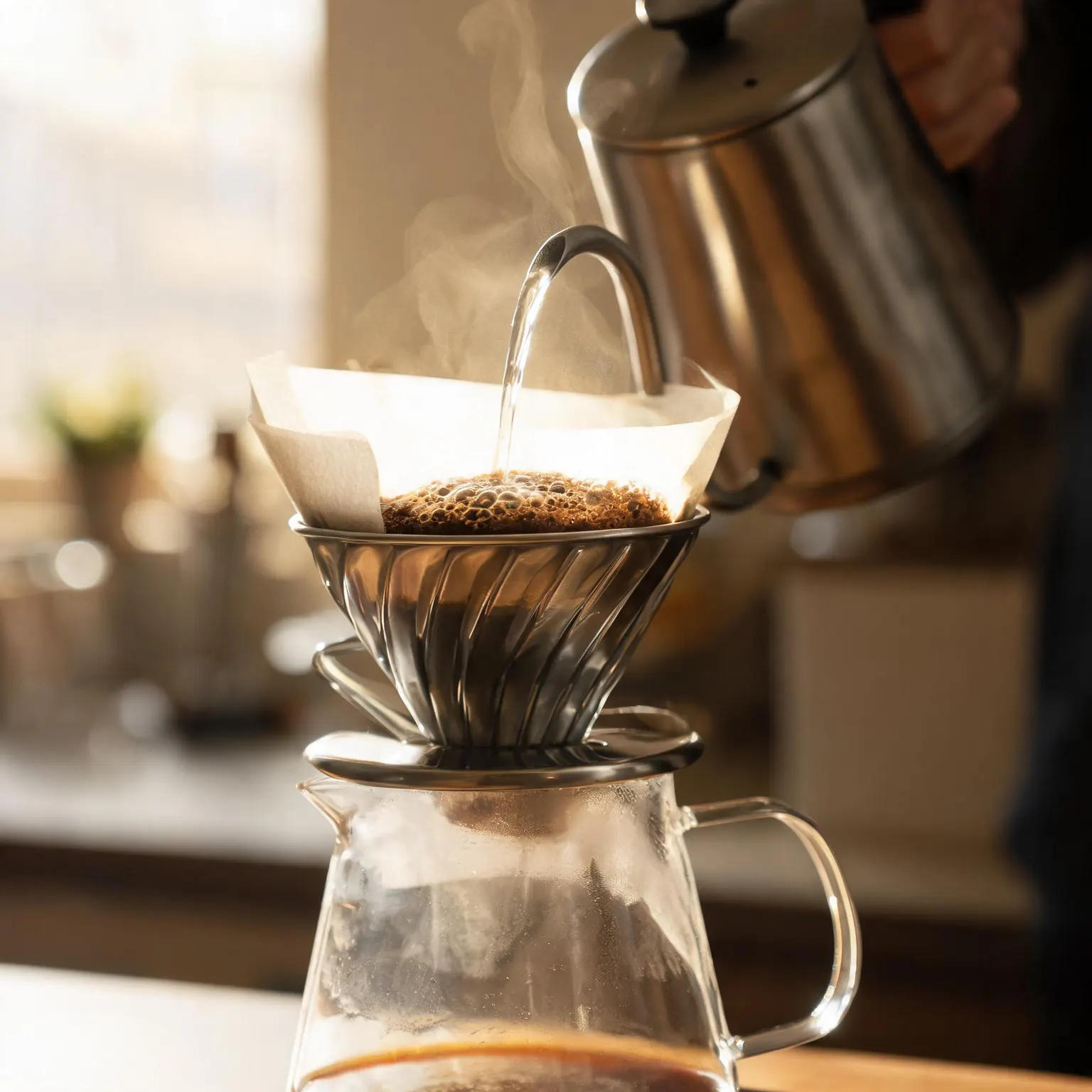
The toolkit: cones versus flat bottoms, paper versus mesh — every choice shifts body, clarity and forgiveness.
The 7 Best Pour Over Coffee Makers, Compared
| Pick | Style | Material | Skill Level | Brew Size | Price Tier |
|---|---|---|---|---|---|
| Kalita Wave 185 Mino Ware | Flat-bottom wave | Porcelain (Mino-yaki) | Beginner-friendly | 1–2 cups | $$ |
| Hario V60 Ceramic 02 | 60° cone | Ceramic | Enthusiast | 1–2 cups | $ |
| Chemex Classic 8-Cup | Cone carafe | Glass + wood | Intermediate | 4–5 cups | $$ |
| Bee House Dripper | Modified cone | Ceramic | Beginner | 1–2 cups | $ |
| OXO Single-Serve | Auto-tank cone | Plastic | Absolute beginner | 1 mug | $ |
| Bodum 34oz | Cone carafe + mesh | Glass + cork | Beginner | 4–5 cups | $ |
| Hario V60 Craft Kit | 60° cone set | Ceramic + glass | Gift/starter | 1–2 cups | $ |
The 7 Best Pour Over Coffee Makers (2026)
1. Kalita Wave 185 Mino Ware Ceramic Dripper
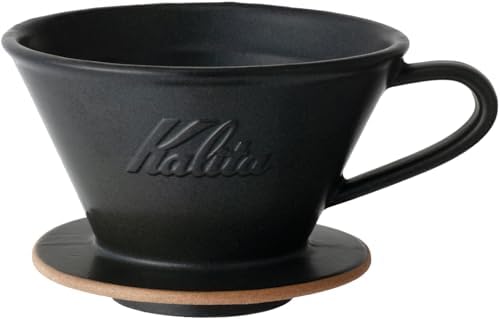
- Size (approx): 4.5 x 5.7 x 3.1 inches (115 x 145 x 8
- Material: Ceramic (Mino Yakiza Katana)
- Country of Manufacture: Japan
What We Like
- Flat bottom and three small drain holes hold a shallow, even coffee bed — the most forgiving geometry for imperfect pours, with fewer sour under-extracted cups while you learn
- Mino-yaki porcelain from Japan’s pottery region holds brewing heat steady through the whole brew
- The redesigned base fixes the clog-and-stall flaw that plagued older stainless Waves — Coffee Chronicler calls this version its “top flat-bottom recommendation, period”
- Rippled “wave” filter walls suspend the paper off the sides, so coffee never stalls against the wall or touches cool spots
What Could Be Better
- Uses proprietary Kalita Wave filters, which cost noticeably more than standard #2 cones
- The 185 size realistically caps at two full cups per session
- Porcelain chips if knocked against a sink or tile — gentler handling than steel
- New listing with a small review pool so far; the design’s reputation is earned by years of prior Wave models
Flaws but not dealbreakers: It demands its own pricier filters, will not scale past two cups, and the porcelain needs a steadier hand than steel — but nothing else produces this level of balanced, even extraction while tolerating beginner pours, which is exactly why it ranks first here.
Best For: Most people: the sweet spot of forgiveness, heat stability and cafe-quality cups, whether it is your first dripper or your fifth.
Skip this if: you regularly brew for more than two people or refuse proprietary filters — the Chemex or Bodum covers batch duty better.
2. Hario V60 Ceramic Dripper, Size 02

What We Like
- Serious Eats’ co-favorite: the 60-degree cone, giant single outlet and spiral ribs produce unmatched clarity and sweetness when poured well
- Legendary in specialty cafes — the recipe ecosystem (videos, ratios, dial-in guides) for the V60 is enormous
- Ceramic body holds temperature through the whole brew and shrugs off decades of use
- Remarkably cheap for the ceiling it offers, and 02 filters are sold everywhere
What Could Be Better
- The large outlet punishes sloppy pours — water races through uneven beds and turns thin and sour
- Ceramic chips if knocked against a sink, unlike plastic siblings
- Tall cone shape eats cabinet space
Flaws but not dealbreakers: This is the dripper experts grow into, not start with — expect a few thin cups while your pour steadies — but at this price, no other brewer rewards practice with this much flavor.
Best For: Coffee geeks and tinkerers who chase bright, tea-like clarity and enjoy dialing in a ritual.
Skip this if: you want good coffee with zero practice — the single big outlet amplifies sloppy pours; start with the Kalita or OXO.
3. Chemex Classic Series 8-Cup Coffeemaker

- CHEMEX – simple, easy to use with timeless, elegant design
- All CHEMEX Coffeemakers are made of the highest quality, non-porous Borosilicate glass which will not absorb odors or ch…
- The patented CHEMEX pour-over design allows coffee to be covered and refrigerated for reheating without losing flavor
What We Like
- Design-museum icon since 1941 — the one-piece borosilicate hourglass with wood collar looks permanent on any counter
- Bonded thick filters produce the cleanest, sediment-free cup of anything here — brilliant for light roasts
- Genuine batch capacity: the 8-cup brews enough for a table of four from one device
- Brews and serves in the same vessel; no separate carafe needed
What Could Be Better
- Thick filters drain slowly and cost more per filter than standard cones
- The 8-cup model is genuinely huge — fridge-door and cabinet clearance deserve measuring
- Thin glass demands careful handling, and the collar is decorative rather than insulating at the glass neck
Flaws but not dealbreakers: Slow drains, pricey papers and real counter footprint — but for households that want beautiful, clean, crowd-sized pour over from one object, nothing else comes close.
Best For: Design lovers and batch brewers serving several people who prize a pristine, grit-free cup.
Skip this if: you brew single mugs only — the 8-cup’s counter footprint and slow drains are wasted on one person.
4. Bee House Pour Over Dripper by Zero Japan

- Stylish Peek Hole: The Zero Japan Bee House Coffee Dripper features a sleek peek hole, letting you keep an eye on the co…
- Double Hole Design for Balanced Brewing: Crafted with precision, this pour-over coffee maker has double holes that ensur…
- Ergonomic Handle for Comfort: Enjoy an ideal grip with the ergonomic handle that molds to the curves of your thumb. This…
What We Like
- Wide, gentle outlet delivers Kalita-like forgiveness: hard to stall, hard to over-drain
- Glossy glazed ceramic in candy-store colors — the prettiest beginner cone, and Japan-built to last
- Takes ubiquitous, inexpensive #2 cone filters
- Compact wedge profile sits stably on nearly any mug and stores flat against the cabinet wall
What Could Be Better
- Clarity sits a step behind the V60 for experienced hands
- Two-cup capacity only
- Color availability fluctuates — popular shades sell through slowly restocked
Flaws but not dealbreakers: It will not deliver geek-tier transparency or batch sizes — but as a starter ceramic that looks lovely, flows forgivingly and costs little, it remains the quiet recommendation of every barista asked by beginners.
Best For: First-time pour-over drinkers who want foolproof mechanics and countertop charm without a starter-kit sprawl.
Skip this if: you chase competition-grade clarity — the wide outlet trades transparency for forgiveness.
5. OXO Brew Single-Serve Pour-Over Coffee Maker

- Brews consistent, flavorful pour-over coffee with minimal effort
- Auto-drip tank controls water flow for a well-balanced brew
- Measurement markings on Tank show how much water to add, up to 12 ounces
What We Like
- The water tank’s calibrated valve releases water at a controlled rate — pour once, walk away, return to finished coffee
- Eliminates the gooseneck-kettle skill barrier entirely: consistency without technique
- Precisely marked tank takes the guesswork out of ratios for single mugs
- Dishwasher-safe, unbreakable-in-practice, and priced like an impulse buy
What Could Be Better
- Strictly one mug per cycle
- Plastic body trades heat retention for portability
- No adjustment room once the valve starts — enthusiasts will feel boxed in
Flaws but not dealbreakers: It removes the very control enthusiasts buy pour over for — but for groggy mornings, desk lunches and anyone who has ruined three cups practicing spirals, this thing simply works.
Best For: Busy single-mug households, office desks, dorms and travel kits where consistency matters more than ceremony.
Skip this if: you want to learn manual pouring — the valve does the work, so the skill never develops.
6. Bodum 34oz Pour Over Coffee Maker

- Pour Over Coffee: Manual Pour Over Coffee Maker allows you to brew an excellent cup of Coffee in minutes
- Stainless steel: Includes a new and improved permanent, stainless steel mesh filter that helps extract your coffee’s aro…
- Coffee Carafe: Made of durable, heat-resistant borosilicate glass with Cork Band detailing that is both functional and e…
What We Like
- All-in-one glass carafe with permanent stainless mesh filter — zero recurring paper costs
- Brews roughly four generous mugs in one pour, the cheapest honest batch capacity here
- Cork collar keeps hand-off-glass and adds signature Scandinavian warmth
- Made in Portugal from heatproof borosilicate; dishwasher-safe parts
What Could Be Better
- Mesh filter admits fine sediment: cleaner than french press, cloudier than paper
- Plastic lid feels like the budget corner it is
- Less precise flow control than dedicated drippers
Flaws but not dealbreakers: The cup sits between french press and Chemex on cleanliness — but at this price with no filter subscriptions ever again, it is the rational default for budget-conscious batch brewing.
Best For: Budget shoppers, offices and anyone brewing several cups daily who refuses to keep buying paper filters.
Skip this if: your taste is clarity-first — the permanent mesh admits sediment that paper would strip out.
7. Hario V60 Pour Over Kit Bundle Set

- This coffee pour over set from Hario provides everything you need to brew up to four perfect cups of coffee, all in one …
- Includes: Package of (100) Hario V60 02W Coffee Filters designed for use with included pour-over coffee dripper
- Includes: Hario XGS-02 V60 Glass Pot Range Server (with glass handle, NOT plastic) an elegant, heatproof glass pot which…
What We Like
- Complete matched system: ceramic V60 02 dripper, glass range server, measuring spoon and 100 genuine 02 filters in one box
- Cheaper than assembling the same parts individually — the bundle discount is real
- Everything scales together: spoon, dripper and server share the 02 sizing so recipes translate cleanly
- Genuinely giftable packaging for the coffee-curious friend
What Could Be Better
- Glass server shares the fragility of all Hario glassware
- You still need a grinder and hot water source to complete the chain
- Server capacity encourages over-brewing beyond what the 02 cone handles best
Flaws but not dealbreakers: Nothing here survives a tile floor, and the kit assumes a kettle exists elsewhere in your kitchen — but as a one-box entry to serious pour over, it flattens the buying decision perfectly.
Best For: Gift-givers and first-timers who want the entire authentic V60 system in a single purchase without piecing parts together.
Skip this if: you already own any dripper or a scale — the bundle duplicates gear you have.
What the Listings Actually Say: Spec Truths (Verified September 5, 2026)
Every figure below comes from the live Amazon listing itself, not a spec sheet from another roundup — checked the same day this page was updated. Ratings pools are included because pool health is a buying signal: several official-brand listings carry small pools purely because manufacturers migrate between ASINs, while the pool size tells you nothing about the product’s age.
| Product | Body / Material (per listing) | Capacity (per listing) | Filter format | Listing details worth knowing |
|---|---|---|---|---|
| Kalita Wave 185 Mino Ware | Porcelain (Mino-yaki) | 2–4 people | Kalita wave 185 papers | #02107, made in Japan; new listing, small pool (4.6★ so far) |
| Hario V60 Ceramic 02 | Ceramic | 1–2 cups (size 02) | Hario 02 papers | 4.7★ from 12,000+ ratings — the deepest pool on this page |
| Chemex Classic 8-Cup | Borosilicate glass + wood collar | 8 cups (~40 oz) | Chemex bonded papers | Current listing is “Exclusive Packaging”; 4.8★ small official pool |
| Bee House Dripper | Glazed ceramic | 1–2 cups | Standard #2 cones | “Peek hole” design; ZERO JAPAN is the manufacturer brand |
| OXO Single-Serve | Plastic | 12 oz tank | #2 cone papers | “Rainmaker” shower head per listing; dishwasher-safe |
| Bodum 34oz | Borosilicate glass + cork | 34 oz | Permanent steel mesh — no papers | Made in Portugal per listing; 4.5★ |
| Hario V60 Kit | Ceramic dripper + glass server | 02 sizing (~2 cups) | 100 Hario 02 papers included | Range server and measuring spoon included; 4.8★ small pool |
Where the Money Stops Buying Performance
Pour over has an unusually flat price-to-performance curve, and it is worth knowing exactly where it flattens. Under roughly $25 sit the pure cones — the V60 and Bee House — and they deliver most of what pour over can taste like; the V60’s clarity ceiling is a technique ceiling, not a price ceiling. The roughly $25–$45 band buys convenience and materials: the OXO’s metering valve, the Kalita’s Mino-yaki porcelain, the Hario kit’s matched server. Roughly $45–$65 — the Chemex 8-cup’s territory — buys batch capacity and a design object, not better extraction. Past about $65 you are paying for looks or volume, because the dripper stopped being the limiting factor long ago: after the cone, your grinder, your kettle and your beans move the cup more than anything else on this page. A $20 cone fed by a decent burr grinder beats every brewer here fed pre-ground supermarket coffee — which is also why we tell gift-buyers to start with the kit, not a pricier single dripper.
Where We Disagree With the Specialists
Serious Eats’ main coffee-maker guide names the Hario V60 its pour-over pick, and Coffee Chronicler’s top pick is the V60 too — yet we hand the beginner slot to the Kalita Wave family. The disagreement is really about who is reading. The V60’s single giant outlet rewards precise pours with the highest clarity ceiling in the category, which is exactly why world Brewers Cup champions and geeks gravitate to it — and exactly why it punished our own first month of learning. We also part ways on the Wave’s history: Coffee Chronicler’s guide is blunt that the classic steel Wave was “trickier than the V60,” describing a filter that “would sit flush against the bottom, clog, and stall the brew,” with the 185 size suffering most. We agree with that finding — and it is precisely why our beginner pick is the redesigned Mino Ware ceramic, which fixes the stall at the source, rather than the stainless version other roundups still default to. If your pouring is already steady, take the specialists’ advice and buy the V60 first; our ranking optimizes for your first month, not your third year.
Failure Modes: What Actually Goes Wrong
Every brewer above fails in a specific, predictable way rather than a random one. Knowing the failure mode in advance turns a bad cup into a diagnosis instead of a refund.
- Kalita Wave (steel models, historical): the filter could sit flush against the base, clog, and stall the brew — Coffee Chronicler documented the flaw and calls the 185 size the worst hit; the Mino Ware base redesign addresses it, and it is the flaw to check if you buy a used steel Wave secondhand.
- Hario V60: thin, sour cups from fast, uneven pours — water races through one side of the bed. Physicist Jonathan Gagné’s own advice is to pour “very slowly” and “very straight,” which flattens the bed and keeps extraction even.
- Chemex: slow-drawing thick papers that can drag past four minutes into bitterness, plus the fragility of thin glass — the two most common ways this brewer disappoints.
- Bee House: fewer failure modes than most, by design — the realistic gripe is cosmetic: color availability fluctuates and popular shades sell through slowly.
- OXO Single-Serve: the metering valve has no adjustment once it starts — a clogged-or-fine grind that stalls the tank is the one way it fails, and there is no dial to rescue the cycle.
- Bodum 34oz: sediment in the cup versus paper-brewed clarity — permanent by design, not a defect; if the mesh bends out of shape, the cup turns muddy fast.
- Hario Kit: the glass range server is the fragile link — a tile floor ends the set’s centerpiece, and replacements cost nearly as much as the bundle.
How to Choose Without Regret
Size Math: Cup Numbers Lie
Every manufacturer counts a “cup” as five ounces — about half an actual mug. A “6-cup” Chemex fills two modern mugs with room for cream; the 8-cup fills four. Cones shrink further: a size-02 V60 or Kalita 185 genuinely tops out around two five-ounce servings per brew because deeper coffee beds stall drainage and over-extract. Buy for your real morning: solo drinkers are served beautifully by 02-class cones, couples should look at the Chemex 6-to-8-cup or Bodum 34oz, and anything feeding a table deserves the largest carafe in the lineup.
Filters Are Not Interchangeable
Each system locks you to a paper format, and this quietly shapes lifetime cost. Standard #2 cone filters fit the Bee House, OXO and V60 02, costing pennies at any grocery store. Kalita’s wave filters cost roughly triple and live on fewer shelves — order ahead rather than substituting flat papers into a rippled basket, which collapses the air gap the design depends on. Chemex bonded papers are thicker, slower and priciest of all; they are also the reason the cup tastes so clean. Bodum owners pay nothing forever, trading paper money for a slightly sedimented cup. Decide which trade suits you before falling in love with a dripper.
Matching Dripper to Your Ritual
Honest self-assessment beats spec sheets. If mornings run on autopilot, the OXO’s walk-away tank or Bodum’s dump-and-fill carafe will get more use than any precision instrument. If weekend brewing is the hobby — scale out, stopwatch running, notes kept — the V60 unlocks a decade of refinement. Everyone in between should start with the Kalita or Bee House: forgiving enough for weekday autopilot, honest enough to reward getting better. And remember the supporting cast matters as much as the cone: a decent burr grinder moves the needle further than upgrading any dripper on this list.
The Perfect Brew, Start to Finish
Whatever dripper you choose, the recipe barely changes. Heat water to a boil, then let it settle — roughly 30 seconds off boil lands near the ideal 200°F window for most roasts. Rinse the paper filter thoroughly to banish papery flavors and preheat the brewer. Dose at 1:16 — that is 22 grams of coffee for a 350-gram mug, weighed, not scooped. (Astrophysicist Jonathan Gagné’s published V60 brews run 1:17 at a 22-gram dose — slightly lighter; both work, and the scale matters more than the exact number.) Bloom with twice the coffee’s weight in water for 30 seconds while trapped carbon dioxide escapes; fresh beans dome and bubble dramatically, stale ones sit inert, a free freshness test hiding in plain sight. Then pour in slow, centered spirals back to your target weight, finishing around the three-minute mark. Taste, adjust grind finer for weaker-sour cups, coarser for bitter ones, and write down what changed — three sessions from now you will be pulling shots-worthy sweetness from a $20 cone.
Frequently Asked Questions
What is the best pour over coffee maker for beginners?
Start with a flat-bottom or auto-regulated design: the Kalita Wave 185 for those who want to learn proper pouring, the OXO Single-Serve for anyone who wants good coffee with zero practice. Flat bottoms hold an even coffee bed over multiple small holes, so minor pour mistakes barely register in the cup. Avoid starting with the V60 — its fast-draining single hole amplifies every error and has discouraged more newcomers than any other design. Once your pours feel natural after a couple of weeks, the entire world of conical drippers opens up.
Kalita Wave vs Hario V60: which should I buy?
Buy the Kalita if you want the best cup with the least technique: its flat bottom and three-hole drainage forgive wandering pours and still extract evenly. Buy the V60 if brewing is your hobby: its aggressive geometry rewards precise spirals with superior clarity and sweetness, and its massive recipe ecosystem gives tinkerers endless variables to explore. Serious Eats’ test kitchen favorites include both the Kalita Wave and the V60, and Coffee Chronicler leans V60-first while still calling the Wave 185 Mino-Yaki its top flat-bottom pick. The split that matters: Kalita for most people, V60 for enthusiasts. Owning both costs less than one decent grinder, and many coffee nerds keep the Kalita for weekday speed and the V60 for weekend sessions.
Is pour over coffee better than a drip machine?
A skilled pour over beats most drip machines on clarity and balance because you control temperature, flow and saturation directly — and quality paper filtration strips the oils and fines that make machine coffee muddy. That said, a well-calibrated machine with SCA certification narrows the gap considerably for batch brewing — the Specialty Coffee Association publishes the standards that certification refers to. The honest framing: pour over wins on peak quality, engagement and per-cup equipment cost; machines win on convenience and multitasking. Many households happily run both — machine for weekdays, manual weekends — though most people who learn a solid pour-over recipe stop reaching for the machine first.
What grind size should I use for pour over?
Target medium: roughly the texture of coarse sand, noticeably finer than french press gravel and coarser than espresso powder. On a typical burr grinder with 40 settings, that lands somewhere near the middle. Flat-bottom drippers like the Kalita tolerate slightly finer grinds thanks to their restricted outlets, while the V60 usually wants a touch coarser to keep its fast flow from turning thin. Dial in by taste: sour, weak, fast-finishing cups mean grind finer; harsh, bitter, slow-drawing cups mean grind coarser. Change one variable at a time and give each adjustment two full brews before judging it.
Why does my pour over coffee taste bitter or sour?
Sour means under-extraction: water ran too cool, too fast, or the grind is too coarse — fix by grinding finer, pouring slower, or shortening the off-boil rest. Bitter means over-extraction: grind finer than needed, water too hot, or a drawdown that drags past four minutes — fix by grinding coarser or cooling the water slightly. Also rule out the boring causes first: stale beans, un-rinsed paper, and wrong ratios cause most “bad dripper” complaints that blame the hardware. Log your dose, grind, water weight and time; three annotated brews almost always reveal the culprit.
Do I really need a gooseneck kettle?
For cone drippers like the V60, Chemex and Kalita — effectively yes. The thin spout regulates flow rate and lets you place water precisely instead of dumping; a regular kettle either trickles unpredictably or floods the bed, and controlling pour speed is the single biggest skill lever in manual brewing. The OXO sidesteps the problem with its metering tank, and the Bodum tolerates careless pours better than most. But once you own any conical dripper, a basic gooseneck — electric temperature-controlled models now cost little more than ordinary kettles — upgrades every future cup more than any other accessory purchase.
How much coffee do I use per cup?
Start at a 1:16 ratio by weight — 15 grams of coffee for a 250-gram (roughly 8.5-ounce) cup, or 22 grams for a 350-gram mug — and adjust to taste from there. Volume scoops mislead badly because bean density varies: a “tablespoon” can weigh anywhere from 4 to 7 grams depending on the roast and bean. If you refuse to weigh, two level tablespoons per 8.5 ounces of water approximates the ratio well enough to start. Strong-coffee drinkers drift toward 1:14, lighter-brew fans toward 1:17; write down whichever ratio wins so your morning repeats it without thinking.
Final Verdict
Most homes should buy the Kalita Wave 185 Mino Ware first — it is the rare dripper that produces genuinely excellent coffee on day one and keeps improving as you do. Add the Chemex when company multiplies, or slide the OXO onto the desk where attention is scarce. Enthusiasts will end up owning the V60 regardless of what we say here; resistance is futile and honestly unnecessary, since it costs less than a bag of nice beans. Whichever you choose, remember that among the best pour over coffee makers, the difference between a good and a transcendent cup lives in your grinder setting and your pour — not the price tag on the cone.
Disclosure: ShoppingPicker participates in the Amazon Services LLC Associates Program. As an Amazon Associate, we earn from qualifying purchases at no additional cost to you.
Sources & Further Reading
- Serious Eats: The 8 Best Pour-Over Coffee Makers, Tested & Reviewed (15 models brewed side-by-side)
- Coffee Chronicler: The 5 Best Pour Over Coffee Makers
- Coffee Ad Astra (Jonathan Gagné): A V60 Pour Over Video — brew measurements
- Specialty Coffee Association: Coffee Standards