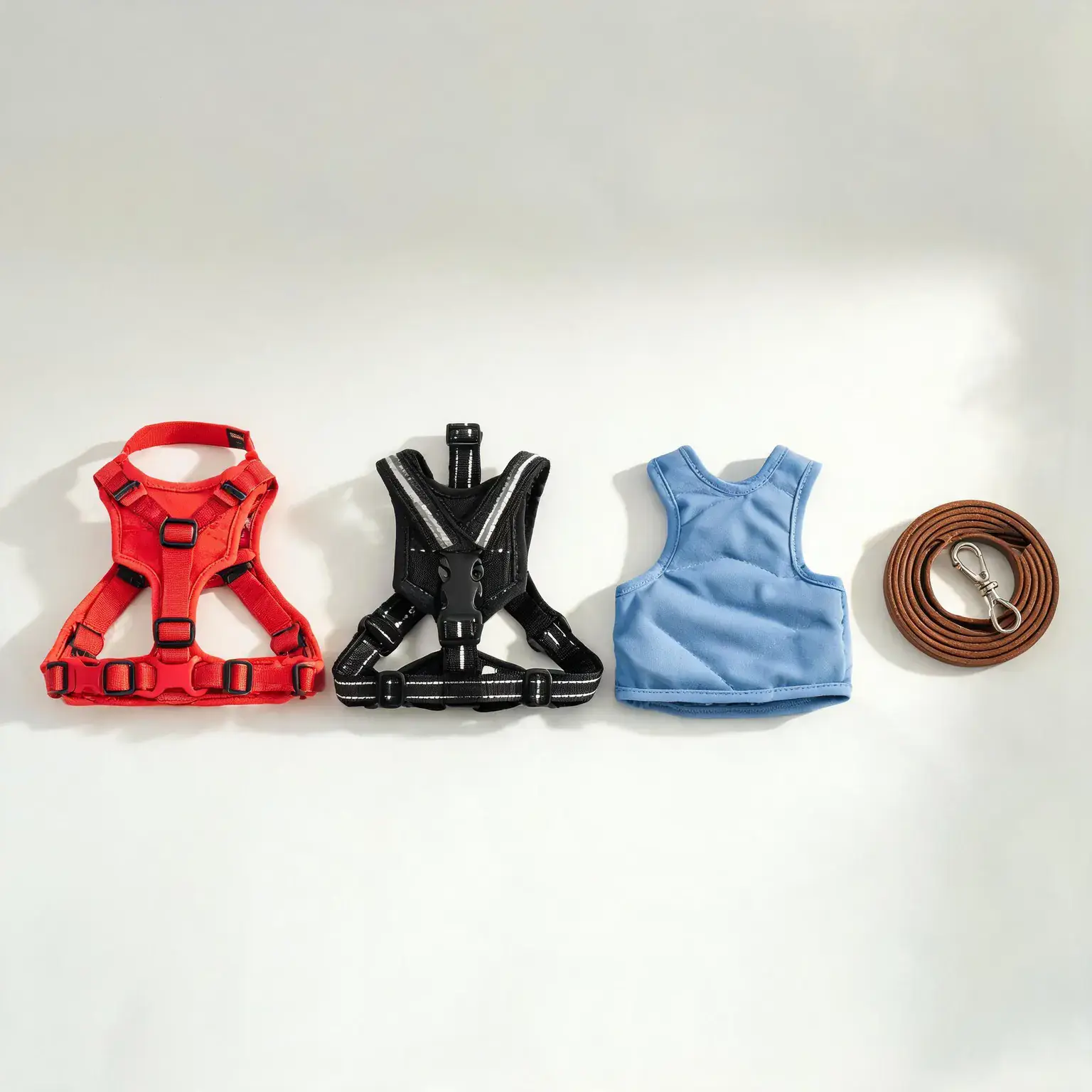
The best cat deshedding brushes do more than rescue a black sweater: they lift dead undercoat off your cat before your cat can swallow it, which means fewer hairballs, less furniture fur and a shinier topcoat underneath. We checked seven tools that are genuinely buyable on Amazon right now against veterinary guidance from the Cornell Feline Health Center and International Cat Care, cross-referenced hands-on roundups from Catster, Hepper and Rover’s certified master groomer, and re-verified every ASIN and price through Amazon’s product API on 18 September 2026. The seven picks below deliberately mix tool types — blade tools, self-cleaning slickers, a rubber curry, a rake, a comb and one glove — because the honest answer to “which brush is best” depends on your cat’s coat length, patience, and how dramatically they protest being touched.
As an Amazon Associate I earn from qualifying purchases. We earn commission from qualifying purchases made through links on this page. This never affects our rankings or what we recommend.
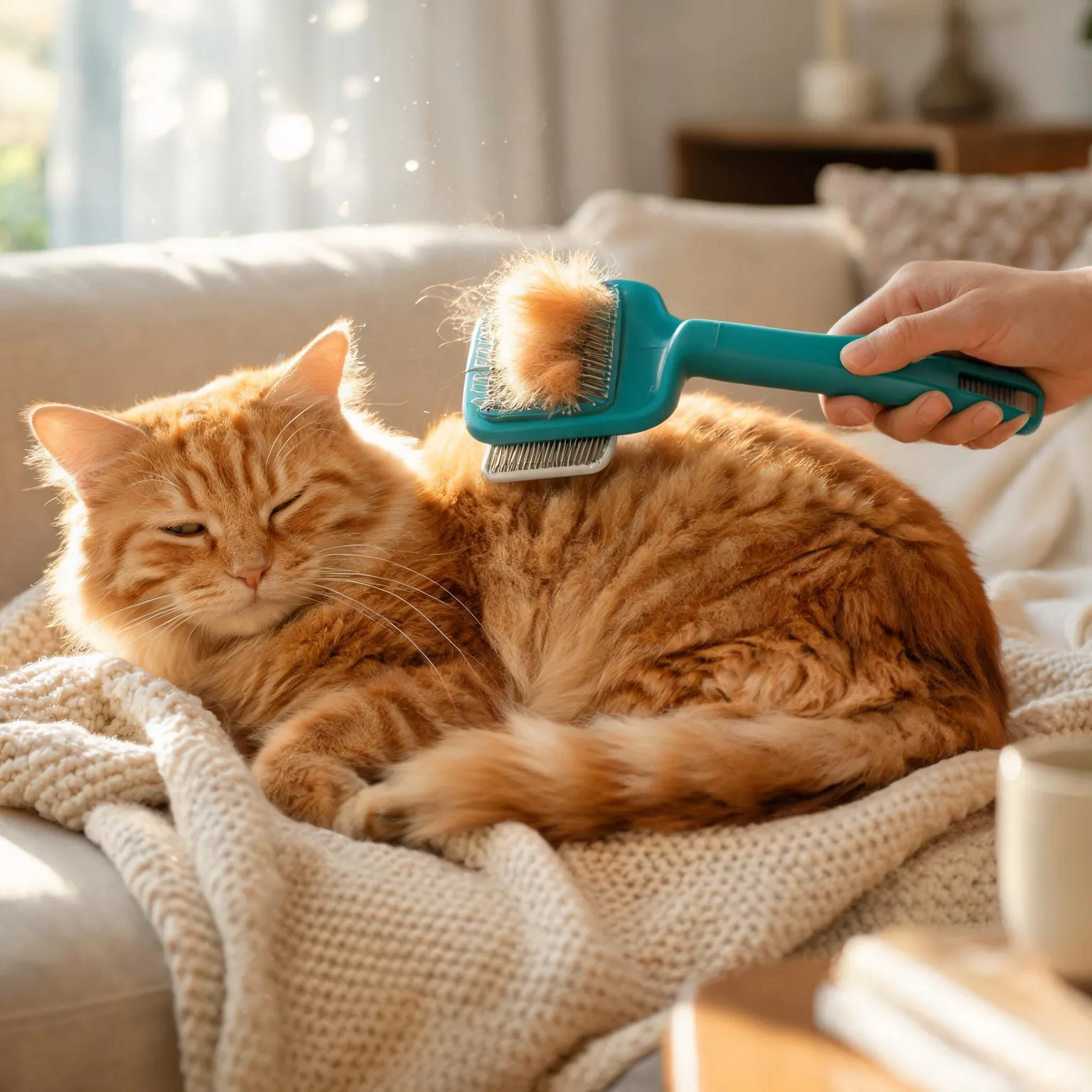
Table of Contents
- How We Chose These Brushes
- Why Cats Shed (and When)
- Undercoat, Guard Hairs and What Each Tool Actually Does
- The 7 Best Cat Deshedding Brushes, Compared
- The 7 Best Cat Deshedding Brushes (2026)
- Where Our Rankings Differ From Other Reviewers
- Price Tiers: Where Paying More Stops Buying Less Fur
- The Failure Modes Nobody Lists
- “95% Less Shedding” and Other Claims, Checked
- Building a Brushing Routine That Sticks
- Frequently Asked Questions
- Final Verdict
How We Chose These Brushes
Every product on this page had to clear four checks before it earned a slot. One: the listing had to be live and buyable on Amazon the day we refreshed this guide, verified through Amazon’s product API rather than a cached page — two of the tools earlier versions of this guide recommended were no longer usable as written, and you will see exactly what we did about that below. Two: the brand had to be the first word of the real product title, which is how we screen out white-label listings wearing a generic “Dog Brush and Cat Brush” title. Three: every specification quoted here is either the listing’s own claim, labelled as a claim, or a figure from a cited veterinary or grooming source — we do not invent measurements. Four: we compared our order against three independent roundups and wrote up the disagreements instead of quietly adopting their ranking.
What is hands-on here: the technique, the coat-by-coat tool advice and the warning signs are drawn from veterinary and professional-groomer guidance, all cited and linked. What is analysis: the comparison table, the spec-truth table and the price-tier boundaries were built from live listing data pulled on 18 September 2026. What we are not: a testing laboratory, and we did not measure pin counts or fur volume ourselves. Our full process, including what we refuse to claim, is documented on our How We Test & Choose Products page.
Why Cats Shed (and When)
Shedding Seasons — and Why Indoor Cats Shed Year-Round
Outdoor cats shed on a solar calendar: a heavy coat dump in spring as the winter undercoat dies off, a lighter molt in fall, and relative calm in between. Indoor cats never got that memo. Artificial light and steady thermostats blur the light-cycle signals that govern coat cycles, so house cats shed in slow motion across all twelve months instead of exploding twice a year. That is why the fur on your sofa never really stops, and why brushing beats any vacuum strategy: hair removed by a brush is hair your cat cannot swallow while grooming itself, cannot embed in your couch, and cannot redistribute across your bedroom at 3 a.m.
Hairballs: The Real Cost, and When Frequency Becomes a Red Flag
Cats groom themselves with barbed tongues that act like a comb with no release button, so swallowed hair has one exit or the other. Cornell University’s Feline Health Center sets out plainly what that costs: a hairball is a trichobezoar (undigested hair moistened by bile), usually about an inch long, and clinical care to move a blockage through the digestive tract — intravenous rehydration plus a laxative, over several days — “can cost between $300 and $400.” Surgery is sometimes the only way to remove one. Cornell also flags which cats are most exposed: long-haired breeds such as Persians and Maine Coons are at “significantly greater risk” than short-haired breeds, and hairballs become more frequent in the seasons when cats shed their coats.
The commonly repeated rule that you should worry once a hairball appears more than about once a month is overstated, and it is worth correcting. Cornell’s guidance is that a cat bringing up a hairball “once every week or two… is nothing to worry about.” The genuine red flags are different: lethargy, refusing food for more than a day, or repeated unproductive retching, any of which means a call to the vet rather than another brushing session. Frequent hacking can also turn out to be nothing to do with hair at all — Cornell notes it may instead signal a respiratory problem such as asthma.
How Often to Brush, by Coat
Frequency beats force, and the international guidance is more specific than most roundups admit. International Cat Care’s own grooming guidance is to aim to groom shorthaired cats at least once weekly, while longhaired cats need to be groomed at least daily — but only for as long as the cat is comfortable, and never by force. Step up to two or three short sessions a week during spring and fall molts, even for shorthairs. Seniors and overweight cats deserve extra sessions regardless of coat length: stiff joints quietly end their self-grooming of the back and rump, and those areas mat first. Three calm minutes daily beats half an hour of wrestling every Sunday, and quitting while your cat still likes you is the entire secret.
When NOT to Brush (or When to Stop and Call the Vet)
Brushing is medicine, and medicine overdoses. Never work a blade tool over the same spot repeatedly in one session — a quarter-inch of over-collected coat leaves visible thin patches, and daily blade use can genuinely thin a coat over time. Skip any session over damp mats (they tighten), open wounds, flea-dermatitis flare-ups or angry skin. International Cat Care is blunt about what over-grooming means: skin problems such as flea allergic dermatitis, underlying pain (a bald patch on the lower belly and inner thighs is a classic sign of feline lower urinary tract disease), and stress can all drive a cat to groom itself raw, and no brush fixes any of them. If brushing reveals bald patches, scabs, or a cat who suddenly cannot tolerate five seconds of contact, stop and book the vet before booking the groomer.
Undercoat, Guard Hairs and What Each Tool Actually Does
The Two Layers
A cat’s coat is two systems stacked. Guard hairs form the outer shell — long, pigmented, water-shedding, and the part people admire. Beneath sits the undercoat: a dense insulating layer of fine secondary hairs that outnumbers guards several times over on fluffy breeds. Dead undercoat is what mats, what sheds, and what becomes hairballs. It does not always fall out on its own, especially in double-coated breeds. A deShedding blade removes that dead layer without cutting healthy guard hairs. A slicker teases out loose hair and small tangles across the whole coat. A rake breaks up clumps. A comb finishes what the first passes missed. Matching tool to layer matters more than price, which is the whole reason this guide is organised by coat rather than by brand.
Tool Type by Coat Length
Short-haired cats — Domestic Shorthairs, Bombays, Siamese — need undercoat volume control more than detangling: a deShedding blade or a rubber curry once or twice a week handles nearly everything, and a soft slicker adds shine. Medium coats such as Maine Coon mixes and Ragdolls want a rotation: slicker twice weekly, blade weekly in spring, comb weekly to catch forming tangles behind the ears and under the arms. Long-haired breeds — Persians, full Maine Coons, Norwegian Forest Cats — are a three-tool job: daily slicker work, careful rake sessions for the britches and ruff, and a metal comb down to the skin to find mats before they become shave-downs at the groomer. Whatever the coat, go gentler than feels necessary: cat skin tears like wet paper.
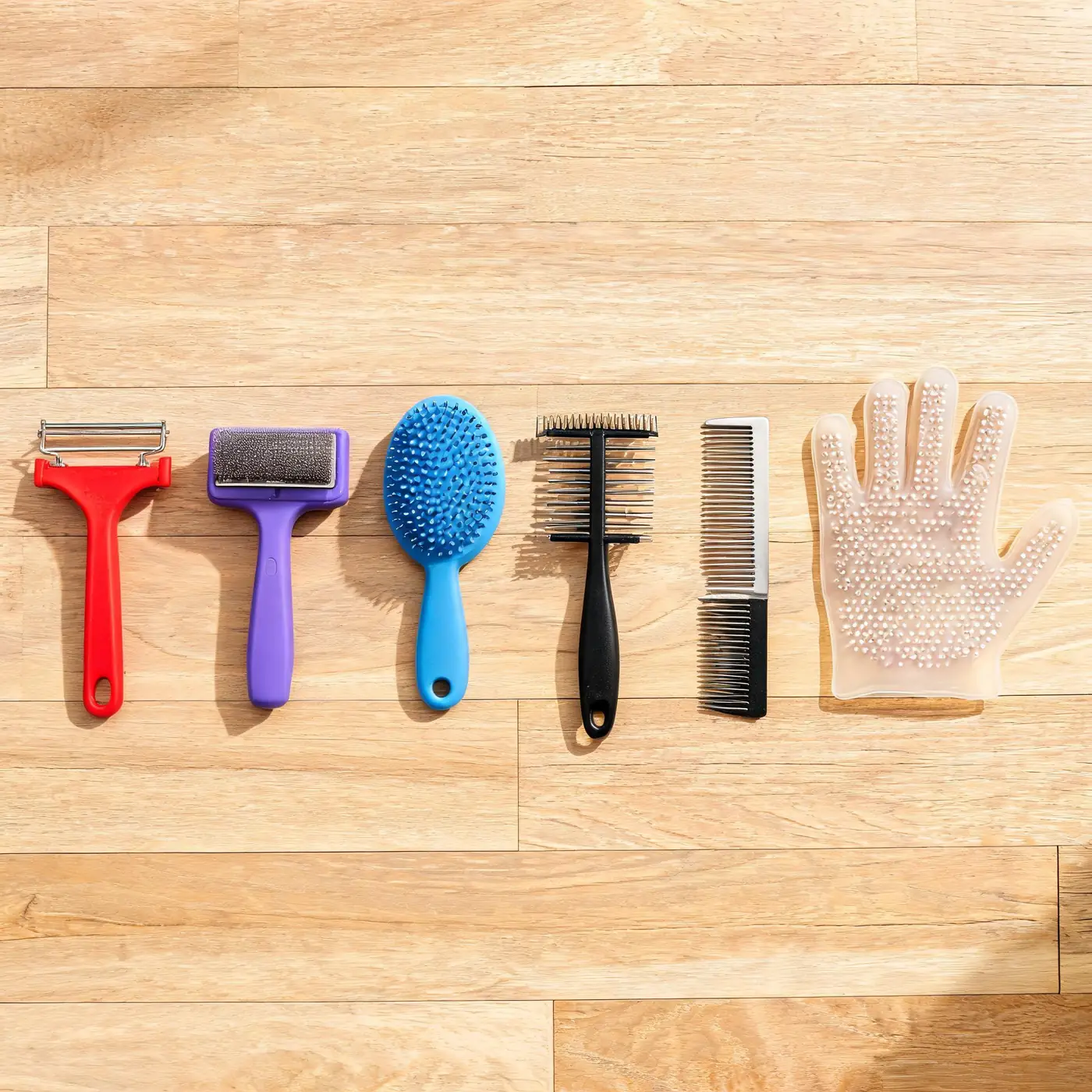
The toolkit: each tool targets a different layer of the coat — blade tools harvest undercoat, slickers sweep the surface, rakes break up clumps, combs finish, gloves socialise.
The 7 Best Cat Deshedding Brushes, Compared
| Product | Standout spec | Price | Track record | Deal |
|---|---|---|---|---|
 FURminator FURminator Medium to Large Cat deShedding Tool for Short Hair |
FOR SHORT-HAIR CATS: Choose large size for cats over 10 pounds. | $33.57 |
#2 in Shedding Tools |
In Stock |
 Hertzko Hertzko Self Cleaning Slicker Brush for Dogs and Cats – Pet Hair Brush for She |
Efficient Grooming: Self cleaning dog and cat brushes removes loose hair, tangles, and debris e | $16.95 |
#28 in Brushes |
In Stock |
 FURminator FURminator Medium to Large Cat deShedding Tool for Long Hair |
FOR MEDIUM/LARGE CATS WITH LONG HAIR: Designed especially for cats that weigh more than 10 poun | $33.57 $39.49 |
#2 in Shedding Tools |
15% OFF In Stock |
 KONG Kong Rubber Brush for Cat |
Product Size (W x D x H): 2.8 x 1.3 x 4.4 inches (7 x 3.3 x 11.1 cm) | $13.54 |
#19 in Brushes |
|
 Maxpower Planet Maxpower Planet Dog Grooming Rake, Deshedding Undercoat Brush, Dogs & Cats |
DUAL-SIDED DESIGN: Our Undercoat Rake Dog brush is perfect for deshedding your pet's coat. Desi | $13.99 |
#1 in Rakes |
In Stock |
 Andis Andis 65730 Stainless-Steel Comb for Knots, Mats & Loose Hair Removal – Effect |
HIGH-QUALITY STAINLESS STEEL: Made of sturdy and corrosion-resistant stainless steel, this comb | $16.06 $17.00 |
#16 in Combs |
6% OFF In Stock |
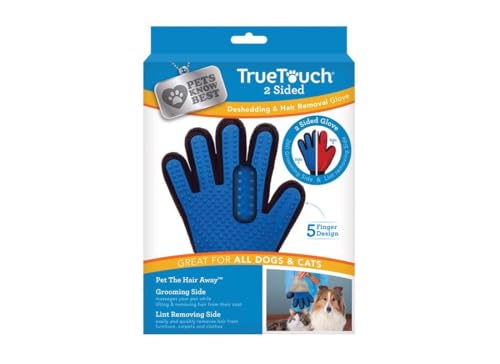 True Touch True Touch Five Finger Deshedding Glove- Premium Version, Gentle Grooming Glov |
True Touch Five Finger Deshedding Glove- Premium Version, Gentle Grooming Glove Great Cats & Do | $17.43 $20.78 |
#424 in Hair Removal Mitts & Rollers |
16% OFF Only 6 left in stock – order soon. |
| Pick | Tool type | Live price | What the listing publishes | What the listing never publishes |
|---|---|---|---|---|
| FURminator Short Hair | deShedding blade | $33.57 | For short-hair cats; large size for cats over 10 lb; stainless deShedding edge; Furejector eject button; weekly use | Edge width, tool weight, teeth on the edge |
| Hertzko Self-Cleaning Slicker | self-cleaning slicker | $16.95 | Angled bristles; retractable pins with a push button; comfort grip; long and short hair | Pin count, pin length, brush-head dimensions |
| FURminator Long Hair | deShedding blade | $33.57 (list $39.49) | For medium/large long-haired cats; stainless deShedding edge; Furejector eject button | Edge width, tool weight, any published coat-length guidance |
| KONG Rubber Brush | rubber curry | $13.54 | Product size 2.8 x 1.3 x 4.4 in; country of origin US; nub density described only as a massage | A usable weight: the listing's own spec block prints “Weight: 0.07 g” |
| Maxpower Planet Rake | dual-sided rake | $13.99 | Dual-sided; 9-teeth side for mats; rounded teeth; non-slip rubber handle; extra-wide head | The second side's tooth count, tooth spacing, tool weight |
| Andis 65730 Comb | stainless comb | $16.06 | Coarse and fine teeth; rounded pin ends; stainless steel; 7-1/2 inches overall | Teeth per inch, tooth length, tool weight |
| True Touch Glove | silicone glove | $17.43 (list $20.78) | 255 silicone tips; one authentic right-hand glove; lint roller included | Tip length, glove dimensions, any numeric sizing chart |
Read the last column first. Across all seven listings, not one publishes its tool weight, its tooth or pin count, or the number of teeth per inch — which is why a spec comparison between cat brushes is mostly a comparison of marketing language. The one figure that is published is wrong: KONG’s own listing spec block prints the weight of a rubber cat brush as “0.07 g.” That is a unit slip, not a measurement, and it is a useful reminder to treat every listing spec as typed by a human.
The 7 Best Cat Deshedding Brushes (2026)
Prices and stock below were pulled from Amazon’s product API on 18 September 2026 and are a snapshot: they move. Two slots changed in this update — the Coastal Pet Safari Cat Shedding Comb that anchored earlier versions of this guide now returns “Currently unavailable” with no price from the API, and the budget rake we previously listed carries a generic “Dog Brush and Cat Brush” title rather than leading with its brand. Both were replaced with live, brand-first alternatives of the same tool type, and the reviews below are written around what the replacement listings actually claim.
1. FURminator Medium to Large Cat deShedding Tool for Short Hair
Our pick: Best Overall for Short-Haired Cats · Live price at publish: $33.57 · Rating: 4.7 stars
What We Like
- The Furejector button ejects the collected fur in one push, so your hand never touches the mat you just harvested
- The stainless-steel deShedding edge reaches through the topcoat to the loose undercoat, which is where a shorthair’s shedding volume actually lives
- Sized for cats over 10 pounds, with an anti-slip ergonomic handle that stays put when your cat stages a mid-session escape
- Roughly two decades of continuous Amazon availability and a 4.7-star average make it the most proven tool of its type
What Could Be Better
- The edge is built for loose undercoat, not knots — dragging it across a mat is how cats get nicked
- Technique-sensitive: repeated strokes over one patch in a single session genuinely thin a coat
- The priciest tool in this lineup at $33.57, and the brand’s popularity has attracted counterfeits
Flaws but not dealbreakers: It demands discipline and costs more than every comb on this page combined — but used weekly with light strokes it still removes more dead undercoat per pass from a shorthair than anything else we checked, and that is the job we hire it for.
Best For: Short-haired heavy shredders — Domestic Shorthairs, Bombays and tabbies who redecorate the sofa year-round.
Skip it if: your cat mats easily, or if you know you will not stop at weekly passes: a blade tool used aggressively is the fastest way to create the matting you were trying to prevent.
2. Hertzko Self Cleaning Slicker Brush for Dogs and Cats
Our pick: Best Everyday Slicker · Live price at publish: $16.95 · Rating: 4.5 stars
What We Like
- Angled wire pins sweep loose hair and small tangles off the surface without scraping skin
- One push retracts the bristles and drops the collected fur pad straight into the bin — the cleanest cleanup here
- A $16.95 brush that behaves like a much more expensive one, with a comfort-grip handle for long sessions
- Rover’s certified master groomer and Catster both name this family of slicker as the finishing step every coat benefits from
What Could Be Better
- It will not out-harvest a blade tool on a dense double coat
- The pins are wire, so a nervous cat needs a slower introduction
- The retractable mechanism wants an occasional rinse if dander builds up
Flaws but not dealbreakers: Not a dematting tool and never will be — but as the gentle, self-cleaning everyday brush that works on any coat length, it is the one most households actually reach for.
Best For: Everyday maintenance on all coat lengths, multi-cat homes, and cats who tolerate brushing but not drama.
Skip it if: your cat is already matted behind the ears or under the arms — a slicker smooths a surface, it does not break apart a felted clump.
3. FURminator Medium to Large Cat deShedding Tool for Long Hair
Our pick: Best for Long-Haired Cats · Live price at publish: $33.57 · Rating: 4.7 stars
What We Like
- The same proven deShedding edge as our short-hair pick, sized for the denser double coats of Persians, Maine Coons and Ragdolls
- Pulls loose undercoat out of ruffs and britches before it can felt, which is where long-hair matting starts
- Furejector release button again, so cleanup is a push rather than a pick
- Cornell’s Feline Health Center flags long-haired breeds as at significantly greater risk of hairballs, which is exactly the population this tool serves
What Could Be Better
- More technique-dependent than the short-hair version — long coats hide skin folds
- Not a detangler: existing mats have to be worked out with a rake or comb first
- The same $33.57 as its sibling, and the 15% discount shown on the live listing moves week to week
Flaws but not dealbreakers: Price plus patience required — but paired with a comb it is the combination long-hair households end up keeping.
Best For: Persian, Maine Coon and Ragdoll homes drowning in spring molt.
Skip it if: your longhair is matted right now: the blade rides over loose undercoat, and Rover’s master groomer warns that running a de-shedding blade over mats is how coats get worse.
4. KONG Rubber Brush for Cat
Our pick: Best Budget & Bath-Time · Live price at publish: $13.54 · Rating: 4.6 stars
What We Like
- Rubber nubs feel like a tongue, so most cats read this as petting rather than grooming
- Rover’s certified master groomer names it the must-have rubber brush for short and medium coats, and the tool to reach for when a cat refuses everything else
- Works dry, doubles as a shampoo massager, and lifts loose hair off in sheets instead of scattering it
- KONG build quality at $13.54 from a listing that has been live for years
What Could Be Better
- Harvests a fraction of what a blade tool pulls off a dense coat
- The nubs need peeling clean after each session
- The wide head is awkward around the face and legs
Flaws but not dealbreakers: It is a surface tool wearing a deshedder’s name — but at this price, with this much feline approval, it earns its slot as the gateway brush for kittens, seniors and bath night alike.
Best For: Cats who hate every other brush, kitten socialization, bath-time lathering and budget shoppers.
Skip it if: raw volume is your only goal — the curry moves far less hair per minute than any blade, rake or comb here.
5. Maxpower Planet Dog Grooming Rake
Our pick: Best for Mats & Tangles · Live price at publish: $13.99 · Rating: 4.6 stars
What We Like
- Dual-sided design: the 9-teeth side takes on stubborn mats while the finer side thins dense undercoat
- The current #1 best seller in Amazon’s Rakes category — unusual staying power for a grooming niche
- At $13.99 it delivers the uneven-tooth format Rover’s groomer describes as the way to reach loose undercoat that the topcoat is holding in place
- Rounded tooth tips and a non-slip rubber handle keep the tool controllable around the britches and ruff
What Could Be Better
- Overkill for a shorthair who never mats
- The dematting side demands a genuinely light touch near skin
- The teeth need clearing by hand between passes
Flaws but not dealbreakers: A specialist rather than a daily driver — but for seasonal matting behind the ears and along the britches it replaces two tools and pays for itself at the first avoided groomer visit.
Best For: Long-haired cats with seasonal matting, and rescue longhairs arriving in a coat that needs a reset.
Skip it if: the coat is already deeply felted — the honest advice, and the groomer’s, is a professional for serious mats, not a sharper tool.
6. Andis 65730 Stainless-Steel Comb for Knots, Mats & Loose Hair Removal
Our pick: Best Finishing Comb · Live price at publish: $16.06 · Rating: 4.8 stars
What We Like
- Coarse and fine teeth in one 7-1/2-inch stainless comb — exactly the uneven-tooth format Rover’s master groomer calls her preferred tool
- The long teeth lift the lower layer of loose fur while the short row smooths the topcoat
- Rounded pin ends are gentle enough for the face, throat and leg feathering where blades have no business
- A professional grooming brand holding a 4.8-star average across a deep review pool, and currently inside Amazon’s top 20 Combs
What Could Be Better
- Purely manual: far less volume per minute than a blade
- The teeth can bend if a determined cat chews the handle end
- No comfort grip — minimalists will notice a long session
Flaws but not dealbreakers: No motor, no self-cleaning trick — yet a comb like this is what every professional groomer owns, because the last five percent of dead hair is tomorrow’s hairball if nobody checks.
Best For: The finish line of every grooming session, sensitive-face duty, and checking behind ears and armpits where mats form quietly.
Skip it if: you want the job finished in one pass; a comb catches what the power tools missed, it does not replace them.
7. True Touch Five Finger Deshedding Glove
Our pick: Best Glove for Brush-Haters · Live price at publish: $17.43 · Rating: 4.1 stars
What We Like
- 255 soft silicone tips mimic petting — the grooming tool cats cannot detect as a tool
- Hair lifts off the glove in sheets after a pass, and most cats lean into the massage
- The honest entry point for rescues, seniors and previously unhandled cats who flee at the sight of a brush
- The listing ships one authentic right-hand glove plus a lint roller
What Could Be Better
- Removes a fraction of what a blade tool harvests — maintenance, not a deep clean
- Sizing runs large on smaller hands; the wrist strap helps but does not solve it
- Silicone tips trap dander and need a rinse every few uses
Flaws but not dealbreakers: Volume collectors will call it a toy — but for the population of cats who vanish when the brush drawer opens, it is the only way to get real deshedding contact done at all.
Best For: Brush-phobic cats, shy new adoptions, and short positive-contact sessions that end with everyone still friends.
Skip it if: your cat already accepts a slicker; you will get more done in two minutes with the brush than ten with the glove.
Where Our Rankings Differ From Other Reviewers
Three respected outlets each crown a different tool, and one of them argues directly against our top pick. Naming that is more useful than pretending everyone agrees.
- Catster (refreshed 15 September 2026, and veterinarian-reviewed by Dr. Marta Vidal-Abarca BVSc MRCVS) ranks the Pet Republique Dematting Rake first and calls the Safari Self-Cleaning Slicker its premium choice. A rake is genuinely the right first tool for a heavily matting longhair — but for the majority of households, which own shorthairs or medium coats, a rake is a specialist you use twice a season rather than a brush you use weekly. We rank the rake fifth for that reason, not because it underperforms.
- Hepper (9 Best Cat Brushes, updated 20 August 2026) puts the Safari Self-Cleaning Slicker Brush first and notes it is not good for mat removal, with the Catit Senses 2.0 Self-Groomer as its budget pick. We agree a self-cleaning slicker deserves a slot — ours is the Hertzko, second — but a slicker is a surface tool. It does not harvest the dead undercoat that produces the shedding, so it cannot be the top pick for a heavy shredder.
- Rover‘s grooming guide, built around Certified Master Groomer Rose Silcox-Rither, is the one that disagrees with us outright. Her preferred tool is a simple metal comb with uneven teeth, and on blade de-shedding tools of the kind our top pick belongs to she is explicit: “You risk removing too much fur… That can create matting.” She recommends the KONG ZoomGroom-style rubber brush as the tool that converts sceptical cats, and puts the whole toolkit at less than $30.
We kept the blade tool first because for a short-haired heavy shredder nothing else we checked removes as much dead undercoat per pass, and because the risk Silcox-Rither describes is a risk of mis-use rather than of the tool: her own guidance is that gentle combing is all that is needed, and every veterinary source on this page puts the danger in frequency and technique, not in owning the tool. Her point stands where it matters most, though, and it shaped this page: if your cat mats, a blade is the wrong tool, and the correct sequence is comb or rake first, blade only on loose undercoat. If you would rather not manage that technique risk at all, start with the comb and the curry — together they cost $29.60, which keeps you inside the sub-$30 toolkit the groomer describes, and they cover most of what a shorthair needs.
Price Tiers: Where Paying More Stops Buying Less Fur
The seven picks cluster into three honest tiers, and the top of the range is narrow.
- Under $15 — the entry tier ($13.54–$13.99). The KONG rubber curry and the Maxpower Planet rake sit here. This tier buys contact and clump-breaking rather than harvest volume. It is also where a first-time cat owner should start, because a $13.54 curry that gets used four times a week outperforms a $33 blade that lives in a drawer.
- $16–$18 — the working tier ($16.06–$17.43). The Andis comb, the Hertzko slicker and the True Touch glove. This is the sweet spot for most households: a finishing comb, an everyday slicker and a socialising glove cost less between them than two blade tools, and they cover the daily work.
- $33.57 — the blade tier. One thing changes when you cross from $17.43 to $33.57: pass efficiency on dense undercoat. Nothing else improves. The blade is not gentler, safer, easier to clean or more cat-friendly than the tools below it — it simply removes more hair per stroke.
That makes the stop point unusually clear: somewhere between $17.43 and $33.57 you stop buying performance and start buying speed. The test is honest and cheap — if a $16.95 slicker and a $16.06 comb already keep your furniture clear, the extra $17 buys convenience, not results. Rover’s certified master groomer makes the same arithmetic from the other direction, saying you can buy all the tools you need to groom a cat for under $30. Our cheapest pairing that covers a shorthair comes to $29.60 — just inside that line.
One note on rating figures: Amazon served us different review counters on different page loads during this update, so we publish star averages only and no review counts. Any roundup quoting a precise, confident count for a cat brush is quoting a number Amazon may not serve you.
The Failure Modes Nobody Lists
These are the recurring complaints that show up across the negative reviews on this exact class of product, and the ones the veterinary sources echo. None of them is a reason to avoid the category; all of them are reasons to buy once and use properly.
- Blade over-use. The single most common report is a patchy, thinned coat along the back or hips — the exact signature of repeated strokes over one area. Cornell’s guidance to accustom the cat to daily brushing and combing is about the comb, not about a blade.
- Nicks from a blade on mats. A deShedding edge is designed for loose undercoat. Run it over a felted clump and it catches skin. This is the failure the groomer interviews warn about, and it is why every longhair in this guide is paired with a comb rather than a blade alone.
- Retractable-pin mechanisms that jam. Dander plus packed fur is abrasive. Self-cleaning slickers are the most convenient tools here and the most mechanically fragile; they want an occasional rinse rather than a wipe-down.
- Teeth that bend. Cheap rakes and combs lose alignment, and a bent tooth is a scratching hazard. This is why the stainless comb in slot six is worth its $16.06 over an unbranded equivalent.
- Curries sold as deshedders. Buyers who expect blade-level harvest from a rubber brush leave one-star “doesn’t remove hair” reviews. A curry moves loose hair off the surface; it was never going to empty an undercoat.
- Glove sizing. The one-size silicone glove runs large on small hands. As a socialising tool it is excellent; as a fitted tool it is not.
- The listing itself disappearing. Two of the tools the biggest roundups recommend most — the Coastal Pet Safari cat comb and the previously listed budget rake — were unusable as written at this update, one out of stock and one carrying a generic title. Check that the product you are about to buy still exists and still leads with its brand name.
“95% Less Shedding” and Other Claims, Checked
- “Reduces shedding by up to 95%.” Several rakes and deshedding tools print a figure in this range, including the rake in slot five. No listing we checked says how it was measured, on what coat, over what period — and no independent source on this page repeats it. What a brush defensibly does is remove loose hair before it lands; how much depends on session frequency far more than on tooth count. Treat the number as marketing, and note that Rover’s groomer puts a complete, sufficient toolkit under $30.
- “The blade tool is safe for everyone.” It is not, and the disagreement is documented rather than inferred: a Certified Master Groomer, quoted by Rover, warns that blade de-shedding tools risk “removing too much fur” that “can create matting.” Cornell’s own recommendation is to get the cat used to daily brushing and combing — a comb instruction, not a blade one. Our position: weekly, light, loose undercoat only.
- “Hairballs more than once a month mean trouble.” This one circulates widely and it overstates the case. Cornell’s Feline Health Center describes a hairball once every week or two as nothing to worry about. The real warning signs are lethargy, refusing food for more than a day, and repeated unproductive retching — and prolonged hacking can indicate asthma rather than hair.
- “Soft silicone tips deshed as well as a brush.” They do not. The glove in slot seven is included because it is the best available answer for cats who will not accept a tool at all, and the listings themselves are honest that they are massagers. A glove that gets used daily still beats a blade that never leaves the drawer.
- Listing specs you can trust. KONG’s own product page for the cat rubber brush prints a weight of “0.07 g.” None of the seven listings publishes a tool weight, tooth count or teeth-per-inch figure. When a roundup quotes you a precise specification for a cat brush, ask which line of the listing it came from.
Building a Brushing Routine That Sticks
Tools fail without ritual, so borrow the trainer’s playbook. Pick a consistent cue — same cushion, same time of evening, treat jar already out — and start sessions absurdly easy: thirty seconds of slicker along the cheeks and shoulders your cat already offers up. International Cat Care’s list of what discomfort actually looks like is the most useful thing to memorise here: skin rippling or twitching, tail swishing or thumping, a head snapping round to face your hand, suddenly freezing, ears flicking back, lip-licking, head-shaking, or a short rapid burst of self-grooming. Any of those means stop for today, not push on.
Rotate tools honestly: a two-minute curry warm-up, the week’s blade pass on loose undercoat only, a comb check behind the ears and under the arms, and a slicker finish. For shorthairs that is a complete session under ten minutes; for longhairs, keep the daily sessions short and consistent rather than thorough and rare. Track it loosely — a weekly calendar checkmark is enough — because the compounding effect is the whole point: every gram of fur you harvest is a gram not swallowed, not matted and not vacuumed, and within a month most cats start showing up for their slot unprompted.
Frequently Asked Questions
What brush is best for short-haired cats?
For most short-haired cats a deShedding blade tool is the single most effective choice, because short coats still grow surprisingly dense undercoats that produce the bulk of the shedding. Use it lightly once a week, then maintain with a rubber curry or a soft slicker between sessions. Cats with very sleek single-layer coats — Siamese, Orientals — often need nothing more than a curry or a grooming mitt, and International Cat Care’s baseline guidance of at least one grooming session a week is a sensible floor for everyone else.
Does deshedding hurt cats?
Done correctly, no. The tool rides above living skin and removes only dead, loose undercoat, which is sensation-free in the way a comb-through is. Pain almost always traces back to technique: pressing down, re-stroking the same patch until the coat thins, dragging a blade over a mat, or using a dog-sized tool on a cat-sized animal. Watch for the warning signs — skin twitching turning into flinching, a head snapping round, an attempt to bite the brush — and lighten pressure immediately or stop for the day.
Can you use the FURminator too much?
Yes. The manufacturer’s own instruction on the live listing is weekly use for typical shedding and no more than twice weekly during heavy molts. Daily use, or repeated strokes over one area in a single session, genuinely thins coats over time and can irritate skin — the classic sign is patchy fur along the back or hips where the tool concentrates. Long-haired cats should have mats worked out with a rake or comb first, because the blade edge is designed for loose undercoat, not knots. When in doubt, fewer passes with lighter pressure deliver nearly all the benefit with none of the risk.
How do I get my cat to tolerate brushing?
Build the association before you need the results. Leave the brush where your cat sleeps so it smells like home, and reward simple curiosity about it with treats. First sessions should target the cheeks and shoulders in under a minute, always ending while your cat is still happy. Extend to back, haunches and belly only as tolerated — many cats never accept full belly work and that is fine. International Cat Care’s rule is blunt and worth repeating: a cat should never be forcibly groomed or stroked without the option to escape. For cats with real trauma history, start with the silicone glove, which reads as petting rather than equipment.
Grooming gloves vs brushes — which is better?
Brushes win on volume: a good slicker or deShedding tool removes several times more dead coat per session than any glove, and they are the only realistic answer for mats or dense undercoats. Gloves win on acceptance: silicone-tipped gloves feel like petting, so anxious, elderly or previously unhandled cats tolerate them from day one. The practical answer for most homes is sequencing — start difficult cats and new adoptions on a glove, then graduate to brushes as trust builds. A glove used daily beats a superior brush that lives in the drawer.
How often should I brush during shedding season?
Step up to two or three sessions weekly during the spring and fall molts even for shorthairs, and keep brief daily sessions for long-haired breeds through the peak weeks. Each session can stay short: five focused minutes with the right tool outperforms twenty distracted ones. The payoff compounds quickly — regular removal during molt prevents the matting that forces professional grooming, cuts hairball incidents while ingestion peaks, and visibly reduces the fur load on floors and furniture. Once the coat stops releasing handfuls per stroke, drop back to your normal maintenance schedule.
Does brushing reduce hairballs?
Yes, and it is the intervention veterinary sources put first. Hairballs form when barbed tongue-strokes swallow loose coat during self-grooming, and brushing removes that same hair before it is swallowed. Cornell’s Feline Health Center lists accustoming your cat to daily brushing and combing first among the ways to reduce the risk, and notes that long-haired cats and seasonal shedders gain the most. Frequent hairballs — or lethargy, refusing food, or repeated unproductive retching — are a reason to see a vet rather than to brush harder.
Final Verdict
Most homes should start with two tools rather than one: the Hertzko Self-Cleaning Slicker for the everyday gentle pass, and the FURminator blade sized to your cat’s coat for the heavy undercoat work of spring and fall. That is the combination the evidence actually supports — a surface tool used often, and a blade used sparingly and correctly. The KONG rubber brush covers kittens, bath nights and brush sceptics for $13.54; the Maxpower Planet rake rescues a matting longhair; the Andis comb finishes every session and is the tool Rover’s master groomer reaches for first; and the True Touch glove opens the door for cats who thought they hated grooming entirely. If you would rather avoid blade technique altogether, the comb-and-curry pairing comes to $29.60 and covers most of what a shorthair needs. Whichever you choose, the best cat deshedding brushes are the ones that actually get used — five calm minutes twice a week will outperform every premium tool sitting unused in a drawer.
Disclosure: ShoppingPicker participates in the Amazon Services LLC Associates Program. As an Amazon Associate, we earn from qualifying purchases at no additional cost to you.
Sources & Further Reading
- Cornell Feline Health Center: A Hairy Dilemma (hairballs, breed risk, clinical-care costs)
- International Cat Care: Grooming Your Cat (session frequency, equipment, discomfort signals)
- International Cat Care: Over-Grooming in Cats (skin, pain and stress causes)
- Catster: 10 Best Cat Brushes in 2026 (veterinarian-reviewed)
- Hepper: 9 Best Cat Brushes — 2026 Reviews & Top Picks
- Rover: 8 Cat Brushes and Grooming Tools, with Certified Master Groomer Rose Silcox-Rither