Finding the best sunscreen for sensitive skin is tricky—stinging, breakouts, and white cast can make daily SPF feel impossible.
If you’ve ever put on sunscreen and immediately felt stinging, burning, watery eyes, or a rashy “hot” feeling—your skin isn’t being dramatic. Finding the best sunscreen for sensitive skin is a real challenge because it’s not just about SPF. It’s about filters, texture, fragrance, alcohols, water resistance, and how it wears on your face and body day after day.
This guide is designed to help you choose a sunscreen you’ll actually use—because the “best” sunscreen is the one you’ll apply generously and reapply consistently.
Affiliate disclaimer: This post may contain affiliate links. If you buy through my links, I may earn a small commission at no extra cost to you. I only recommend products I believe are worth considering based on ingredient profiles, brand reliability, and real-world use cases.
Quick Answer
The best sunscreen for sensitive skin is typically fragrance-free, broad spectrum, and comfortable enough to wear daily. Many sensitive-skin users do well with mineral formulas (zinc/titanium), while others prefer modern chemical lotions that feel lighter and don’t leave a white cast. Choose based on your skin type, finish preference, and how often you’ll reapply.
Table of Contents
- What “sensitive skin” really needs from sunscreen
- Mineral vs. chemical sunscreen: which is better for sensitive skin?
- SPF 50 vs SPF 100: does higher SPF matter?
- How to choose a face sunscreen vs a body sunscreen
- Common triggers (and what to avoid)
- Best sunscreens on Amazon (top 5 picks)
- How to apply sunscreen for maximum protection
- FAQ
- Conclusion
What Sensitive Skin Really Needs From Sunscreen
Sensitive skin usually reacts to one (or several) of these issues:
- Fragrance and masking fragrance (common stingers)
- Essential oils (even “natural” ones)
- Certain chemical UV filters (not everyone, but some people)
- High alcohol content (can sting or dehydrate)
- Heavy, greasy textures (can feel suffocating, especially on oily or acne-prone skin)
- Eye irritation (migrating sunscreen into the eyes)
So when you’re shopping for the best sunscreen for sensitive skin, look beyond the SPF number and focus on these practical features:
- Broad spectrum (UVA + UVB)
- Fragrance-free and ideally allergy-tested
- Non-comedogenic if you break out easily
- Water resistant (40–80 minutes) if you sweat, swim, or live in humid climates
- A finish you’ll tolerate daily (because reapplication is everything)
Mineral vs. Chemical Sunscreen for Sensitive Skin (How to Choose)
This is the question that confuses most shoppers.
Mineral (physical) sunscreens
Active filters: zinc oxide and/or titanium dioxide
Why sensitive skin often likes them: They tend to be less stingy for many people and are often recommended for reactive skin.
Tradeoffs: Some leave a white cast, feel thicker, or pill under makeup if the formula isn’t great.
Chemical (organic) sunscreens
Active filters: can include avobenzone, octocrylene, homosalate, octisalate, etc.
Why people love them: Usually more lightweight, more transparent on skin, and easier for daily reapplication.
Tradeoffs: Some people experience stinging (especially around eyes) or irritation depending on the formula.
Important: sensitive skin doesn’t automatically mean you must use mineral sunscreen. It means you should choose a formula with a tolerable ingredient profile and finish—then test it.
For a clear, science-based overview of sunscreen basics and how to use it correctly, the American Academy of Dermatology is a strong resource:
SPF 50 vs SPF 100: Is Higher SPF Better?
SPF is not “twice as good” at 100 compared to 50. The protection increases, but not linearly. In real life, higher SPF can be helpful for people who:
- burn very easily,
- apply too little product (most people do),
- spend long periods outdoors,
- need extra buffer because they miss spots.
That said, even SPF 100 won’t protect you if you don’t apply enough or never reapply. If a high-SPF sunscreen is the only one you’ll wear consistently, it can absolutely be the best sunscreen for sensitive skin for you.
For additional public-health guidance on UV exposure and sunscreen use, the CDC is a solid reference:
Face vs. Body Sunscreen: What Actually Matters
You can use one sunscreen for everything, but many people do better with a “two-sunscreen strategy”:
Face sunscreen priorities
- Doesn’t sting eyes
- Layers under makeup or moisturizer
- Non-greasy finish
- Works for your skin type (oily, dry, acne-prone)
Body sunscreen priorities
- Easy to spread fast
- Water resistant if you’re active
- Large size or good value
- Comfortable enough to reapply
Common Triggers to Avoid (If You’re Reactive)
If you know your skin is reactive, consider avoiding or being cautious with:
- Added fragrance / parfum
- Essential oils (citrus oils can be extra irritating)
- Very high-denatured alcohol formulas (often feel “dry touch” but may sting)
- Formulas that migrate into eyes (especially on sweaty days)
Tip: Patch test a new sunscreen on your jawline or inner forearm for a few days before committing to full-face daily use.
Best Sunscreen for Sensitive Skin: Top Amazon Picks
Below are popular, widely available options that fit common sensitive-skin needs. Availability can change, so I’m focusing on products that are typically easy to find on Amazon and are well-known for daily wear or outdoor use.
Best Sunscreens on Amazon (Sensitive-Skin Friendly)
1) La Roche-Posay Anthelios Melt-In Milk Sunscreen SPF 100 (Face + Body)

Why it stands out: Very high SPF, broad spectrum, and designed for skin that burns easily. Many people like it for beach days, outdoor sports, or vacations when they want extra buffer.
Key features:
- Broad spectrum SPF 100
- Water resistant up to 80 minutes
- Oil-free, fragrance-free
- Suitable for face and body
Pros: - High protection level
- Comfortable “lotion” texture for many users
- Good for long outdoor days
Best for: Very fair skin, burn-prone skin, outdoor travel, beach reapplication.
Check price on Amazon https://amzn.to/4mGpJg4
Disclosure: As an Amazon Associate I earn from qualifying purchases.
2) La Roche-Posay Anthelios Clear Skin Dry Touch Sunscreen SPF 60 (Face)

Why it stands out: A go-to style for people who hate greasy sunscreen—especially if you run oily or shiny.
Key features:
- Broad spectrum SPF 60
- “Dry touch” / more matte feel
- Often marketed as oil-free
Pros: - Less greasy feel than many face sunscreens
- Good under makeup for some users
Best for: Oily skin, combination skin, humid climates, everyday face wear.
Check price on Amazon https://amzn.to/3QL1MId
Disclosure: As an Amazon Associate I earn from qualifying purchases.
3) La Roche-Posay Anthelios Light Fluid Facial Sunscreen SPF 60 (Face)

Why it stands out: Fluid sunscreens are popular because they spread easily and feel lighter—especially for daily use.
Key features:
- Lightweight fluid texture
- Broad spectrum protection
- Often layers well under makeup
Pros: - Easy to apply evenly
- Lightweight feel
Best for: Daily commuters, makeup wearers, “I hate sunscreen” people who need a lighter option.
Check price on Amazon https://amzn.to/4dUAoRW
Disclosure: As an Amazon Associate I earn from qualifying purchases.
4) Neutrogena Ultra Sheer Dry-Touch Sunscreen Lotion SPF 100+ (Face + Body)
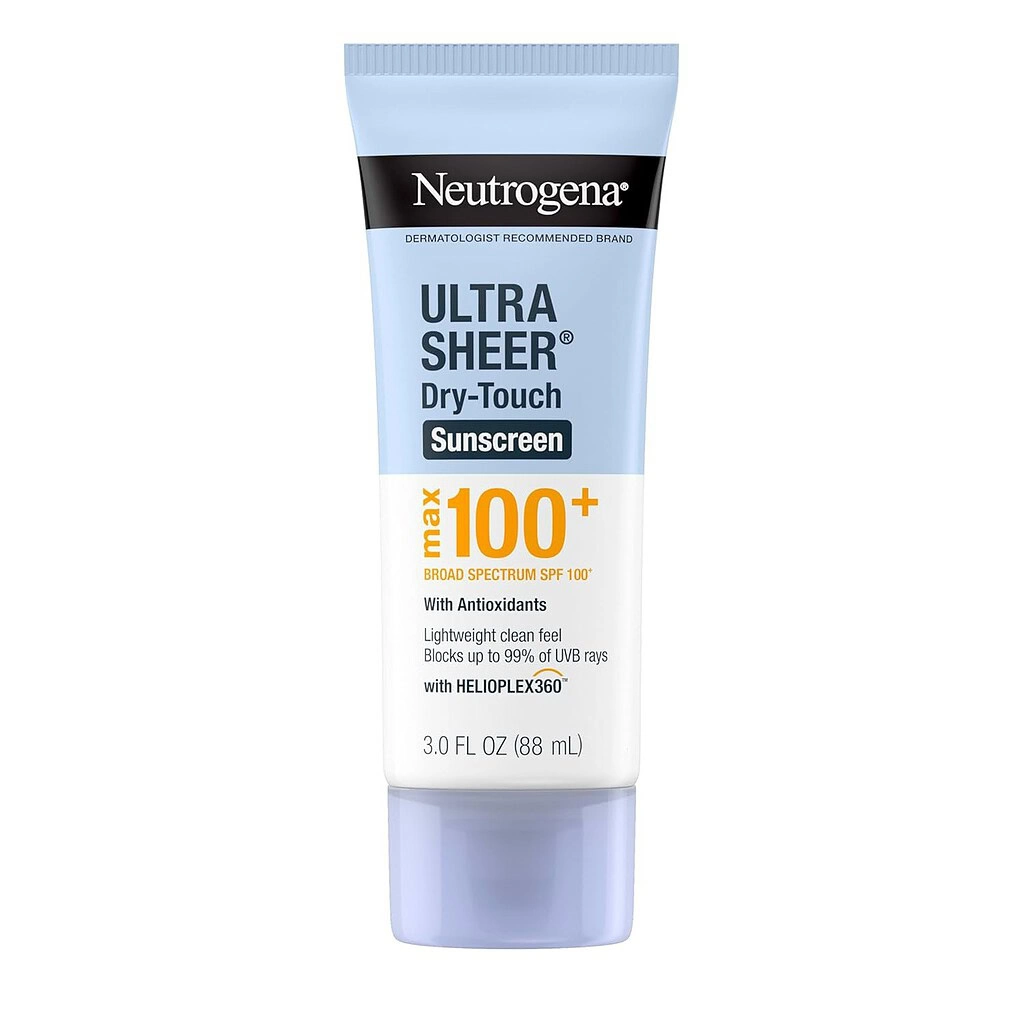
Why it stands out: A widely available high-SPF option that’s easy to grab for trips and outdoor days.
Key features:
- High SPF (100+)
- Broad spectrum
- “Dry-touch” finish style
Pros: - Convenient and widely accessible
- High SPF for long days outside
Best for: Value-focused shoppers who still want very high SPF for outdoor use.
Check price on Amazon https://amzn.to/4cvAi0F
Disclosure: As an Amazon Associate I earn from qualifying purchases.
5) Eucerin Tinted Mineral Face Sunscreen SPF 35 (Face)
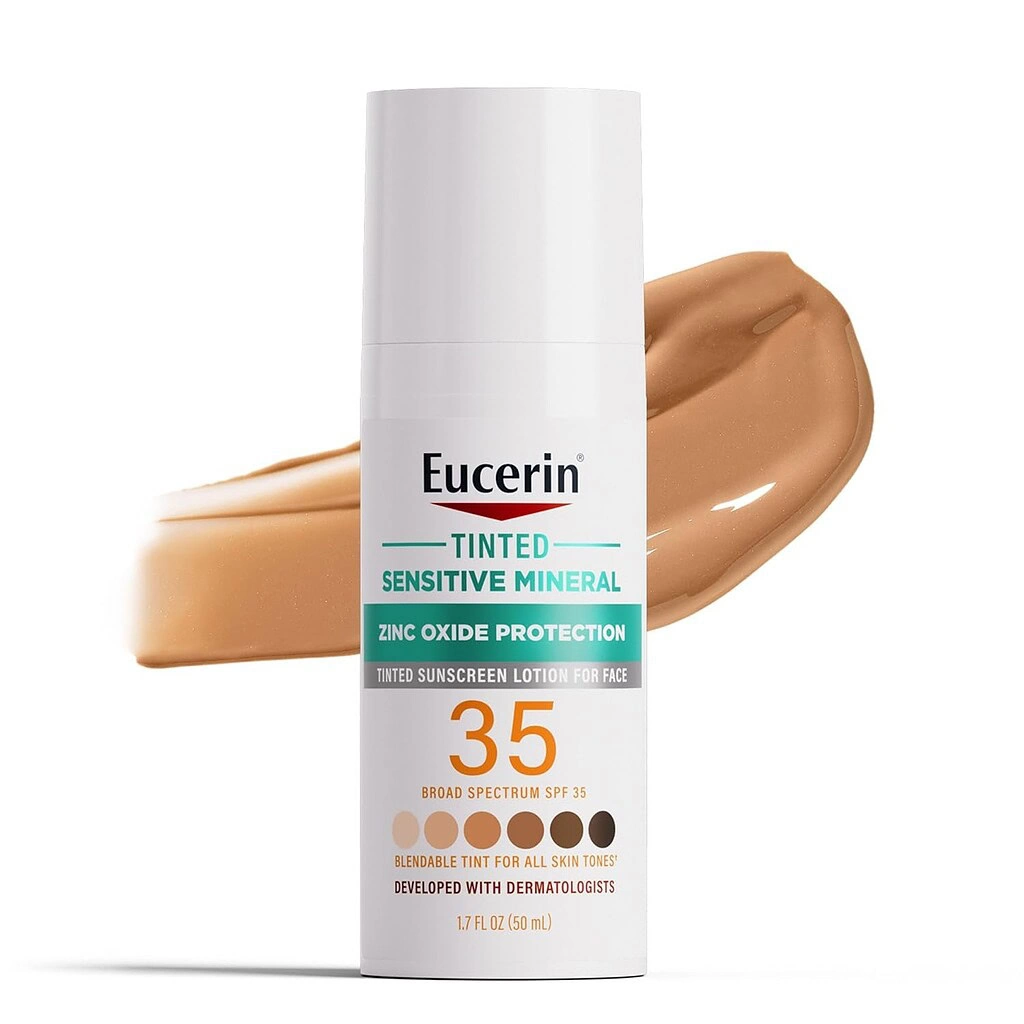
Why it stands out: Tinted mineral formulas can be a game-changer if you’re sensitive and you hate white cast. The tint can also help even skin tone.
Key features:
- Mineral sunscreen style (tinted)
- Face-friendly format
- Helps reduce white cast compared to untinted mineral
Pros: - More flattering finish than many mineral sunscreens
- Convenient “one step” for casual days
Best for: Sensitive skin + uneven tone, “no makeup makeup” days, mineral-only preference.
Check price on Amazon https://amzn.to/4ecJI3N
Disclosure: As an Amazon Associate I earn from qualifying purchases.
Quick Comparison Table
| Product | Type | Best For | Water Resistance |
|---|---|---|---|
| Anthelios Melt-In Milk SPF 100 | Chemical filters | Burn-prone + outdoor days | 80 min |
| Anthelios Clear Skin SPF 60 | Chemical filters | Oily skin / shine control | Varies by version |
| Anthelios Light Fluid SPF 60 | Chemical filters | Lightweight daily face wear | Varies by version |
| Neutrogena Ultra Sheer SPF 100+ | Chemical filters | Value + high SPF | Varies by version |
| Eucerin Tinted Mineral SPF 35 | Mineral (tinted) | Sensitive + white cast concerns | Varies by version |
Note: Always confirm the exact “water resistant” minutes on the label of the version you buy, since formulas and packaging can change.
Best Use Cases (So You Pick the Right One)
Here’s how I’d match common needs to the right style of sunscreen:
- You burn easily / beach days / outdoor vacations: choose a high SPF, water-resistant body + face lotion (like Anthelios SPF 100).
- You get oily fast and hate shine: a “dry touch” face sunscreen tends to feel better and makes reapplication more realistic.
- You want a lightweight everyday sunscreen: fluid textures are often easiest to commit to daily.
- You can’t tolerate many chemical sunscreens: try a tinted mineral face sunscreen to reduce white cast and irritation risk.
Cost & Value: What You’re Really Paying For
Sunscreen value isn’t just price per ounce. It’s:
- whether you’ll apply enough (generously),
- whether you’ll reapply,
- whether it works with your routine,
- whether it causes irritation that makes you avoid using it.
A slightly more expensive sunscreen that you use every day can be “cheaper” than a bargain tube you hate and never reapply.
How to Apply Sunscreen (So It Actually Works)
A great sunscreen applied poorly becomes a mediocre sunscreen.
- Apply 15 minutes before sun exposure (especially for many chemical sunscreens).
- Use enough: most adults need roughly a shot-glass amount for full body, and about two finger lengths for face/neck (common rule of thumb).
- Reapply at least every 2 hours, and after swimming/sweating/towel drying.
- Don’t forget easy burn zones: ears, hairline/scalp part, neck, chest, and hands.
If you wear makeup, consider keeping a second “reapplication-friendly” sunscreen (like a lighter fluid) to make touch-ups easier.
FAQ
Is SPF 100 worth it for sensitive skin?
SPF 100 can be worth it if you burn easily, spend lots of time outdoors, or tend to under-apply sunscreen. It provides extra buffer, but it’s not a substitute for reapplying. For sensitive skin, focus on fragrance-free formulas and patch test first—high SPF doesn’t automatically mean more irritation.
What’s the best sunscreen for sensitive skin on the face?
The best face sunscreen for sensitive skin is one that doesn’t sting, doesn’t clog pores, and layers well with your skincare or makeup. Many people prefer lightweight fluids or gentle mineral formulas. If you’re oily, a dry-touch finish can make daily wear and reapplication much easier.
Mineral vs chemical sunscreen: which is safer for sensitive skin?
Both can work. Mineral sunscreens (zinc/titanium) are often recommended for reactive skin because they tend to sting less for many people. However, some sensitive-skin users tolerate well-formulated chemical sunscreens better due to lighter textures and easier reapplication. Patch testing is the most reliable way to choose.
Why does sunscreen sting my eyes?
Eye stinging usually happens when sunscreen migrates into the eyes from sweat, water, or natural skin oils—often during hot weather. Try applying less near the lash line, setting the area with powder, choosing a water-resistant formula, or using a mineral sunscreen around the eyes to reduce irritation.
How often should I reapply sunscreen if it’s water resistant?
Water resistance (40 or 80 minutes) means the sunscreen maintains its SPF level during that time in water or heavy sweating—not that it lasts all day. Reapply after swimming/sweating/towel drying and at least every 2 hours during sun exposure, especially for outdoor activities.
Conclusion: Choosing the Best Sunscreen for Sensitive Skin
The best sunscreen for sensitive skin is the one you can wear comfortably every day and reapply without hesitation. If you burn easily or want maximum buffer for outdoor days, La Roche‑Posay Anthelios Melt‑In Milk SPF 100 is a strong pick. If you’re oil-prone, a dry-touch SPF 60 face sunscreen may be the difference between wearing sunscreen daily… or skipping it.
If you want to start simple, choose:
- One daily face sunscreen you love wearing
- One water-resistant body sunscreen for outdoor days
Shop my top picks on Amazon:
- La Roche‑Posay Anthelios Melt‑In Milk SPF 100 — Check price on Amazon (Amazon link)
- Anthelios Clear Skin Dry Touch SPF 60 — Check price on Amazon (Amazon link)
- Anthelios Light Fluid SPF 60 — Check price on Amazon (Amazon link)
- Neutrogena Ultra Sheer SPF 100+ — Check price on Amazon (Amazon link)
- Eucerin Tinted Mineral Face SPF 35 — Check price on Amazon (Amazon link)