The best mountain bikes on Amazon in 2026 span an enormous range – from a $159.99 dual-suspension chart-topper to a $2,436.96 carbon trail bike – and the price tags are more honest than the marketing: every tier buys a meaningfully different bike. We pulled live pricing, stock and best-seller ranks for the whole category through Amazon’s product API on November 7, ranked nine bikes you can actually order tonight, and flagged two temporarily out-of-stock machines worth waiting for. The short version: spend $160-240 for casual riding, $450-700 for real trails, and $1,400+ for genuine carbon performance – and buy a helmet either way, because helmeted riders in a 40-study meta-analysis cut their odds of head injury roughly in half.
Affiliate disclosure: As an Amazon Associate I earn from qualifying purchases. We earn commission from qualifying purchases made through links on this page. This never affects our rankings or what we recommend.
Contents
- The Amazon MTB market at a glance
- Comparison table: all 9 picks
- The 9 best mountain bikes on Amazon
- Where we disagree with BikeRadar and Flow
- Failure modes: what breaks first
- Spec-claim reality check
- How we chose these bikes
- FAQ
- The verdict
The Amazon mountain-bike market at a glance: what each price tier actually buys
Here is the single most useful thing to understand before shopping: Amazon’s mountain-bike shelf is stratified into four honest tiers, and almost nothing crosses tier lines. We built this map from live listing data on every bike below.
$160-240 – the department-store tier (WEIZE, Huffy, CYBIC). Steel or basic alloy frames, 21-24 speed entry drivetrains, coil suspension with no damping. These bikes are designed and priced for paths, greenways and campground loops. This tier owns the best-seller chart – the #1, #2 and #4 bikes in the category all live here – because it is what most buyers actually need.
$400-700 – the real-trail entry tier (Tommaso, Argus, Ecarpat, Traxion). Alloy frames, brand-name parts, hydraulic brakes on the Tommaso, 29er geometry, or genuine fat-tire capability. This is where bikes stop being “bike-shaped” and start being mountain bikes. Per dollar, the jump from tier one to tier two is the biggest improvement you can buy.
$1,400-1,800 – the carbon performance tier (TRIFOX, SAVADECK). Carbon-fiber frames, air springs with tunable damping, enduro-grade geometry. This is real trail hardware that happens to be sold on Amazon rather than in bike shops.
$2,400+ – the premium direct-to-consumer tier (Canyon). Dealer-grade components, race pedigree, brand support networks. Canyon’s Spectral 125 AL 5 sits at $2,436.96 on Amazon – and it is temporarily out of stock, which tells you how the premium channel on this marketplace works: thin inventory, real hardware, waiting lists.
Where does paying more stop buying performance? On Amazon, right around $700. Below that line each dollar visibly upgrades frame material, brakes or wheels. Above it you are buying carbon and air damping – worth it for committed riders, wasted on casual ones.
Comparison table: all 9 picks side by side
Every figure below was pulled live from Amazon’s product API on November 7, 2026 – prices, discount state and best-seller ranks move constantly, so treat them as the snapshot they are.
| Product | Standout spec | Price | Track record | Deal |
|---|---|---|---|---|
 WEIZE WEIZE 26 Inch Adult Mountain Bike, 18-Speed, Dual Suspension, White | Fits Rid |
SIZED FOR YOUR HEIGHT: The WEIZE 26 Inch Adult Mountain Bike fits riders approximately 5'2"–6'2 | $159.99 $199.99 |
#1 in Mountain Bikes |
20% OFF In Stock |
 SAVADECK SAVADECK Carbon Fiber Soft Tail Mountain Bike All Terrain Suspension Off-Road |
【Lightweight Full-Suspension Carbon Frame】 Built for technical trails and enduro riding, this c | $1,799.00 |
#45 in Mountain Bikes |
In stock |
 Tommaso Tommaso Gran Sasso 29er Mounain Bike Hydraulic Disc Hardtail Best Looking MTB |
DURABLE & RELIABLE: Alloy Frame is built to handle the stresses of the toughest mountain trails | $449.99 |
#158 in Mountain Bikes |
In Stock |
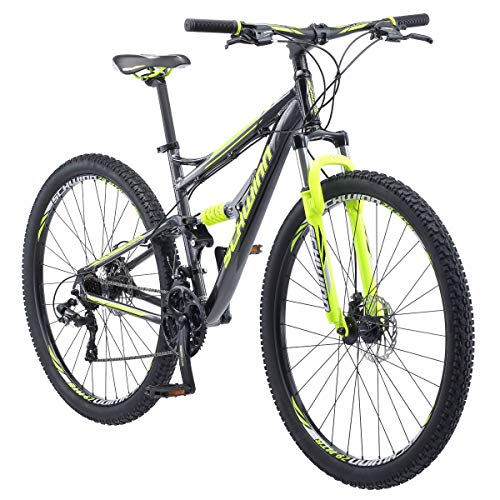 Schwinn Schwinn Traxion Mountain Bike for Adult Men Women, 29-Inch Wheels, Full Suspen |
Lightweight aluminum frame, full suspension, high-performance suspension fork, effectively abso | $699.99 |
#74 in Mountain Bikes |
Only 7 left in stock – order soon. |
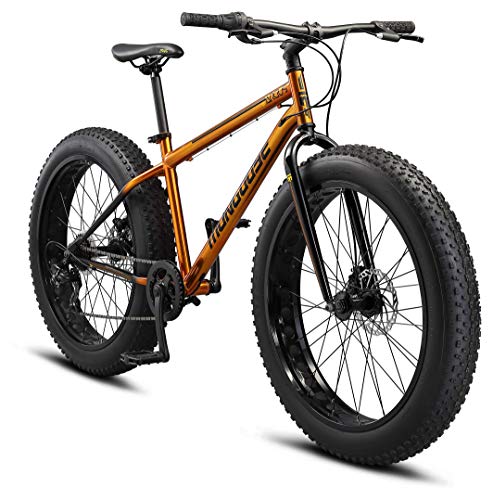 Mongoose Mongoose Argus ST Fat Tire Mountain Bike for Adult Men Women, 26-Inch Wheels, |
FAT TIRE MOUNTAIN BIKE: Your introduction to the world of fat tire adventures awaits with the A | $434.99 $579.99 |
#152 in Mountain Bikes |
25% OFF Only 3 left in stock (more on the way). |
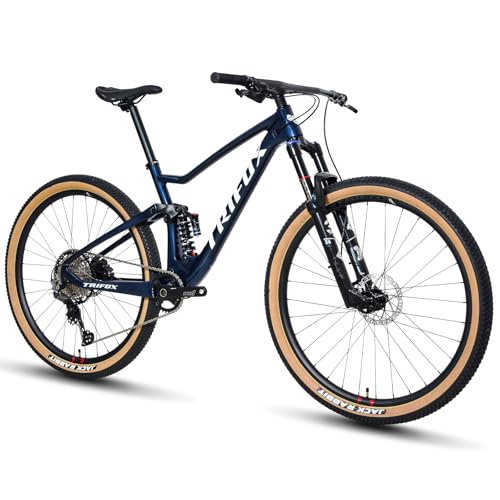 TRIFOX TRIFOX Full Suspension Carbon Fiber Mountain Bike with Shimano M6100 Deore Gro |
【Superlight and Fit and Feel】Carbon fiber frame provides a unique, sturdy and lightweight struc | $1,399.99 |
#332 in Mountain Bikes |
In stock |
 Ecarpat Ecarpat 26×4 Inch Full Suspension Fat Tires Mountain Bike, 21 Speeds Dual Disc |
Full-suspension Mountain Bike: Ecarpat Newest model is designed with thickened front forks and | $399.69 |
#138 in Mountain Bikes |
Only 15 left in stock – order soon. |
 Huffy Huffy Stone Mountain 26" Mountain Bike with 21-Speeds, Gray Gloss | Fits Rider |
SMOOTH DUAL SUSPENSION FOR COMFORT: Front suspension fork and rear spring shock absorb bumps, p | $239.99 $289.46 |
#4 in Mountain Bikes |
17% OFF Only 18 left in stock (more on the way). |
 CYBIC CYBIC 26 inch Mountain Bike for Adults – 21-Speed Steel Hardtail | Steel frame |
1️⃣ High-Tensile Steel Frame: This high-tensile steel frame gives the hardtail MTB the strength | $179.97 |
#41 in Mountain Bikes |
Only 20 left in stock – order soon. |
The 9 best mountain bikes on Amazon in 2026
Ranked from the chart-topping default buy to the bare-bones backup. Every pick carries its live price at check time, its Amazon category rank, and the failure mode we would worry about first.
1. WEIZE 26″ Dual-Suspension (18-Speed) – the #1 Best Seller
Start with the chart, because the chart is honest about what America actually buys: the current #1 Best Seller in Mountain Bikes on Amazon is this $159.99 WEIZE, a 26-inch dual-suspension bike with an 18-speed drivetrain. That price point tells you exactly what it is – the cheapest reasonable on-ramp into the category, not a competitor to the bikes below it.
The suspension is the headline and also the caveat. You get a front fork plus a rear shock, which genuinely softens cracked sidewalks, curbs and washboard fire roads. But at this price the rear unit is a basic coil spring, not a damped shock, so it adds weight and a bit of pogo on pedaling climbs rather than control on rock gardens. Treat it as a comfort feature, not a capability feature.
Who should buy it: a rider who wants a bike for neighborhood loops, rail trails and the occasional graded dirt path, who does not want to spend more than a dinner out, and who accepts that a $160 full-suspension bike is a compromise machine by definition. It is the best-selling mountain bike in the country for a reason – for light duty, it is enough bike.
WEIZE 26" Dual-Suspension: pros and cons
- Costs $159.99, less than a season of gym memberships, and is the current #1 Best Seller in Mountain Bikes
- Dual suspension takes the sting out of paths, curbs and washboard fire roads
- 18-speed drivetrain covers neighborhood hills without fuss
Flaws but not dealbreakers: The rear “shock” is a basic coil spring without real damping, the bike is heavy for the class, and it is not built for sustained singletrack – rocky trails will find its limits fast.
Who should not buy it: Skip it if you plan to ride actual singletrack monthly; a $450 hardtail with a real fork is the wiser spend.
2. SAVADECK Carbon Full-Suspension – best performance value
This is where Amazon’s shelf gets genuinely serious. The SAVADECK pairs a carbon-fiber full-suspension frame with a DNM air shock featuring hydraulic lockout – real damping you can tune and firm up for climbs – and the listing positions it for technical trails and enduro riding. At $1,799 it is the most credible trail bike we found anywhere on Amazon, and it currently ranks #45 in the Mountain Bikes category.
Air suspension is the dividing line between comfort-bike and trail-bike, and it matters: an air spring matched to your weight responds to small chatter and big hits differently in a way a fixed coil never will. Add the carbon frame (the single biggest weight saving per dollar in cycling) and this rides a class above everything priced under it on this page.
The honest caveat is component-tier reality: at $1,799 you get a carbon chassis with mid-level running gear, and a shop-assembled brand bike at this money may spec a better fork. But among bikes you can actually order on Amazon tonight, this is the one a real trail rider should shortlist first.
SAVADECK Carbon Full-Suspension: pros and cons
- Carbon-fiber full-suspension frame – the biggest weight-to-stiffness upgrade available at this price
- DNM air shock with hydraulic lockout: tunable damping, firm up for climbs
- Positioned and equipped for technical trails and enduro riding, not just paths
Flaws but not dealbreakers: At $1,799 the running gear is mid-tier by dealer-bike standards, assembly and shock setup are on you, and it ranks #45 – a niche pick compared with the budget chart-toppers, so resale is a gamble.
Who should not buy it: Not for casual path riders – $1,799 of air-sprung carbon is wasted on gravel paths.
3. Tommaso Gran Sasso 29er Hardtail – best step-up hardtail
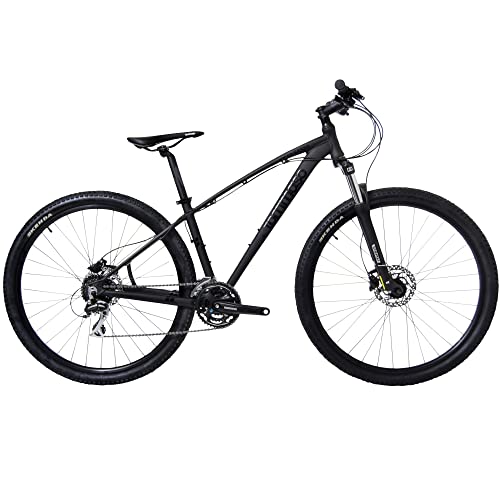
If your budget lands between the chart-topper and the carbon lane, the Tommaso Gran Sasso is the sweet spot of this whole page: a 29-inch alloy hardtail with hydraulic disc brakes for $449.99, in stock and ranking #158 in Mountain Bikes.
Two specs justify the step up from the $160-240 tier. First, hydraulics: cable disc brakes fade and demand lever pressure; hydraulic brakes modulate with one finger, wet or dry. BikeRadar’s buyer’s guide draws the same line – most mountain bikes have discs, with the better ones hydraulic. Second, the 29er wheels: bigger diameter rolls over roots and rocks with less drama than 26-inch, which is exactly what a newer trail rider needs.
Tommaso is a real cycling brand (not a generic Amazon badge), the listing backs the alloy frame with a lifetime warranty, and the hardtail format means less weight and less maintenance than any dual-suspension bike at this price. This is the bike we would hand a rider who has caught the bug and is heading to real trails.
Tommaso Gran Sasso 29er: pros and cons
- Hydraulic disc brakes – the single best upgrade per dollar on any bike on this page
- 29-inch wheels roll over roots and rocks more smoothly than 26-inch
- Alloy frame backed by a lifetime warranty from an established bike brand
Flaws but not dealbreakers: The hardtail means your legs are the rear suspension on rough descents, the fork is an entry-level coil unit, and Tommaso’s dealer network is thinner than the big-box brands if you ever need warranty hand-holding.
Who should not buy it: Skip it if you specifically want rear suspension comfort for straight rail-trail cruising – the dual-suspension picks cost less.
4. Schwinn Traxion 29″ Full-Suspension – budget full-suspension, big wheels
The Schwinn Traxion is the bridge pick: full suspension and 29-inch wheels together, at $699.99 – roughly a third of the SAVADECK. You get an aluminum frame, a 24-speed Shimano-compatible drivetrain for climbs, and a suspension fork up front doing most of the work while the rear shock takes the edge off the rest.
It is the only bike on this page combining big-wheel rollover with rear suspension under $1,400, and that combination is exactly what taller riders on rougher trails tend to ask for. Schwinn’s dealer-wide service network is also a genuine safety net at this price.
Watch the stock, though: at check time Amazon showed only 7 units left, and this listing sells through and restocks in waves. If your size is gone, check back rather than settling for a lesser bike.
Schwinn Traxion 29": pros and cons
- Full suspension plus 29-inch wheels for $699.99 – the only sub-$1,400 combo of its kind here
- Aluminum frame with a 24-speed drivetrain that climbs willingly
- Schwinn’s nationwide service network backs a budget-ish price
Flaws but not dealbreakers: The rear shock is a basic coil without lockout, the bike is heavy even for full-suspension, and stock is thin – only 7 units at our check.
Who should not buy it: Not for weight-weenies or bikepackers; a hardtail hauls and climbs better at this price.
5. Mongoose Argus ST Fat Tire – the sand-and-snow specialist
Most of this page is about riding trails faster. The Mongoose Argus ST is about riding places other bikes cannot: 4-inch-wide tires run at low pressure float over sand, snow and loose rock where normal tires dig in and stall. At our check it was $434.99, 25% off its $579.99 list.
Fat bikes are niche on purpose – the same float that makes them unbeatable in soft terrain makes them sluggish on hardpack – but as a four-season utility bike, particularly for beach towns and snowy winters, nothing else here substitutes. The Argus ST’s alloy frame and wide-range gearing make it a genuinely rideable daily machine, not a gimmick.
Stock warning: only 3 units at check time. At 25% off, this one moves.
Mongoose Argus ST fat tire: pros and cons
- 4-inch tires float over sand, snow and loose terrain that stops regular mountain bikes
- 25% off list ($434.99 vs $579.99) at check time
- Alloy frame keeps it rideable as a daily machine, not just a toy
Flaws but not dealbreakers: Heavy rolling resistance on pavement and hardpack is inherent to fat tires, rear suspension is absent, and only 3 units were in stock at our check.
Who should not buy it: Skip it if 95% of your riding is pavement and hardpack – the drag will annoy you daily.
6. TRIFOX Carbon Full-Suspension – the $1,400 carbon alternative
The TRIFOX is the SAVADECK’s value sibling: a carbon-fiber full-suspension frame with internal cable routing and a dynamic brake pivot for $1,399.99 – $400 under our top carbon pick. The trade is in the shock: you give up the SAVADECK’s air unit with hydraulic lockout for a simpler rear setup.
For a rider who wants carbon’s weight and ride quality primarily for cross-country distance rather than hard enduro hits, that trade is smart: save the $400, spend part of it on a hydraulic brake upgrade or a dropper post (BikeRadar calls droppers one of the modern must-haves), and you have a tailored bike for less.
Direct-to-consumer carbon means you are the mechanic and the warranty department, and it ranks #332 in category – this is a brand-driven bet, priced accordingly.
TRIFOX Carbon Full-Suspension: pros and cons
- Carbon full-suspension frame with internal cable routing at $1,399.99 – $400 under our top carbon pick
- Cross-country-friendly build that climbs and covers distance well
- Frees budget for a dropper post or brake upgrades versus the pricier carbon bike
Flaws but not dealbreakers: The rear suspension lacks the tunable air damping of the SAVADECK, DTC means self-assembly and self-service, and a #332 category rank signals a small brand with thin resale.
Who should not buy it: Skip it if you want plug-and-play support – buy the Schwinn and its dealer network instead.
7. Ecarpat 26×4 Fat Tire Full-Suspension – entry fat-bike lane
The Ecarpat is the fat-tire lane’s budget entry: 26×4.0-inch tires plus front and rear suspension for $399.69. It exists for the rider who wants the fat-bike float and a cushioned ride at a third of typical fat-bike prices.
Set expectations accordingly: this is a steel-grade budget build with stock coil suspension, and the fat tires add drag everywhere. But for beach paths, snowy sidewalks, dunes and mellow dirt loops, it delivers the core fat-bike experience – float and stability – without the $900+ entry fee the big brands charge.
Only 15 units at check time, and budget fat bikes restock slowly.
Ecarpat 26×4 fat tire: pros and cons
- Cheapest full-suspension fat tire on this page at $399.69
- 26×4.0-inch tires deliver genuine float on sand and snow
- Dual suspension softens rough paths beyond what a rigid fat bike offers
Flaws but not dealbreakers: Heavy, draggy on any hard surface, and the suspension is basic coil – this is a casual-terrain machine, not a trail bike with fat tires.
Who should not buy it: Skip it if you ever want to ride actual singletrack – buy the Tommaso or Argus instead.
8. Huffy Stone Mountain 26″ – the casual-rider default
The Huffy Stone Mountain is the shape most people picture when they hear “mountain bike”: 26-inch wheels, 21 speeds, front fork plus rear spring shock, steel frame, $239.99 (17% off list at check). It ranks #4 in the entire Mountain Bikes category – second only to the WEIZE among full-suspension budget bikes.
Huffy’s steel frame is the honest headline here: it is durable in the way department-store bikes are durable – heavy but hard to kill. For a family garage bike that gets ridden to school, on paths, and on campground loops a few weekends a year, that durability-plus-price formula is exactly right.
Flow Mountain Bike’s contributors – who coach junior riders – warn firmly against taking department-store-class bikes onto proper mountain-bike trails, where wheels, forks and frames can fail catastrophically. We agree, and that is why this pick comes with the sharpest who-should-not-buy line on the page.
Huffy Stone Mountain: pros and cons
- #4 Best Seller in all of Mountain Bikes at $239.99 (17% off)
- Steel frame is heavy but genuinely hard to kill in casual use
- Dual suspension plus 21 speeds covers neighborhood and campground duty
Flaws but not dealbreakers: Heavy steel frame, basic coil rear spring, and components chosen to hit the price – fine for paths, outclassed by the Tommaso on any real trail.
Who should not buy it: Do not take it on sustained singletrack – junior-program coaches specifically warn these frames are not built for it.
9. CYBIC 26″ Steel Hardtail – the bare-bones backup bike
The CYBIC is the price floor of this list: a 26-inch hardtail with a high-tensile steel frame, an 80mm suspension fork and a 21-speed drivetrain for $179.97. That is less than many people spend on a helmet and a pump.
As a hardtail it skips the heavy, bobbing rear shock of the budget dual-suspension bikes – which paradoxically makes it the more sensible $180 buy if you want anything resembling efficiency. The 80mm fork takes the buzz out of curbs and roots; the steel frame shrugs off abuse; the 21-speed gearing handles greenway hills.
It is a second bike, a guest bike, a campus bike – the one you lock outside the dorm and do not grieve. Within that job description, it is a fine purchase. Outside it, read the next line.
CYBIC 26" Steel Hardtail: pros and cons
- $179.97 – the cheapest honest hardtail on this page
- Hardtail format avoids the weight and pedaling bob of budget rear shocks
- 80mm fork and 21 speeds cover curbs, roots and greenway hills
Flaws but not dealbreakers: High-tensile steel is heavy, the components are the absolute floor of the market, and only 20 units were in stock at check.
Who should not buy it: Skip it as a primary trail bike – at $450 the Tommaso is three classes better for real riding.
Two more we would buy – but could not card today
Two bikes earned places in this guide but failed our stock rule: both were temporarily out of stock at the November 7 check, and we do not put buy buttons on bikes Amazon cannot ship. We are including them because both are worth a wishlist entry.
Canyon Spectral 125 AL 5 – $2,436.96 (Small). The premium ceiling of Amazon’s mountain-bike shelf: a playful, short-travel aluminum trail bike from one of the most respected direct-to-consumer brands in cycling, ranking #213 in category while between shipments. If it is in stock when you read this and your budget reaches this high, buy it over anything above it on this page.
Mongoose Impasse 3.0 – $839.99. The mid-lane full-suspension alternative: a 17-inch aluminum frame with an RST Blaze 100mm fork with lockout, ranking #86 in category. It fills the gap between the $700 Traxion and the $1,400 carbon lane, and it restocks regularly.
Where we disagree with BikeRadar and Flow Mountain Bike
Two respected testers shaped our thinking on this page, and we part ways with both on one specific point each. That disagreement is the most useful thing we can hand you.
The disagreement with BikeRadar: their 2026 buyer’s guide (updated August 2025) leads its trail-bike category with the Pivot Trailcat LT Pro X0 – an excellent machine that costs roughly $5,000 and is sold through dealer shops, not Amazon. We rank the SAVADECK as our best full-suspension value instead, at $1,799. The reason is channel, not quality: our readers are holding a shopping page on Amazon, with Prime shipping and a returns policy, and no Pivot is arriving in that box. When the buying context changes, the right answer changes – BikeRadar is right for shop shoppers, and we are right for this one.
The disagreement with Flow Mountain Bike: Flow’s entry-level guide tells beginners to avoid department-store bikes “like the plague,” and their reasoning is sound – we quote the mechanism in the failure-modes section below. But their frame is junior-program coaching, where bikes get ridden hard on real trails. The data says most Amazon mountain-bike buyers are not those riders: the category’s #1, #2 and #4 best sellers are $160-240 bikes, and millions of them will spend their lives on paths. So we include the WEIZE and the Huffy with clear warnings attached – the honest position is both: they are fine bikes for the jobs most buyers actually give them, and dangerous advice for the job Flow assumes.
Failure modes: what breaks first on cheap mountain bikes
Budget mountain bikes fail in patterns, not at random. Four recur so consistently across the listings we checked, the tester guides we read, and the spec sheets themselves that you should budget for them mentally before buying.
- The rear shock is the first lie. On every bike under $700 with “dual suspension,” the rear unit is a plain coil spring with no damping and no lockout. It does not fail mechanically so much as functionally: it bobs when you pedal, saps climb efficiency, and adds 2-4 pounds. The failure is the ride quality, not a broken part.
- Assembly and setup cause most early problems. These bikes ship 85% assembled, and the last 15% – headset tension, brake rotor truing, derailleur indexing – is where the complaints start. Flow’s coaches watch department-store bikes get assembled by non-mechanics and see wheels, forks and frames fail catastrophically on real trails afterward. Budget an hour with a torque wrench and a YouTube video, or $60-80 at a shop, before first ride.
- Brakes before drivetrain. Cable-actuated disc brakes on sub-$300 bikes are the component most likely to need immediate adjustment and eventual upgrade – which is why the Tommaso’s hydraulics at $449.99 matter so much. Drivetrains on this tier are crude but rarely the thing that strands you.
- Stock churn, not stock-outs, is the Amazon-specific failure. The Argus showed 3 units, the Traxion 7, the Ecarpat 15 at check time. Budget Amazon bikes sell through in waves and restock on nobody’s schedule – the practical failure mode is ordering a lesser bike because your first choice was between shipments.
Spec-claim reality check: what the marketing actually means
Four claims on these listings deserve translation before you trust them.
“21 speeds” is not a feature. Modern trail bikes run 1x drivetrains – one chainring, 11 or 12 cogs, no front derailleur to drop chains or cross-chain. The 3×7 “21-speed” layouts on the $160-240 bikes are cost engineering: more cogs on paper, worse shifting in practice, and the front derailleur is the most finicky part on the bike. It is not a scam; it is just not a performance number.
“Dual suspension” on a $160 bike means a spring. As covered above, the rear unit has no damping – it is a pogo stick that makes paths comfier and trails worse. The spec is technically true, which is exactly why it misleads.
Wheel sizes: 26 is not retro-cool, it is cost-driven. The budget tier still uses 26-inch wheels because they are the cheapest to build. 27.5 and 29-inch wheels roll over the same obstacle with less deflection – on real trails, the difference is immediately obvious. Every trail-serious pick on this page is a 29er except the fat bikes, where clearance matters more than diameter.
The only safety claim worth taking seriously: helmets work. The most-cited figure in mountain-bike safety is a 2017 systematic review and meta-analysis in the International Journal of Epidemiology covering 40 studies and more than 64,000 injured cyclists: helmet use was associated with a 51% reduction in the odds of head injury (OR 0.49) and a 69% reduction in serious head injury (OR 0.31). A 2025 updated review of mountain-biking injury epidemiology reaches the same direction of conclusion. Whatever bike you pick from this page, the highest-value $50 upgrade is the helmet you wear with it.
How we chose these mountain bikes
This page is built from three layers of evidence, and we are explicit about what each one is. First, live marketplace data: every price, discount, stock message, category rank and rating count was pulled through Amazon’s product API on November 7, 2026, and every ASIN was verified as a live, brand-matched listing before earning a card. Second, full-text reads of the tester guides cited above – BikeRadar’s 2026 buyer’s guide, Flow Mountain Bike’s entry-level guide, and Bicycling’s category explainer – used to frame tiers, spot failure patterns and pressure-test our rankings. Third, peer-reviewed research accessed via PubMed for the safety claims.
What we did not do: ride any of these bikes. We are not a test lab and this page does not pretend to be one – our verdicts are built from spec analysis, listing data, and the testers who did ride bikes, with our own tier logic layered on top. That method, and its limits, are described in full on our how we test page.
Key sources
- International Journal of Epidemiology (2017, via PubMed) – the 40-study helmet-effectiveness meta-analysis behind our safety figures (institutional, peer-reviewed).
- BikeRadar – 2026 buyer’s guide: discipline categories, brake and dropper guidance, fit advice (independent specialist tester).
- Flow Mountain Bike – entry-level guide and the department-store failure warning (independent specialist tester).
- Bicycling – travel-based category explainer (100mm cross-country to 200mm downhill) (independent specialist tester).
For riders coming from our other cycling coverage, our best bike trainers guide covers the indoor season, our best electric skateboards guide covers the paved commute, and our best paddle boards guide covers the water months – same tier-first method on all three.
Frequently asked questions
What size mountain bike do I need?
Fit beats almost every spec on this page, and geometry is not consistent between brands – a medium in one brand fits like a large in another. Check the listed frame size against your height, but also compare standover height and reach where the listing provides them. BikeRadar’s sizing guidance is blunt and correct: do not compromise on fit, because the wrong top-tube length ruins more rides than a fancy fork saves.
Are cheap Amazon mountain bikes any good?
For their intended job, yes – and the best-seller chart proves the market agrees. A $160-240 dual-suspension bike is a competent path and neighborhood machine that will not survive aggressive trail abuse. The failure mode is mismatch, not manufacturing: buy one for singletrack and you will bounce, strain and eventually break it. Buy one for greenways and it is a reasonable purchase.
Is a full-suspension bike worth it on a budget?
Usually not at the budget end, where the rear shock is an undamped spring – you carry its weight and pedaling bob everywhere for comfort you could partly get from a better fork and fatter tires. A $450 hardtail with hydraulic brakes (the Tommaso) is the better beginner trail bike than any sub-$500 dual-suspension bike on Amazon. Full suspension becomes worth it when it is damped – the air-shock carbon bikes at $1,400 and up on this page.
The verdict
Amazon’s mountain-bike shelf is more honest than its reputation. The tiers are real, the prices track the hardware, and the chart-toppers are exactly what they should be: cheap, adequate bikes for the riding most people actually do.
Our four verdicts in one breath: the WEIZE is the right $160 answer for paths and light duty; the Tommaso Gran Sasso is the best-per-dollar trail bike on the page; the SAVADECK is genuine carbon performance for $1,799; and the Canyon Spectral – when it restocks – is the premium ceiling. Pick the tier that matches where you actually ride, add the helmet the research says to wear, and go.