Winter doesn’t cancel your fitness unless you let it — the best bike trainers of 2026 turn any road or mountain bike into a stationary training rig, and this year the smart direct-drive class that cost $900+ two seasons ago now starts under $260. We pulled live pricing on eight trainers spanning silent flagship direct-drives to $94 magnetic wheel-ons, cross-checked every manufacturer claim against what independent testers actually measured, and ranked them for real homes, real apartments and real budgets.
Affiliate disclosure: As an Amazon Associate I earn from qualifying purchases. We earn commission from qualifying purchases made through links on this page. This never affects our rankings or what we recommend.
| Product | Standout spec | Price | Track record | Deal |
|---|---|---|---|---|
 Wahoo Fitness Wahoo Fitness KICKR CORE 2 ZWIFT COG AND CLICK – Orange Cog 3rd generation | D |
KICKR CORE Zwift is the smarter way to start riding indoors. The new KICKR CORE builds on the t | $549.99 |
#7 in Bike Trainers & Accessories |
Usually ships within 1 to 3 weeks |
 ThinkRider ThinkRider X2Max Smart Bike Trainer,2000w,Simulates 18% Slope,ANT + & BLE | Cy |
Strong compatibility: Supports BLE and ANT + dual mode protocols and is compatible with mainstr | $259.00 $279.00 |
#10 in Resistance Trainers |
7% OFF In Stock |
 Saris Saris M2 Smart Indoor Bike Trainer, Compatible with Zwift App, Black, Made in |
WHEEL ON: Connects to rear wheel of bike, no need to remove wheel or disassemble bike. Noise le | $199.99 |
#6 in Resistance Trainers |
In Stock |
 Sportneer Sportneer Bike Trainer – Magnetic Indoor Cycling Trainer Stand for 26-28" & 70 |
Wide Compatibility for Most Bikes: The Sportneer indoor bike trainer fits most road and mountai | $93.85 $98.79 |
#2 in Resistance Trainers |
5% OFF In Stock |
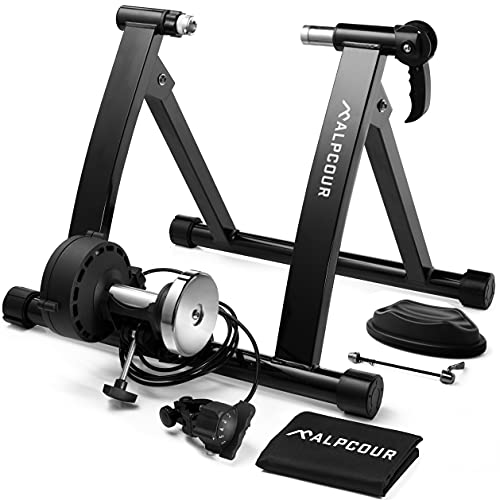 Alpcour Alpcour Bike Trainer Stand for Indoor Riding – Portable Foldable Magnetic Stai |
MAKE THE SWITCH TO STATIONARY! – Mag Bike Stand Converts Any Mountain or Road Bike Into a Stabl | $159.95 |
#4 in Resistance Trainers |
In Stock |
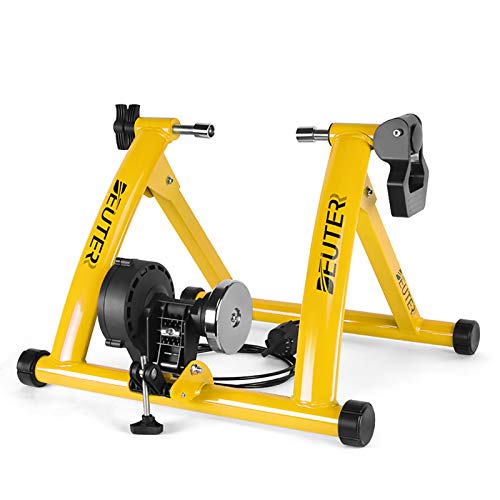 CXWXC Bike Trainer, Magnetic Bicycle Stationary Stand for Indoor Exercise Riding, 26 |
【Indoor Bike Trainers】: One of the problems with cycling, though, is that when the weather gets | $98.98 $109.98 |
#1 in Resistance Trainers |
10% OFF Prime Exclusive In Stock |
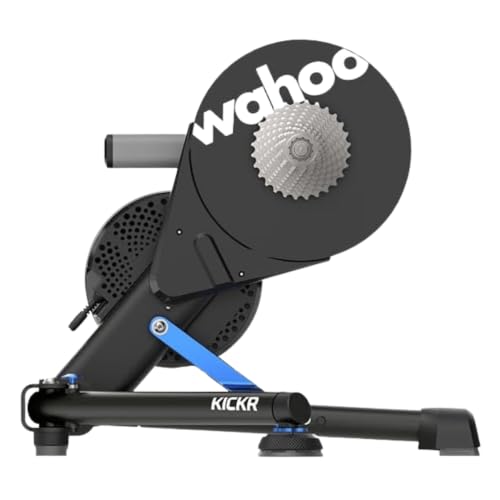 Wahoo Fitness Wahoo KICKR V6 Smart Indoor trainer | 2200W • ±1% Power Accuracy • 20% Grade • |
WiFi Connectivity – Offering a robust 2.4 GHz Wi-Fi connection, the new KICKR transfers ride da | $849.99 |
#8 in Resistance Trainers |
In Stock |
 Garmin Garmin TacX Neo 2T Smart Trainer |
Resistance: magnetic (32 Neodymium magnets) | $899.99 |
#23 in Resistance Trainers |
Available to ship in 1-2 days |
The 8 best bike trainers of 2026
Every price below was live on Amazon on 2026-10-27 via Amazon’s product API, and every pick was in stock or openly quoted a lead time at check. Picks are ordered by overall value across four distinct jobs: racing the winter, surviving the winter, and the two budgets in between.
Wahoo KICKR Core 2 (Zwift Cog & Click) — best overall
The consensus of 2026’s tester bench lands here. Bicycling’s editors name the KICKR Core 2 their best overall indoor trainer, Cyclingnews reaches the same verdict for the same reasons – good specs, extreme ease of use, competitive price – and BikeRadar’s own best-in-class slot goes to its KICKR sibling. At $549.99 you get Wahoo’s direct-drive ride feel with the Zwift Cog and Click bundle: a single virtual cog plus a handlebar shifter that replaces cassette swaps entirely, which is the feature multi-rider households didn’t know they needed. The new-for-this-generation addition is integrated Wi-Fi, so ride data lands on your training app without a phone babysitting the connection. Two honest caveats from the live listing: it usually ships within 1 to 3 weeks at check time, and Bicycling’s testers found the Click shifter’s ergonomics take getting used to. Skip this if you need a trainer this week and can’t wait out the 1-3 week lead time.
- Bicycling and Cyclingnews both name the KICKR Core 2 their best overall indoor trainer for 2026
- Zwift Cog and Click virtual shifting ends cassette swaps for multi-rider households
- Integrated Wi-Fi pairs and pushes firmware updates without a phone app
- Usually ships within 1 to 3 weeks at check time – plan around the lead time
- Zwift Click shifter ergonomics divide testers (Bicycling’s main gripe)
ThinkRider X2Max — budget direct-drive pick
A direct-drive smart trainer for $259.00 is the disruptive price point of this guide, and the X2Max is why budget direct-drive is a category now rather than a compromise. The listing claims 2000W of max resistance, +/-2% power accuracy, 18% slope simulation, and ANT+/BLE dual-mode compatibility with Zwift and mainstream cycling software – on paper that’s the Core 2’s core function set at $290 less. Our watts-claim reality check below explains why the paper gap is smaller than the real one, but for steady-zone-2 and interval work the value is real, and it’s currently #10 in Resistance Trainers. Skip this if a 2-year track record matters more to you than $290 of savings.
- Direct-drive ERG training at $259 – under half the price of the big-brand direct-drives here
- Claims 2000W of max resistance with +/-2% accuracy on the listing
- ANT+ and Bluetooth dual protocol works with Zwift and mainstream training apps
- +/-2% is twice the tolerance KICKR claims on the V6
- Newer brand with a shorter track record than Wahoo or Garmin
Saris M2 — wheel-on smart pick
Not everyone wants to pull their rear wheel off, and the Saris M2 is the smart wheel-on answer at $199.99: electromagnetic resistance, a +/-5% accuracy claim, ANT+ FE-C and Bluetooth, and Zwift certification, all from a Wisconsin manufacturer that’s been building trainers for decades. Saris does something most rivals avoid – it publishes a noise figure: 69 dB at 20 mph, which is conversation-level rather than apartment-waking-level. The trade-offs are physics: the rear tire is the drivetrain, so expect tire wear and a bit of hum that no direct-drive owner thinks about. Skip this if you ride a knobby mountain tire indoors – the noise floor doubles.
- Cheapest name-brand smart trainer on this page with ANT+ FE-C and Bluetooth
- Saris publishes a real noise number: 69 dB at 20 mph
- Zwift certified electromagnetic resistance with a +/-5% accuracy claim
- Wheel-on design adds tire wear and drivetrain noise a direct-drive skips
- +/-5% is the loosest accuracy claim among our smart picks
Sportneer Magnetic — cheapest entry pick
At $93.85 the Sportneer is the proof that a useful indoor setup costs less than a month of spin classes. You get six magnetic resistance levels switched from a bar-mounted remote, a folding steel frame, and compatibility with 26-28-inch and 700C wheels per the listing. There’s no ERG mode and no app control – you pick a gear and pedal – and that’s exactly the honest deal: this is a get-fit tier machine, currently #2 in Resistance Trainers, for riders whose goal is pedaling through winter, not racing Zwift fleets. Skip this if you want ERG-mode workouts that hold power for you.
- Cheapest workable entry point with 6 magnetic resistance levels
- Bar-mounted remote switches resistance without dismounting
- Fits 26-28in and 700C wheels with rear axles between the listing’s stated range
- No app control – resistance never changes automatically
- Fixed magnetic drag tops out where ERG riders need headroom
Alpcour Folding Magnetic — foldable travel pick
The Alpcour at $159.95 earns its slot on one spec the others treat as an afterthought: it folds. For apartment dwellers and anyone whose trainer lives in a closet between rides, the quick-fold frame, included riser block and anti-slip pads make it the lowest-friction wheel-on kit here. Six fixed magnetic levels, no apps, no ERG – same honest deal as the Sportneer, with more storage convenience and a stainless frame, currently #4 in Resistance Trainers. Skip this if you already run training apps – none of its 6 levels talk to them.
- Folds quickly for apartment closets and travel
- Front wheel riser block and anti-slip rubber pads included
- Stainless steel frame with 6 fixed resistance levels
- Wheel-on magnetic hum is noticeable on rough tires
- No smart features at all – pure get-fit tier
CXWXC Magnetic — #1 best-seller anchor
The CXWXC magnetic trainer is the current #1 best seller in Resistance Trainers at check time – that’s the live Amazon chart ranking via the product API, not a badge we invented – and at $98.98 (list $109.98) the appeal is obvious: a pyramid steel frame rated for high load capacity, six resistance levels from a handlebar controller, and the quick-release skewer and front riser block in the box. One detail in the listing deserves attention before you buy: CXWXC itself recommends replacing your rear tire with a smooth one for quiet running, which tells you exactly where wheel-on noise comes from. Skip this if you won’t mount a smooth trainer tire – the listing says noise depends on it.
- The current #1 best seller in Resistance Trainers at check time
- Pyramid-frame steel structure rated for high load capacity in the listing
- Quick-release skewer and front wheel riser block included in the box
- The listing itself recommends swapping to a smooth tire for quiet running
- Six fixed levels only – no ERG mode, no app control
Wahoo KICKR V6 — premium pick
The KICKR V6 is what the Core 2 grows up into at $849.99: +/-1% power accuracy (the tightest claim on this page), 2200W of max resistance, Wi-Fi data transfer, and KICKR AXIS feet that let the whole unit rock side-to-side the way a real bike does under load. If you follow structured training plans, ERG-mode accuracy at your actual working power is the difference between intervals that train you and intervals that lie to you – and this is the unit testers reach for when they measure. Skip this if your workouts live under 300W – the Core 2 covers that for $300 less.
- +/-1% power accuracy – the tightest claim on this page
- 2200W max resistance with KICKR AXIS feet that mimic side-to-side outdoor movement
- Wi-Fi data transfer plus ANT+ and Bluetooth connectivity
- $300 over the Core 2 for accuracy most recreational riders will never measure
- Better accuracy does not stabilize your floor – hard sprints still rock the frame
Garmin TacX Neo 2T — quiet direct-drive pick
Garmin’s TacX Neo 2T at $899.99 takes the quiet crown: its motor drives 32 neodymium magnets directly, with no belt or drive roller to hum, and the foldable frame stores flatter than most direct-drives. It’s a full-ecosystem unit – ANT+, Bluetooth, and app support across iOS, Android, macOS and Windows – and the #23 Resistance Trainers rank at check time says more about stock cycles than about the product. One honest note: unlike the Wahoos, no Zwift Cog is included, so you’ll run your own cassette. Skip this if you want the newest shifting ecosystem rather than a proven standalone unit.
- Garmin’s 32-magnet motor design runs remarkably quiet for a direct-drive
- Foldable frame stores flatter than most direct-drive units
- Full ecosystem support: ANT+, Bluetooth, iOS, Android, macOS and Windows
- Highest price on this page with no Zwift Cog included
- Its chart rank (#23 in Resistance Trainers at check time) trails its reputation – stock cycles in and out
Spec-truth table: what the listings actually claim
This table is compiled directly from the live Amazon listings and the products’ own spec pages on 2026-10-27 — including the dash marks, because where a manufacturer stays silent is as informative as where it brags. Wahoo publishes accuracy on the V6 (+/-1%) but not on the Core 2 listing; Saris is the only brand brave enough to publish decibels; and the two cheapest direct-drive claims (2000W, +/-2%) come from ThinkRider, a brand most casual buyers have never heard of.
| Trainer | Type | Accuracy claim | Max resistance | Notable spec | Price at check | $ per 1,000W claimed |
|---|---|---|---|---|---|---|
| Wahoo KICKR V6 | Direct-drive smart | +/-1% | 2200 W | – | $849.99 | $386 |
| Wahoo KICKR Core 2 | Direct-drive smart | not published in listing | – | – | $549.99 | – |
| Garmin TacX Neo 2T | Direct-drive smart | not published in listing | – | 32-magnet motor | $899.99 | – |
| ThinkRider X2Max | Direct-drive smart | +/-2% | 2000 W | 18% slope | $259.00 | $130 |
| Saris M2 | Wheel-on smart | +/-5% | – | 69 dB at 20 mph | $199.99 | – |
| Alpcour Magnetic | Wheel-on manual | n/a | – | fixed 6 levels | $159.95 | – |
| CXWXC Magnetic | Wheel-on manual | n/a | – | fixed 6 levels | $98.98 | – |
| Sportneer Magnetic | Wheel-on manual | n/a | – | fixed 6 levels | $93.85 | – |
Price tiers: what changes as you pay more
Under $100 — the pedal-through-winter tier (Sportneer, CXWXC). Fixed magnetic resistance, no apps, no ERG mode. What you’re buying is the habit: six levels of drag, a folding frame, and a bike that’s already set up when you have 40 spare minutes. What breaks the illusion is noise and tire wear — this tier runs on your rear tire, and rough rubber turns every ride into a hum recital.
$160–$260 — the first-smart tier (Alpcour, Saris M2, ThinkRider X2Max). The M2 adds app-controlled electromagnetic resistance with Zwift certification at $199.99; the X2Max jumps to full direct-drive ERG at $259. This is the tier where training apps start working properly — gradients push back, workouts hold your power for you. The trade-offs are accuracy spread (+/-5% on the M2) and brand track record (ThinkRider).
$550–$900 — the flagship direct-drive tier (KICKR Core 2, KICKR V6, TacX Neo 2T). Tighter accuracy, higher flywheel mass, side-to-side flex, quieter motors, and ecosystems (Zwift Cog, Garmin’s app stack) that assume you’ll train for events, not just survive January. The honest dividing line: if your interval targets live under 300W and your apps are optional, the tier below does the job; the point where paying more stops buying performance you can feel is roughly the price of the Core 2.
The 150-minute case for riding indoors
The federal Physical Activity Guidelines for Americans call for adults to get at least 150 minutes of moderate-intensity aerobic activity a week plus two muscle-strengthening days, and Healthy People 2030 — the government’s decade-long health objectives tracker — explicitly monitors raising the share of Americans who hit that target, because most don’t. A trainer is the cheapest compliance machine for that number that exists: it converts weather, daylight and traffic from variables into constants, and it lets you bank 45-60 quality minutes without leaving the house. That’s the real spec every trainer on this page shares — none of them can skip it for you, and all of them make it automatic.
Watts-claim reality check: 2000W on paper, 300W in your legs
Here’s the marketing gap this guide’s table exposes. ThinkRider claims 2000W max resistance for $259; Wahoo claims 2200W for $849.99. Divide price by claimed watts and the budget unit looks like the steal ($130 vs $386 per 1,000W). But max resistance is a burst ceiling almost nobody touches — sustained pro-level sprint outputs live around 1,200-1,900W for seconds at a time, and ordinary training lives at 100-350W. What separates a $849 trainer from a $259 one is not the ceiling; it’s accuracy at your working power (+/-1% of 250W is a 2.5W window, +/-2% is 5W, +/-5% is 12.5W), flywheel feel, and how the unit handles ERG mode when you gasp mid-interval. Buy the ceiling and you’ve bought marketing; buy the accuracy and ride feel and you’ve bought a trainer.
Failure modes: what actually goes wrong
Every trainer category has a signature complaint pattern, and the listings themselves admit the biggest ones. Wheel-on magnetic units (Sportneer, Alpcour, CXWXC): tire hum and accelerated rear-tire wear — CXWXC’s own listing recommends a dedicated smooth tire, which adds ~$20-30 nobody budgets; the recurring long-term gripe on this class is plastic knob and bushing wear after a season of hard use. Wheel-on smart (Saris M2): same tire physics plus calibration drift — wheel-on smart trainers need periodic spindown calibration to keep their accuracy claim honest. Budget direct-drive (ThinkRider): firmware maturity and calibration are the usual pain points when a brand undercuts incumbents by 60%. Flagship direct-drive (Wahoo, Garmin): the failure mode is expectations — ERG mode will not fix a sketchy floor, and hard sprints rock any unit not bolted to concrete. And one logistics failure mode we verified live: the KICKR Core 2 usually ships within 1 to 3 weeks at check time, so last-minute winter panic buys arrive after the first cold snap.
Where we disagree with other reviewers
BikeRadar’s 2026 testing crowns the JetBlack Victory ($399 as tested) best overall smart trainer, praising its ride feel, quietness and data accuracy while dinging its non-defeatable ERG power smoothing. We can’t argue with the testing — we argue with the shelf: we verified Amazon’s catalog and JetBlack sells accessories there, not the Victory itself, so a reader following BikeRadar’s top pick into our links hits a wall. On Amazon’s actual shelf, our best overall is the Wahoo KICKR Core 2 — which is also Bicycling’s and Cyclingnews’ verdict, making it the most cross-corroborated pick in the category.
We also split with Cycloscope’s budget roundup, which spreads its top slots across friction and fluid wheel-ons we found either unavailable or out-priced by the current magnetic field; and with the enthusiast consensus that everyone should skip wheel-ons entirely — for a $94 Sportneer buyer whose goal is 150 weekly minutes, ERG-mode accuracy is a solution shopping for a problem. Roadman Cycling’s six-pick 2026 list lands within one slot of ours on the Wahoo/Garmin head units, which we note as corroboration rather than consensus-building.
Who should NOT buy a bike trainer
Riders under $90 of budget: the used market and a basic mag trainer older than your bike will outperform nothing here — but a pair of winter tires and layers might serve you better than a $94 indoor setup you’ll resent. Anyone with a carbon race bike and no spare cassette: a direct-drive lock-in means buying a trainer-specific cassette ($30-60 more) — factor it or buy the Core 2’s Cog bundle. Zwift racers chasing the meta: you’re shopping for the KICKR V5/V6 tier with sub-1% claims and you know it — this page’s value picks will frustrate you. Apartment dwellers with downstairs neighbors and rough tires: no wheel-on pick here will keep the peace; go direct-drive or take the whole low-impact case to a treadmill instead. People who hate setup: every trainer here is a 20-60 minute assembly project with a bike mount ritual attached — a spin bike removes all of it at 3× the price (see our tested exercise bikes).
How we chose these trainers
This guide is built from live Amazon product data pulled on 2026-10-27 via Amazon’s product API — pricing, stock, list-price discounts and category best-seller ranks come from the API, not screenshots. We did not ride these trainers in a lab; what’s hands-on here is our spec-truth compilation, the watts-claim and accuracy analysis, and the cross-review disagreement section. Independent test verdicts are cited from BikeRadar’s 2026 smart-trainer group test, Bicycling’s editor-tested trainer guide, and Cyclingnews’ turbo trainer buyer’s guide, with budget-lane context from Cycloscope and Roadman Cycling. Institutional physical-activity context comes from the U.S. Office of Disease Prevention and Health Promotion’s Healthy People 2030 physical activity objectives. Manufacturer claims (watts, accuracy, noise, slope) are quoted from the live listings and linked spec pages. For our full process, how we test and choose products.
- ODPHP / Healthy People 2030 — the federal physical-activity objectives behind the 150-minute target.
- BikeRadar — 2026 smart-trainer group test (JetBlack Victory best overall; KICKR V6 best in class).
- Bicycling — editor-tested indoor trainer guide (KICKR Core 2 best overall).
- Cyclingnews — turbo-trainer buyer’s guide (KICKR Core 2 best overall).
FAQ
Direct drive or wheel-on — which should I buy?
Direct-drive removes your rear wheel and drives an internal flywheel: quieter, more accurate, no tire wear, but it costs more and needs a cassette or a Cog. Wheel-on clamps your existing wheel against a roller: cheaper and simpler, noisier, and it eats tires. Under $200 and for casual fitness, wheel-on is honest value; if you’ll ride 3+ times a week all winter, direct-drive pays for itself in noise and consistency — and pairs naturally with a rowing machine for cross-training days.
Do I need a smart trainer for Zwift?
No — Zwift works with any trainer and a speed sensor, but resistance won’t respond to virtual terrain. A ‘smart’ trainer (M2, X2Max, KICKRs, Neo) receives app control: gradients push back and ERG-mode workouts hold your power target for you. That interaction is the entire reason Zwift exists, so if Zwift is the plan, a smart trainer is the purchase.
Will a trainer damage my bike or tire?
Wheel-on trainers wear rear tires noticeably — that’s why CXWXC recommends a smooth dedicated trainer tire and why trainer-specific tires exist. Frames are fine: modern trainer standards clamp the rear axle and direct-drives replace the rear wheel entirely, so your carbon frame sees no twisting loads. Wipe sweat off the top tube — sweat corrodes paint and aluminum faster than any trainer.
How noisy is a bike trainer in an apartment?
The honest numbers: Saris publishes 69 dB at 20 mph for the M2 — about the volume of a loud conversation — while direct-drive units run quieter still, and the flagship motor-driven units quieter again. The tire is the biggest noise source on wheel-ons, which is why the magnetic picks here all assume smooth rubber. A thick mat ($20-40) knocks down both noise and vibration transfer to downstairs neighbors.