The best binoculars in 2026 are not one pair but a short list of configurations: an 8×42 for birds, a 10×42 for wildlife and long range, a 7×50 for boats, and image-stabilized glass for everything that shakes. We compared nine current Amazon picks across those lanes, from a $28.79 pocket pair that happens to be the category’s #1 Best Seller to a $696.95 stabilization marvel, cross-checked the claims against OutdoorGearLab’s 16-pair field test, Live Science’s 2026 guide and the Audubon Society’s convention-panel rankings, and price-checked every unit through Amazon’s product API this week. Fall migration and the holidays are exactly when binocular sales spike and prices move, so every figure below was verified on 2026-10-07.
As an Amazon Associate we earn from qualifying purchases. We earn commission from qualifying purchases made through links on this page. This never affects our rankings or what we recommend.
Contents
- How we picked and tested
- The contenders at a glance
- The 9 best binoculars of 2026
- Where we disagree with the testers
- How to choose binoculars (and what the specs mean)
- Caring for your binoculars
- Frequently asked questions
- The final verdict
How we picked and tested
Nine lanes, one pick each: budget compact, budget full-size, ED-glass mid-price, marine, flat-field ED, premium birding, tester-crowned overall, and image-stabilized. Every ASIN was verified live through Amazon’s product API on 2026-10-07 (title, brand, buy-box price, discount and stock), and the #1 Best Seller slot was confirmed on Amazon’s own Binoculars best-sellers chart rather than taken from a listing badge. We read the published specs of each listing line by line, pulled the complaint patterns from tester notes and critical reviews, and only ranked products we could verify in stock or restocking.
This page is three kinds of research stacked honestly: our own spec and price analysis of live listings, hands-on findings aggregated from cited testers (OutdoorGearLab bought and tested 16 of the best-selling binoculars; Live Science tested the models in its 2026 guide; Audubon’s convention panel rated nearly 50 pairs on clarity, brightness, color rendition and eye relief), and institutional guidance on using optics safely in cold weather from the National Weather Service. We are not a lab; our full testing methodology explains exactly what that means, and we would rather show the seams than pretend.
Key sources
Key sources:
• NWS Cold Weather Safety — frostbite and hypothermia timing for cold-season glassing.
• The Audubon Guide to Binoculars — convention-panel ratings of ~50 pairs and the 7-8x guidance.
• OutdoorGearLab — 16 best-selling binoculars bought and side-by-side field tested since 2013.
• Live Science — 2026 tester guide to binoculars for birdwatching and stargazing.
The contenders at a glance
| Product | Standout spec | Price | Track record | Deal |
|---|---|---|---|---|
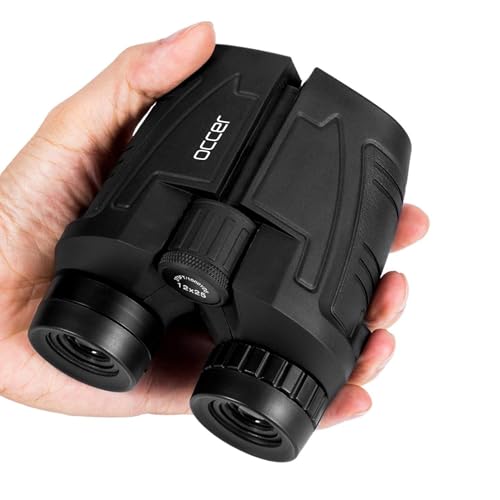 occer Occer 12×25 Compact Binoculars for Adults and Kids |
【HIGH-POWERED LARGE EYEPIECE BINOCULARS】 This binoculars for adults has 12x magnification, 25mm | $28.79 $35.98 |
#1 in Binoculars |
20% OFF Prime Exclusive In Stock |
 Celestron Celestron Nature DX 8×42 Waterproof Binoculars for Bird Watching & Outdoors |
THE PERFECT BINOCULARS FOR EVERY ADVENTURE: Nature DX 8×42 offers sharp, detailed views in a co | $148.99 $179.95 |
#41 in Binoculars |
17% OFF In Stock |
 Vortex Vortex Crossfire HD 10×42 Binoculars |
10x magnification & 42mm objective lenses, these Crossfire HD binos are optimized with select g | $149.00 |
#6 in Binoculars |
In Stock |
 Nikon NIKON Monarch M5 Binoculars | Waterproof Fogproof ED Glass Optics with Dielect |
PREMIUM OPTICS WITH ED GLASS – Nikon MONARCH M5 binoculars feature Extra-low Dispersion (ED) gl | $307.84 $339.95 |
#45 in Binoculars |
9% OFF In Stock |
 Steiner Steiner Marine Binoculars for Adults and Kids, 7×50 Binoculars for Bird Watchi |
HIGH CONTRAST OPTICS – For bright, high-contrast images with true-to-life color reproduction, 7 | $279.00 |
#108 in Binoculars |
In Stock |
 Celestron Celestron Regal ED 10×42 Roof Binoculars – ED Glass for Hunting & Wildlife |
PERFECT BINOCULARS FOR EVERY ADVENTURE: Ideal for beginners and seasoned outdoor or birding ent | $318.99 $379.95 |
#293 in Binoculars |
16% OFF Only 17 left in stock – order soon. |
 Nikon Nikon Monarch M7 10×42 Binoculars | Official Nikon USA Model |
BRIGHT, HIGH-RESOLUTION VIEWS IN ANY LIGHT – Nikon MONARCH M7 binoculars feature ED glass and m | $447.75 $549.95 |
#48 in Binoculars |
19% OFF In Stock |
 Vortex Vortex Viper HD Roof Prism Binoculars 8×42 |
8x magnification and 42mm objective lenses, the Viper HD is a high-end, full-size yet compact b | $489.00 |
#51 in Binoculars |
In Stock |
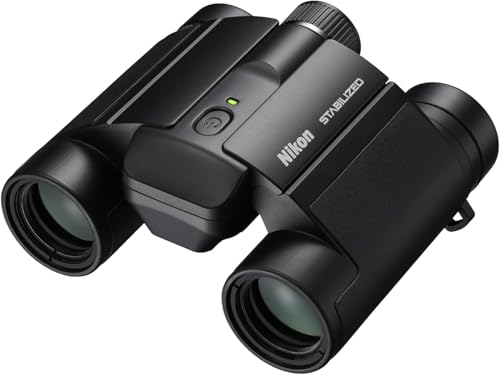 Nikon Nikon STABILIZED 12×25 Binoculars – Optical Image Stabilization, Blur-Free Vie |
ELECTRONIC IMAGE STABILIZATION FOR STEADY VIEWS – Advanced stabilization technology compensates | $696.95 |
#434 in Binoculars |
Only 5 left in stock – order soon. |
The nine picks total $2,866.31 at the prices above, but nobody needs all nine — the point of the lanes is that the right question is not “which binoculars are best” but “best for what.”
The 9 best binoculars of 2026
Occer 12×25: the current #1 Best Seller in Binoculars
Every category has a popularity winner, and this is it: Amazon’s own best-sellers chart in Binoculars currently puts the Occer 12×25 at number one, and it has been the default first pair for school science fairs, cruise balconies and backyard birds for years. It is a 12×25 with FMC-coated lenses over a BaK-4 prism, a claimed 273-foot field of view at 1,000 yards and fold-down eyecups that make it usable with glasses. At $28.79 (20 percent off, Prime Exclusive) it is the cheapest way to find out whether anyone in your house actually cares about birds.
What we like:
- The current #1 Best Seller in Binoculars, with more than 20 percent off its $35.98 list price
- Genuinely pocketable: one hand, a jacket pocket, no harness needed
- Fold-down rubber eyecups actually work for eyeglass wearers
- Wide 273-foot field of view at 1,000 yards for a budget compact
Flaws but not dealbreakers: The 12x magnification over a 25mm objective gives a 2.1mm exit pupil, so the image dims fast in twilight, and the ABS shell is ‘life waterproof’ rather than nitrogen-purged waterproof. That is a fair trade at $28.79, but it is not a dawn-and-dusk optic.
Who should skip it: Skip it if you want one pair for low-light wildlife: the Nature DX 8×42 below is the better single pair.
Celestron Nature DX 8×42: best binoculars under $150 for birding
This is the pair to buy if you want the configuration birding organizations actually recommend without spending more than $150. The 8×42 magnification-objective balance is what the Audubon guide calls bright with a wide field of view, and Celestron backs it with phase-coated BaK-4 prisms, fully multi-coated lenses, nitrogen purging and a limited lifetime US warranty. The listing’s 7.4-degree angular field of view works out to roughly 389 feet at 1,000 yards, wide enough to keep a warbler in frame while it flits.
What we like:
- 8×42 is exactly the configuration the Audubon guide recommends for most birders
- Phase-coated BaK-4 prisms and fully multi-coated lenses at a $148.99 street price
- Waterproof and nitrogen-purged, which budget compacts are not
- Wide 7.4-degree field of view (about 389 feet at 1,000 yards) for following birds in flight
Flaws but not dealbreakers: It is not ED glass, so expect a little color fringing at the edges compared with the Monarch M5 and Regal ED, and OutdoorGearLab measured the 8×42 at 22.8 ounces, which is noticeably heavier than any compact you could pocket.
Who should skip it: Skip it if you mainly glass wide open country at long range; a 10x lane fits that better.
Vortex Crossfire HD 10×42: best budget full-size glass
Vortex’s entry full-size pair is the number 6 best seller in all of Binoculars, and it is the cheapest way into genuine HD-spec glass: select elements that cut chromatic aberration, full multi-coating on every air-to-glass surface, and a rubber-armored roof-prism body that is nitrogen-purged and O-ring sealed. The VIP warranty is the real story: unlimited, unconditional, lifetime, fully transferable — if you drop it off a cliff, Vortex repairs or replaces it.
What we like:
- Select HD glass elements that cut chromatic aberration at a flat $149
- Nitrogen-purged and O-ring sealed, waterproof and fogproof
- Vortex VIP warranty: unlimited, unconditional, lifetime and fully transferable
- Ranked #6 best seller in Binoculars at the time of writing
Flaws but not dealbreakers: Ten-power magnification shows more hand shake than an 8x, and Vortex does not publish a field-of-view figure for this model in its listing, which makes comparison awkward.
Who should skip it: Skip it if you bird mostly in shaded woods at dawn, where the brighter 8×42 lanes pay off.
Nikon Monarch M5 8×42: the ED-glass threshold pick
Around $300, binoculars stop apologizing. The Monarch M5 is the cheapest pair here with extra-low dispersion glass, which visibly reduces the color fringing that cheaper optics show on backlit branches, and its dielectric prism coatings brighten the dawn-and-dusk window when birds actually move. Nikon publishes an 8.2-foot close focus for the 8×42, close enough for butterflies at the feeder, and the turn-and-slide eyecups are genuinely easy for eyeglass wearers.
What we like:
- ED glass minimizes chromatic aberration and color fringing, the flaw that betrays cheaper bins
- Close focus as near as 8.2 feet for butterflies and feeder birds
- Dielectric high-reflective prism coatings for brighter low-light views
- Turn-and-slide eyecups that eye-glass wearers consistently rate well
Flaws but not dealbreakers: The discount is modest (9 percent off $339.95) and the rubber-armored 8×42 body is not what anyone would call compact.
Who should skip it: Skip it if your budget tops out near $150: the Crossfire HD delivers most of the experience for half the money.
Steiner Marine 7×50: best binoculars for boats
Marine glass is its own discipline: you want a wide, bright, low-magnification image you can brace on a rail in a chop. Steiner’s 7×50 does exactly that with sports auto-focus (set it once, everything from 20 yards out stays sharp), a floating prism system that absorbs shock, and 356 feet of field of view at 1,000 yards. The 7.1mm exit pupil is why this stays bright long after a compact has gone dim.
What we like:
- Sports auto-focus: set it once and everything from 20 yards to infinity stays sharp
- Floating prism system uses flexible silicone mounts to absorb shock and impact
- 7×50 configuration gives a 7.1mm exit pupil, which is why marine glass is bright even at dusk
- 356-foot field of view at 1,000 yards for scanning horizons
Flaws but not dealbreakers: Seven power is short reach for land wildlife, the 50mm objectives make it the heaviest pair here for hiking, and an auto-focus design has no close-focus range worth writing home about.
Who should skip it: Skip it if you need close focus for butterflies and museum walls rather than buoys and boats.
Celestron Regal ED 10×42: the sharpest sub-$350 all-rounder
Live Science’s 2026 guide calls the Regal ED 10×42 excellent quality for the money and notes it performs better than some more expensive models they have tried — we agree, and the spec sheet explains why: ED objectives for color fidelity, a flat-field design that stays sharp to the edge, and a 6.5-foot minimum focus that is the best in this roundup. Metal twist-up eyecups at this price are rare. Just move fast: only 17 were left when we price-checked.
What we like:
- ED objective lenses virtually eliminate chromatic aberration for the money
- Flat-field optical design stays sharp edge to edge
- 6.5-foot minimum focus, the closest in this test
- Metal twist-up eyecups, a rarity under $400
Flaws but not dealbreakers: Only 17 were left in stock when we checked, ten-power shake is real without steady hands, and the listing does not state a field-of-view figure.
Who should skip it: Skip it if dawn and dusk birding is your main event; the brighter 8×42 Monarch M5 is calmer in failing light.
Nikon Monarch M7 10×42: best premium birding binocular
OutdoorGearLab’s reviewers rate the Monarch M7 the ‘Also Great’ 10×42 behind their overall winner, and its listing makes the case: ED glass, multilayer coatings, and a 357-foot field of view at 1,000 yards, which is unusually wide for a 10-power. Nikon’s oil- and water-repellent outer coatings are the little luxury that keeps salt spray and fingerprints from ruining the view. At $447.75 it is 19 percent off list.
What we like:
- ED glass and multilayer lens and prism coatings for maximum resolution
- A wide 357-foot field of view at 1,000 yards, unusual for a 10x
- Oil- and water-repellent outer lens coatings that shrug off smudges
- 19 percent off list at the time of writing
Flaws but not dealbreakers: At $447.75 it sits within $42 of our tester-crowned overall winner below, so the saving over the Viper HD is real but not enormous.
Who should skip it: Skip it if you would rather spend $41 more for the Vortex Viper HD and its included chest harness.
Vortex Viper HD 8×42: the testers’ overall winner
OutdoorGearLab has bought and field-tested 16 of the best-selling binoculars since 2013, hundreds of hours from sunny plains to dawn whitetail stands, and their verdict is that the Viper HD 8×42 is the best for most people — the higher-scoring models cost thousands more and are not necessary. The Viper adds argon purging (better long-term fog resistance than nitrogen), Armortek scratch-resistant lens coatings, and a GlassPak chest harness in the box. If one pair has to do birds, hunts and safaris, this is the one the testers keep picking.
What we like:
- OutdoorGearLab’s overall pick: ‘the best for most people’ after testing 16 of the best-selling binoculars
- Argon-purged and O-ring sealed for a lifetime of waterproof, fogproof performance
- Armortek ultra-hard scratch-resistant lens coating
- GlassPak chest harness included, which is a $30-ish accessory on cheaper pairs
Flaws but not dealbreakers: It costs 3.3 times the Crossfire HD, and for casual backyard use that premium buys clarity you may not notice. There is also no list price to strike through; $489 is the standing price.
Who should skip it: Skip it if binoculars are an occasional holiday toy rather than a weekly habit.
Nikon Stabilized 12×25: best image-stabilized binoculars
Image stabilization is the feature you do not appreciate until you try a 12-power without it. Nikon’s Stabilized 12×25 uses electronic stabilization to erase hand tremor, runs up to 12 hours on AAs with a 60-minute auto shutoff, and does it all in a body that fits a coat pocket. Live Science’s reviewers call these the smallest IS binoculars on the market. The trade-offs are price and water: splash-resistant JIS 4 only, and a $696.95 ticket.
What we like:
- Electronic stabilization genuinely erases hand tremor at 12x, from concerts to whale spouts
- Live Science: these are currently the smallest image-stabilized binoculars on the market
- Up to 12 hours on standard AA batteries with a 60-minute auto shutoff
- Pocketable roof-prism body that fits a travel bag
Flaws but not dealbreakers: Live Science’s tester notes flag that these are splash-resistant to JIS 4 only, not fully waterproof, so they are not a boat binocular. The $696.95 price is also a hard premium over every non-stabilized pair here, and only 5 were left in stock when we checked.
Who should skip it: Skip it for marine use: the Steiner 7×50 above is the honest boat choice.
Where we disagree with the testers
Three honest divergences from the authority sources, because a roundup that just re-prints other people’s rankings is not worth your time:
First, the crown. OutdoorGearLab picks the Vortex Viper HD 8×42 ($489) as the best binoculars for most people, and after reading their methods we do not dispute the optics. But their own runner-up logic — that the Diamondback HD is ‘an even better value’ if you can sacrifice a little clarity — cuts harder than they let it: the $149 Crossfire HD sits one tier below with the same warranty and the same waterproofing, and 3.3 times the price buys refinement most owners will not perceive at dawn. That is why our #1 overall value is the Nature DX 8×42 and the Viper is the ‘if money is secondary’ lane, not the default.
Second, the all-rounder. Live Science crowns the Celestron Regal ED 10×42 ($318.99) the best pair for everything, and it is the sharpest sub-$350 optic here. But for the single most common use — birds at dawn — we would carry the Monarch M5 8×42 instead: the same ED glass trick, a calmer 8-power image, and a close focus within two feet of the Regal’s. The Regal wins on the bench; the M5 wins on a wet October morning.
Third, the anchor. The Occer 12×25 is the current #1 Best Seller in Binoculars and we include it first-class, but popularity is not optical quality: a 12×25 has a 2.1mm exit pupil, which is why the Audubon guide’s math (bigger than 42mm gets heavy, smaller than 30mm is not bright enough) would flunk it as a serious birding optic. Buy it as a cheap, shareable, fun first pair — not as your only pair.
How to choose binoculars (and what the specs mean)
Magnification and objective size, honestly
Two numbers define every pair. The first is magnification: 8x or 10x. Audubon’s guide notes most birders prefer 7- or 8-power because the image is brighter and the field of view wider, which makes birds easier to find and follow; 10x buys reach for wildlife and open country but shows every ounce of hand shake. The second number is the objective diameter in millimeters. Divide it by the magnification and you get the exit pupil: a 8×42 gives a 5.25mm pupil (about as much light as your eye can use at dusk), a 10×25 gives 2.5mm (daylight only). That single division explains why marine glass is 7×50 and why pocket bins go dim at dusk.
ED glass, prisms and coatings
Extra-low dispersion (ED) glass reduces chromatic aberration — the purple-green fringing on backlit edges — and it is the single biggest optical upgrade between a $150 pair and a $300 one. BaK-4 prisms beat BK-7 for edge clarity, and phase-correction coatings on roof prisms sharpen contrast. Fully multi-coated means every air-to-glass surface has multiple anti-reflective layers; the listing claims on every pick above specify it, and it is the baseline you should demand.
The spec-claims reality check
Marketing outruns physics in this category, so we checked the loudest claims against the numbers. The Occer’s “low light night vision” phrasing is really just a 2.1mm exit pupil and a physical limit — no $28 pair sees in the dark. Its “life waterproof” ABS shell is splash-resistance by another name; real waterproofing is nitrogen or argon purging with O-ring seals, which every full-size pick here has and no pocket pair does. And the Nikon Stabilized’s splash-resistant JIS 4 rating, which Live Science flagged, means a boat voyage needs the Steiner instead. One more seasonal note from the National Weather Service: people exposed to extreme cold “are susceptible to frostbite and can succumb to hypothermia in a matter of minutes,” and uncovered hands are among the most prone — glass winter wildlife from a blind with gloves rated for the wind chill, and see our winter layering guide for the clothing side of that math.
What the spec sheets do and do not publish
| Pick | Config | Field of view | Close focus | Environmental | Warranty |
|---|---|---|---|---|---|
| Occer 12×25 | 12×25 | 273 ft / 1,000 yds | not published | ‘Life waterproof’ ABS (no purge rating) | not published |
| Celestron Nature DX 8×42 | 8×42 | 7.4° (≈389 ft) | not published | Waterproof, nitrogen-purged | Limited Lifetime (US) |
| Vortex Crossfire HD 10×42 | 10×42 | not published | not published | Waterproof, nitrogen-purged, O-rings | VIP lifetime, transferable |
| Nikon Monarch M5 8×42 | 8×42 | not published* | 8.2 ft | Waterproof, fogproof, nitrogen-purged | not published |
| Steiner Marine 7×50 | 7×50 | 356 ft / 1,000 yds | 20 yds (auto-focus floor) | Waterproof, rubber-armored | Heritage lifetime repair/replace |
| Celestron Regal ED 10×42 | 10×42 | not published | 6.5 ft | not stated in listing | Limited Lifetime (US) |
| Nikon Monarch M7 10×42 | 10×42 | 357 ft / 1,000 yds | not published | Waterproof, fogproof, oil-repellent coatings | not published |
| Vortex Viper HD 8×42 | 8×42 | not published | not published | Waterproof, fogproof, argon-purged, Armortek | VIP lifetime, transferable |
| Nikon Stabilized 12×25 | 12×25 | not published | not published | Splash-resistant (JIS 4) per Live Science | not published (12-hr AA power) |
Price tiers: where more money stops buying performance
Under $60 is the toy-and-gift tier — fun, pocketable, and optically honest only in daylight. The $100-$160 band is where real glass starts: phase-coated prisms, nitrogen purging and warranty teeth (Nature DX, Crossfire HD). The $250-$350 band is the ED-glass threshold, where chromatic fringing mostly disappears (Monarch M5, Regal ED) and where specialty builds like the Steiner live. Above $450 you are buying refinement and features — argon purging, wider fields, and above all image stabilization, which is why the Nikon Stabilized costs $700. For most people the stop point is about $150 for casual use and about $320 if birds are a weekly habit; Canon’s $1,599 10×42 L IS exists for people whose income depends on steady glass, and it is not a better four figures of bird.
Caring for your binoculars
Binoculars die of neglect, not use. Keep the lens caps on in the field bag, blow dust off before wiping (grit is what coats coatings), and use a microfiber cloth rather than a shirt hem. Purged, O-ring-sealed pairs handle rain and humidity all day, but none of them belong in a hot car trunk for months — heat bakes lubricants and adhesives. Splash-resistant models like the Nikon Stabilized should never be rinsed under a tap. Audubon even maintains a whole guide to making a pair last, which tells you how common premature deaths are. And if your binocular life involves boats, a floating strap is cheaper than a bottom survey; if it involves a dusk at a campsite, our cabin tent picks are the shelter half of that evening.
One more practicality for boat users: brace against the rail or use the tripod socket that the Nature DX, Crossfire and Regal all include, and if the water is your main venue, our fishing kayak guide covers the stable platform that makes 7x50s worth carrying.
Frequently asked questions
What magnification is best for bird watching?
For most birders, 8×42. The Audubon Society’s guide notes most birders prefer 7- or 8-power because the view is brighter and the field of view wider, which matters more than raw zoom when a bird is flitting through cover. Ten-power is for open country and long distances, with the shake penalty that implies.
Are $300 binoculars really better than $100 ones?
Yes, and the difference has a name: extra-low dispersion glass. Around the $300 mark (Monarch M5, Regal ED) chromatic fringing mostly disappears and low-light brightness improves measurably. Between $100 and $160 you get the same build quality with lesser glass. Below $100, expect honest daylight performance and little more.
What does ED glass actually do?
It brings the colors of light to focus at the same point, which reduces chromatic aberration — the purple and green halos you see around backlit branches on cheaper bins. Both OutdoorGearLab and Live Science’s testers converge on ED glass as the feature that separates mid-price from budget optics.
Can I use binoculars for stargazing instead of a telescope?
Absolutely — 15×70-class astronomy binoculars show the moon’s craters, Jupiter’s moons and bright deep-sky objects, and Live Science’s stargazing coverage treats them as the affordable entry point. Use a tripod adapter for anything above 10x; the Nature DX, Crossfire and Regal all have the socket. Our telescope guide covers when a telescope earns its keep.
How do I stop my binoculars from fogging up?
Buy a purged pair. Nitrogen or argon purging with O-ring seals replaces interior humid air, which is why the full-size picks here are rated waterproof and fogproof while pocket pairs are not. If your glass fogs on the outside, let it reach air temperature with the caps on — wiping a cold lens in a warm room just moves the moisture around.
The final verdict
If you want one answer: most people should buy the Celestron Nature DX 8×42 ($148.99) and stop reading, because it is the recommended configuration with real waterproofing at a gift-friendly price. Step up to the Monarch M5 ($307.84) when the fringing bothers you, and to the Vortex Viper HD ($489) when binoculars are a weekly habit. Give the Occer 12×25 ($28.79) to a curious kid, the Steiner 7×50 ($279) to a boat, and the Nikon Stabilized ($696.95) to anyone whose hands shake or whose seat is in the upper deck. Every price here was verified on 2026-10-07 through Amazon’s product API — the deals move, the optics do not.