The best TVs of 2026 have quietly split into two different shopping trips: a $190-$580 band where Amazon’s best-seller charts are dominated by 4K LED, QLED, and mini-LED sets from Insignia, Hisense, and Roku, and a $1,000-plus OLED tier that finally dipped under four figures this year. We pulled live pricing, stock, and category-rank data through Amazon’s product API on October 12, 2026, cross-checked the lab picks from CNET and Tom’s Guide, ran the Department of Energy’s own efficiency math, and ranked 9 picks across four panel technologies and two screen-size classes. Every pick is a brand-first listing verified live at check time, and every review ends with the flaws you should weigh before you buy.
As an Amazon Associate I earn from qualifying purchases. We earn commission from qualifying purchases made through links on this page. This never affects our rankings or what we recommend. Prices and stock below were verified October 12, 2026 through Amazon’s product API and they move.

Table of contents
- The 9 best TVs at a glance
- The picks in detail
- Price tiers: what each band actually buys
- Where we disagree with the big testers
- Spec truth: what the numbers on the box mean
- Stock and listing signals worth watching
- How we chose these TVs
- Buying guide: what actually matters
- FAQ
- The bottom line
The 9 best TVs at a glance
The table below is generated from the same live API data as the product cards, so the prices match exactly. “Standout spec” is the first listed feature on the Amazon listing itself, not our paraphrase – where a listing does not publish a number (several value sets state no peak-brightness figure at all), we flag it in the pick section rather than guessing.
| Product | Standout spec | Price | Track record | Deal |
|---|---|---|---|---|
 INSIGNIA INSIGNIA 55-inch Class F50 Series LED 4K UHD Smart Fire TV with Alexa Voice Re |
4k Ultra HD (2160p resolution): Enjoy breathtaking HDR10 4K movies and TV shows at 4 times the | $189.99 $199.99 |
#1 in Smart TVs |
5% OFF In Stock |
 INSIGNIA INSIGNIA 55-inch Class QF Series LED 4K UHD QLED Smart Fire TV with Alexa Voic |
4K UltraHD Resolution: Experience incredible detail with 4X resolution of 1080p Full HD TVs. | $209.99 $399.99 |
#8 in Smart TVs |
48% OFF In Stock |
 INSIGNIA Insignia 65" Class F50 Series LED 4K UHD Smart Fire TV, Voice Remote with Alex |
4K Ultra HD (2160p resolution): Enjoy breathtaking HDR10 4K movies and TV shows at 4 times the | $259.99 $299.99 |
#2 in LED & LCD TVs |
13% OFF In Stock |
 Hisense Hisense 55" Class E6SR Series Hi-QLED 4K UHD Smart Roku TV (55E6SR, 2026 Model |
HI – QLED COLOR: Vivid and authentic color brings every shade, scene, and skin tone to life exa | $279.99 $449.99 |
#5 in QLED TVs |
38% OFF In Stock |
 Roku Roku 65-Inch Select Series Smart TV 2026-4K (2160p) QLED TV TV |
Breathtaking picture: Sharp 4K brings out rich detail on our 65" flat screen TV, while the QLED | $379.99 $399.99 |
#1 in QLED TVs |
5% OFF In Stock |
 Hisense Hisense 65" E7 Cinema Series Hi-QLED Mini-LED 4K UHD Smart Fire TV (65E7SF, 20 |
HI-QLED MINILED: Mini-LED backlighting uses thousands of precise light zones to enhance contras | $579.99 $999.99 |
#9 in QLED TVs |
42% OFF In Stock |
 Samsung Samsung 55-Inch Class OLED 4K S85F Series, Vision AI Smart TV (2025 Model, 55S |
ADVANCED PROCESSING POWERS AI-ENHANCED** 4K CLARITY: Uses AI with the power of 20 neural networ | $997.95 $1,397.99 |
#8 in OLED TVs |
29% OFF Only 6 left in stock – order soon. |
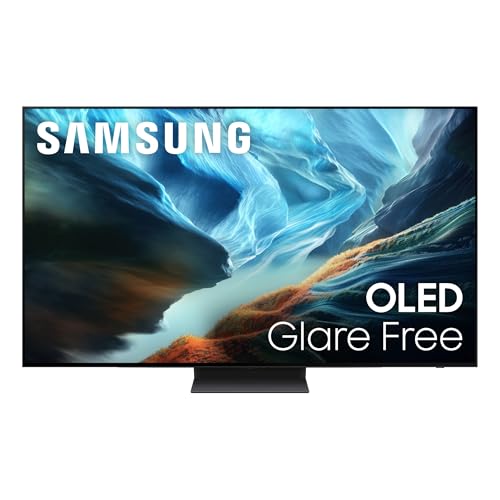 Samsung Samsung 55-Inch Class S90H Series, OLED, 4K, Smart TV, 2026 Model |
OLED HDR+ WITH GLARE FREE*: Experience incredible brightness and deep contrast. Advanced AI enh | $1,297.99 $1,597.99 |
#1 in OLED TVs |
19% OFF In Stock |
 LG LG 55-Inch Class OLED evo AI 4K C6 Series Smart TV, 2026 Model |
BRIGHTNESS BOOSTER: Brighter visuals and vivid detail with Brightness Booster powered by the a1 | $1,299.99 $1,499.99 |
#3 in OLED TVs |
13% OFF In Stock |
The picks in detail
Each card below is priced live from the API at build time. Every review ends with “Flaws but not dealbreakers:” – read that line before the pros.
1. INSIGNIA 55-inch F50 – the current number one best seller in Smart TVs
This is the current number one best seller in Amazon’s Smart TVs category at our October 12 verification – the anchor pick of this ranking, confirmed through the category sales-rank data rather than a badge screenshot. At $189.99 (5 percent under its $199.99 list) it is the cheapest verified 55-inch 4K set on the board, and it earns the chart position the boring way: 4K UHD resolution, Amazon’s Fire TV platform built in, and an Alexa voice remote in the box, in a size class that fits most living rooms. The Department of Energy’s purchasing guidance notes that LCD panels with LED backlights – exactly this design – tend to be the most energy-efficient TV class you can buy, which makes the F50’s dominance less surprising: it is the low-friction default for a second room, a first apartment, or anyone replacing a dead set this week. What it does not have is the panel hardware the rest of this list charges for – there is no local dimming to tighten dark scenes and no high refresh rate for sports, and the price tells you that honestly. Check the live price on Amazon →
Flaws but not dealbreakers: It is a value panel: no local dimming and a standard refresh rate, so dark-room contrast and sports motion are its visible limits Only a 5 percent cut under its 199.99 dollar list at verification – an everyday price, not a deal window. Skip it if you watch films at night in a controlled room – the Hisense E7’s full-array local dimming below is the cheapest honest dark-scene upgrade.
2. INSIGNIA 55-inch QF – quantum-dot color at LED money
The QF is the same Fire TV formula as our number one pick with one meaningful upgrade: a quantum-dot QLED layer, the film of nanocrystals that absorbs backlight and re-emits it as purer red and green, which is where QLED sets get their extra color vibrancy. At $209.99 it is only $20 above the F50, and the 48 percent cut from its $399.99 list is the deepest verified discount in this ranking – the classic shape of a retailer clearing stock on a prior specification run. It ranked number 8 in Smart TVs at check time, behind its F50 sibling, which tells you most buyers are still taking the cheaper panel; if you watch a lot of animated content or sports with saturated kit colors, the step up is visible and cheap. The honest asterisk: at 48 percent off, you are buying into a clearance window, and the value case weakens if the price snaps back toward $300. Check the live price on Amazon →
Flaws but not dealbreakers: Ranks number 8 in Smart TVs, so its buyer history is thinner than the F50 chart leaders A 48 percent discount is stock-clearing shaped; if the price snaps back toward 300 dollars the value case weakens. Skip it if you need Roku or Google TV – platform lock-in is real, and the Hisense E6SR below is the Roku answer at 279.99 dollars.
3. Insignia 65-inch F50 – the big-screen value lane
Sixty-five inches for $259.99 is the single best size-per-dollar ratio we verified – a 13 percent cut from its $299.99 list, ranked number 2 in Amazon’s LED & LCD TVs chart, with the identical Fire TV platform and Alexa remote as our top pick. CNET’s buying advice is blunt on this front: in their words, bigger is better, and your money is best spent on screen size rather than a slight image-quality upgrade – a 65-inch value panel beats a 55-inch fancy one for most rooms, because at normal seating distances the size difference is what you actually see. The panel carries the same limits as its 55-inch sibling – no local dimming, standard refresh – and at 13 percent off this is a stable everyday price rather than a deal window, so there is no urgency premium to resist. Check the live price on Amazon →
Flaws but not dealbreakers: Same value-panel limits as the 55-inch F50 – no local dimming and a standard refresh rate 13 percent off is modest; this is a stable everyday price rather than a deal. Skip it if your sofa sits under 8 feet from the screen – the 55-inch F50 above saves you 70 dollars with no visible loss at that distance.
4. Hisense 55-inch E6SR – the Roku platform pick with Dolby Vision
The E6SR is the value pick for people who want a smarter platform, not just a smarter panel: it runs Roku TV, the system CNET’s comparison explicitly calls its favorite for simplicity, and the listing carries three features the Insignia value sets omit – Dolby Vision, VRR, and ALLM – at $279.99, 38 percent below its $449.99 list. That feature cluster matters more than marketing tiers: Dolby Vision is the HDR format most streaming services master for, and VRR/ALLM smooth out console gaming, so this is the cheapest set here we can recommend to a casual PS5 or Xbox owner without caveats about motion. Hisense’s Hi-QLED branding is its own marketing tier – treat it as QLED-adjacent color rather than OLED-class contrast – and Roku’s ad-supported home screen is the tax you pay for the platform price. Check the live price on Amazon →
Flaws but not dealbreakers: Hi-QLED is Hisense’s own marketing tier – treat it as QLED-adjacent color, not OLED-class contrast Roku’s ads-and-agreements model trades some menu cleanliness for that low price. Skip it if you are invested in Alexa or Google ecosystems – Roku remotes and routines do not play well with them.
5. Roku 65-inch Select – the current number one best seller in QLED TVs
This is the current number one best seller in Amazon’s QLED TVs category at our verification, confirmed through category sales-rank data – a separate chart from our Smart TVs anchor, and an interesting one: buyers are choosing a 65-inch native-Roku QLED at $379.99 over flashier 2026 launches. The proposition is legible: quantum-dot color on a big panel, Roku’s famously simple interface, and only a small premium over the LED equivalents in this ranking. What the Select tier does not carry is the hardware above it – local dimming and high refresh rates belong to Roku’s Plus and Pro lines – and Roku’s platform economy puts an ad-heavy row of tiles on the home screen out of the box. As a big, bright, set-and-forget family TV, it is the easiest recommendation on this list to explain to a non-enthusiast. Check the live price on Amazon →
Flaws but not dealbreakers: The Select series is Roku’s entry QLED tier – local dimming and high refresh belong to its Plus and Pro lines Roku’s platform economy means an ad-heavy home screen out of the box. Skip it if you game – the Hisense E6SR’s VRR or the mini-LED E7’s 144Hz panel are the gaming answers here.
6. Hisense 65-inch E7 Cinema – mini-LED brightness at half the flagship price
The E7 is the specification event of this ranking: a 65-inch mini-LED backlight with full-array local dimming, a native 144Hz panel, Dolby Vision IQ, and HDR10+ Adaptive, listed at $579.99 – 42 percent below its $999.99 list. Mini-LED is the technology CNET and Tom’s Guide both point to when a buyer wants LED brightness that fights a sunny room: thousands of dimming zones tighten contrast while the backlight pushes highlights far beyond what a value LED can manage, and Tom’s Guide reserves its bright-room crown for sets built exactly this way at roughly triple the price. The E7 is the honest pick for live sports and daytime viewing, and the 144Hz native panel plus HDMI bandwidth makes it the gaming value here. The trade-offs are real: it ranks number 9 in QLED TVs behind better-marketed rivals, Fire TV splits its platform audience, and mini-LED halo control at this price is good rather than reference-grade. Check the live price on Amazon →
Flaws but not dealbreakers: Ranks number 9 in QLED TVs – the Fire TV platform split against Roku and Google rivals keeps it below flashier launches Mini-LED halo control at this price is good, not reference-grade; blooming is visible in demanding material if you look for it. Skip it if your room is dim and movie-focused – near 1,000 dollars the OLED tier below is the correct spend.
7. Samsung 55-inch S85F – the sub-$1,000 OLED entry
At $997.95 – 29 percent below its $1,397.99 list – the S85F is the OLED tier’s front door: the only verified OLED under $1,000 on Amazon at our check, ranked number 8 in OLED TVs. This is a 2025 model year set, and that is precisely the play: CNET’s 2026 guide keeps half its own list on 2025 models because television panels improve incrementally, and buying last year’s OLED at a discount is the correct strategy rather than a compromise. You get per-pixel light emission – each OLED pixel turns completely off, which is why OLED black levels have no LED equivalent – plus Samsung’s Vision AI processing and object-tracking sound lite per the listing. The urgent caveat is literal: only 5 units were listed in stock at verification with an order-soon flag, the classic signature of a model-year sell-through, and Samsung’s sets ship HDR10+ only – there is no Dolby Vision on any Samsung television. Check the live price on Amazon →
Flaws but not dealbreakers: Only 5 units were listed in stock at verification – order-soon pricing on OLEDs usually means a pending model-year swap Samsung sets ship HDR10+ only; no Dolby Vision on any of them. Skip it if stock is gone at your check time – pay the difference for the S90H below rather than chasing gray-market listings.
8. Samsung 55-inch S90H – the current number one best seller in OLED TVs
This is the current number one best seller in Amazon’s OLED TVs category at our verification – the 2026-generation Samsung OLED, in stock at $1,297.99, 19 percent under its $1,597.99 list. Tom’s Guide tested this family directly and its verdict is worth quoting in substance: a fantastic successor OLED, but expensive, with only minor upgrades over the 2025 S90F. We agree, and that is exactly why we rank it here rather than higher: it holds the category’s top chart position with real stock, it carries Samsung’s Tizen gaming hub that Tom’s Guide found excellent for console play, and it is the set to buy if you want the current model year with none of the order-soon risk. If a 2025 S90F discount reappears near the S85F’s sub-$1,000 line, take it – the panel generation difference does not justify a $300 gap. Check the live price on Amazon →

Flaws but not dealbreakers: Tom’s Guide’s own review calls it expensive with only minor upgrades over the 2025 S90F – we agree, and rank it as the availability pick, not the value pick Carries Samsung’s platform trade-offs, including no Dolby Vision. Skip it if a 2025 S90F discount reappears near the S85F’s sub-1,000-dollar line above – that is the smarter money.
9. LG 55-inch C6 evo – the Dolby Vision premium pick
LG’s C-series is the default enthusiast recommendation in every OLED guide worth reading, and the 2026 C6 evo at $1,299.99 (13 percent under list, number 3 in OLED TVs) carries the family credentials: an OLED evo panel, Dolby Vision support alongside HDR10, and LG’s webOS – the platform Tom’s Guide calls one of the easiest to use in the industry. On measurement, LG’s OLED line dominated CNET’s published color-accuracy table, with the 2025 G5 posting the best average error in their testing at 1.70 – the C6 is that line’s 2026 panel generation at a notably lower price than the G-series. The honest framing of its rank here: at $1,299.99 it costs two dollars more than our Samsung pick for the same screen size, its 13 percent discount is the thinnest in the OLED tier, and its case rests on Dolby Vision mastery, webOS, and LG’s color pedigree rather than price. Check the live price on Amazon →

Flaws but not dealbreakers: 13 percent off is the thinnest discount in the OLED tier – LG’s price floor holds firm early in the model year At 1,299.99 dollars it sits two dollars above our Samsung pick in the same 55-inch size. Skip it if you live inside Samsung or Roku ecosystems and do not care about Dolby Vision – the S90H costs two dollars less.
Price tiers: what each band actually buys
Verified pricing on October 12 splits this market into three honest bands. The $190-$280 value band (both Insignias, the Hisense E6SR) buys 4K UHD, a modern streaming platform, and – on the E6SR – Dolby Vision with gaming features; it does not buy panel hardware, and the DOE efficiency math below shows why that matters less than it sounds. The $380-$580 big-screen band (Roku Select, Hisense E7) is where the specification curve bends: 65-inch panels, mini-LED local dimming, and native 144Hz arrive here, which is why Tom’s Guide’s under-$500 pick lives in this band. The $998-$1,300 OLED band (Samsung S85F and S90H, LG C6) buys per-pixel black levels and the best measured color accuracy – CNET’s ballparks put a very good 55-inch TV at $700 and a 65-inch at $1,000, and our verified charts undercut both numbers in every band. The ladder logic is simple: climb for size first, panel technology second, and brand premium last – it buys the least.
Where we disagree with the big testers
CNET crowns the TCL QM8L both Best TV of 2026 and Brightest TV – an Editors’ Choice measured on a lab spectroradiometer, and we do not argue with a byte of the testing. We argue with the shopping context: that $1,078 price was measured at big-box retail, and the Amazon-listed QM8L units we probed were not rankable live at check time. For an Amazon-first buyer, our verified mini-LED lane is the Hisense E7 at $579.99 with a native 144Hz panel – roughly half the money for the same bright-room job – and our OLED tier starts at $997.95, under CNET’s own pick. Tom’s Guide’s best-TV-for-most-people is the LG B6 OLED, which we rate as the correct answer to a different question: it is a panel-first pick, priced and stocked unevenly across Amazon’s marketplace at check time, while the chart data shows where volume buyers actually land – the F50 family holds the top two positions of the LED charts on price alone.
Where the value band is concerned, both labs essentially ignore it: neither CNET nor Tom’s Guide ranks a single sub-$300 television this year, and Tom’s Guide’s budget boundary sits at $500. We think that is a gap rather than a verdict – Amazon’s own Smart TVs chart is topped by a $189.99 set, 554 TVs have been lab-tested at RTINGS and the sub-$300 class still outsells the OLED tier by an order of magnitude, and the DOE’s efficiency tables treat this class as the federal benchmark. We rank the value band as a first-class lane with its own honest limits, not as a footnote below the showpieces.
Spec truth: what the numbers on the box mean
A claim-reality check on the three numbers every TV listing leans on, using primary sources:
- “4K UHD” is a fixed standard, not a quality claim. It means 3,840 x 2,160 pixels – four times a 1080p set – and every pick in this ranking carries it. It says nothing about brightness, color volume, or motion; those live in the panel technology rows (LED, QLED, mini-LED, OLED).
- The energy numbers are smaller than the marketing implies. The Department of Energy’s FEMP table for a 54.5-inch LED TV: an ENERGY STAR-certified unit runs about 133 kWh per year ($15 at their 11-cent federal rate) versus roughly 235 kWh ($26) for a less-efficient model – a lifetime saving of about $47 over five years, cost-effective up to a $31 price premium. That is real money on a $190 TV’s operating budget, and it is why the FEMP low-standby limit of 1 watt and the automatic brightness control feature are worth checking on any value pick.
- Refresh-rate claims split by size. Tom’s Guide’s testing shows manufacturers ship the same model name with different panels by size: their Hisense QD7 review notes the 75-inch and up editions carry a 144Hz panel and two HDMI 2.1 ports while smaller sizes run 60Hz. Our E7 pick states its native 144Hz on the listing itself; where a listing is silent, assume 60Hz at these prices and check the spec row rather than the headline.
- OLED and mini-LED claims are directional, not equivalent. CNET’s measured color-accuracy table – grayscale and color error averaged across HDR testing – puts LG’s 2025 OLED flagship best at 1.70 and budget LCD sets multiples higher. The lesson is not “never buy value”; it is that the $1,000 tier is buying measured accuracy and per-pixel black, and the value tier is buying size and features per dollar. Both are rational purchases; they are just not the same purchase.
Stock and listing signals worth watching
A pattern we saw in this category’s live data, from the failure-and-friction side of the house:
- OLED stock thins before model-year swaps. The S85F showed 5 units with an order-soon flag at verification, and our probe of the Sony BRAVIA XR8B OLED at $1,398 found a single unit left. Order-soon pricing on OLEDs is a sell-through signature: if you want that specific panel, buy it; do not wait out a deeper discount on a dying SKU.
- Listing titles are keyword soup – read the spec rows. Roku’s own 65-inch Select title ends in “QLED TV TV”, a duplicated-token artifact of marketplace SEO. Treat titles as noise, confirm the resolution and platform in the specification table, and never buy on headline claims like “Cinema” or “Vision” alone.
- Deep discounts mark clearances, not defects. The QF’s 48 percent cut and the E7’s 42 percent are stock-clearing shaped – prior spec runs moving out for 2026 refreshes. The panel technology does not expire; the warranty and firmware support run from purchase date, which makes clearance buys on current-generation platforms a rational play.
- Chart leadership is sticky on price, not on specs. The F50 family holds the top of two charts simultaneously (our 55-inch anchor at number 1 in Smart TVs, the 65-inch at number 2 in LED & LCD TVs) because it wins the price war, not the spec sheet. When a value set outranks technically superior rivals, read it as the market’s revealed preference for cheap 4K – and expect the discounting around it to stay modest.
- Low stock on value leaders is a restock rhythm, not a discontinuation. Unlike the OLED tier, the F50 class restocks in batches; a temporary stockout on a chart-topping $190 set is a logistics event, not a signal to pay up for an alternative.
How we chose these TVs
This is a listing-verification ranking, not a lab test, and we label it as such. We pulled live pricing, stock, brand-first-title checks, category sales ranks, and listed specifications for 12 television ASINs through Amazon’s product API on October 12, 2026, then ranked the 9 strongest positions across LED, QLED, mini-LED, and OLED panels using three inputs: the specification clusters the professional testers establish as pay-for (local dimming, native high-refresh panels, Dolby Vision support, platform quality, measured color accuracy), the price bands each tester defines, and the best-seller rank positions that show where real buyers actually land. We did not measure panels in a lab. Probed but not ranked: the Sony BRAVIA XR8B OLED ($1,398, one unit left – stock risk) and the Roku 65-inch Plus mini-LED (no listed availability at check). Where our ranking disagrees with a testing organization, the disagreement section above says so explicitly, with the price context that drives the difference.
Sources: the US Department of Energy’s FEMP purchasing guidance for televisions for energy-use math and efficiency guidance; CNET’s Best TVs of 2026 (spectroradiometer-measured brightness and color tables, updated September 2026); Tom’s Guide’s best-TV testing (hands-on picks with per-size specification rows); and RTINGS.com’s best-TV database (554 TVs bought and tested; its full measurement database sits behind a membership paywall, so we cite its scope rather than quoting figures). Amazon listing data is ours, live at check time. Read more about our process on our how we test page.
Key sources: US DOE FEMP (energy-use and efficiency math) · CNET (lab-measured brightness and color accuracy) · Tom’s Guide (hands-on testing with per-size specs) · RTINGS.com (554 TVs tested; paywalled measurement database).
Buying guide: what actually matters
Size: buy inches before you buy quality
CNET’s position is the correct default: bigger is better, and money spent on screen size beats money spent on marginal image quality at normal seating distances. The verified price gap makes the math easy – our 55-inch F50 anchor is $189.99 and the 65-inch is $259.99, a $70 step that is far cheaper than any panel-technology upgrade in this ranking. Measure your seating distance before you shop: under about 8 feet favors 55 inches, beyond it a 65-inch panel is the visible upgrade, and a 75-inch value LED (Insignia’s 75-inch F50 variant probed at $359.99) is now inside impulse-buy territory.
Panel ladder: LED, QLED, mini-LED, OLED
LED-backlit LCD is the value baseline and, per the DOE, the most energy-efficient class. QLED adds a quantum-dot layer for purer color – Tom’s Guide’s budget pick explanation is the clearest: the crystals absorb some backlight and re-emit it as red and green light. Mini-LED shrinks the backlight into thousands of dimmable zones, which tightens contrast and lets the set fight bright rooms – the Hisense E7 is the value expression of it at $579.99. OLED removes the backlight entirely: every pixel emits its own light and switches fully off, which is why OLED black levels and contrast have no LED equivalent and why the DOE notes OLED sets use less energy doing it. Buy up this ladder for what you watch: dark-room films justify OLED, sunny rooms justify mini-LED, and everyone else is served by QLED value.
Smart platforms: pick the ecosystem, ignore the hype
CNET’s comparison prefers Roku for simplicity, and our ranking reflects the platform splits as filed: Fire TV on the Insignia value sets and the Hisense E7, Roku OS on the Hisense E6SR and the Roku Select, Tizen on Samsung, webOS on LG. Tom’s Guide’s testing dings Fire TV as the weakest of the group and praises webOS and Google TV for responsiveness; CNET adds the liberating point that the built-in system matters less than it used to, because a $30-50 streaming stick upgrades any TV’s platform. Buy the panel; fix the platform with a stick if you must – but if you are all-in on one ecosystem’s voice assistant, match the TV to it and skip the friction.
HDR formats: the Dolby Vision question
Two HDR families ship on 2026 sets: Dolby Vision and the HDR10 family (HDR10, HDR10+, HLG). The practical rule: most prestige streaming content masters in Dolby Vision, so LG’s C6 and the Hisense E6SR and E7 carry it, while Samsung ships HDR10+ only across its entire line – a brand-level stance both testers note. HDR10+ is genuinely good, and no set here lacks HDR entirely; but if your watchlist is prestige dramas and films, Dolby Vision support is the tiebreaker between same-price OLEDs.
Gaming: the three features that matter
Console gaming needs three things: a 120Hz-or-better native panel, HDMI 2.1 bandwidth, and VRR/ALLM to smooth frame pacing. The Hisense E6SR lists all three at $279.99 – VRR and ALLM are on the listing, and Tom’s Guide’s QD7 testing shows the feature split by screen size, so always check the specific size you are buying. The E7’s native 144Hz is the enthusiast value here, and Tom’s Guide’s Samsung S90-family testing (four HDMI 2.1 ports, a dedicated Tizen gaming hub) is why the S90H holds the premium gaming slot. PC gamers on a budget: the E7 at $579.99 is the cheapest verified panel here that respects a high-refresh graphics card. And if your cable run is old, swap in a certified 4K-rated HDMI cable before blaming the TV – our under-$20 4K HDMI cable picks cover the fix.
Setup: sound and mounting are the real second purchase
Two costs every TV buyer under-budgets. First, sound: thin panels leave no room for real speakers, Tom’s Guide flags the weak speaker system even on its top OLED pick, and CNET’s blunt answer is that even an inexpensive soundbar beats any built-in – our best soundbars ranking starts at entry level. Second, mounting: all four OLED and mini-LED picks are thin enough for a low-profile wall install, and a $25-60 mount beats the included stands for safety and sightlines – our TV wall mount guide covers fixed, tilting, and full-motion classes. If your room is small, bright, and shared, also read our projector guide – a 100-inch projection is the alternative answer to a 65-inch panel.
FAQ
- What is the best TV on Amazon in 2026? For verified value, the INSIGNIA 55-inch F50 at $189.99 – it is the number one best seller in Smart TVs for a reason. Step up to the Hisense E7 for mini-LED brightness and 144Hz at $579.99, or to the Samsung S90H ($1,297.99) or LG C6 ($1,299.99) for 2026 OLED.
- What is the best TV under $300? Three verified answers: the INSIGNIA QF QLED at $209.99 for color, the Hisense E6SR at $279.99 for Roku plus Dolby Vision and gaming features, and the Insignia 65-inch F50 at $259.99 if size matters most.
- Is OLED worth it over QLED? For dark-room and film watching, yes – per-pixel black levels are a genuine category difference, not marketing. The verified entry point is the Samsung S85F at $997.95. For bright rooms and daytime sports, a mini-LED like the E7 fights sun better at nearly half the price.
- What size TV should I buy? CNET’s rule: bigger is better at normal distances. Under 8 feet of seating distance, 55 inches; beyond it, 65. The verified 55-to-65 price gap on the F50 family is $70 – the cheapest visible upgrade in television.
- Do I need a soundbar with these TVs? Effectively yes – thin cabinets physically cannot produce real bass, and even top-tester picks carry weak-speaker flags. An inexpensive soundbar is the highest-impact add-on in home entertainment; see our soundbars ranking.
- Can I wall-mount these TVs? All of them, including the OLEDs, follow standard VESA mount patterns – check the specific size’s pattern in the spec sheet, match the mount class (fixed, tilting, full-motion) to your seating geometry, and mind the stud spacing. Our wall-mount guide ranks verified options by TV size.
The bottom line
The 2026 TV market’s best deal is not the showpiece OLED – it is the $190-$280 value band where Insignia and Hisense now ship 4K, modern platforms, and even Dolby Vision with gaming features. Buy the F50 and you are done; add $20 for the QF’s quantum-dot color, or $90 over the anchor for the E6SR’s Roku-plus-Dolby-Vision package. The middle band is the enthusiast value zone: the E7’s mini-LED at $579.99 does the bright-room job of sets at triple the price. And the OLED tier is finally a rational $1,000 decision – the S85F under four figures, the S90H and C6 for the current generation. Every price and stock figure in this ranking was verified October 12, 2026, through Amazon’s product API, and the cards re-price as the market moves.