The best garage heaters turn a cold-weather storage room into a workspace you actually use — and the right one depends less on brand names than on three questions: how big is your garage, how well is it insulated, and do you have 240-volt power. We pulled Amazon’s live heating charts and price data on October 3, 2026, combined the hands-on testing of Bob Vila’s team with the research and expert guidance of Family Handyman and Popular Mechanics, and ranked seven heaters from a $90 best seller to a $453 shop-class workhorse — with the wiring, sizing and safety details most buyers learn the hard way.
Affiliate disclosure: As an Amazon Associate I earn from qualifying purchases. We earn commission from qualifying purchases made through links on this page. This never affects our rankings or what we recommend.
What’s in this guide
- What Amazon’s heating charts say
- The 7 picks (comparison table)
- Spec truth: output, coverage, wiring
- Price tiers: where paying more stops mattering
- Where we disagree with the reviewers
- How garage heaters disappoint
- Wiring, permitting and safety
- FAQs
- How we research these picks
- The seven picks in detail
What Amazon’s heating charts actually say
On October 3, 2026 we pulled three of Amazon’s live heating charts — Heaters & Heater Accessories, Indoor Propane Space Heaters and Indoor Electric Space Heaters — and read every candidate’s rank and spec data through Amazon’s product API. The first lesson: chart rank and buying advice are not the same thing. The flagship heaters chart is currently so noisy that its top ranks mix a water-heater flush kit, an accessory fan and a bolt-removal induction tool in among actual heaters. Two of our picks do crack that list: the Mr. Heater 30,000 BTU sits at #3 and the Comfort Zone ceiling mount at #4.
The loudest best-seller signal in the category belongs to the Mr. Heater Portable Buddy — the current #1 best seller in Indoor Propane Space Heaters, with 29,239 ratings at 4.7 stars, and still a top-ten presence (#8) on the broader indoor space-heater chart among desk-size electrics. The rest of the garage-worthy field lives deeper down — #32 to #231 — because garage buyers shop on sizing and fuel type, not impulse. Bridging that gap between chart noise and real-world fit is exactly what this guide is for.
The 7 best garage heaters, ranked
Every pick was price-, stock- and rank-checked through Amazon’s product API on October 3, 2026, and each listing was read end to end — including the fine print, where this category hides its biggest surprises (missing pigtails, sold-separately thermostats, “vent-free” caveats). The comparison table below pulls from the same API data as the cards.
| Product | Standout spec | Price | Track record | Deal |
|---|---|---|---|---|
 COMFORT ZONE Comfort Zone Hard-Wired Ceiling Mount Garage Space Heater with Remote, 7,500 W |
OPTIMAL SPACE UTILIZATION: Maximize your available floor space with the space-saving design of | $155.00 |
4.4 ★ 2,432 ratings #4 in Heaters & Accessories |
Only 14 left in stock (more on the way). |
 DR. INFRARED HEATER DR. INFRARED HEATER NEW Upgraded DR-975 7500-Watt 240-Volt Hardwired Shop Gara |
Heavy duty 240V single Phase 4700W/7500W electric heater | $240.00 |
4.3 ★ 4,382 ratings #231 in Electric Space Heaters |
In Stock |
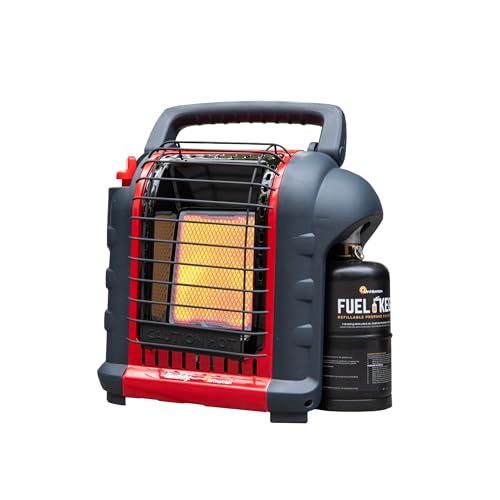 Mr. Heater Mr. Heater 9,000 BTU Portable Buddy Radiant Propane Heater |
Emits 4,000 or 9,000 BTU/hr radiant heat | $89.97 |
4.7 ★ 29,239 ratings #1 in Propane Space Heaters |
In Stock |
 Mr. Heater Mr. Heater 30,000 BTU Vent Free Radiant Propane Heater |
30,000 BTU/HR | $212.29 |
4.5 ★ 1,434 ratings #3 in Heaters & Accessories |
Usually ships within 7 to 12 days |
 Mr. Heater Mr. Heater 50,000 BTU Forced-Air Unit Heater (Propane or Natural Gas) |
Ceiling-mounted forced air unit heater turns garages, barns, and workshops into heated workspac | $452.79 |
4.4 ★ 1,489 ratings #32 in Heaters & Accessories |
Only 8 left in stock (more on the way). |
 DR. INFRARED HEATER Dr. Infrared Heater DR-966 240-Volt Hardwired Shop Garage Commercial Heater, 3 |
Heavy Duty 240V Single Phase 3000/6000W Commercial Electric Heater | $175.70 |
4.3 ★ #231 in Electric Space Heaters |
In Stock |
 InoKraft InoKraft 7500W Electric Garage Heater, 240V with NEMA 14-50P Plug |
Powerful 7,500W Heating–Immerse yourself in cozy comfort with InoKraft Max Heat powerful 240V | $239.99 |
4.6 ★ 286 ratings #187 in Electric Space Heaters |
In Stock |
1. Comfort Zone CZ230ERBK — The best garage heater for most people
Start where the hands-on testing points: the Comfort Zone is Bob Vila’s best overall and currently #4 in Amazon’s heaters chart. It is a 7,500-watt ceiling-mount with a remote, digital thermostat and 12-hour timer, at the lowest price in our hardwired class. Its steel body, adjustable louvers and variable-angle bracket are the details testers actually praised — “It proved to put out plenty of heat” — and the listing rates coverage up to 1,250 sq ft. The caveat lives in the box: no 240-volt pigtail or cable clamp, so budget those separately. For a powered, insulated-to-typical garage, this is the value call of 2026.
What we like:
- Bob Vila’s hands-on testers name it their best overall garage heater — and it sits at #4 in Amazon’s Heaters & Heater Accessories chart
- 7,500 watts (≈25,600 BTU) of fan-forced heat from the ceiling, with remote control, a digital thermostat and a 12-hour timer on board
- Heavy-gauge steel body, adjustable louvers and a variable-angle mounting bracket — and the test verdict is blunt: “It proved to put out plenty of heat”
- The cheapest 7,500-watt hardwired unit in this guide at $155, with the listing rating coverage up to 1,250 sq ft
Flaws but not dealbreakers: No 240-volt pigtail or cable clamp in the box — Bob Vila called setup “a bit of a mixed bag” because of the separate purchases (budget them in) Hardwired installation on a dedicated 240-volt circuit: if DIY wiring is not your thing, add an electrician to the budget Stock runs thin at this price — 14 units left at check time
Skip it if: you do not have — or cannot add — a 240-volt circuit; the propane picks below are your path.
2. Dr. Infrared DR-975 — The reviewer favorite
Popular Mechanics does not hedge: this is its best overall garage heater, “the best all-around choice for most spaces.” The DR-975 pairs 7,500 watts (25,591 BTU per PM’s spec box) with adjustable louvers and a remote-controlled thermostat on the front face, mounts on wall or ceiling, and runs at 4,700 or 7,500 watts to suit the day. It is $85 more than our #1 pick and asks the same wiring homework — plus a sold-separately wall thermostat if you want wall control. What you are buying over the Comfort Zone is flexibility: two power modes, a wider target range and the consensus of the outlet that researches this category hardest.
What we like:
- Popular Mechanics’ best overall pick: “the best all-around choice for most spaces, with 7,500 watts of heating power”
- Adjustable louvers plus a remote-controlled thermostat right on the front — mount it on the wall or ceiling and aim the heat where you work
- Two power modes (4,700 / 7,500 W) and a 50–85°F target range — 25,591 BTU by Popular Mechanics’ spec box
- A long track record: 4.3 stars across the DR-9xx family’s 4,382-rating pool
Flaws but not dealbreakers: The wall-mounted thermostat is sold separately — the included remote covers most of it, but plan for the add-on if you want wall control Hardwired only: no plug, no cord, and the hook-up parts are a separate purchase (see our wiring section) Shares its review pool with the DR-966 below — those 4,382 ratings are not unique to this model
Skip it if: you want Wi-Fi or app scheduling — this one is remote-and-dial, not connected.
3. Mr. Heater Portable Buddy — The best seller for spot heat
The category’s actual best seller — 29,239 ratings — and the only pick here that needs no electricity at all. The Buddy is Popular Mechanics’ most-compact choice: 10.6 lb, radiant propane, 4,000 or 9,000 BTU, and it warms you and your workbench rather than the whole room. On a 1-lb canister it runs about three hours on high; add the common 20-lb tank adapter and it becomes an all-day companion for sheds, deer camps and power-less garages. It is not a whole-garage solution — it is the perfect second heater, and the one that still works when the power is out.
What we like:
- The current #1 best seller in Amazon’s Indoor Propane Space Heaters category — 29,239 ratings at 4.7 stars
- No electricity required: radiant propane heat that works in sheds, garages and job sites with no power at all
- Popular Mechanics’ most-compact pick — 10.6 lb, carry-it-one-handed portable, with 4,000 and 9,000 BTU settings
- Runs up to three hours on a 1-lb canister (high) and takes a 20-lb tank with a common adapter for longer sessions
Flaws but not dealbreakers: Small-space only: roughly 225 sq ft of spot warmth — Popular Mechanics’ own con list says “only suited for small spaces” The 20-lb tank adapter and hose are sold separately — add them to the cart It is a radiant heater: you and your bench feel the warmth while the air around stays cooler — that is the design, not a fault
Skip it if: you need whole-garage heat — go 7,500-watt electric or 30,000+ BTU gas instead.
4. Mr. Heater 30,000 BTU Radiant — The best big-space propane pick
For unpowered or sprawling spaces, this is the chart-topper that matters: #3 among heaters, 30,000 BTU, and a rated 1,000 sq ft of coverage — the heart of the two-car range our sources cite. It runs on propane with a battery ignition (no outlet anywhere), throws radiant heat you can feel from across a bay, and its size means one unit can carry a garage without the electrician visit. The trade-offs are honest: refill logistics, directional warmth, and at check time a 7–12 day shipping window. Order before the first cold snap, not after.
What we like:
- One of the highest-charting actual heaters in Amazon’s heater category — #3 at check time
- 30,000 BTU of radiant heat for up to 1,000 sq ft — squarely inside the 30,000–50,000 BTU range Popular Mechanics’ expert gives for two-car garages
- No electricity needed: battery-operated electronic ignition (battery included), so it works in unpowered buildings
- Vent-free radiant design warms people and objects directly — useful for a cold workshop bay
Flaws but not dealbreakers: Propane only, and you will be buying and refilling tanks — plan that logistics before winter Ships in 7–12 days at check time, so order before the first cold snap Radiant heat is directional: it is not an invisible furnace for the whole room
Skip it if: you want fully automatic, set-and-forget heat — a thermostat-driven electric or vented gas unit fits better.
5. Mr. Heater 50,000 BTU Forced-Air — The heavy-duty workhorse
When a 3-car shop needs to be warm at 6 a.m., you stop shopping for comfort and start shopping for output: 50,000 BTU, a rated 1,667 sq ft, and a ceiling mount that keeps every square foot of floor free. It runs on propane or natural gas, works with ordinary 24-volt or Wi-Fi thermostats, and recovers fast when a big door cycles in January. This is the pick your contractor respects and your electrician never touches. It is also a project: gas line, mounting, venting considerations, professional install — and at $452.79, the priciest thing here.
What we like:
- Serious output: 50,000 BTU — the listing estimates 1,667 sq ft, or about a 3-car garage
- Ceiling mount keeps the floor clear, and it runs on propane or natural gas with a standard 24-volt (or Wi-Fi) thermostat
- Built for garages, barns and workshops that get opened to the cold — fast recovery when the big door cycles
- 4.4 stars from 1,489 ratings — one of the better-documented big-BTU units
Flaws but not dealbreakers: You will need a gas line and a professional install — this is a project, not a purchase-and-go At $452.79 it is the priciest pick here — and overkill for a small, insulated garage Only 8 left in stock at check time
Skip it if: your garage is small or tight — downsize to the 30,000 BTU class or one of the electric leaders.
6. Dr. Infrared DR-966 — The commercial-grade value
Bob Vila’s “best commercial-grade” winner is the quiet value of this list: $176, two output modes (3,000 or 6,000 watts), UL/CUL listing, and tilting louvers with hardware its testers rated above most rivals. Their reviewers called it “one of the nicest” hardwired shop heaters they have handled — smoother and less boxy than typical commercial units. It asks the same 240-volt commitment as everything above and tops out a step under the 7,500-watt leaders, which makes it the smart pick for a well-insulated single garage and a solid mild-weather assist in bigger ones.
What we like:
- Bob Vila’s “best commercial-grade” pick: “one of the nicest” hardwired shop heaters its testers have handled
- Two output modes — 3,000 or 6,000 watts (≈10,200 / 20,500 BTU) — to match milder and colder days
- UL/CUL listed, with tilting louvers and hardware Bob Vila rated higher than most rivals
- The smoothest ~$176 you can spend on a hardwired shop heater with a name-brand support trail
Flaws but not dealbreakers: Still a 240-volt hardwire job — Bob Vila’s testers say you will “most likely require an electrician” for the circuit Bob Vila’s test unit did not include the wall thermostat some descriptions imply — confirm what is in the box before you buy 6,000 W max is a step below the 7,500 W leaders — finest for insulated garages, or as a mild-weather assist in bigger ones
Skip it if: you want maximum output per dollar — the CZ230 gives you a quarter more heat for less money, and the DR-975 adds two power modes.
7. InoKraft 7,500W — The plug-in alternative
Most hardwired heaters assume a bare junction box; the InoKraft assumes a receptacle. It ships with a NEMA 14-50P plug and an 8.2-ft cord, so if your garage already has a 240-volt range-style outlet, this 7,500-watt wall unit goes up without an electrician — digital control from 40°F to 99°F, an ECO mode, and a rated 750 sq ft of coverage. It is newer and lighter on reviews (286 ratings, 4.6 stars), so it is the pick for early adopters with the right outlet — and a reminder that “plug-in” here still means 240-volt power, not an extension cord.
What we like:
- The plug-in exception: comes with a NEMA 14-50P plug and an 8.2-ft cord — if your garage already has a 240-volt receptacle, this avoids a hardwire job
- 7,500 watts of fan-forced heat (≈25,600 BTU) with digital control from 40°F to 99°F and an ECO mode
- Wall-mount footprint that keeps floor and ceiling space usable — and the listing rates coverage to 750 sq ft
- 4.6 stars on a newer model — a lighter but fast-growing 286-rating pool
Flaws but not dealbreakers: No 240-volt outlet? Then you are back to an electrician anyway — the plug only saves you money if the receptacle already exists The lightest review pool in this guide (286 ratings) — newer listing, shorter history Digital thermostat lives on the unit; no app or remote scheduling at this price
Skip it if: you have no 240-volt outlet and want zero electrical work — see the propane picks above.
Spec truth: output, coverage and wiring — as verified
We pulled these figures from the live listings and the testers’ spec boxes at check time. “≈” BTU values are math, not marketing: we converted watts at 3.412 BTU per watt and label them as converted. “Not published” means the manufacturer does not state a coverage figure we could stand behind — in this category, that silence is common and usually deliberate.
| Heater | Type | Output | Coverage | Install | Price | Chart rank |
|---|---|---|---|---|---|---|
| Comfort Zone CZ230ERBK | Electric, 240 V fan-forced | 7,500 W (≈25,600 BTU) | Up to 1,250 sq ft (listing) | Hardwired, ceiling | $155.00 | #4 Heaters & Acc. |
| Dr. Infrared DR-975 | Electric, 240 V forced air | 4,700 / 7,500 W (PM: 25,591 BTU) | Not published | Hardwired, wall/ceiling | $240.00 | #231 Electric |
| Mr. Heater Portable Buddy | Propane radiant | 4,000 / 9,000 BTU | ≈225 sq ft (listing) | Portable — no power | $89.97 | #1 Propane |
| Mr. Heater 30,000 BTU | Propane radiant (vent-free) | 30,000 BTU | 1,000 sq ft (listing) | Portable — battery ignition | $212.29 | #3 Heaters & Acc. |
| Mr. Heater 50,000 BTU | Propane / natural gas forced-air | 50,000 BTU | 1,667 sq ft (listing) | Ceiling, fuel line required | $452.79 | #32 Heaters & Acc. |
| Dr. Infrared DR-966 | Electric, 240 V forced air | 3,000 / 6,000 W (≈10,200 / 20,500 BTU) | Not published | Hardwired, wall/ceiling, UL/CUL | $175.70 | #231 Electric |
| InoKraft 7,500W | Electric, 240 V fan-forced | 7,500 W (≈25,600 BTU) | Up to 750 sq ft (listing) | Wall, NEMA 14-50P plug | $239.99 | #187 Electric |
Two things to notice. Coverage claims are the loosest numbers in the category — the Comfort Zone lists 1,250 sq ft, the InoKraft 750, and two of our seven publish nothing at all. And the mounting pattern flips the wiring question: ceiling units free your floor but usually mean hardwiring; the wall units and the two portables are the flexible edge of the market. Match that to your building before you fall for a spec.
The reality check our sources forced: Bob Vila’s guide repeats the industry rule of about 10 watts per square foot (a 1,500 W heater for 150 sq ft); Popular Mechanics’ expert guidance says a two-car garage needs 30,000–50,000 BTU. Run our picks through both rules and the messages collide hard — 10 W/ft² puts a two-car garage near 5,800 W, while the BTU rule wants roughly 8,800–14,700 W. The reconciliation: each assumes a different job and building. The watt rule describes steady comfort in an average insulated space; the BTU guidance describes cold-climate recovery, when doors cycle and walls leak. That is why both guides quietly send uninsulated or hard-winter garages up a class. If your garage is bare studs and a single-pane door, size like it is twice as big — whatever any coverage figure promises.
Price tiers: where paying more stops mattering
$90–$125 — the spot-heat tier. The Portable Buddy and its siblings. This is where you shop when you need warmth in a corner, a shed, or a power-less space — or a backup for the day the power dies. Nothing at this price heats a whole garage, and nothing needs to.
$155–$240 — the sweet spot. The Comfort Zone, DR-975 and InoKraft: 7,500-watt hardwired class, remote or digital controls, and enough output for most insulated 1–2 car garages. This is where we would spend, and where our top two picks live.
$450+ — the big-shop class. The 50,000 BTU class and up: 3-car spaces, barns, uninsulated shops, and anyone who wants a 40-degree morning to become a 60-degree morning before the second coffee. Past roughly $550 you are into contractor-installed territory — Popular Mechanics’ 80,000 BTU class starts there — and the money stops buying polish and starts buying coverage you actually need (or do not).
One budgeting note the charts do not show: the wiring is part of the price. A hardwired 240-volt heater means a circuit, a pigtail or hook-up kit (often separate), possibly a permit, and occasionally an electrician. Add $50–$300 to your mental math depending on what is already in your walls — the reviews that sting are the ones that did not.
Where we disagree with the reviewers
We lean on three editorial sources throughout — Family Handyman (research-led picks with installation guidance), Bob Vila (hands-on garage testing) and Popular Mechanics (expert-led selection). All three crown different winners. Family Handyman’s overall is a Wi-Fi-enabled Heat Storm 6,000-W; Bob Vila’s is the Comfort Zone; Popular Mechanics’ is the DR-975. Our two leaders are the two outlet winners — and we rank them together because the Comfort Zone matches the DR-975 on wattage while beating it on price and current chart standing, and the DR-975 answers back with better mounting flexibility and its remote thermostat.
The Heat Storm question, answered honestly: app scheduling is its whole differentiator versus our top two — at 6,000 W it makes 20,000 BTU, under both of our 7,500-watt leaders. If remote control is a must, it is a legitimate buy from a top outlet; if it is not, you are paying a premium for convenience while giving up a quarter of the output. That trade is why it does not lead our list.
And the reviewers do not even agree on how to size a heater — Bob Vila runs the 10-watts-per-square-foot rule, Popular Mechanics’ expert runs the 30,000–50,000 BTU rule for a two-car garage. We ran both numbers against every pick in the spec section above; if you only remember one thing, remember that the gap between those rules is the gap between an average insulated garage and a real one in February.
Where we could be wrong: if your garage is large, uninsulated, or in a hard-winter climate, our ranking is not for you — size up a class (the 50,000 BTU pick, or contractor-grade gas) and treat our electric leaders as mild-weather assists. The flip side: for a tight, insulated two-car garage, jumping to the $450+ class buys nothing but a bigger short-cycle problem.
How garage heaters disappoint (and how to avoid it)
- The wiring is the hidden line item. The single most repeated complaint across listings and tester notes: the heater arrives without the pigtail, cable clamp, wire or hook-up kit needed to finish the install — Bob Vila docked the Comfort Zone and the Fahrenheat exactly this. Budget $20–$50 of parts (and possibly an electrician) before you start, not mid-install.
- The thermostat you thought was included. Popular Mechanics flags the DR-975’s wall thermostat as sold separately; Bob Vila’s DR-966 test unit lacked the wall stat its description implied; the Big Maxx class wants thermostat, hose and regulator in the cart. Read the box list twice — then read it again.
- Wrong size cuts both ways. Popular Mechanics’ engineer puts it perfectly: “An oversized heater will short cycle… A heater that is too small will… run and run and never fulfill the heating demand, eventually wearing itself out.” Size to your insulation and climate, not to the biggest number on the page.
- Gas heat needs respect, not fear. Ready.gov’s rule is blunt — only use generators and grills outdoors, and never heat with a stovetop or oven. Popular Mechanics adds: never modify a heater beyond its intended use, keep it clear of combustible surfaces and never let it run near gasoline fumes.
- Safety features are the shopping list, not the fine print. Bob Vila’s testers check cool-touch surfaces and tip-over shutoffs on every unit — and flagged one popular pick that keeps heating when knocked down. Popular Mechanics says plainly: no portable propane or kerosene heater without a low-oxygen cutoff or tip-over switch. If the listing cannot tell you what protects you, buy a different listing.
- Stock and shipping timing. Our picks showed 8–14 units remaining at check time, and one ships in 7–12 days. November is when garage-heater listings go out of stock and ship times stretch — the time to buy is now, not the week of the first freeze.
Before you buy: wiring, permitting and cold-weather safety
Every expert we read opened with the same word: safety. Popular Mechanics asked a mechanical engineer (multi-licensed in electrical, plumbing and HVAC) and an electrician for their non-negotiables, and both led with paperwork: “Pull a permit.” A permanently installed electric or gas-fired garage heater needs a building permit whether you DIY or hire it out — inspected installations are how your insurance stays valid.
On the practical side: never modify a heater to be used in a way the manufacturer did not intend — “an electric heater intended for hard-wired installation should not be modified so that it can be plugged into an outlet.” Keep the unit a safe distance from combustible surfaces (the DR-975’s manufacturer says a foot of clearance; Bob Vila’s guidance suggests mounting runs at least 24 inches from walls, toward the coldest corner of the space). Do not drape power cords or tool cables in front of the heat, and consider a CO alarm for any garage where you burn propane.
For fuel-burning heat the institutional guidance matters: ready.gov’s winter-weather guidance says to avoid carbon monoxide poisoning by using generators and grills only outdoors — and to install and test smoke alarms and carbon monoxide detectors with battery backups. And on installation: Family Handyman’s HVAC expert warns that “garage heaters involve electrical or gas connections, ventilation considerations and safety measures… Professional installation helps prevent potential hazards.” If anything in this section gave you pause, that is the right instinct — hire the install.
Frequently asked questions
What size garage heater do I need for a two-car garage?
Popular Mechanics’ expert guidance puts a two-car garage at 30,000–50,000 BTU for a consistent, comfortable temperature; Bob Vila’s rule of thumb sizes by watts (about 10 W per square foot). Both assume an insulated space — size up a class for bare walls, single-pane doors or hard winters. In our lineup, the 30,000 BTU Mr. Heater is the two-car archetype, with the 7,500-watt electrics covering most insulated 1–2 car garages.
Electric, propane or natural gas — what is best for a garage?
For most garages, electric — it is the easiest to install safely, and the capacity suits 1–2 car spaces (that is where two of our three sources point). Propane wins for portability, power-less buildings and big uninsulated spaces; natural gas is the long-term answer for large, permanently heated shops — with the caveat that both gas routes mean ventilation awareness and, ideally, a CO alarm.
Do I need an electrician and a permit?
For any 240-volt hardwired unit: plan on a dedicated circuit, and many towns require a permit — Popular Mechanics’ experts both said “pull a permit” before anything else. The InoKraft is the exception that proves the rule: with a NEMA 14-50P plug and an existing 240-volt receptacle, you skip the hardwiring — but not the electrical realities.
Will a heater keep my garage warm if it is not insulated?
It will keep working — it just stops winning. Popular Mechanics routes “larger or poorly insulated” garages toward the gas class, and every sizing conversation we read assumes insulation somewhere on the spectrum. Weatherstripping the door and sealing the obvious gaps does more for comfort than any spec on this page; after that, size up a class rather than expecting a small heater to brute-force a leaky building.
Can I heat just my workbench corner?
Yes — that is exactly what the Portable Buddy is for. Popular Mechanics calls it “a localized heating solution,” good for roughly 225 sq ft of targeted warmth, with radiant heat that you feel directly rather than waiting for the room to catch up. It is also the one pick that works at a job site, a shed, or anywhere the grid does not reach.
How fast do these warm a garage?
Measured examples from the testers: Bob Vila’s big Mr. Heater raised a test garage 15°F in about 20 minutes; its Flame King pick felt comfortable after roughly 25 minutes of runtime; a Family Handyman reviewer reports their 45,000 BTU ceiling unit bringing a Wisconsin garage to 80°F in 15 minutes. Plan on 15–30 minutes for a meaningful rise in a typical garage — quicker with more BTU, slower through a cold slab and leaky door.
The bottom line
Buy the Comfort Zone CZ230ERBK if you want the best value in the class — the hands-on winner, the chart riser, the sub-$160 head start. Buy the DR-975 if you want the reviewer favorite with more mounting flexibility; the Portable Buddy if spot heat and power-less reliability matter most; the 30,000 BTU Mr. Heater if your garage is big or off-grid; the 50,000 BTU if it is even bigger; the DR-966 if you want commercial-grade manners on a budget; and the InoKraft if a 240-volt outlet already lives in your garage. Seven heaters, one rule: match output to your space, fuel to your situation, and buy before the first cold snap.
How we research these picks
We are not a test lab, and this page does not pretend to be one. On October 3, 2026 we pulled live price, stock, listing and category-rank data for every heater through Amazon’s product API, read each listing end to end, and aggregated the published work of three editorial teams: Bob Vila’s hands-on garage testing, Family Handyman’s research-led picks and Popular Mechanics’ expert guidance — naming each inline wherever a claim comes from their work. Safety and CO guidance comes from ready.gov. Where a claim is the manufacturer’s alone, we say so in the same sentence. Prices move; treat every figure as a snapshot of October 3, 2026. Our full process lives on our How We Test page.
Key sources
- Ready.gov — Winter Weather: carbon monoxide safety, detectors and heating guidance.
- Family Handyman — Best Garage Heaters: picks, sizing and installation guidance.
- Bob Vila — The Best Garage Heaters, Tested: hands-on testing and category winners.
- Popular Mechanics — Best Garage Heaters: expert sizing and safety guidance.
More from our coverage: the best space heaters for indoor rooms, and the best cordless power-tool combo kits for kitting out the workshop you just heated.