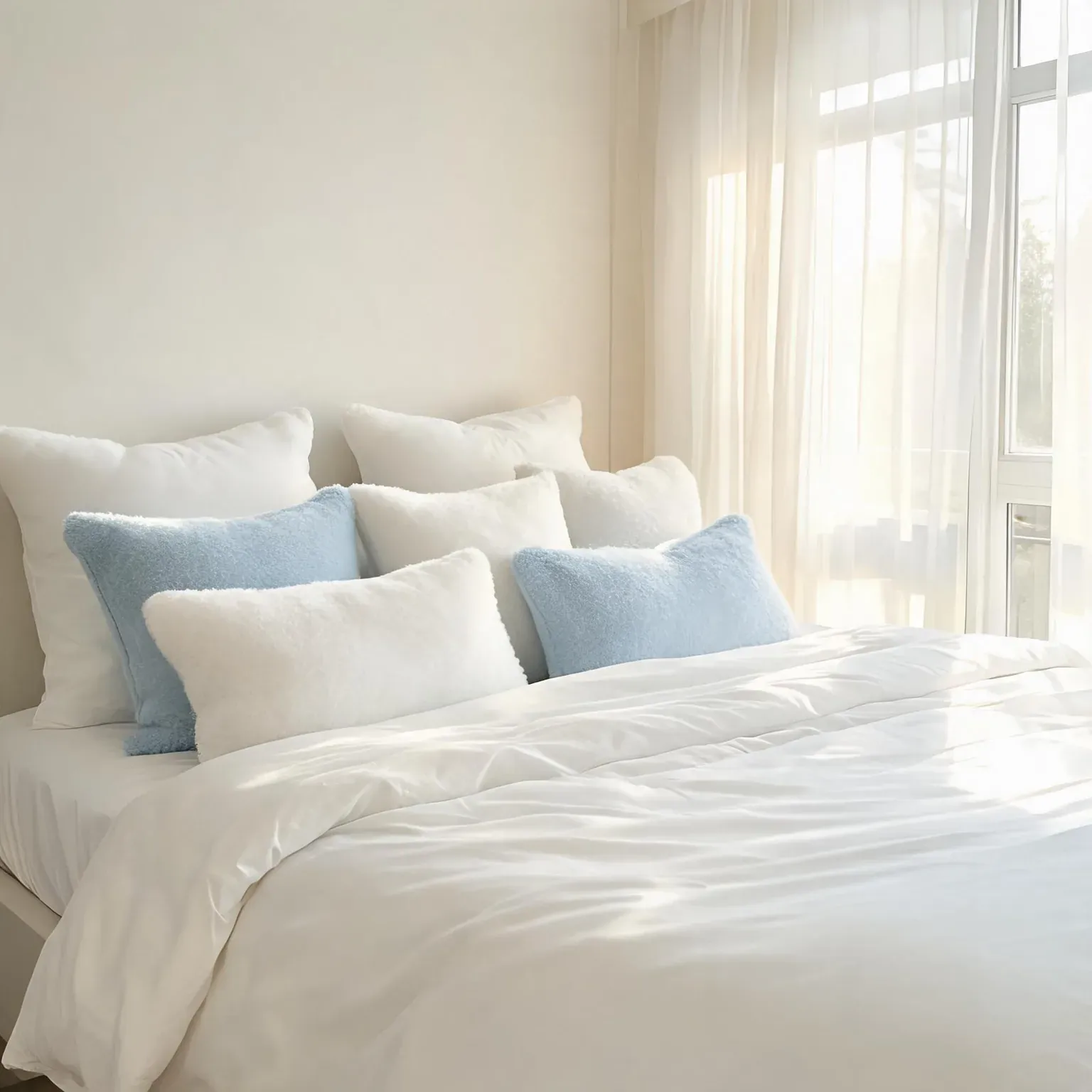
The best mattress protectors do the one job a fitted sheet cannot: they stop spills, sweat, urine and dust-mite allergen at the surface, before any of it soaks into the mattress underneath. For 2026 we price-checked and spec-checked seven protectors sold on Amazon — five fitted covers and two full zippered encasements — read every live listing for depth, material, waterproofing layer, care limits and best-seller rank, set those claims against the published sleep-medicine and allergy guidance, and compared our ranking with the two biggest mattress testers. The short version: our top pick costs $39.99, the cheapest genuinely waterproof queen here costs $14.69, and the single most useful thing you can do with any protector is a wash-temperature decision, not a brand decision.
Affiliate disclosure: As an Amazon Associate I earn from qualifying purchases. We earn commission from qualifying purchases made through links on this page. This never affects our rankings or what we recommend.
What’s in this guide
- How we picked these protectors
- The 7 best mattress protectors at a glance
- 1. SafeRest Waterproof Queen (best overall)
- 2. BEDLORE Waterproof Queen (best value)
- 3. Amazon Basics Waterproof Fitted Cover (best under $15)
- 4. PlushDeluxe Bamboo Waterproof (best for hot sleepers)
- 5. Serta Power Chill Cooling (best cooling splurge)
- 6. Guardmax 6-Sided Zippered Encasement (best encasement)
- 7. Niagara 360 Zippered Encasement (best budget encasement)
- Protector, encasement or pad: which one you actually need
- Dust mites, bed bugs and the 130-degree rule
- Where we disagree with the big mattress reviewers
- Where paying more stops buying better
- The failure modes to watch for
- Who should skip which protector
- Frequently asked questions
- Sources and methodology
How we picked these protectors
We started from the failure modes, not the shelf. Every pick below was checked against its live Amazon listing on September 18, 2026, so the depths, materials, waterproofing descriptions, care instructions and best-seller ranks here match what the page actually said that day; price, stock and rank were then verified through Amazon’s product API in the same pass. We set those listings against the published guidance that actually exists for this category: Sleep Foundation’s mattress protector vs. mattress encasement explainer, the Asthma & Allergy Friendly certification programme’s bedding standards (run by Allergy Standards Ltd. with the Asthma and Allergy Foundation of America), and OEKO-TEX’s STANDARD 100 textile-testing standard. For hands-on impressions we used Sleepopolis’ best mattress protectors (over 300 beds and sleep products tested in their studio) and Mattress Clarity’s waterproof mattress protector round-up, whose testers pour measured water onto each cover and then check the mattress underneath.
Sourcing transparency: what this guide is and isn’t. We did not run a waterproofing, allergen-barrier, tear or wash-cycle lab test, and we do not claim to. What we did is read each live listing (depth range, face fabric, membrane description, care limits, warranty wording and best-seller rank on September 18, 2026), check those claims against the institutional and tester sources named above, and rank by what a listing can actually prove. Where our order differs from a bigger outlet we say so by name and explain why. Our full process is on the How We Test & Choose Products page.
The 7 best mattress protectors at a glance
Prices, stock and ranks below were pulled live from Amazon on September 18, 2026. Star averages come from the listings themselves; we deliberately publish no review counts, because when we checked, Amazon served identical counters on unrelated protector listings in the same session — the shared-widget behaviour that makes those numbers unsafe to quote.
| Product | Standout spec | Price | Track record | Deal |
|---|---|---|---|---|
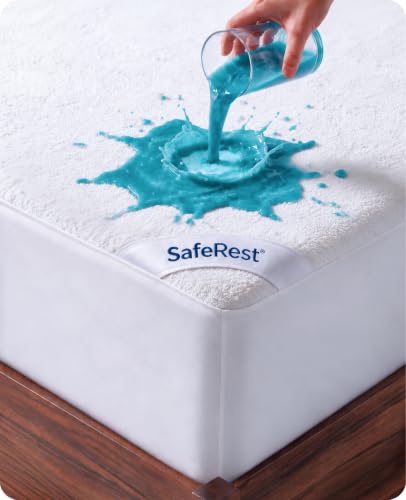 SafeRest SafeRest Waterproof Queen Size Mattress Protector |
KEEP YOUR MATTRESS DRY – Helps protect against fluids, urine, perspiration and anything else th | $39.99 $42.99 |
#5 in Mattress Protectors |
7% OFF In Stock |
 BEDLORE BEDLORE Waterproof Mattress Protector, Queen Size Mattress Pad Noiseless |
Unique Style: Stand out with our classic quilted design. It locks in filling for even support a | $23.99 $26.99 |
#1 in Mattress Protectors |
11% OFF In Stock |
 Amazon Basics Amazon Basics Waterproof Mattress Protector, Fitted Secure Protection, Queen, |
COMPLETE PROTECTION: Waterproof and bed bug proof barrier safeguards your mattress from spills, | $14.69 |
#7 in Mattress Protectors |
In Stock |
 PlushDeluxe PlushDeluxe Bamboo Waterproof Mattress Protector, Queen Size, Ultra Soft |
SAFEGUARD YOUR INVESTMENT: Keep your expensive mattress in pristine condition with our Premium | $37.99 |
#3 in Mattress Protectors |
In Stock |
 Serta Serta Power Chill Cooling Waterproof Mattress Protector, Queen |
SUPER SOFT & BREATHABLE – Our cooling mattress protector features Cool-Hex technology, designed | $50.99 $59.99 |
#79 in Mattress Protectors |
15% OFF In Stock |
 Guardmax Guardmax Queen Mattress Protector Zippered, Bed Bug Mattress Cover |
Bed Bug Mattress Encasement Sealed on All Six Sides: The nylon zipper closure glides around thr | $41.99 $45.99 |
#7 in Mattress Encasements |
9% OFF In Stock |
 Niagara Sleep Solution Niagara Waterproof 360 Protection Zippered Mattress Pad Queen 60×80 Non Noisy |
100% WATERPROOF: The microscopic pores in the 100% waterproof polyurethane membrane of the twin | $16.99 |
#101 in Mattress Protectors |
In Stock |
1. SafeRest Waterproof Queen — best overall
SafeRest is the protector that keeps showing up in dorm rooms, guest rooms and rental turnover lists, and the reason is unglamorous: a cotton-blend terry face, a stretchable-pocket skirt, and a care label that does not ask anything unusual of you. The listing’s own headline features are “KEEP YOUR MATTRESS DRY” and “QUIET & BREATHABLE,” which maps onto the two things protectors most often get wrong. Sleep writers repeatedly flag noise as the giveaway that a cover has a plastic sheet inside it, and this listing explicitly markets the opposite.
What you are really buying at $39.99 is the category’s most-tested pattern: a terry-topped fitted cover that installs like a sheet, tolerates cold wash and tumble dry, and does not change how the mattress sleeps. Both major testers describe the same format in the same terms — Mattress Clarity notes that a quiet protector is the difference between a cover you forget and one you notice every time you roll over, and Sleepopolis pours water onto every fitted cover it tests and checks the mattress beneath.
What we like
- A cotton-blend terry sleep surface over a stretchable-pocket skirt, so it goes on like a fitted sheet and grips all four corners
- The listing itself leads with “QUIET & BREATHABLE,” and noise is the complaint we see most often levelled at cheap protectors
- Machine wash cold and tumble dry — the exact care routine both tester sites say preserves the waterproof membrane
- Standard 60 × 80 in queen footprint that fits the overwhelming majority of queen mattresses and sheets
- The deepest track record of any fitted cover in this guide: it was ranked #5 in Amazon’s Mattress Protectors category on our check date
What could be better
- The listing never names the membrane material or thickness — “waterproof” is asserted, not specified
- $39.99 buys no published barrier figure: no hydrostatic-head rating and no allergen-blocking test result on the page
- It is a fitted cover, not an encasement, so it does not protect the underside and is not a bed-bug barrier
Flaws but not dealbreakers: the membrane is unspecified and there is no published barrier rating, so you are buying the category’s best-known fit, care routine and review history rather than a documented performance number. If you need underside protection it is the wrong format, not the wrong product.
2. BEDLORE Waterproof Queen — best value
If you want the SafeRest formula at roughly 40% off, this is the pick. BEDLORE sells the same product shape — fitted cover, waterproof backing, noiseless marketing — with one specification advantage that matters on a real bed: pockets rated for mattresses from 6 to 18 inches deep. That range covers thick pillow-tops that a fixed 14-inch skirt cannot reach, and it is the spec most budget protectors quietly get wrong.
The trade is track record, not construction. BEDLORE is a much newer name than SafeRest, its listing publishes no membrane specification, and it states no warranty. On a guest bed or a kid’s bed, where the protector exists to absorb the accident and get washed, that trade is easy to make.
What we like
- Deep 6–18 in pockets, which covers thick pillow-tops that a standard 14 in skirt will not reach
- The listing markets a noiseless surface — and crinkle noise is the number-one complaint on cheap polyurethane covers
- Breathable, lightweight build that is meant to disappear under a fitted sheet rather than change how the bed feels
- Machine washable and quick to dry, so you can rotate it on wash day instead of taking the bed apart
What could be better
- The brand has a far shorter history than the category leaders, so long-term membrane durability is unproven
- No membrane specification is published, and no warranty term is stated on the listing we checked
- Fitted only — the sides and underside are exposed
Flaws but not dealbreakers: BEDLORE is a newer name without the decade of listings the leaders have, and it publishes no membrane spec. At $23.99 with deep pockets and a noiseless face, it is still the best price-to-basics ratio in this guide.
3. Amazon Basics Waterproof Fitted Cover — best under $15
This is the cheapest board we could verify that is genuinely waterproof rather than merely “water-resistant,” and it is not a throwaway. The listing claims an 18-inch pocket, a silent polyurethane backing, machine washing and quick drying, and it states that the fabric is 85% Global Recycled Standard certified recycled post-consumer polyester. For a first apartment, a dorm, a spare bed or a set you want one of in every room, $14.69 removes the reason to skip protection entirely.
What it is not is a mattress pad. There is no terry face and no fill, so it will not add cushioning, and the “bed bug proof” line in its bullets is a claim without a published test behind it. Treat it as a spill barrier at a price that makes the barrier automatic.
What we like
- The cheapest genuinely waterproof protector we verified — under $15 for a queen
- An 18-inch pocket depth, which is deeper than several covers that cost two or three times as much
- A polyurethane backing described as silent, avoiding the crisp-plastic crinkle of old-style waterproof pads
- The listing states it is made with 85% Global Recycled Standard certified recycled post-consumer polyester
- Machine washable and quick-drying, and Amazon Basics keeps spare sizes permanently in stock
What could be better
- The thinnest build here: polyester with a polyurethane backing, with no terry or cotton face to soften the feel
- Its “bed bug proof” line on the listing is a marketing statement with no published test behind it
- No membrane thickness or material grade is specified anywhere on the page
Flaws but not dealbreakers: it is a thin polyester cover with no terry face, so it will never feel like a mattress pad, and its bed-bug wording is marketing rather than a test result. As a sub-$15 spill barrier for a guest bed, a dorm or a first apartment, that is a fair trade.
4. PlushDeluxe Bamboo Waterproof — best for hot sleepers
The institutional guidance is consistent on this point: the waterproofing layer is usually a polyurethane film, and polyurethane traps body heat. Sleep Foundation is explicit that “waterproof mattress protectors often contain a polyurethane barrier, which tends to trap body heat,” and recommends breathable materials to counteract it. Sleepopolis’ medical advisor Dr. Shelby Harris makes the same case in materials terms: natural fibres like cotton and linen breathe better than synthetic polyester and are the better choice for hot sleepers.
PlushDeluxe’s answer is a bamboo-viscose face over a thin waterproof membrane, fitted to depths up to 18 inches, and marketed as “completely silent — no crinkling.” Bamboo viscose is the same fibre family the mattress testers recommend for cooling sheets and pillowcases, and at $37.99 it sits below the Serta while doing the breathability job more straightforwardly. It ranked #3 in Amazon’s Mattress Protectors category on our check date, behind only two much cheaper plain covers — a strong signal for a premium-priced fitted cover.
What we like
- A bamboo-viscose surface marketed as breathable and moisture-wicking — the material family the mattress testers recommend for hot sleepers
- Fits mattress depths up to 18 in, so it works on deep hybrid and foam beds as well as standard ones
- Explicitly marketed as “completely silent — no crinkling,” the failure most people actually notice night to night
- TPU-backed waterproofing with a soft textile face rather than a vinyl sheet, which is the format sleep writers steer readers toward
- Ranked #3 in Amazon’s Mattress Protectors category on our check date, behind only two far cheaper plain covers
What could be better
- “Bamboo” is used loosely across bedding listings; this one is bamboo viscose, and the page does not say what share of the face is bamboo versus polyester
- No waterproofing specification or wash-durability claim is published
- It carries a premium price for a fitted cover while giving up the underside protection an encasement adds
Flaws but not dealbreakers: the bamboo content is loose and the waterproofing is unspecified. If you sleep hot and want a soft, quiet, breathable face fabric over a waterproof membrane, this is the pick; if you want a documented barrier, it is not.
5. Serta Power Chill Cooling — best cooling splurge
If you want a name-brand bed brand and a cooling story, this is the one. Serta’s Cool-Hex knit is marketed to turn heat into cooling comfort, the face fabric is cool to the touch, and the cover carries a 3M Scotchgard treatment sold on stain release and odour inhibition — which, unlike most protector claims, describes something you can observe the first time you wash a coffee spill out of it. The elastic runs extra wide on all four sides, the detail that stops a protector creeping up at the corners.
Be clear about what you are paying for. At $50.99 it is the most expensive fitted cover here, and no listing, brand or standard publishes a measured temperature difference for a “cooling” protector — there is no recognised test behind the word. You are buying the fit, the stain chemistry and the Serta warranty, not a proven thermal figure. Its best-seller rank was also the weakest of the five fitted picks on our check date.
What we like
- Cool-Hex knit marketed to turn heat into cooling comfort, plus a cool-to-touch face fabric
- A 3M Scotchgard treatment sold on stain release and odour inhibition, which is genuinely useful on a protector
- Extra-wide elastic on all four sides, the fit detail that stops a protector from riding up at the corners
- Machine washable on cold and gentle, from a bedding brand that has been making sleep products for more than 90 years
What could be better
- $50.99 is the most expensive fitted cover here, and the listing publishes no measured temperature difference to justify it
- There is no recognised standard behind the word “cooling” on bedding, so the claim cannot be verified from the page
- Its best-seller rank was the weakest of the five fitted picks on our check date
Flaws but not dealbreakers: you are paying roughly $12 more than the SafeRest for a cooling story with no published numbers behind it. The Scotchgard stain release and the wide elastic are real, measurable convenience; the temperature claim is not verifiable.
6. Guardmax 6-Sided Zippered Encasement — best full encasement
Everything above covers the sleeping surface. An encasement covers the whole mattress. Sleep Foundation draws the line plainly: “A mattress protector shields only the sleep surface, while a mattress encasement completely surrounds the mattress — including the underside,” and adds that encasements “offer a greater degree of protection from moisture, allergens, and bed bugs.” If your reason for being here is dust mites, dander or a bed-bug scare rather than a spilled drink, this is the format you need, and the Guardmax is the one to buy.
It zips closed on three sides, adds a velcro seal over the zipper so the closure cannot creep open, and is marketed as waterproof, dust-mite proof and noiseless over a soft stretch fabric with a polyurethane inner lining rather than a stiff vinyl shell. That combination — full wrap, sealed closure, quiet face — is exactly what the allergy literature asks of a cover, and it is why this is our encasement pick over the cheaper Niagara.
What we like
- Six-sided zippered encasement — the only format that also closes off the underside of the mattress
- A zipper seal with a velcro lock over it, so the closure cannot creep open the way a bare zip can
- Marketed as waterproof and dust-mite proof, which is exactly the barrier job the allergy guidance describes
- Soft, stretchable, noiseless fabric with a polyurethane inner lining rather than a stiff vinyl shell
- Machine washable, so allergen control does not mean replacing the cover every season
What could be better
- Encasements are fussier to install and to wash than a fitted cover, and they must go back on a bare mattress
- The “bed bug proof” wording is not backed by a published laboratory result on the listing
- No membrane specification or warranty term is published; you are trusting the description
Flaws but not dealbreakers: it takes longer to fit than a fitted cover, and the bed-bug wording is unproven on the page. It is still the only format here that closes off the underside, which is what the sleep and allergy guidance says you need for real allergen and pest control.
7. Niagara 360 Zippered Encasement — best budget encasement
Six-sided protection for $16.99, which is less than most fitted covers here. Niagara’s 360 design wraps the mattress and zips around three sides, and the listing markets it as non-noisy, cooling and breathable — the three complaints that keep people away from encasements. If you are not sure whether you want a full encasement, or you need several for a multi-bed household, this is the cheap way to find out without committing $40 per bed.
It is the thinnest cover in this guide and the one whose zipper is most likely to be the first thing to fail after a run of wash cycles. That is the honest trade at this price, and it is why it sits behind the Guardmax rather than ahead of it.
What we like
- The cheapest six-sided zippered encasement we verified — a full wrap for the price of a fitted budget cover
- 360-degree protection with a zip that runs around three sides for easy fitting
- Marketed as non-noisy, cooling and breathable, avoiding the two classic encasement complaints
- Machine washable, which is what makes an encasement livable rather than a one-time installation
What could be better
- The thinnest construction and the shallowest track record of the two encasements here
- A budget zipper is the classic failure point on cheap encasements once it has been through a few wash cycles
- The “cooling” wording is unverifiable for the same reason it is on every other listing
Flaws but not dealbreakers: the build is basic and the zipper is the part most likely to fail first. As a cheap way to test whether you actually want a full encasement, it is hard to beat at $16.99.
Protector, encasement or pad: which one you actually need
Three different products get sold under the same words, and picking the wrong one is the most common mistake in this category. A fitted protector covers the top and sides of the mattress and installs like a sheet; it stops spills, sweat and surface allergen and it is the right answer for the overwhelming majority of households. A mattress pad is a comfort layer with a thin protective top, and it is what you buy when you want the bed softer, not when you want it sealed. An encasement zips around all six sides. Sleep Foundation is blunt about which does what: for “maximum protection against spills or allergens, you’ll want a mattress encasement,” while a fitted protector is the lighter, easier option that also keeps a mattress warranty intact — relevant, because stains from spills and accidents generally void mattress warranties.
The practical buying rule: fitted cover for a normal bed in a normal household; encasement if anyone in the house has dust-mite or dander allergies, if you have had bed bugs, or if the mattress is expensive enough that the underside matters. Both formats here are available for the same $17 to $42 range, so this decision costs nothing but a little research.
Dust mites, bed bugs and the 130-degree rule
This is the part where a protector stops being a convenience and starts being a health device, and it is the part most roundups skip. The Asthma & Allergy Friendly certification programme — operated by Allergy Standards Ltd. with the Asthma and Allergy Foundation of America — states that certified mattress and pillow covers “create an effective barrier against dust mites,” and that certification requires that the outer fabric “must block allergens (e.g. dust mites) from passing through.” The barrier is the entire point: a loose-woven cover that lets allergen through the fabric fails at the job no matter how waterproof it is.
The second half of the guidance is the part that costs nothing and that almost nobody follows: the same programme advises washing sheets, pillowcases and blankets weekly in water that is 130 °F or hotter to kill and remove dust mites. A protector is not a substitute for that wash schedule; it is what lets the wash schedule work, because you are laundering a removable cover instead of the mattress. Note the conflict with the testers’ care advice, which we take seriously: Mattress Clarity warns that heat can disrupt the protector’s own waterproof membrane, so wash the cover on cold or warm as its label says and put the bedding through the hot cycle. Different items, different temperature rules.
For bed bugs the answer is simpler and stricter. Sleep Foundation notes that bed bugs typically cannot penetrate a waterproof or tightly knit encasement, and that the closure has to be a zipper that fastens without leaving gaps — which is why both encasement picks here are zippered six-sided covers rather than fitted sheets. A fitted protector, including our top three, does nothing about bed bugs. If that is your situation, go straight to pick six.
Where we disagree with the big mattress reviewers
Both of the major testers pick the same winner, and it is not ours. Sleepopolis says “the Saatva Waterproof Mattress Protector earned our top spot for its waterproofing, its cooling capabilities, and overall comfort,” and Mattress Clarity states flatly that “we named the Saatva Waterproof mattress protector as our best overall mattress protector.” Saatva’s cover is genuinely well made — organic, fair-trade cotton over a polyurethane layer, and Quiet enough that both testers single out the absence of crinkle — but it sells for $195 and it is not sold on Amazon at all.
Three specific disagreements, stated plainly. First, on price: Sleepopolis’ own buying rule is that “if a protector costs more than $100, I expected noticeable quality or performance to justify it.” Their winner is nearly twice that, and no barrier figure, membrane grade or allergen test result is published anywhere to spend it on. Our top pick is $39.99 and the difference buys no measurable protection. Second, the two testers contradict each other on value: Sleepopolis names the Bear protector as best value at $110 (frequently under $75), while Mattress Clarity names the Helix as best value at $124 (frequently under $100). When two careful labs disagree about which $100-plus cover is the value pick, the honest conclusion is that above $100 you are buying brand relationship and warranty service, not barrier performance. Third, on coverage: Mattress Clarity says of its own waterproof pick that the Bear “does not encase all sides of the mattress, so it cannot fully protect against bed bugs” — which is exactly why we run fitted covers and encasements as separate slots rather than pretending one product does both jobs.
Where paying more stops buying better
Reading every verified listing side by side, the category sorts into four honest tiers. Under $20 buys a working waterproof barrier with a polyurethane backing and an elastic skirt — the Amazon Basics at $14.69 and the Niagara encasement at $16.99 live here, and both do the basic job. $20–$40 buys better fit and a better face: deeper pockets that reach 18 inches, terry or viscose surfaces instead of bare polyester, and quieter construction. Our $23.99 and $39.99 picks are in this band, and it is where the value is.
$40–$65 buys a named brand, a sealed zippered encasement, or a stain-treatment system. The Guardmax encasement and the Serta cooling cover sit here, and the money buys real things — a six-sided wrap, a velcro-sealed zip, Scotchgard chemistry — just not more waterproofing. Above $100 is the direct-to-consumer zone, where the testers’ own winners live. Sleepopolis tests $195 and $250 protectors; those are good products with real return policies, but no one publishes a barrier number that a $40 cover fails to match, so the extra $150 is buying service, materials story and brand, not a proportionally better barrier. If your mattress costs four figures, insuring it may be worth it — but call it insurance, not performance.
The failure modes to watch for
- Crinkle noise. The most-reported complaint on cheap waterproof covers, and a direct signal of a stiff plastic sheet under a thin face fabric. Both testers weight noise heavily; every premium pick here markets silence explicitly.
- Sagging on thin mattresses. Mattress Clarity notes that its budget kid pick — a $50-class cover — “might be too saggy for thin mattresses.” A skirt designed for a 15-inch bed will bunch on a 10-inch one.
- Slipping under the sheet. Mattress Clarity reports that one of its picks can shift beneath fitted sheets on mattresses under 15 inches tall. Wide elastic and a rubberised band at the corners are the fix, and it is worth checking before you buy.
- Heat trapping. Sleep Foundation’s warning about polyurethane barriers is the root cause of most “I sleep hot now” complaints after fitting a waterproof cover. If that matters to you, prioritise a cotton, bamboo or viscose face.
- Tearing in the wash. Thin membranes snag. Sleepopolis says of one pick that it is thin enough that it “could see it tearing if thrown into the wash alongside other items” — wash protectors on their own, on gentle.
- Membrane death by hot drying. Mattress Clarity and Sleep Foundation both warn that heat damages the waterproof layer, which is why almost every listing here specifies low-heat or tumble-dry-low. High heat is the fastest way to turn a waterproof cover into a decorative one.
- Zipper failure on budget encasements. The closure is the weakest part of a cheap six-sided cover, and once it fails the encasement is just an expensive fitted sheet that never comes off.
- Overstated “proof” claims. “100% waterproof,” “bed bug proof” and “dust mite proof” are marketing lines unless a listing publishes a test behind them. None here do.
Who should skip which protector
- Skip the SafeRest if you need to protect the underside of the mattress — get the Guardmax encasement instead.
- Skip the BEDLORE if you want a documented membrane specification or a stated warranty term before buying.
- Skip the Amazon Basics if you want a plush, padded sleep surface; it is a barrier, not a comfort layer.
- Skip the PlushDeluxe Bamboo if the word “bamboo” is your main reason for buying — the listing does not state what share of the face is bamboo.
- Skip the Serta Power Chill if you are buying it only for the cooling claim; no standard measures it, and the cheaper bamboo cover does the breathability job.
- Skip the Guardmax if you want a cover you can strip and refit in under a minute; encasements take longer by design.
- Skip the Niagara encasement if the bed is the one you sleep on every night and you intend to keep the cover for years — spend the extra $25 on the Guardmax.
Frequently asked questions
Are mattress protectors actually necessary? If the mattress has a warranty you would rather keep, yes. Sleep Foundation notes that stains from spills and accidents generally void mattress warranties, and several manufacturers require a protector to stay in warranty at all. A $15 to $40 cover protecting a four-figure mattress is the cheapest insurance in the bedroom.
How often should I wash a mattress protector? Mattress Clarity’s rule is roughly every two months, and more often in allergy season, after illness or after an accident. Wash per the label — usually cold or warm on gentle — and dry on low, because heat degrades the waterproof membrane.
Does a mattress protector stop dust mites? Only if the fabric is woven tightly enough to block allergen, which is what the Asthma & Allergy Friendly certification tests for. A fitted protector helps on the sleeping surface; a full encasement is the stronger option. Either way, wash bedding weekly at 130 °F or hotter to kill the mites already in the bed.
Can I use a mattress protector on a mattress that already has stains? Yes, but understand what it can and cannot do: a protector stops new moisture reaching the mattress, it does not clean what is already in there. If the concern is bed bugs or a previous infestation, only a zippered encasement traps what is inside the mattress.
What does OEKO-TEX STANDARD 100 actually certify? Not waterproofing and not allergen blocking. OEKO-TEX describes STANDARD 100 as “a label for textiles tested for harmful substances,” certified as having “passed safety tests for the presence of harmful substances.” That is a chemical-safety assurance, and it is worth having — but it is a different question from whether the cover keeps liquid and allergen out.
Do I need a protector if I already use a mattress pad? Only if the pad is waterproof. Many pads are comfort layers with a mildly water-resistant top, and a few ounces of water will still reach the mattress. If you want spill protection and extra cushioning, buy one of the fitted covers here and put a pad on top of it.
Sources and methodology
Institutional and primary: Sleep Foundation, “Mattress Protector vs. Mattress Encasement” (protector vs encasement coverage, polyurethane heat retention, warranty and stain guidance, bed-bug penetration); Asthma & Allergy Friendly Certification Program, Bedding standards (barrier requirement against dust mites and the 130 °F wash rule; programme operated by Allergy Standards Ltd. and the Asthma and Allergy Foundation of America); OEKO-TEX® STANDARD 100 (what the textile label does and does not certify).
Independent testers: Sleepopolis, “Best Mattress Protectors (2026), Tested by Experts” (updated September 16, 2026; over 300 beds and sleep products tested; water-pour testing, scored categories, the $100 expectations rule, quotes from testers Nicole and the site’s medical advisors); Mattress Clarity, “Top 8 Best Mattress Protectors 2026” (waterproof and noise testing, encasement and deep-pocket picks, the two-year replacement guidance, care and warranty warnings).
How this guide was built: seven products were selected from live Amazon search results, then every listed specification — depth range, face fabric, membrane description, care instructions, best-seller rank and price — was read from the product pages on September 18, 2026 and verified through Amazon’s product API the same day. Star averages are the listings’ own. Review counts are deliberately omitted because Amazon served identical counters across unrelated protector listings in the same session. What we did not do: we did not run waterproofing, allergen-barrier, abrasion or wash-cycle tests, and no number in this guide comes from a test we did not run. Prices and stock change. Related buying guides: mattress toppers, cooling sheets for hot sleepers, weighted blankets and bath towels. Our full process is on the How We Test & Choose Products page.