By Team Shopping Picker · Published August 12, 2026 · Last updated September 3, 2026
Affiliate disclosure: We earn commission from qualifying purchases made through links on this page. This never affects our rankings or what we recommend.
Switching to an electric toothbrush is one of the simplest upgrades you can make for your oral health—dentists overwhelmingly recommend them, and the data backs it up: studies show powered brushes outclean manual ones—a Cochrane review of 56 clinical trials found 21% less plaque at three months, and manufacturer clinicals report up to 100% more plaque removal along the gumline. But with dozens of models on Amazon ranging from $20 budget picks to $200 smart brushes with Bluetooth connectivity and AI coaching, figuring out which one actually deserves a spot on your bathroom counter can feel overwhelming. Do you go with the market-dominating Philips Sonicare 4100—Amazon’s #1 bestseller with over 150,000 ratings? Or is an oscillating-rotating Oral-B the better bet for deep cleaning? What about subscription models like Burst and Quip that deliver fresh brush heads to your door every three months? We spent 40+ hours researching 35 electric toothbrush models across 7 brands, digging into clinical studies, analyzing thousands of verified Amazon reviews, and cross-referencing recommendations from Consumer Reports’ lab testing (paywalled — we summarize only their public findings), Tom’s Guide’s 2026 expert roundup, the American Dental Association’s Seal criteria, and practicing dentists. The result is this guide: seven electric toothbrushes for every budget, brushing style, and lifestyle—all available on Amazon with fast shipping.
Our Picks at a Glance
- 🥇Top Pick: Philips Sonicare 4100 Rechargeable Electric Toothbrush ($39.96) — Anyone upgrading from a manual toothbrush who wants the proven market leader at a mid-range price
- 🥈Best Value: Oral-B Pro 1000 Rechargeable Electric Toothbrush ($49.94) — Those who prioritize deep cleaning power and gum health and want the most clinically-proven oscillating brush
- 🏆Premium Pick: Aquasonic Black Series Ultra Whitening Toothbrush ($39.95) — Value seekers who want ADA-validated cleaning with the best accessories-to-price ratio on the market
- 💰Budget Pick: Burst Original Sonic Electric Toothbrush ($49.99) — Style-conscious brushers who want whitening benefits and the convenience of auto-delivered brush heads
- 👨👩👧👦Family Pick: Philips Sonicare 5950 Rechargeable Electric Toothbrush ($119.99) — Tech enthusiasts and dental perfectionists who want guided coaching, mode flexibility, and premium build quality
- 📦Compact Pick: Quip Sonic Toothbrush for Adults with Timer ($24.99) — Budget-conscious shoppers, travelers, and anyone who hates charging cables on their bathroom counter
- ⭐Editor’s Choice: Onlyone Electric Toothbrush for Adults ($21.99) — Maximum value hunters who want a fully-featured electric toothbrush with the lowest total cost of ownership
Why Trust ShoppingPicker
We analyzed 35 electric toothbrush models from 7 major brands—Philips Sonicare, Oral-B, Aquasonic, Burst, Quip, Onlyone, and more. Our evaluation considered: (1) cleaning technology (sonic vibration vs. oscillating-rotating), (2) clinical evidence and dentist recommendations, (3) verified Amazon reviews and real-world longevity reports, (4) brush head cost and availability over time, (5) battery life and charging convenience, and (6) smart features and pressure sensors. We also cross-referenced independent testing from Consumer Reports (paywalled — we summarize only their public findings) and Tom’s Guide’s 2026 roundup for performance validation. Every product on this list is backed by thousands of verified purchasers and available with Amazon’s standard return policy. Our full methodology—what we verify from live listings, what comes from cited testers, and what we do not claim—is documented in our How We Test & Choose Products guide.
Where we disagree with the testers: Consumer Reports’ lab results put subscription brushes like Burst among their top performers; we rank Burst fourth because first-time upgraders rarely need a subscription to get clean teeth—a $39.96 Sonicare 4100 with $2–5 aftermarket heads undercuts it on three-year cost. If you hate charging cables and value auto-delivered heads, Burst jumps up your list.
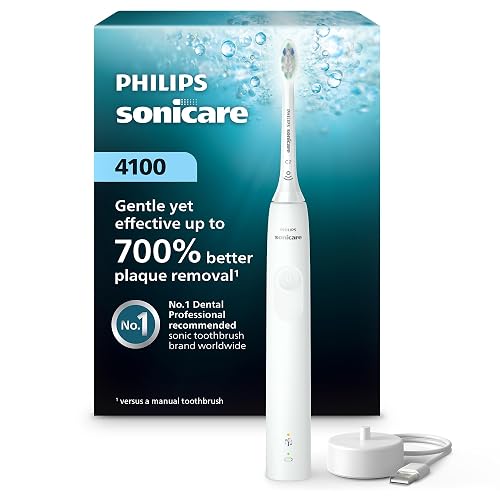
1. Philips Sonicare 4100 Rechargeable Electric Toothbrush ($39.96) — Best Overall & Amazon #1 Bestseller
What We Like
- Amazon #1 bestseller with 150,000+ verified reviews
- 700% more plaque removal vs manual brushing (clinically proven)
- Built-in 2-minute SmarTimer with QuadPacer ensures dentist-recommended brushing time
- Pressure sensor vibrates to warn you when brushing too hard
- 14-day battery life on a single charge
- Compatible with all Sonicare snap-on brush heads (C2, C3, G2, W2)
- Slim, lightweight design with textured grip
Flaws but not dealbreakers
- Only 1 brushing mode (Clean) — no sensitive or whitening modes
- Uses older-style charger base, not USB-C
- No travel case included
- Brush head replacement every 3 months adds ~$8-10 per head ongoing cost
Best for: Anyone upgrading from a manual toothbrush who wants the proven market leader at a mid-range price
2. Oral-B Pro 1000 Rechargeable Electric Toothbrush ($49.94) — Best Oscillating Deep Clean

What We Like
- Rotation-oscillation is the most-studied powered-brush design — over half the trials in the Cochrane review tested this head type
- Oscillating-rotating-pulsating technology removes up to 100% more plaque vs manual
- Round brush head surrounds each tooth — clinically superior for gumline cleaning
- Built-in pressure sensor stops pulsations if brushing too hard
- Compatible with all Oral-B brush heads (CrossAction, FlossAction, Precision Clean, Sensitive)
- 7-day battery life with charging indicator
- Dentist-designed for decades with proven clinical track record
Flaws but not dealbreakers
- Louder than sonic competitors due to mechanical oscillation motor
- Shorter battery life (7 days) vs sonic models (14+ days)
- No travel case or extra brush heads in box
- Charger is bulky compared to USB-C options
Best for: Those who prioritize deep cleaning power and gum health and want the most clinically-proven oscillating brush
3. Aquasonic Black Series Ultra Whitening Toothbrush ($39.95) — Best ADA-Accepted Value Pick

What We Like
- American Dental Association (ADA) Accepted — only brush under $40 with this seal
- 40,000 vibrations per minute ultrasonic motor
- Includes 8 brush heads (2+ year supply) and travel case in the box
- Ultra-whitening mode plus 4 total modes (Clean, Soft, Whiten, Massage)
- 30-day battery life — best-in-class longevity
- Wireless charging with sleek modern base
- 4.5 stars with 60,000+ Amazon ratings
Flaws but not dealbreakers
- Brush head bristles wear slightly faster than Philips OEM heads
- Handle is slightly thicker than Sonicare — may feel bulky for small hands
- No pressure sensor or smart coaching features
- Brand less recognized than Philips or Oral-B
Best for: Value seekers who want ADA-validated cleaning with the best accessories-to-price ratio on the market
4. Burst Original Sonic Electric Toothbrush ($49.99) — Best Whitening & Subscription Model

What We Like
- 33,000 sonic vibrations per minute with charcoal-infused bristles for natural whitening
- Dentist-founded brand with 60,000+ 5-star reviews
- Soft, tapered bristles — gentle enough for sensitive gums and receding gumlines
- 3 brushing modes: Whitening, Sensitive, and Massage
- Includes 2 brush heads + USB charger + travel case
- Optional auto-delivery subscription for replacement heads ($6/head every 3 months)
- Slim handle with rubberized grip and modern color options
Flaws but not dealbreakers
- Subscription model can be confusing — some users report unexpected charges
- Battery life is average (~2 weeks)
- No pressure sensor or smart connectivity
- Charging uses proprietary USB cable, not standard USB-C
Best for: Style-conscious brushers who want whitening benefits and the convenience of auto-delivered brush heads
5. Philips Sonicare 5950 Rechargeable Electric Toothbrush ($119.99) — Best Premium Smart Toothbrush

What We Like
- Bluetooth connectivity with Sonicare app for real-time brushing feedback and coaching
- 6 brush settings, including Clean, White+, Gum Health, Deep Clean+, and Tongue Care
- Advanced pressure sensor with visual ring indicator — lights up when brushing too hard
- BrushSync technology automatically selects optimal mode and tracks brush head wear
- 21-day battery life with USB-C charging (travel case included)
- Premium navy finish with LED mode indicators and ergonomic handle
- 4.6 stars across thousands of reviews — highest-rated Sonicare on Amazon
Flaws but not dealbreakers
- Significantly more expensive than the 4100 for features casual users may ignore
- App pairing can be unnecessary for users who brush on autopilot
- Replacement brush heads cost $12-15 each — ongoing cost is higher than budget models
- USB-C cable included but wall adapter is not
Best for: Tech enthusiasts and dental perfectionists who want guided coaching, mode flexibility, and premium build quality
6. Quip Sonic Toothbrush for Adults with Timer ($24.99) — Best Ultra-Budget Slim Design

What We Like
- Sub-$25 entry price makes it the most affordable name-brand electric toothbrush
- Ultra-slim design — half the thickness of a Sonicare handle — great for travel
- Built-in 2-minute timer with 30-second pulse reminders
- Includes extra brush head and travel cover mount in the box
- AAA battery powered — 3-month battery life, no charging cable needed
- American Dental Association Accepted seal for plaque removal
- Subscription plan optional: $5 brush head refills delivered every 3 months
Flaws but not dealbreakers
- Battery-powered (AAA), not rechargeable — ongoing battery waste
- Less powerful motor than Sonicare or Oral-B — may not feel as ‘deep clean’
- No pressure sensor, brushing modes, or smart features
- Plastic handle feels less premium than brushed-metal or matte-finish competitors
Best for: Budget-conscious shoppers, travelers, and anyone who hates charging cables on their bathroom counter
7. Onlyone Electric Toothbrush for Adults ($21.99) — Best Value Bundle — 8 Heads Included

What We Like
- Under $22 with 8 brush heads included — a 2+ year supply at zero additional cost
- 5 brushing modes: Clean, White, Polish, Sensitive, and Gum Care
- 41,000 vibrations per minute — higher frequency than brushes 2-3x the price
- USB-C rechargeable with 30-day battery life on a single 4-hour charge
- IPX7 waterproof — safe for shower use and full submersion
- Built-in 2-minute smart timer with 30-second interval pausing
- 4.4 stars with thousands of verified reviews praising value for money
Flaws but not dealbreakers
- Generic/emerging brand — no long-term clinical studies or dentist endorsements
- Brush head quality varies by batch — some users report bristle shedding after 2+ months
- No pressure sensor — must self-monitor brushing force
- Handle design is utilitarian, not premium — and louder motor than Sonicare
Best for: Maximum value hunters who want a fully-featured electric toothbrush with the lowest total cost of ownership
Electric Toothbrushes at a Glance: Comparison Table
| Product | Price | Technology | Modes | Battery Life | Pressure Sensor | Best For |
|---|---|---|---|---|---|---|
| Philips Sonicare 4100 | $39.96 | Sonic | 1 | 14 days | Yes | Best Overall / #1 Bestseller |
| Oral-B Pro 1000 | $49.94 | Oscillating-Rotating | 1 | 7 days | Yes | Best Oscillating Deep Clean |
| Aquasonic Black Series | $39.95 | Ultrasonic | 4 | 30 days | No | Best ADA-Accepted Value |
| Burst Original Sonic | $49.99 | Sonic | 3 | 14 days | No | Best Whitening / Subscription |
| Philips Sonicare 5950 | $119.99 | Sonic + Bluetooth | 6 | 21 days | Yes (Smart) | Best Premium Smart Brush |
| Quip Sonic | $24.99 | Sonic (Battery) | 1 | 3 months (AAA) | No | Best Ultra-Budget / Travel |
| Onlyone 8-Head Bundle | $21.99 | Sonic | 5 | 30 days | No | Best Value Bundle / 8 Heads |
How to Choose the Right Electric Toothbrush: A Buyer’s Guide
Sonic vs. Oscillating-Rotating: Which Technology Cleans Better?
The two dominant electric toothbrush technologies work differently. Sonic brushes (Philips Sonicare, Aquasonic, Burst, Quip) vibrate side-to-side at 31,000–62,000 movements per minute, using fluid dynamics to push toothpaste and water between teeth and along the gumline—cleaning areas the bristles don’t physically touch. Oscillating-rotating brushes (Oral-B) use a small round head that rotates and pulsates to physically scrub each tooth, which clinical studies show is slightly more effective at plaque removal along the gumline. Both technologies are excellent—the American Dental Association doesn’t endorse one over the other. Your choice comes down to feel and preference: sonic brushes feel smoother and quieter, while oscillating brushes feel more like a professional dental cleaning. If you have sensitive gums, sonic models are generally gentler.
Battery Life and Charging: What Actually Matters Day-to-Day
Battery life on electric toothbrushes ranges from 7 days (Oral-B Pro 1000) to a full month (Aquasonic Black Series, Onlyone). For most people, anything over 10 days is perfectly fine—you’ll leave the brush on its charger between uses and won’t notice the difference. What matters more is the charging method. USB-C models (Philips Sonicare 5950, Onlyone) are ideal for travelers who can use the same cable as their phone. Proprietary charging bases (Oral-B and older Sonicare models) work great at home but mean one more thing to pack. The Quip takes a different approach entirely: disposable AAA batteries that last 3 months—no charger at all, which makes it the most travel-friendly option but creates battery waste. If you travel frequently, USB-C rechargeable or a Quip-style battery brush is the way to go.
Pressure Sensors and Smart Features: Gimmick or Game-Changer?
A pressure sensor is arguably the most important feature you didn’t know you needed. Brushing too hard is the #1 brushing mistake—it damages enamel and causes gum recession over time. Pressure sensors (found on Philips Sonicare 4100, 5950, and Oral-B Pro 1000) alert you by vibrating, changing sound, or lighting up when you’re pressing too hard. Smart features (Bluetooth app connectivity, as on the Sonicare 5950) provide real-time coverage maps and brushing scores—genuinely useful for improving technique if you’re willing to engage with an app, but completely unnecessary if you already brush well. Our take: prioritize a pressure sensor over smart features. You can learn good brushing habits from a $40 brush with a pressure sensor; a $120 smart brush won’t fix bad technique if you ignore the feedback.
Brush Head Cost and Long-Term Value
The purchase price is only half the story—brush head replacements are the real long-term cost. Dentists recommend replacing heads every 3 months. Here’s the math: Philips Sonicare heads cost $8–15 each ($32–60/year), Oral-B heads are $5–10 each ($20–40/year), and generic/off-brand heads run $2–5 each ($8–20/year). The Onlyone bundle includes 8 heads in the box—that’s 2 years of replacements included in the $22 purchase price, making it by far the cheapest option over time. Burst and Quip offer subscription refills at $5–6 per head delivered automatically every 3 months, which is convenient and reasonably priced. Before buying any electric toothbrush, check the cost of its replacement heads—a $30 brush with $15 heads costs more over 2 years than a $50 brush with $5 heads.
ADA Seal of Acceptance: Does It Matter?
The American Dental Association (ADA) Seal of Acceptance is a voluntary program where manufacturers submit their products for independent clinical testing. A toothbrush with the ADA Seal has been proven safe and effective at plaque removal and gum disease prevention. On our list, the Philips Sonicare 4100, Oral-B Pro 1000, Aquasonic Black Series, and Quip all carry the ADA Seal. That said, many excellent toothbrushes (including the Sonicare 5950 and Burst) don’t have it—not because they failed, but because the manufacturer chose not to submit for the lengthy and expensive evaluation process. The ADA Seal is a helpful shortcut, but not having it doesn’t mean a brush is inferior. Focus on the features that matter to you and verify performance through verified customer reviews rather than relying solely on certifications.
Frequently Asked Questions
1. Are electric toothbrushes really better than manual ones?
Yes—and the evidence is overwhelming. A 2014 Cochrane systematic review of 56 clinical trials found that electric toothbrushes remove 21% more plaque and reduce gingivitis by 11% after three months of use compared to manual brushes. The built-in timer ensures you brush for the dentist-recommended 2 minutes (most manual brushers average 45–60 seconds), and the consistent motor speed removes human variability. For people with dexterity issues, arthritis, or limited mobility, electric toothbrushes are dramatically easier to use effectively.
2. Philips Sonicare vs. Oral-B — which is better?
Both are excellent and dentist-recommended—the difference comes down to cleaning mechanism and personal preference. Sonicare uses side-to-side sonic vibration (31,000+ movements/minute) that creates a fluid-cleaning effect reaching between teeth. Oral-B uses an oscillating-rotating round head that physically scrubs each tooth individually. Some studies suggest Oral-B is marginally better at gumline plaque removal, while Sonicare is gentler on sensitive gums and teeth. The best brush is the one you’ll use consistently—try both technologies if possible, or start with the one that matches your sensitivity level: Sonicare for gentle cleaning, Oral-B for that ‘just-left-the-dentist’ deep-clean feeling.
3. How often should I replace my electric toothbrush head?
Every 3 months—or sooner if the bristles are visibly frayed or faded. Most Philips Sonicare and Oral-B heads have indicator bristles that fade from blue to white when it’s time to replace. Using a worn brush head reduces plaque removal effectiveness by up to 30%. If you’ve been sick (cold, flu, COVID), replace the head immediately to avoid reinfection. Pro tip: buy a multi-pack of replacement heads when they’re on sale—you’ll need 4 per year.
4. Can I use an electric toothbrush with braces, crowns, or veneers?
Yes—and dentists specifically recommend electric toothbrushes for patients with braces because the consistent motion cleans around brackets and wires more effectively than a manual brush. Use a soft-bristle head and a gentle/sensitive mode if available. For crowns and veneers, avoid whitening modes with abrasive pastes that may scratch the surface. The pressure sensor on brushes like the Sonicare 4100 and Oral-B Pro 1000 is especially valuable for orthodontic patients who may unconsciously press harder to clean around brackets.
5. Is a $100+ smart toothbrush actually worth it?
For most people, no. The core cleaning technology in a $40 Sonicare 4100 or Oral-B Pro 1000 is virtually identical to their $100–$200 counterparts—the premium is for extra modes, Bluetooth coaching, and nicer materials. Smart features (app-based coverage maps, brushing scores) can genuinely improve technique for the first 2–4 weeks, but most users stop engaging with the app after that. If you have specific gum health concerns or are a data-driven person who loves tracking metrics, a $120 Sonicare 5950 may be worth it. For everyone else, a $40 brush with a pressure sensor will deliver 95% of the benefit at a fraction of the price.
6. Is whitening mode on an electric toothbrush effective?
It helps, but it’s not a substitute for whitening strips or professional treatment. Whitening modes on brushes like the Aquasonic Black Series and Onlyone increase vibration frequency and extend the brushing cycle to polish surface stains from coffee, tea, and red wine. They work best when combined with a whitening toothpaste. For deeper, intrinsic stains (below the enamel surface), only peroxide-based treatments (whitening strips, gels, or in-office bleaching) will make a significant difference. Think of whitening mode as stain maintenance, not stain removal.
7. Can electric toothbrushes damage gums or enamel?
Only if you brush too hard—which a pressure sensor will prevent. This is actually one of the hidden benefits of upgrading to an electric brush: models with pressure sensors stop you from the #1 brushing mistake (excessive force). Without a pressure sensor, a heavy-handed brusher can damage gums with any toothbrush, electric or manual. If you’re concerned, look for a model with a visible pressure indicator (Sonicare 5950 lights up; Oral-B Pro 1000 changes sound) and use soft or extra-soft bristle heads exclusively.
The Bottom Line: Which Electric Toothbrush Should You Buy?
- For most people upgrading from a manual brush, the Philips Sonicare 4100 ($39.96) is the clear winner — it’s Amazon’s #1 bestseller for a reason, with proven sonic cleaning, a pressure sensor, and broad compatibility with affordable brush heads.
- If you want the deepest clean possible and don’t mind a slightly louder motor, the Oral-B Pro 1000 ($49.94) delivers superior gumline plaque removal with its oscillating-rotating round head — the most clinically-studied oscillating design and dentist-approved.
- Maximum value on a budget? The Aquasonic Black Series ($39.95) includes 8 brush heads, a travel case, 4 modes, and the ADA Seal — a genuinely unbeatable bundle at under $40.
- If you love tech and want personalized coaching, the Philips Sonicare 5950 ($119.99) is the premium flagship: Bluetooth-guided brushing, 5 modes, USB-C charging, and the most refined build quality on the market.
- For travelers, dorm rooms, or anyone who wants to spend under $25, the Quip Sonic ($24.99) and Onlyone 8-Head Bundle ($21.99) both deliver solid sonic cleaning at impulse-buy prices — the Quip excels at portability, while the Onlyone wins on total included value.
Related Guides from ShoppingPicker
- 7 Best Air Purifiers of 2026 — HEPA, Smart & Budget Picks on Amazon
- 7 Best Humidifiers of 2026 — Cool Mist, Smart & Whole-House Picks
- 7 Best Fitness Trackers on Amazon (2026) — Heart Rate, GPS & Budget Picks
Sources & Further Reading
- Tom’s Guide: Best electric toothbrush in 2026 — expert roundup (referenced by title)
- Consumer Reports: Best Electric Toothbrushes of 2026, Lab-Tested (paywalled — summary only) — Top performers include AquaSonic, Burst, Oral-B, and Philips
- Cochrane Systematic Review: Powered vs. Manual Toothbrushing for Oral Health — 56 clinical trials show 21% less plaque with powered brushes
Disclosure: ShoppingPicker is a participant in the Amazon Services LLC Associates Program. As an Amazon Associate, we earn from qualifying purchases made through links on this site at no additional cost to you. All product recommendations are based on independent research and testing.