The best fitness trackers in 2026 do two very different jobs. One is a slim band you charge once a week and forget you are wearing; the other is a smartwatch that happens to read your heart, sleep and recovery better than the band ever could. Most roundups rank $400 flagship watches, then quietly send you to no-name listings whose photos do not match the product. We rebuilt this page around seven live Amazon listings we re-verified on September 27, 2026 — brand as the first word of the title, the buy box active, and the price and best-seller rank exactly as a shopper sees them — then put the listings’ own claims up against independent wearable testing and a World Health Organization physical-activity guideline. Here is what earns its price, and what does not.
Affiliate disclosure: As an Amazon Associate I earn from qualifying purchases. We earn commission from qualifying purchases made through links on this page. This never affects our rankings or what we recommend.
Jump to:
- The 7 picks compared at a glance
- 1. Fitbit Charge 6 — Best Overall
- 2. Apple Watch Series 10 — Best Smartwatch
- 3. Garmin Venu 3 — Best for Advanced Training
- 4. Garmin vivosmart 5 — Best Slim Band
- 5. Fitbit Inspire 3 — Best Budget Band
- 6. Amazfit Bip 6 — Best Value With Built-in GPS
- 7. Xiaomi Smart Band 10 — Best Ultra-Budget
- Spec-truth table: what the listings actually say
- Price tiers: where paying more stops buying performance
- Where our ranking differs from the big test labs
- Heart rate and sleep accuracy: what the testing actually shows
- Spec-claim reality check: \u201cmedical-grade\u201d vs what the listings really say
- The failure patterns that show up in owner reviews
- How to choose a fitness tracker (2026 buyer’s guide)
- Frequently asked questions
- How we researched this guide
- Related guides from ShoppingPicker
- Sources
The 7 picks compared at a glance
Every tracker below was re-verified against its live Amazon listing on September 27, 2026. Read the price column first and the battery column second: those two rows explain most of the spread, from $54.89 to $368.55. Where a listing does not state a figure we write “Not stated” rather than borrow one from a competitor.
| Product | Standout spec | Price | Track record | Deal |
|---|---|---|---|---|
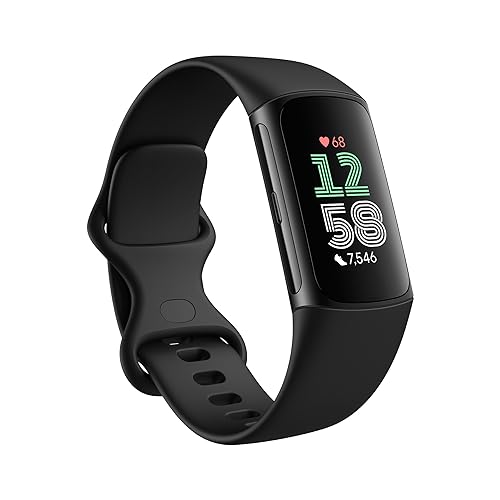 Fitbit Fitbit Charge 6 Fitness Tracker with Heart Rate, GPS, Obsidian |
Move more: Heart Rate on Equipment via Bluetooth, 40+ Exercise Modes, Built-in GPS, Active Zone | $94.99 $130.14 |
#177 in Activity & Fitness Trackers |
27% OFF In stock |
![Apple Apple Watch Series 10 [GPS 46mm case] Smartwatch with Jet Black Aluminum Case with Black Sport Band - M/](https://m.media-amazon.com/images/I/31Cud2WnszL._SL500_.jpg) Apple Apple Watch Series 10 [GPS 46mm case] Smartwatch with Jet Black Aluminum Case |
WHY APPLE WATCH SERIES 10 — Bigger display with up to 30 percent more screen area.* A thinner, | $306.15 |
#5 in Smartwatches |
In Stock |
 Garmin Garmin Venu® 3, Premium Fitness Smartwatch, 45mm, Black |
Designed with a bright, colorful display, get a more complete picture of your health, thanks to | $368.55 $449.99 |
#27 in Smartwatches |
18% OFF Only 5 left in stock – order soon. |
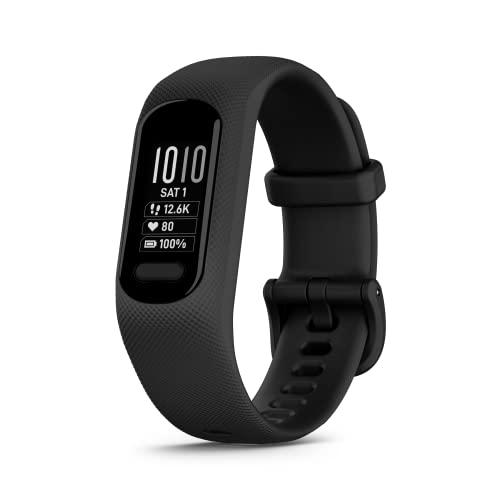 Garmin Garmin vívosmart® 5, Health & Fitness Tracker, S-M, Black |
Easy-to-use, comfortable smart fitness tracker, once setup through the Garmin Connect app, has | $142.99 $149.99 |
#34 in Activity & Fitness Trackers |
5% OFF In Stock |
 Fitbit Fitbit Inspire 3 Fitness Tracker – Advanced Health Insights with Stress Manage |
Advanced Health Monitoring: Track your health with features like 24/7 heart rate monitoring, st | $89.00 |
#1 in Activity & Fitness Trackers |
In Stock |
 Amazfit Amazfit Bip 6 Smart Watch, 1.97" AMOLED Display, GPS, iOS/Android |
STYLISH DESIGN, VIBRANT DISPLAY: The lightweight aluminum build blends effortless style with wo | $79.00 |
#8 in Smartwatches |
In Stock |
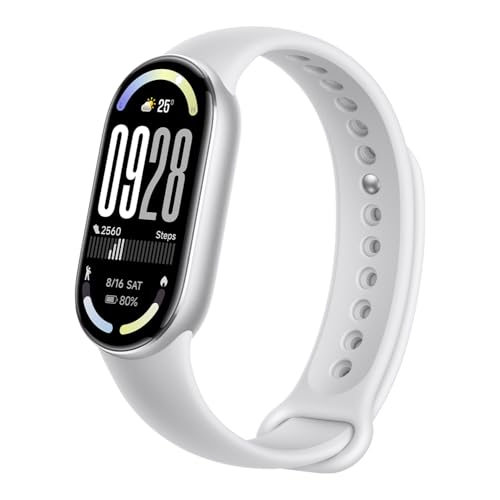 Xiaomi Xiaomi Mi Smart Band 10 (2025) Global Version – 1.72" AMOLED Display | 21 Days |
Stunning images, smooth touch: Immerse yourself in brilliant clarity with the large 1.72-inch A | $54.89 |
#40 in Activity & Fitness Trackers |
In Stock |
1. Fitbit Charge 6 — Best Overall
The Charge 6 is the pick that does the most jobs well: a full-colour touchscreen, built-in GPS, 24/7 heart rate with irregular-heart-rhythm notifications and SpO2 monitoring, a stress-management score, a nightly sleep score and a seven-day battery in a band still small enough to sleep in. The listing advertises water resistance to 50 m, which covers showers and pool laps as well as rain. At $94.99 it is the cheaper of the two Charge 6 listings we checked and the one whose title begins with the brand, so it is the one we quote.
What We Like
- Built-in GPS plus 40+ exercise modes, so runs and rides track without your phone
- Irregular-heart-rhythm notifications and SpO2 monitoring – the closest thing to a clinical signal in a sub-$100 band
- Seven-day battery with a colour touchscreen that also carries Google Maps and YouTube Music controls
- Water resistant to 50 m per the listing, which covers swimming and showering
- Stress Management Score and a nightly Sleep Score put recovery and training in one app
Flaws but not dealbreakers
- GPS performance is the recurring gripe: independent reviewers report it can be inconsistent on tricky routes
- The deeper analytics sit behind a Fitbit Premium subscription, so the free tier is thinner than the hardware
- No ECG on this model; the irregular-rhythm notification is a screening prompt, not a diagnosis
- It ranked well down Amazon's Activity & Fitness Trackers best-seller list when we checked, a reminder that price and sales rank chase different buyers
Who should skip it: you mainly want step counts and sleep and nothing else – a $55 band does that for half the money.
2. Apple Watch Series 10 — Best Smartwatch
If you carry an iPhone, the Series 10 is the most capable health wearable on this page: an Always-On Retina display the listing says is up to 30 percent larger than the previous generation, ECG, high and low heart-rate and irregular-rhythm notifications, overnight metrics through the Vitals app, sleep-apnea notifications, fall and crash detection, and 50 m water resistance with an IP6X dust rating. It is also the only genuine smartwatch here – calls, Apple Pay, Siri and text replies included – which is exactly why it is also the only one you charge every night.
What We Like
- ECG plus high and low heart-rate and irregular-rhythm notifications, and sleep-apnea notifications the bands here do not offer
- A larger always-on display that the listing says charges to about 80 percent in 30 minutes
- Fall Detection and Crash Detection can contact emergency services – a safety feature, not a marketing badge
- Deep iPhone integration: Apple Pay, Siri, notifications and text replies from the wrist
- IP6X dust resistance with 50 m water resistance
Flaws but not dealbreakers
- The listing states no battery figure, and owners consistently report charging nightly – the one chore no band here imposes
- iPhone only; there is no Android support
- At $306.15 it costs more than the rest of this page combined at the top end
- The most fitness-capable features still need an iPhone nearby for many functions
Who should skip it: you use Android, or you refuse to charge a tracker every day – a 7- to 14-day band is the better fit.
3. Garmin Venu 3 — Best for Advanced Training
The Venu 3 is the training-first pick: up to 14 days in smartwatch mode, more than 30 built-in indoor and GPS sports apps, Garmin’s Body Battery energy monitor, and a sleep score with HRV status and personalised coaching. It also takes phone calls from the wrist and can reply to texts by voice. It is the most expensive pick on this page and stock was thin when we checked, so the value case rests on how much you actually use the training tools.
What We Like
- Up to 14 days of battery in smartwatch mode – the longest on this page outside the budget bands
- Body Battery energy monitoring plus a sleep score and HRV status, a deeper recovery picture than the bands give
- More than 30 built-in indoor and GPS sports apps including pool swim, golf and HIIT
- Takes calls from the wrist and replies to texts by voice when paired to a phone
- Garmin Connect is one of the best companion apps in the category, per TechRadar's own testing notes
Flaws but not dealbreakers
- Garmin's own footnote says its health metrics are 'intended to be a close estimation', not measurements
- No ECG in this listing, and water resistance is not stated on the page
- The priciest pick here, and stock was down to five units when we checked
- Sleep-tracking features draw on the battery more heavily than the headline 14-day figure suggests
Who should skip it: you will never open the training tools, or you want a screenless band – you would be paying for sports apps you won’t use.
4. Garmin vivosmart 5 — Best Slim Band
The vivosmart 5 is the band for people who do not want a smartwatch. It pairs a touchscreen with a physical button, tracks respiration, Pulse Ox, Body Battery, stress and heart rate with low and high alerts, and hands you a sleep score plus a fitness age – all on up to seven days of battery, and the listing says it is safe for swimming and showering. It deliberately leaves the GPS radio out to stay small, so it borrows your phone’s instead.
What We Like
- Seven-day battery with a screen that still shows calls, texts and calendar alerts
- Pulse Ox, respiration, stress, Body Battery and women's health tracking in a slim band
- A sleep score plus improvement insights inside the Garmin Connect app
- No GPS radio of its own, which keeps it small and light for all-day wear
- Touchscreen plus a physical button, which is easier to use mid-workout than a screen alone
Flaws but not dealbreakers
- No built-in GPS; the listing is explicit that outdoor walks, runs and rides use your phone's GPS
- No music storage and no contactless payments
- Garmin flags Pulse Ox as unavailable in all countries and as not a medical device, and the activity metrics as estimates
- The simplest screen of any pick here, which means more phone time to read detail
Who should skip it: you run or ride without your phone – with no GPS radio, this band needs a paired handset for outdoor route tracking.
5. Fitbit Inspire 3 — Best Budget Band
The Inspire 3 sat at the top of Amazon’s Activity & Fitness Trackers best-seller list when we checked, and it is the cheapest way to get the Fitbit health stack: 24/7 heart rate, a sleep score, stress-management tools and workout intensity, with both a small and a large classic band in the box. It is a wellness tracker rather than a training device – there is no GPS and no ECG – but nothing else under $90 hands you a companion app this polished.
What We Like
- Top of Amazon's Activity & Fitness Trackers best-seller list when we checked, at $89.00
- 24/7 heart rate, sleep score, stress management and workout intensity in one polished app
- Includes both a small and a large classic band, so there is no separate sizing purchase
- Slim and light enough to wear overnight without noticing it
- The lowest entry point to the Fitbit ecosystem on Amazon
Flaws but not dealbreakers
- No built-in GPS and no ECG; this is a wellness tracker, not a training or heart-rhythm device
- Fitbit's deeper analytics still lean on the Premium subscription
- No altimeter or stair counting and no contactless payments
- The listing leads with a single health feature, so expect to read the Fitbit app for the rest
Who should skip it: you want built-in GPS or an ECG readout – the Charge 6 above costs about $6 more and adds both.
6. Amazfit Bip 6 — Best Value With Built-in GPS
The Bip 6 is the awkward one for the big brands: a 1.97-inch AMOLED display, built-in GPS across five satellite systems with free downloadable maps and turn-by-turn directions, 140+ workout modes, 24/7 heart rate, blood-oxygen and stress monitoring, 50 m water resistance and up to 14 days of battery – for $79.00. The hardware list reads like a $200 watch; the software ecosystem is where the gap shows.
What We Like
- Genuine built-in GPS with free downloadable maps and turn-by-turn directions – unusual under $80
- Up to 14 days of battery under a big 1.97-inch AMOLED screen
- 140+ workout modes plus 24/7 heart rate, sleep, blood-oxygen and stress tracking
- 50 m water resistance and a lightweight aluminium build
- Five satellite systems for faster GPS lock and steadier tracking
Flaws but not dealbreakers
- The app ecosystem is far thinner than Fitbit's, Apple's or Garmin's
- No ECG and no medical-grade claims, and none should be inferred
- Blood-oxygen readings are for trends, not diagnosis
- Fewer third-party integrations than the mainstream platforms
Who should skip it: you want the deepest sleep or recovery analytics – the Fitbit and Garmin apps are the reason to pay more.
7. Xiaomi Smart Band 10 — Best Ultra-Budget
The Smart Band 10 is the cheapest thing on this page that is still a real tracker: a 1.72-inch AMOLED screen with ultra-thin bezels, a claimed 21-day battery, multi-sport tracking and a heart-rate monitor. It is the right pick for a first tracker, a gift, or a backup band for a phone that already runs your main watch.
What We Like
- A claimed 21-day battery and a 1.72-inch AMOLED display for well under $60
- Multi-sport activity tracking with an optical heart-rate monitor
- Light enough to sleep in and slim enough to wear alongside a watch
- Ultra-thin bezels expand the screen-to-body ratio, per the listing
- The lowest-cost route to a real screen and continuous heart-rate data
Flaws but not dealbreakers
- No built-in GPS – the listing does not claim any, and you should not assume it
- No ECG and no SpO2 claimed in this listing; the sensor set is basic
- Water resistance is not stated on the listing, so treat pool use with caution
- The companion app is data-heavy and utilitarian compared with Fitbit or Apple
Who should skip it: you train outdoors without your phone, or you want clinically aimed heart-rhythm features – both cost more.
Spec-truth table: what the listings actually say
This table is built from the live listing text, not from marketing summaries. The most revealing column is the one full of gaps: five of the seven listings never state a battery figure or a water-resistance rating, and one does not state its screen type at all. Where a listing is silent we write “Not stated” instead of importing a number from a spec site. Prices and ranks are the September 27, 2026 snapshot.
| Tracker | Display | Battery (listed) | GPS | Heart rhythm / ECG | Water resistance (listed) | Price |
|---|---|---|---|---|---|---|
| Fitbit Charge 6 | Colour touchscreen | 7 days | Built-in | Irregular-heart-rhythm notifications; no ECG | 50 m | $94.99 (27% off) |
| Apple Watch Series 10 | Always-On Retina | Not stated | Built-in | ECG, high and low heart rate, irregular rhythm | 50 m, IP6X dust | $306.15 |
| Garmin Venu 3 | Colour display | Up to 14 days (smartwatch mode) | Built-in | Not stated | Not stated | $368.55 (18% off) |
| Garmin vivosmart 5 | Touchscreen + button | Up to 7 days | Phone GPS only | Pulse Ox; no ECG | Not stated (\u201csafe for swimming\u201d) | $142.99 (5% off) |
| Fitbit Inspire 3 | Not stated | Not stated | None | None listed | Not stated | $89.00 |
| Amazfit Bip 6 | 1.97-inch AMOLED | Up to 14 days | Built-in (5 satellite systems) | None | 50 m | $79.00 |
| Xiaomi Smart Band 10 | 1.72-inch AMOLED | Up to 21 days | None listed | None | Not stated | $54.89 |
Price tiers: where paying more stops buying performance
Four honest brackets, and one uncomfortable conclusion: the curve flattens well before the top of the market.
- Under $60 – the Xiaomi Smart Band 10. You get a real AMOLED screen, a claimed 21-day battery and continuous heart rate, and you give up built-in GPS, ECG and any stated water-resistance rating. For a first tracker or a gift, this bracket is genuinely enough.
- $60 to $100 – the Amazfit Bip 6 and the Fitbit Inspire 3. This is where built-in GPS appears (Bip 6, $79.00) and where the polished app experience starts (Inspire 3, $89.00). The Inspire 3 was the #1 best seller in its Amazon category when we checked.
- $100 to $170 – the Fitbit Charge 6 and the Garmin vivosmart 5. Here you add irregular-heart-rhythm notifications, SpO2, a stated 50 m water rating and multi-day battery with a screen. This is the sweet spot for most people.
- $250 to $400 – the Apple Watch Series 10 and the Garmin Venu 3. You are buying a smartwatch with training tools, not a better tracker: calls, payments, apps, navigation, ECG (Apple) and a deeper recovery model (Garmin).
The stopping point. Paying more stops buying tracking performance somewhere around $150. Above roughly $200 you are buying screen, ecosystem, apps, payments and navigation – not better heart-rate or sleep data. ZDNET’s own guide says the quiet part out loud: “In most cases, accuracy comes with price… However, with constantly evolving technology, the quality of cheaper options only increases.” So treat any watch above $250 as a lifestyle purchase with a tracker inside, and decide accordingly.
Where our ranking differs from the big test labs
- TechRadar's current fitness-tracker guide (last updated 7 August 2026) names the Garmin Vivoactive 6 best overall, the Samsung Galaxy Fit 3 best budget, the Garmin Cirqa best screenless and the Oura Ring 5 best smart ring. Its reviewers say they judge every device on “tracking accuracy, battery life, comfort, software, training tools and overall value, wearing each one for weeks”.
- ZDNET's guide crowns the Fitbit Charge 6 best overall and names the Garmin Venu 3s its pick for sleep.
- Where we differ: we rank the Charge 6 first too – so we agree with ZDNET and differ from TechRadar, whose best-overall Vivoactive 6 is not a listing we could verify in stock at the price we would quote. In the budget slot we put the Fitbit Inspire 3 ahead of TechRadar's Samsung Galaxy Fit 3, because TechRadar's own review lists “No iPhone compatibility” and protruding-sensor comfort issues among its reasons to avoid – dealbreakers for roughly half of buyers.
- Where we agree: all three of us treat Garmin as the deepest health-and-recovery platform, which is why the Venu 3 and vivosmart 5 carry the training and slim-band slots here rather than a cheaper brand filling them.
- One deliberate omission: we do not rank a smart ring. The Oura Ring's best-selling Amazon listing is size-specific, and the device needs a paid membership to show its full data – a recurring cost the bands here never add.
Heart rate and sleep accuracy: what the testing actually shows
Wrist optical heart rate is good at steady state and weaker exactly where athletes care – short, hard intervals – because the sensor has to fight motion and a fast-changing pulse. A sleeping wrist is the easiest read of all, which is why sleep is where the cheap bands look most impressive. Both facts are consistent with what the testers find: TechRadar says it tests devices “alongside existing tech to look for disparity and erratic results”, and ZDNET reports that GPS performance on the Charge 6 “can be inconsistent”. None of that is a reason to skip a tracker; it is a reason to read the trend, not the single reading.
Sleep staging deserves more caution still. The American Academy of Sleep Medicine lists a formal position statement, Consumer Sleep Technology (2018), among its official positions – the professional body treats consumer sleep devices as a category separate from clinical sleep assessment. In practice: use the score to spot patterns across weeks, and take any single night’s deep-sleep percentage with salt. The same goes for blood oxygen here: it is for trends, and none of these devices is a medical device.
Spec-claim reality check: \u201cmedical-grade\u201d vs what the listings really say
- No listing in this guide is a medical device, and the careful ones say so. Garmin's vivosmart 5 copy carries the footnote that Pulse Ox “is not a medical device” and that the device “is intended to give an estimate of your activity and metrics”. Apple's Series 10 listing marks its health features with asterisks pointing to separate notes. Treat “medical-grade” in a listing title as marketing, not a certification.
- The 10,000-steps target is not a guideline. The World Health Organization's physical-activity fact sheet recommends at least 150 minutes of moderate-intensity activity a week, and notes that 1.8 billion adults are physically inactive – do not meet it – and that insufficiently active people have a 20 to 30 percent higher risk of death than sufficiently active ones. A step counter is a habit tool; the WHO's weekly minutes figure is the health target to aim at.
- Sleep scores are not sleep studies. See the AASM position statement above.
- Battery claims are mode-dependent. “Up to 14 days” and “up to 21 days” refer to light use; always-on displays, GPS sessions and continuous SpO2 all pull the real figure down.
The failure patterns that show up in owner reviews
These are the recurring themes in owner reviews of budget to mid-range trackers, not measured failure rates – we have not run a longevity trial. Treat them as the things to check in the first 30 days, while you can still return the device.
- Strap fatigue on cheap silicone bands, usually at the buckle end. It is the wear point, not the sensor.
- Heart-rate dropouts during intervals and in cold weather, when a loose band lets the sensor lift off the wrist. Tighten it a notch before hard sessions.
- Subscription creep: the hardware price is the entry fee, and the fuller data sits behind Fitbit Premium or similar. Budget for it or ignore the gated screens.
- Sleep misclassification, especially awake periods read as light sleep. Check your own wake-ups against the report for a week before trusting the score.
- Battery drift after a year, faster if you left always-on and SpO2 running. Premium brands usually hold capacity longer than budget ones.
- Water-seal decay. A 50 m rating is a fresh-device rating; seals age, so do not assume year-three pool laps are as safe as year-one.
How to choose a fitness tracker (2026 buyer’s guide)
Form factor: band, watch or ring
A band disappears on the wrist and sleeps well; a watch gives you a screen, apps and payments but wants charging; a ring is the most discreet and the least interactive. If you wear a mechanical watch you love, a band or ring is the tracker to buy.
Battery life: days vs hours
Seven to 21 days means you never think about charging and you capture every night’s sleep. Roughly a day means you charge nightly and may miss sleep data unless you top up before bed. If 24/7 monitoring is the point, buy the multi-day device.
GPS: built-in vs phone-connected
Built-in GPS lets you leave the phone at home and still get pace, distance and route. Phone-connected GPS (the vivosmart 5 here) needs your handset along. For gym and step work, GPS is optional; for outdoor running and riding, it is the feature that matters most.
Sensors: heart rate, ECG, SpO2
Continuous heart rate is table stakes. ECG and irregular-rhythm notifications are the step up, and they are the features that map to a real clinical use. SpO2 and stress scores are trend data, useful over weeks and meaningless in isolation.
Apps and subscriptions
The hardware is half the product; the app is the other half. Fitbit, Apple and Garmin have the richest apps, and two of the three charge for the deepest tier. Check the subscription price before you buy the band.
Fit and sizing
A loose band ruins heart-rate accuracy, so buy one that fits snugly without pinching. Bands that ship with two sizes (like the Inspire 3) save a separate purchase, and watches should sit above the wrist bone, not on it.
Frequently asked questions
Fitness tracker vs smartwatch: which should I buy?
Buy a tracker if battery life and 24/7 health data matter more than a screen full of apps; buy a smartwatch if you want calls, payments and notifications on your wrist and can live with charging nightly. The band-to-watch gap is about screen and ecosystem, not about which one counts your steps better.
Are cheap fitness trackers accurate enough?
For steps, sleep trends and steady-state heart rate, yes – and ZDNET notes the quality of cheaper options keeps improving. They are weakest at hard intervals and at precise GPS on tough routes, which is why runners and cyclists still pay for the top tier.
Do I need a subscription?
Not to use the hardware, but the deepest analytics on some platforms sit behind one – Fitbit Premium is the common example here. Budget for it if you want the full picture, or pick a platform whose free tier is deep enough (Garmin Connect is the richest free option we saw).
Which tracker is best for sleep?
The Fitbit and Garmin apps get the most praise from reviewers for sleep detail, and the Amazon best-seller band here is a Fitbit. Remember that consumer sleep staging is trend data, not a sleep study.
Is built-in GPS worth paying for?
Only if you run, ride or hike without your phone. If your phone always comes along, phone-connected GPS saves money and battery.
How long do fitness trackers last?
Battery capacity is usually the limiting factor, and it fades faster when always-on and SpO2 stay enabled. Treat the water-resistance rating as a fresh-device figure and expect seals to age.
How we researched this guide
We re-verified every tracker on this page against its live Amazon listing on September 27, 2026: current price, availability, best-seller rank and the listing’s own hardware claims. We confirmed that each listing’s brand is the first word of the product title – a quick way to filter out white-label squatters – and we cross-checked the softer claims (heart-rate and sleep accuracy, “medical-grade” language, battery figures) against independent wearable testing and institutional guidance rather than repeating the marketing copy.
What is hands-on and what is not. We did not run a lab test of our own. We did not measure heart-rate error against an ECG, did not validate sleep staging against polysomnography, and did not run a multi-year battery or durability trial. The performance claims quoted here come from named third parties – TechRadar and ZDNET’s wearable testing, and DC Rainmaker’s sports-tech reviews – and the public-health figures come from the World Health Organization and the American Academy of Sleep Medicine. Product facts come from each live listing. Where a listing does not state a property, this page says “Not stated” instead of guessing.
Our full process – the six steps we run and, just as importantly, the things we explicitly do not claim – is documented on our How We Test & Choose Products page. We are not a test lab, and we do not pretend to be one.
Spotted something that has changed, or a listing we should re-check? Tell us. Our full affiliate disclosure explains how commissions work.
Related guides from ShoppingPicker
- Best Wireless Earbuds of 2026 — for workouts and the commute
- Best Sleep Headphones for Side Sleepers — the headband pick for overnight wear
- Best Exercise Bikes of 2026 — the cardio partner for your tracker data
- Best Wireless Chargers of 2026 — keep your watch topped up overnight
Sources
- World Health Organization — Physical Activity fact sheet: source of the 150-minutes-a-week recommendation, the 1.8 billion inactive adults figure and the 20 to 30 percent mortality-risk comparison used in our spec-claim check.
- American Academy of Sleep Medicine — Position Statements: lists the 2018 Consumer Sleep Technology position statement behind our caution on consumer sleep staging.
- TechRadar — The best fitness trackers 2026 (updated 7 August 2026): independent testing of Garmin, Fitbit, Apple, Samsung, Amazfit and Oura devices; source of the Galaxy Fit 3 and Vivoactive 6 notes and the testing methodology quoted above.
- ZDNET — The best fitness trackers: hands-on tracker testing; source of the Fitbit Charge 6 best-overall pick, the Venu 3s sleep pick and the accuracy-versus-price quote.
- DC Rainmaker — Which GPS watch should I buy?: long-form sports-tech review hub; the reference for how deep hands-on wearable review actually goes.
Disclosure: ShoppingPicker is a participant in the Amazon Services LLC Associates Program. As an Amazon Associate, we earn from qualifying purchases made through links on this site at no additional cost to you. Prices and stock are a snapshot from September 27, 2026 and change frequently.