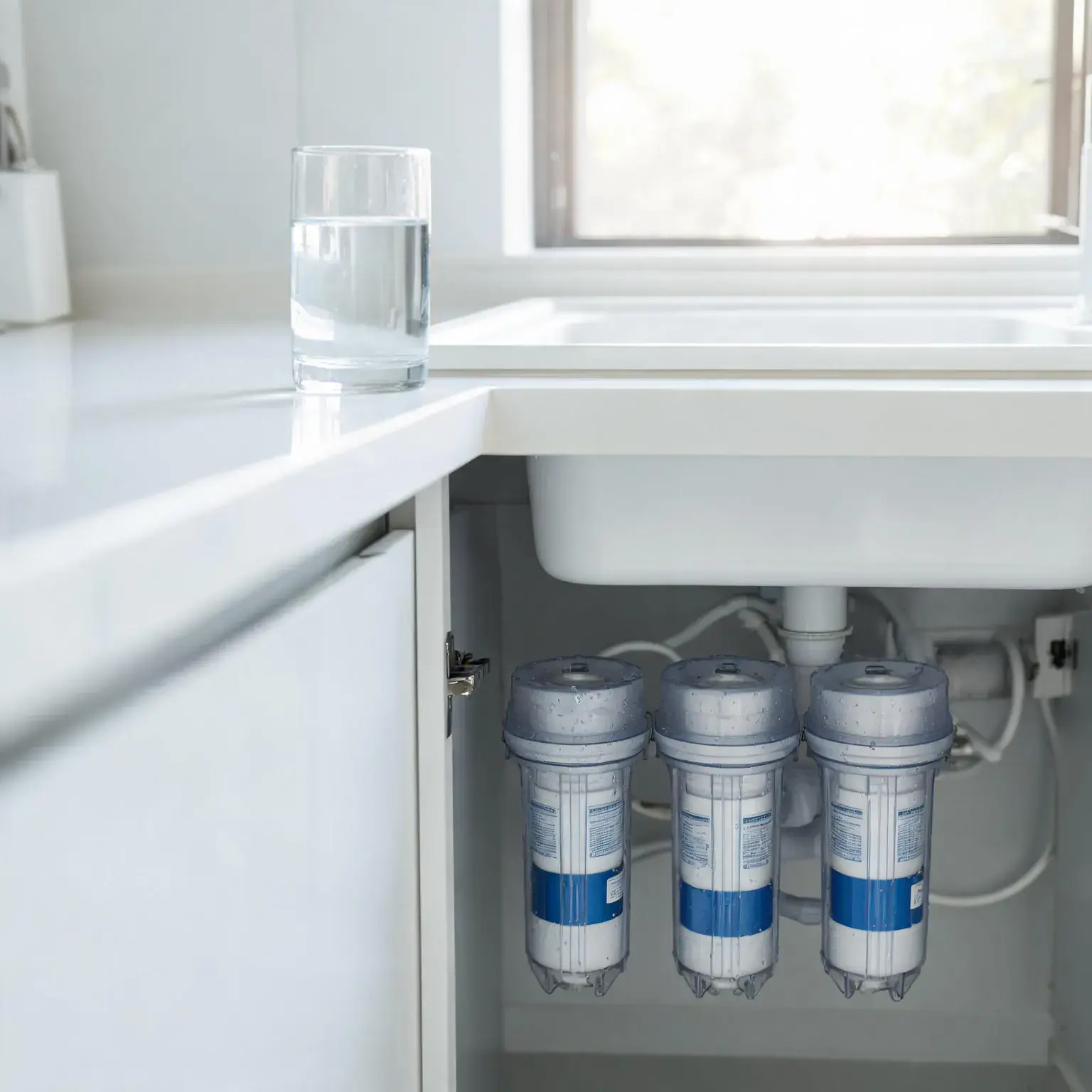
Best reverse osmosis systems solve a problem pitchers and basic carbon filters can’t: they force water through a membrane fine enough to strip dissolved lead, arsenic, nitrates, fluoride and PFAS — the contaminants that actually worry people — rather than just making tap water taste better. We verified nine systems live on Amazon for this guide on October 9, 2026, spanning the three shapes RO now comes in: classic tank-based under-sink units, tankless high-flow systems, and no-plumbing countertop machines. Prices below were pulled from Amazon’s product API at build time and range from $179.99 to $849.00.
Affiliate disclosure: As an Amazon Associate we earn from qualifying purchases. We earn commission from qualifying purchases made through links on this page. This never affects our rankings or what we recommend.
What’s in this guide
The nine picks at a glance
The set below deliberately covers three different buying intents. If you want the cheapest certified water with the deepest track record, the iSpring RCC7 has 21,618 ratings. If you want the fastest flow without a tank, the Waterdrop G3P800 moves 800 gallons a day. If you rent and can’t touch plumbing, the AquaTru Carafe and Bluevua RO100ROPOT sit on the counter and plug in. All nine were in stock with verified pricing when this guide was built; the full data snapshot follows.
| Product | Standout spec | Price | Track record | Deal |
|---|---|---|---|---|
 iSpring iSpring RCC7-BN NSF Certified, High Capacity Under Sink 5-Stage Reverse Osmosi |
EFFECTIVELY REDUCES CONTAMINANTS – The iSpring RO system delivers clean, pure, and great-tastin | $219.96 |
#2 in Under-Sink & Countertop Filtration |
In Stock |
 DREO DREO Reverse Osmosis Water Filter Countertop, RO Filtration System, 3:1 Pure t |
𝗘𝗳𝗳𝗶𝗰𝗶𝗲𝗻𝘁 𝗣𝘂𝗿𝗶𝗳𝗶𝗰𝗮𝘁𝗶𝗼𝗻, 𝗣𝗲𝗮𝗰𝗲 𝗼𝗳 𝗠𝗶𝗻𝗱: The DREO 7‑in‑1 RO water filter filters out 99.9% of pos | $179.99 $199.99 |
#1 in Under-Sink & Countertop Filtration |
10% OFF In Stock |
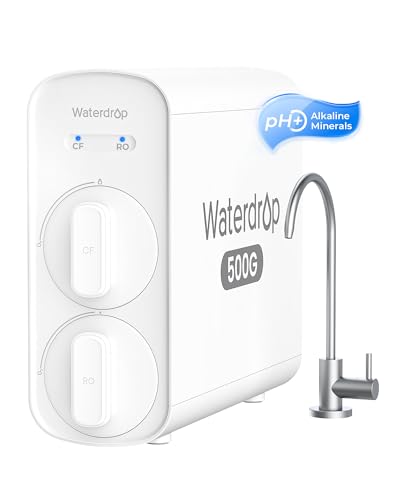 Waterdrop Waterdrop G5P500A Reverse Osmosis System, 8-Stage RO Filtration, Alkaline |
[8-Stage precise filtration] The reverse osmosis system features an advanced 8-stage filtration | $229.99 $259.99 |
#9 in Under-Sink & Countertop Filtration |
12% OFF In Stock |
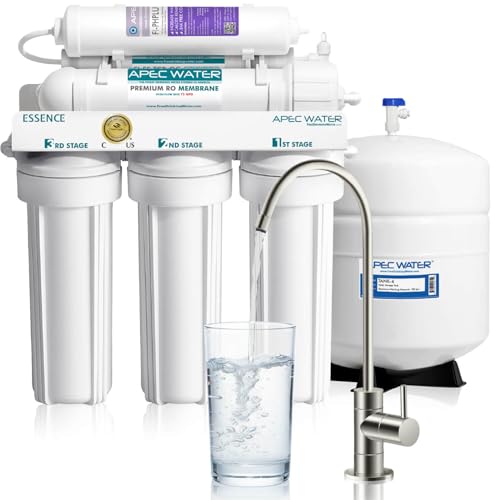 APEC WATER APEC Water ROES-PH75, 6-Stage Under Sink RO System, Alkaline, 75 GPD |
Supreme quality – designed and engineered with only premium components to ensure high quality f | $189.99 $294.99 |
#8 in Under-Sink & Countertop Filtration |
36% OFF In Stock |
 Waterdrop Waterdrop G3P600 Tankless Reverse Osmosis Water Filter System, 600 GPD |
[Trusted certifications]: Waterdrop G3P600 reverse osmosis system is certified against NSF/ANSI | $439.00 $539.00 |
#4 in Under-Sink & Countertop Filtration |
19% OFF In Stock |
 AQUA TRU AquaTru Glass Carafe Alkaline Countertop Reverse Osmosis Water Purifier | 4 St |
REVERSE OSMOSIS WITH ALKALINE MINERAL BOOST: 4-stage Reverse Osmosis filtration that goes beyon | $375.25 $395.00 |
#3 in Under-Sink & Countertop Filtration |
5% OFF In Stock |
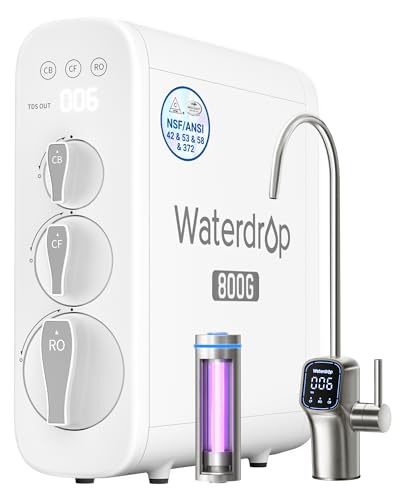 Waterdrop Waterdrop G3P800 Tankless Reverse Osmosis Water Filter System, 800 GPD |
[10-Stage filtration] Tested by official third-party laboratory (SGS), through 10-stage filtrat | $849.00 $999.00 |
#12 in Under-Sink & Countertop Filtration |
15% OFF In Stock |
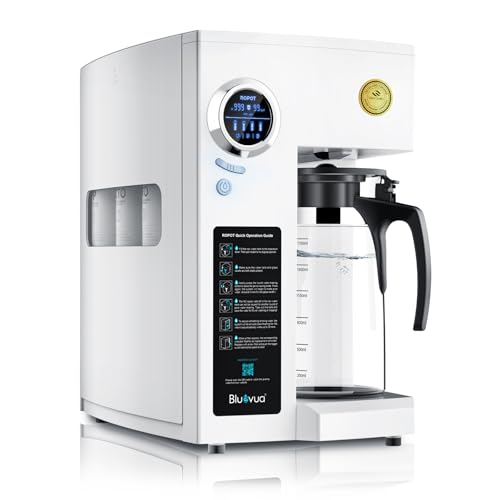 Bluevua Bluevua RO100ROPOT Countertop Reverse Osmosis Water Filter System |
6-STAGE ADVANCED FILTRATION WITH UV LIGHT: The Bluevua RO100ROPOT-UV boasts a superior 6-stage | $409.00 $454.00 |
#6 in Under-Sink & Countertop Filtration |
10% OFF In Stock |
 EXPRESS WATER Express Water ROALK10D, 10-Stage Under Sink RO System, Alkaline, 100 GPD |
Reverse Osmosis Water Filter: Experience what water should taste like with the Express Water re | $229.99 |
#57 in Under-Sink & Countertop Filtration |
In Stock |
How we chose these nine systems
We don’t run a water lab, and we won’t pretend otherwise — our testing methodology page explains exactly what is hands-on, what is spec and listing analysis, and what we aggregate from testers who do run water through hardware. For this guide: we pulled live pricing, stock, best-seller ranks and review averages from Amazon’s product API for every unit on October 9, 2026; we read the aggregated review-sentiment summaries on each listing to map recurring failure modes; and we leaned on two independent test labs and two institutional references for the engineering claims. Every ASIN was verified live — title, brand match, price, availability — before it earned a slot, and each card below carries the date its price was checked.
Key sources
EPA — the agency’s 2024 home-filter fact sheet, which explains how RO works and why third-party certification matters. DrinkTap (American Water Works Association) — the water-industry body’s consumer explainer on RO, including its honest wastewater caveat. Consumer Reports — CR’s water-filter buying guide, which flow-tests filters and verifies NSF/ANSI claims. WaterFilterGuru — an independent filtration test lab that lab-scores RO systems with SimpleLab Tap Score water testing.
A note on honesty: where we quote a lab, we quote what they actually published. Where a claim comes from a manufacturer’s listing — a GPD figure, a waste ratio — we say so, and the certification section below shows you how to check those claims yourself. Two bot-walled references we could not fetch directly, NSF’s own consumer pages and CDC drinking-water material, are mentioned by name only, with no quoted claims; the standards they explain are covered via the sources above that we could verify.
What reverse osmosis actually removes — and what it costs you
The mechanism is simple pressure physics. The EPA’s 2024 fact sheet on reducing PFAS at home describes RO as “a process that forces water through an extremely thin barrier that separates chemicals from the water,” and lists it alongside activated carbon and ion exchange as one of the three filter types that “can be effective at reducing PFAS.” That membrane doesn’t care whether the dissolved junk is lead, arsenic, nitrate, fluoride or PFAS — anything larger than a water molecule gets turned away, which is why RO is the only common home technology that addresses such a broad spectrum at once.
The trade-offs are real, and the industry’s own consumer outlet says so plainly. DrinkTap, run by the American Water Works Association, notes that “RO filters can remove many substances, including fluoride and many minerals associated with ‘hard’ water. RO can be expensive and it also ‘wastes’ several gallons of water for each gallon produced.” Consumer Reports’ buying guide is blunter about older-style tank systems, which “typically create 3 to 5 gallons of wastewater for every gallon filtered,” require periodic bleach sanitizing, and need membrane replacement on the manufacturer’s schedule. This is precisely why the waste-ratio figures in the picks below matter: modern tankless units claim 3:1 or 4:1 pure-to-drain, which flips the old math from “four gallons down the drain per gallon produced” to one.
CR’s broader reporting also gives the “why bother” case some teeth: a joint Consumer Reports–Guardian US investigation of tap water found that 118 of 120 sampled locations across the US had detectable lead, arsenic or PFAS above CR’s recommended maximums. Your utility’s annual Consumer Confidence Report — every supplier must publish one each July — tells you what’s actually in your water; CR suggests an EPA-certified lab like SimpleLab if you’re on a well. If that report comes back clean and you just dislike the taste, a $30 carbon pitcher beats an $800 RO unit; if it shows the dissolved contaminants RO exists to remove, the picks below start earning their price.
The certification reality check: what “NSF certified” actually proves
Every RO listing shouts NSF or ANSI. Here’s what those labels mean when you scrape off the marketing. Standards NSF/ANSI 42 covers aesthetic claims (taste, chlorine odor), 53 covers health contaminant reduction (lead, VOCs, cysts), 58 covers reverse osmosis performance specifically, and 401 covers emerging compounds like pharmaceuticals. A unit “certified to NSF/ANSI 58” has had a third party verify its membrane actually reduces the contaminants the standard names, on the claims the manufacturer makes.
The verification step most shoppers skip: the EPA’s fact sheet advises that “certification by an independent entity is an assurance that the filter works as the manufacturer says it does,” and points buyers to the American National Standards Institute–accredited certification bodies. DrinkTap lists the five recognized for drinking-water treatment units: CSA, IAPMO, NSF International, UL and WQA. So when WaterFilterGuru reports that the AquaTru Carafe is “IAPMO certified for the removal of 83 contaminants,” that claim is checkable against IAPMO’s public certification listings — and when a listing says “made with NSF certified components” or “tested to NSF standards,” that is deliberately weaker language meaning nobody certified the assembled system. We flagged that distinction on every pick below; two manufacturers in this guide lean on the soft phrasing more than we’d like.
One more honesty note: Consumer Reports’ guide verifies manufacturer NSF/ANSI claims before publishing them in ratings, and noted in its July 2025 update that new CR ratings of RO filters were expected in late 2025. If those ratings are out by the time you read this, they’re worth checking against our picks — we’ll fold any surprises into the next refresh of this guide.
The picks, reviewed
Each review states what the system is, what live data shows, what owners consistently praise, where it fails — the “Flaws but not dealbreakers” line at the end of every review is where the recurring 1-star themes live — and one concrete disqualifying scenario. Every card’s price was verified via Amazon’s product API on 2026-10-09.
1. iSpring RCC7-BN — the certified classic with the deepest track record
The iSpring RCC7 family has been the default “first RO system” recommendation for over a decade, and the numbers explain why: this five-stage under-sink unit carries NSF/ANSI 58 certification on the assembled system, holds a 4.7-star average across 21,618 ratings — more than twelve times the review count of most competitors here — and currently sits at #2 in Amazon’s Under-Sink & Countertop Filtration category at $219.96. The five stages run sediment → two carbon stages → the RO membrane → a final fine carbon polish, and the box includes the storage tank, dedicated faucet, tubing and fittings, which is most of what “installation” means with a tank system. Owners repeatedly describe the water as better than bottled and the install as a straightforward DIY afternoon with clear instructions.
What we like:
- NSF/ANSI 58 certification on the complete system, not just components — the strongest claim type in this guide’s budget tier.
- 21,618 ratings at 4.7 stars is the deepest track record of any pick here; defects that matter would surface in that sample.
- Full install kit included at a price under half of the tankless units.
Our score: 4.5/5. The RCC7-BN wins on certified performance per dollar, full stop.
Flaws but not dealbreakers: the recurring complaint in negative reviews is a leaking faucet connection rather than the filtration itself — a few wraps of thread tape and a properly seated shank solve most of it, but plan to re-check the fitting a day after install. It’s also a tank system: expect the older-style waste ratio, a fridge-adjacent tank in your cabinet, and a slower refill between heavy draws.
Who should skip it: renters who can’t drill a faucet hole or modify cabinet plumbing — buy the AquaTru Carafe or Bluevua below instead.
2. DREO Countertop RO — the current #1 Best Seller in its category
Amazon’s #1 Best Seller in Under-Sink & Countertop Filtration right now is this countertop pitcher-style system from DREO — and that rank is live-verified from Amazon’s category data, not a listing badge. At $179.99 (10% off the $199.99 list) it undercuts nearly every dedicated countertop RO unit, and its 3:1 pure-to-drain claim, if it holds in your kitchen, beats the 3-to-5-gallons-per-gallon waste that Consumer Reports attributes to older tank systems. Owners highlight the speed — the pitcher fills in under a couple of minutes — and the taste difference versus tap, plus no-install setup that suits rentals.
What we like:
- The current #1 Best Seller in the exact category this guide targets — popularity with a 4.4-star average behind it (937 ratings).
- 3:1 pure-to-drain claim — far better than legacy tank waste rates.
- Genuinely fast for a countertop unit: pitcher-sized batches in minutes, not the hour some rivals take.
Our score: 4.5/5. The best-value entry into RO if you won’t touch plumbing.
Flaws but not dealbreakers: opinions about the pitcher size are sharply mixed — several owners were surprised at how small it is. Measure the batch size you actually drink in an evening and check the listed carafe volume against it before ordering; this is a “refill it often” machine, not a “fill it once” one.
Who should skip it: households that go through large volumes at once — a party’s worth of water means standing at the tap refilling all evening.
3. Waterdrop G5P500A — the tankless sweet spot under $250
Tankless RO usually starts above $400. The G5P500A breaks that floor at $229.99 (12% off list) with eight stages — including an alkaline remineralization final pass, the feature the six-stage APEC below achieves with calcite — in a compact wall-mounted body with no storage tank, so nothing in your cabinet but the filter assembly and a line to the dedicated faucet. It’s #9 in the category with a 4.5-star average across 781 ratings, and owners call the install about 30 minutes and the water taste a clear upgrade.
What we like:
- Eight-stage filtration with remineralization at the lowest tankless price we verified.
- No tank: fresher water, more cabinet space, and none of the stale-tank taste complaints of old systems.
- 4.5 stars across 781 ratings with consistent install-ease praise.
Our score: 4.0/5. The value pick of the tankless lane, with a modest flow spec.
Flaws but not dealbreakers: flow-rate opinions split — plenty of owners are happy, but a recurring minority reports slower flow than expected, and the filter-end-of-life beeps draw complaints from light sleepers in open kitchens. If flow is your priority, that’s what the G3P600 and G3P800 below are selling.
Who should skip it: anyone who wants silent operation — the pump and alerts are audible in a quiet room.
4. APEC ROES-PH75 — the alkaline tank workhorse, 36% off right now
APEC built its reputation on American-assembled tank systems and standing behind them, and the ROES-PH75 is the six-stage version of the classic formula: five stages of filtration plus a final calcite pass that adds back a small amount of calcium for pH and taste — the same job Waterdrop does with a cartridge, done with rock instead. At $189.99, down 36% from a $294.99 list, it’s the deepest discount in this guide, verified live, and it holds a 4.7-star average across 4,126 ratings at #8 in the category. The review base includes several long-haul owners on very hard, iron-bearing wells who report it handling water their municipalities described as undrinkable.
What we like:
- The largest verified discount in this guide: $105 under list.
- 4.7 stars across 4,126 ratings, with hard-water success stories in the verified-review set.
- Calcite remineralization without an extra cartridge to replace.
Our score: 4.5/5. The tank-system pick for well-water households on a budget.
Flaws but not dealbreakers: while many owners report zero leaks, others describe problems at the factory-made hose connections — the recurring weak point in negative reviews. Check every push-fit and collar before you close the cabinet, and again after the first 48 hours. It’s also a tank system with the space and refill-cadence trade that implies.
Who should skip it: renters, and anyone whose cabinet already hosts a disposal, a second sink loop and a tankless water heater — measure first.
5. Waterdrop G3P600 — tankless flow for the price of a good countertop
The G3P600 is the unit that made tankless RO mainstream: 600 gallons per day of membrane capacity means a 24-ounce bottle fills in seconds rather than the minutes of tank systems, with a smart faucet showing TDS and filter life and no storage tank to sanitize. It’s #4 in the category, holds 4.5 stars across 4,185 ratings, and at $439.00 (19% off the $539 list) it now costs less than the countertop AquaTru below. WaterFilterGuru’s lab work on the sibling G3P800 (which they scored 9.21) used the same tankless platform, and their testing notes certify the family’s flow-and-design strengths.
What we like:
- 600 GPD tankless flow — effectively on-demand RO at the faucet.
- No tank to sanitize, no stale-water complaints, more cabinet space.
- Long review history (4,185 ratings) for a design that’s still relatively young.
Our score: 4.0/5. The tankless pick for people who hate waiting, at a fair mid-tier price.
Flaws but not dealbreakers: the negatives split two ways — a minority of owners report internal leakage inside the chassis (mount it where fittings stay visible), and noise opinions range from “very quiet” to “makes some noise” depending on your kitchen acoustics. Value-for-money opinions are similarly mixed; at half the price the G5P500A delivers the same tankless idea with a slower membrane.
Who should skip it: budget-first buyers — the G5P500A exists precisely for you.
6. AquaTru Carafe — the countertop lab winner, tied to real test data
This is the pick with the strongest independent-test pedigree in the guide. WaterFilterGuru lab-tested nine RO systems with SimpleLab Tap Score water analysis and scored each across six weighted categories; the AquaTru Carafe took their highest overall score (9.57/10) and their best-countertop slot, described as “the only system to eliminate all contaminants with health effects in our test water,” with IAPMO certification to NSF standards for 83 contaminant removals and a 4:1 efficiency ratio — the best waste math of any unit here. On Amazon it’s the Glass Carafe Alkaline variant we verified: $375.25, #3 best seller in the category, 4.3 stars, no installation at all, and a glass carafe instead of plastic.
What we like:
- Highest lab score (9.57/10) in WaterFilterGuru’s Tap Score testing — verified contaminant elimination, not marketing.
- IAPMO-certified for 83 contaminant removals across NSF 42/53/58/401, per the lab’s certification notes.
- Zero plumbing: fill it from the tap, plug it in, pour from glass. Rental-perfect.
Our score: 4.5/5. The countertop pick for people who want lab receipts.
Flaws but not dealbreakers: value opinions split hard — some owners call it worth every cent for ditching bottled water, others say it’s overpriced for a batch machine. Filtration speed draws both praise (about five minutes per batch) and complaints, and several owners report leakage issues around the carafe latch. Handle it gently and seat it squarely.
Who should skip it: large households — batches are carafe-sized by design, and a family of five will live at the refill cycle.
7. Waterdrop G3P800 — the flagship: 800 GPD and a 3:1 waste ratio
If the G3P600 made tankless mainstream, the G3P800 is its big-brother argument: 800 gallons per day, a claimed 3:1 pure-to-drain ratio, IAPMO certification to NSF/ANSI 42, 53 and 58 per WaterFilterGuru’s testing (9.21/10, their best-tankless pick), optional UV stage, and a tankless chassis that still fits a standard cabinet. At $849.00 (15% off the $999 list) it’s the most expensive system we verified — and the only one whose flow spec makes “RO for the whole kitchen” literal, filling pots and bottles without the tank-refill pause.
What we like:
- 800 GPD — the fastest verified flow in this guide, by a wide margin.
- Independent lab certification to NSF/ANSI 42/53/58 (WaterFilterGuru, scored 9.21/10).
- 3:1 waste claim with flow-activated operation — it runs only when water moves.
Our score: 4.0/5. The no-compromise pick if the budget genuinely stretches.
Flaws but not dealbreakers: two things recur in the negatives. First, price — even discounted, many owners wrestle with the cost. Second, and more substantively, a minority of long-term owners report units developing faults around the three-year mark, which matters when the upfront is this high; budget for the possibility in your math. Noise opinions also split between “very quiet” and “noisy.”
Who should skip it: a one-or-two-person household — you’re paying for capacity you will never use.
8. Bluevua RO100ROPOT — the zero-install glass-carafe alternative
The Bluevua RO100ROPOT is the other countertop machine we verified, and its case rests on the glass carafe, a low-waste design, and a 4.3-star average across 1,645 ratings with an unusually strong “pays for itself” narrative — owners replacing bottled-water deliveries report the unit covering its cost within months — owners replacing bottled-water deliveries report the unit covering its cost within months. Setup is genuinely zero-install: fill the reservoir, plug it in, dispense into the glass carafe.
What we like:
- Fully self-contained RO with a glass carafe — no plumbing, no drilling, no faucet swap.
- 1,645-rating track record at 4.3 stars, uncommon for the countertop niche.
- Compact footprint that survives small-apartment counters.
Our score: 4.0/5. The plug-and-pour pick, priced at a premium for the format.
Flaws but not dealbreakers: it’s slow — a recurring minority of owners time a full pitcher at over an hour, and capacity opinions split between “plenty” and “leaves half the water unused” depending on your batch size. A few owners also note the listed measurements in photos mislead; the footprint is tighter than it looks, which is a rare compliment, but check the carafe fit under your cabinet-height shelves.
Who should skip it: impatient households and anyone who wants continuous flow — the batch rhythm is the whole design.
9. Express Water ROALK10D — ten stages for the tinkerer
The ROALK10D takes the opposite philosophy from the minimalists: if two stages are good, five are better, and ten — including alkaline and remineralization cartridges after the membrane — are best. It’s the cheapest ten-stage system we verified at $229.99, holds a 4.7-star average across 270 ratings, and uses standard-format cartridges that make customization and hardware-store replacement straightforward. For buyers who enjoy maintaining equipment and want to tune what their final water contains, it’s the most flexible platform here.
What we like:
- Ten stages including alkaline remineralization at a mainstream-tank price.
- 4.7-star average — the equal of iSpring and APEC on score, if on a much smaller review base (270).
- Modular cartridge format that invites customization.
Our score: 4.0/5. The enthusiast’s platform; the pragmatist’s maintenance burden.
Flaws but not dealbreakers: the recurring negative theme is leakage after assembly — with ten wet connections instead of five, dry-fit everything, hand-tighten, and pressurize slowly the first time. More stages also means more filter-replacement line items on the calendar; the total cost of ownership math that looks so good at purchase narrows over three years.
Who should skip it: minimalists — the iSpring RCC7 delivers certified water with half the upkeep.
What more money actually buys: the three price tiers
$150–$250 — the mainstream tier (DREO, APEC, iSpring, Waterdrop G5P500A, Express Water). Every unit here is either tank-based classic or an entry tankless/countertop, and this is where certified performance per dollar peaks: NSF/ANSI 58-certified systems, decades-long track records, and the full install hardware in the box. What you give up is flow and waste ratio — tank systems refill slowly and waste more per gallon, and the G5P500A’s tankless convenience comes with the guide’s most audible pump. Above roughly $250 you’re no longer buying cleaner water — the certification floor is met at $180 — you’re buying speed, capacity and silence.
$370–$450 — the countertop-premium and tankless tier (AquaTru Carafe, Bluevua, Waterdrop G3P600). This tier buys form-factor: lab-verified contaminant elimination with zero plumbing (AquaTru, per WaterFilterGuru’s testing the only system to eliminate all health-effect contaminants in their test water), or genuine tankless on-demand flow at the faucet (G3P600). The efficiency ratios improve here too — 4:1 on the AquaTru — which matters if your water bill or well capacity is a constraint. Paying this much only makes sense if the form factor is the point: a renter who can’t drill, or a cook who fills pots all day.
$850+ — the flagship tier (Waterdrop G3P800). Above $800 you’re buying maximum membrane capacity (800 GPD), the best waste ratios with UV options, and build quality rated for heavier households. The honest analysis: the performance-per-dollar curve flattens hard past $450. The G3P800’s water is not twice as clean as the $190 APEC’s — both meet the same NSF/ANSI 58 certification standard — it’s faster, quieter-ish and less wasteful. If those three things aren’t daily annoyances for you, the extra $400+ is better spent on a water test and a maintenance fund.
RO vs the cheaper filters: when you don’t need it
The fan-out question every RO shopper eventually asks: do I actually need this, or will a pitcher do? The decision tree is contaminant-driven, not taste-driven. If your utility’s Consumer Confidence Report shows only taste-and-odor issues — chlorine byproducts, aesthetic iron — activated carbon (a $30 pitcher, a faucet-mount) handles it, and DrinkTap notes carbon filters “are particularly effective at reducing taste and odor associated with chlorine.” If the report (or a lab test) shows dissolved inorganic contaminants — lead, arsenic, nitrates, fluoride, PFAS — carbon alone won’t reliably remove them, and this is exactly where the EPA lists RO among the filter types that “can be effective.” Whole-house systems, meanwhile, solve different problems (scale, sediment, iron at every tap) and generally do not include RO membranes; they complement rather than replace a point-of-use RO at the kitchen sink. And if your actual water problem is moisture rather than purity, that is a job for a basement dehumidifier, not a filter.
Where our ranking differs from the specialists’: WaterFilterGuru’s best-under-sink winner (Cloud RO, 9.24) isn’t sold on Amazon, and their best-overall chart therefore can’t be shopped directly — our under-sink picks (iSpring, APEC) trade a few lab points for certified systems with five-to-twelve times the user track record and Amazon-verified pricing. Consumer Reports’ caution about RO — expense, wastewater, maintenance — is the correct frame for someone whose water tests clean; for the households whose water doesn’t, the same features CR flags are simply the cost of the only filter class that addresses their contaminant list. Both are true; your CCR decides which one applies to you.
Installation and upkeep: the honest checklist
Under-sink installs (iSpring, APEC, Waterdrop G3s, Express Water) run one to three DIY hours: mount the assembly, connect feed and drain lines, hang the tank (tank systems), swap your faucet or add the dedicated one If you have ever installed a tankless water heater, you already have every skill and tool this job needs. CR’s maintenance note is the non-negotiable part: sanitize tank systems periodically with bleach solution, and replace membranes and cartridges per the manufacturer’s schedule — typically pre-filters every 6–12 months, membranes every 2–3 years, post-filters annually. Set phone reminders at purchase; the filter sets run $50–$100+ per year depending on the system, and a neglected RO membrane degrades silently — water still tastes fine while rejection rates fall. That’s why units with TDS readouts (the Waterdrop G3 family) earn their keep: they surface membrane health in numbers.
Countertop units (DREO, AquaTru, Bluevua) trade the install for a refill rhythm: pour source water in, wait for the batch, empty the carafe. Their filter calendars are friendlier — the AquaTru’s pre/post filters run about a year and the membrane about two — and there’s no drain connection to leak. The trade is batch size and counter real estate. Whichever form you choose, run the first two full batches to drain on install day: carbon fines and preservative flush out of every new system, and the first glass is not representative.
Frequently asked questions
Do reverse osmosis systems really waste that much water? Older tank designs do — Consumer Reports puts them at 3 to 5 gallons of wastewater per gallon filtered. Modern tankless and countertop units claim 1:1 to 4:1 pure-to-drain ratios (the G3P800 claims 3:1, the AquaTru Carafe 4:1). Verify the claim against the certification listing where possible; the ratio is the biggest hidden operating cost of an RO system and the number we’d check first.
Does RO remove healthy minerals — and should I care? Yes, it removes most dissolved minerals along with the contaminants; that’s the same membrane property. That’s why four picks here (APEC’s calcite stage, the G5P500A, the Carafe and the ROALK10D) add remineralization back. The health significance of demineralized water in an otherwise normal diet is debated; the taste difference, most owners agree, is not — remineralized final-stage water reads as “clean but not flat.”
Countertop or under-sink — which should I buy? Rent and can’t modify: countertop, no question (AquaTru Carafe or Bluevua). Own your place and want invisible, unlimited-capacity filtration: under-sink (iSpring for budget, APEC for wells, Waterdrop G3s for flow). Countertop units cost more per gallon over time but install in five minutes and move with you.
How often do I actually replace filters? Follow the manufacturer’s schedule, not the taste test: pre-sediment and carbon roughly every 6–12 months, RO membrane every 2–3 years, final/polish stages annually. On a tank system, CR’s bleach-sanitizing note applies annually. Budget $50–$100+ per year for a five-stage tank system; ten-stage platforms and UV options run higher.
The bottom line
Buy the iSpring RCC7-BN if you want the most certified water per dollar with the longest track record. Buy the DREO if you want the category’s current best seller as a no-install countertop starter. Buy the APEC ROES-PH75 if your water is hard or well-sourced and the 36% discount fits the budget. Buy the Waterdrop G5P500A or G3P600 if tankless flow matters, and the G3P800 if capacity matters more than money. Buy the AquaTru Carafe if you want lab-test receipts in a rental-friendly box, the Bluevua if you want the same in glass, and the Express Water ROALK10D if you genuinely enjoy maintaining a ten-stage machine. Whatever you choose, pull your Consumer Confidence Report first — the right filter is the one matched to what’s actually in your water, not the one with the loudest badge.
Prices, stock, ranks and ratings in this guide were verified via Amazon’s product API and live listings on 2026-10-09 and move frequently. For how we research, test and update guides like this one, see How We Test & Choose Products.