The best pellet grills in 2026 are the ones that hold temperature through a 12-hour brisket, hold value at every price tier and — this is the part the spec sheets skip — hold up to real ownership. We pulled Amazon’s live Combination Grill-Smokers chart on October 4, 2026, read every candidate’s price, stock and rank through Amazon’s product API, and cross-checked the whole field against the two most rigorous test programs we could fetch: Taste of Home’s team, which burned 280 pounds of pellets and 400+ hours across 12 grills, and Smoked BBQ Source’s reviewer, who has cooked on more than 39 pellet grills from $299 to $3,800. The result: eight picks from $349 to $1,600 — including the category’s current #1 best seller — plus the hopper math, pellet-storage rules and failure modes that separate a smoker you keep for a decade from one you flip by spring.
Affiliate disclosure: As an Amazon Associate I earn from qualifying purchases. We earn commission from qualifying purchases made through links on this page. This never affects our rankings or what we recommend.
What’s in this guide
- What Amazon’s grill chart says
- The 8 picks (comparison table)
- Spec truth: the claims, checked
- Price tiers: where paying more stops mattering
- Where we disagree with the testers
- How pellet grills disappoint
- Safety: what the fire data says
- FAQs
- How we research these picks
- The eight picks in detail
What Amazon’s grill chart actually says
On October 4, 2026 we pulled the Combination Grill-Smokers best-seller chart — the category where Amazon’s pellet grills actually live — and read every candidate’s rank, price and spec data through Amazon’s product API. The headline: the current #1 best seller is the Ninja Woodfire ProConnect Premium XL, a $379.99 electric woodfire grill, with the Pit Boss 440 ($349.34) at #2, the Traeger Woodridge Pro ($1,149.99) at #3, the Traeger Westwood XL ($799.99) at #4, the Pit Boss 850 Navigator ($774.12) at #5, a $290 KingChii 8-in-1 at #6 and the Z GRILLS 700 ($548) at #7. Six of the chart’s top seven are recommendations in this guide — which tells you the volume tier and the quality tier overlap more than in most categories.
The chart also tells a second story worth hearing. The two grills both test programs crown as the best overall — Weber’s Searwood 600 and the recteq Flagship line — sit outside the volume top tier, because the chart measures price-driven buying, not cooking results. In between sits the honest truth of this category: mid-price grills with real capacity and app control are where most households land, and the $1,000–$1,600 band buys build quality and stamina rather than better barbecue. Read the chart for what buyers do; read the test programs for what belongs on your patio.
The 8 best pellet grills, ranked
Every pick below was price-, stock- and rank-checked through Amazon’s product API on October 4, 2026, and each listing was read end to end — including the fine print, where this category hides its biggest surprises (hopper sizes that cap overnight cooks, controller claims vs. grill-level reality, and models that churn yearly). The comparison table pulls live from the same API.
| Product | Standout spec | Price | Track record | Deal |
|---|---|---|---|---|
 Weber Weber Searwood™ 600 Wood Pellet Smoker Grill – Wi‑Fi & Bluetooth‑Enabled Outdo |
180–600°F range, full-grate Sear Zone and DirectFlame searing — the test programs’ No. 1 pick | $999.00 |
4.5 ★ #53 in Smokers |
Only 10 left in stock – order soon. |
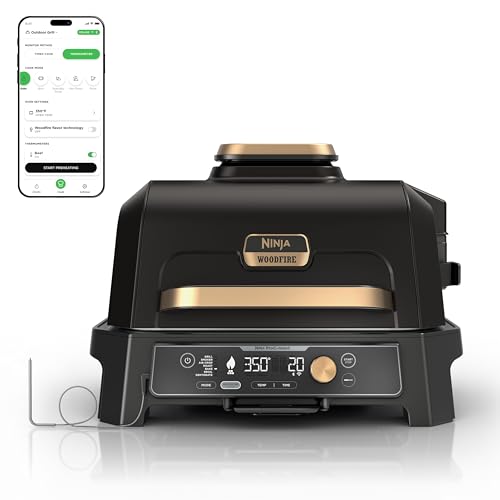 Ninja Ninja Woodfire ProConnect Premium XL Outdoor Grill & Smoker, Black & Gold |
The category’s current #1 best seller: 7-in-1 electric pellet grill + air fryer, 180 sq in, smo | $379.99 $499.99 |
4.5 ★ 1,053 ratings #1 in Combination Grill-Smokers |
24% OFF Prime Exclusive In Stock |
 PIT BOSS Pit Boss 440 Mahogany Series Wood Pellet Grill & Smoker with Flame Broiler and |
The chart’s #2 pick: 518 sq in, 180–500°F, porcelain grates and a Flame Broiler lever for direc | $349.34 $410.99 |
4.4 ★ 1,751 ratings #2 in Combination Grill-Smokers |
15% OFF In Stock |
 Z GRILLS Z GRILLS 2026 Electric Pellet Smoker & Grill, 700 sq. in Cooking Space, PID 3. |
Dual-wall insulated base for heat retention, PID 3.0, two probes, and up to 28 hours of cooking | $548.00 $609.00 |
#7 in Combination Grill-Smokers |
10% OFF Available to ship in 1-2 days |
 Pit Boss Pit Boss 850 Navigator Series WiFi & Bluetooth Wood Pellet Grill & Smoker, Fla |
932 sq in, 180–500°F, 30-lb hopper with viewing window, WiFi + Bluetooth and two meat probes | $774.12 |
4.5 ★ 70 ratings #5 in Combination Grill-Smokers |
In Stock |
 Traeger Traeger Westwood XL Wood Pellet Grill & Smoker, 823 Sq In, WiFi |
823 sq in dual-tier — 7 rib racks or 25 burgers — with WiFIRE app control and an 18-lb hopper; | $799.99 |
#4 in Combination Grill-Smokers |
In Stock |
 Traeger Traeger Woodridge Pro Wood Pellet Grill & Smoker, 970 Sq In, WiFi |
970 sq in, Super Smoke mode, WiFIRE app and a digital pellet sensor — Taste of Home’s beginner | $1,149.99 |
4.4 ★ 219 ratings #3 in Combination Grill-Smokers |
In Stock |
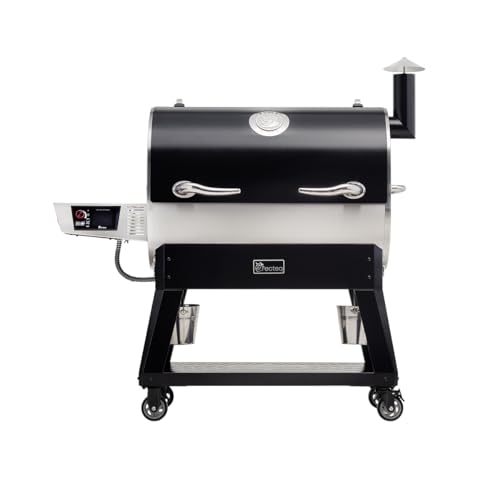 recteq recteq Pellet Grill Smoker – Flagship 1600, Wood Pellet Smoker, BBQ, Wi-Fi Sma |
1,667 sq in of stainless build, 180–700°F, and a 40-hour hopper run — the premium benchmark | $1,599.99 |
4.5 ★ 33 ratings #73 in Smokers |
In Stock |
1. Weber Searwood 600 — Best overall
Start with the grill both test programs crown. Taste of Home’s product-testing team ran the Searwood through its 12-grill, 400-hour protocol and made it Best Overall — its tested pros list reads “Great at searing … Best temperature regulation … Adjustable smoke level,” with a disposable-pan tray system and a hood that doesn’t burn your hand. Smoked BBQ Source’s hands-on reviewer agrees: it is his best overall pick for 2026 as well. The spec sheet explains why: a 180–600°F range with DirectFlame cooking — no big diffuser plate between fire and food — and a Rapid React PID that “heats grill to set temperature in 15 minutes or less,” per the listing. It is the most complete pellet grill you can buy on Amazon at a mainstream price, and the only one here that both marquee testers and this guide rank #1. The honest tax: $999, a young Amazon rating pool, and stock that ran to single digits at check time.
What we like:
- The No. 1 pick of both test programs we could fetch: Taste of Home’s team put 12 grills through 280 pounds of pellets and 400+ hours and crowned the Searwood 600 for cooking results; Smoked BBQ Source’s hands-on reviewer ranks it first as well
- A full 180–600°F range with DirectFlame cooking — no large diffuser blocking the fire — which is why “Great at searing” tops Taste of Home’s tested pro list; SmokeBoost holds 180°F when you want maximum smoke absorption
- Rapid React PID heats the grill to set temperature in 15 minutes or less and recovers quickly after lid-open, per the listing; the full-grate Sear Zone spreads high heat evenly
- The ecosystem play: accessory grates, a griddle insert and rotisserie open up technique, and Weber’s support network is the widest in the category
Flaws but not dealbreakers: The priciest mainstream pick here at $999 — and by Amazon sales rank it sits outside the category’s volume tier; this is the pick you buy on test-program evidence, not star volume Stock ran thin at check time (10 units left) and Weber’s accessory ecoysystem adds up fast A young Amazon rating pool — strong score, but fewer field reports than the Pit Boss and Traeger listings
Skip it if: you need the deepest rating histories or a smaller budget — the picks below carry both.
2. Ninja Woodfire ProConnect Premium XL — The #1 best seller (and best small-space pick)
America’s best-selling product in this category is not a $1,000 pit — it is the Ninja Woodfire ProConnect Premium XL, and once you use one the logic shows. It runs on electricity, flavors with real wood pellets (“½ cup” is the listing’s smoke charge), and folds 7 functions — grill, BBQ smoke, air fry, roast, bake, broil, dehydrate — into 180 square inches that fit a balcony, deck, RV or tailgate. The ProConnect app paces you through cooks with preheat, add-food and flip notifications; the listing calls it “authentic BBQ bark and flavor — fast and easy.” Both test programs we cite skip it entirely — which says less about the Ninja than about how they scope “real” pellet grills. If your space, landlord or patience rules out a 100-pound pit, this is the pragmatic gate into wood-fire cooking, and it outsells everything else on this page while doing it.
What we like:
- The current #1 best seller in the category on Amazon’s own chart, verified at check time — and the only flagship-level product here that runs on a standard outlet
- 7-in-1 pellet cooking: grill, BBQ smoke, air fry, roast, bake, broil and dehydrate with real woodfire pellets — the listing promises “authentic BBQ bark and flavor — fast and easy with just ½ cup of pellets”
- The right-sized option: 180 square inches fits 2 rib racks, 10 burgers or a 10-lb brisket on an apartment balcony, deck or RV — no gas, no charcoal, no propane logistics
- ProConnect app walks you through the cook with preheat / add-food / flip notifications; built to stay outdoors year-round per the listing
Flaws but not dealbreakers: It is not a stick-fed pit: 180 sq in and ½-cup pellet charges make smoke a flavor layer, not an overnight-brisket engine Both Amazon-focused test programs we cite skip it entirely — this pick is chart-verified, not lab-crowned Prime Exclusive at check time, and Ninja’s flavor lineup nudges you toward its own pellet blends
Skip it if: you are cooking for a crowd — everything from the 440 up gives you 3–9x the cooking area.
3. Pit Boss 440 Mahogany — Best compact (and the chart’s #2)
The chart’s #2 seller is the value backbone of this list: 518 square inches, a 180–500°F digital control board with 5-degree increments, porcelain-coated grates and the Flame Broiler lever that opens direct flame for a searing lane — all for $349.34 at check time. It is the cheapest honest answer to “I want to smoke on a budget,” and its 1,700-plus rating pool with a 4.4-star score is the most battle-tested we found in the tier. What you are not buying: multi-rack capacity, an app, or the larger hoppers the mid-tier carries. What you are buying: Pit Boss’s parts network, a five-year warranty class, and the exact grill a lot of first briskets are about to be cooked on across America.
What we like:
- The #2 best seller in the category at check time — 518 square inches for $349, the price-per-inch math that put it there
- Dial-in digital control board with LED readout and a 180–500°F cooking range; porcelain-coated steel grates
- Flame Broiler lever opens direct flame for a searing lane — a feature usually found a tier up
- The Mahogany series frame and Pit Boss’s parts-and-support network are the widest in the budget tier
Flaws but not dealbreakers: 518 sq in is compact: a packer brisket fits, a party cook doesn’t — multi-rack capacity starts at the 850 No WiFi or app claims on this trim — it is a dial-and-watch grill Its 4.4-star pool has real depth (1,700+), but the value crown here is price-per-inch, not feature count
Skip it if: you need app control and multi-tier cooks — start at the 850 below.
4. Z GRILLS 700 (2026) — Best budget smart grill
Z GRILLS has spent a decade making pellet cooking cheap and reliable, and the 2026 700-model is its best argument yet: PID 3.0 controller, dual-wall insulated base, two meat probes, an 8-in-1 range and 697 square inches for $548 — with the hopper math (up to 28 hours on a fill, per the listing) that makes overnight cooks realistic at this price. The insulated base is the sleeper spec: it “boosts pellet efficiency and keeps dishes hot longer, even in chilly weather,” which matters the moment you use the grill past October. The trade is honest and documented below: a 450°F ceiling, no app, and a rating pool that is still forming. For the price of a mid-range gas grill you get real wood smoke and real capacity.
What we like:
- Z-Ultra PID 3.0 automatically manages pellet feed and airflow to hold stable temperatures from 180° to 450°F — with dual-wall insulation that “locks in heat” on cold-weather cooks
- The hopper math: a full hopper supports up to 28 hours of continuous cooking, the longest listed run under $600
- Two built-in meat probes plus a large LCD — set the temperature, walk away, monitor from the screen
- 697 sq in for $548 with an 8-in-1 range (smoke, sear, roast, bake and more) and a hopper cleanout for quick flavor swaps
Flaws but not dealbreakers: 450°F ceiling is the lowest in this guide — steaks sear, but high-heat browning is not its game It’s the chart’s #7 pick in a strong category, but this 2026-model rating pool is still forming — younger evidence than the Pit Boss and Traeger listings No app control on this listing: PID and probes, not WiFi
Skip it if: you want phone control or a 500°F+ range — the Pit Boss 850 and Westwood cover both.
5. Pit Boss 850 Navigator — Best mid-range value
This is the grill that answers the testers’ own value pick. Smoked BBQ Source’s reviewer updated his guide specifically to name the 850 family his best value “after conducting further hands-on testing” — and while the DX trim he crowned is not part of Amazon’s lineup, the 850 Navigator is the buyable sibling: 932 square inches across two tiers, a 30-pound hopper with a viewing window, WiFi + Bluetooth, two probes, folding shelves and a 5-year warranty for $774.12. It sits at #5 on the category chart. The package math is why it beats everything else in the middle of this market, even after you subtract the DX-trim nuance. If you want one grill that smokes, bakes and sears for a family without going flagship, this is the pick.
What we like:
- #5 on the category chart with the biggest hopper in this guide’s mid-tier: 30 pounds with a built-in viewing window
- 932 sq in across two tiers, 180–500°F, and WiFi + Bluetooth for what the listing calls “immediate reads and faster adjustments”
- Two meat probes, folding front and side shelves, an easy-access grease tray and a 5-year warranty — the most complete mid-tier package on paper
- Smoked BBQ Source’s reviewer named the 850 family (DX trim) its best value after additional hands-on testing; the Navigator is the closest Amazon kin
Flaws but not dealbreakers: The DX trim the testers crowned is not part of Amazon’s lineup at check time — the Navigator is the buyable equivalent with slightly different specs Fan-forced convection helps evenness, but this is mid-tier steel rather than the recteq’s stainless build A young 70-rating pool on the Amazon listing
Skip it if: you are price-anchored under $600 or want the smallest footprint.
6. Traeger Westwood XL — Best for family cooks
Traeger’s newest mainstream line, ranked #4 on the chart in its first season. The Westwood XL gives you the app-driven Traeger workflow — “dial in your temp, load your food, and let the Westwood XL do the work,” with dinner-ready alerts — plus 823 square inches that hold 7 rib racks or 25 burgers and an 18-pound hopper. New for 2026 at $799.99, it undercuts the Woodridge Pro by $350 while covering the same weeknight-to-gameday range; what it gives up is the Pro’s 970 inches, the pellet sensor and a few years of history. Buy it if you want the current generation and the app doing the thinking, and you accept that no test program has put hands on this exact model yet.
What we like:
- #4 on the category chart and the newest generation of Traeger’s mainstream line — 823 sq in of dual-tier space for 25 burgers or 7 rib racks, on an 18-lb hopper
- WiFIRE app control works the way Traeger advertises: “dial in your temp, load your food, and let the Westwood XL do the work” while alerts follow you inside
- 6-in-1 versatility handles weeknight burgers through 3-hour pulled pork, and P.A.L. accessory mounts let you build the workspace out
- New for 2026 at $799 — the lowest price of entry into Traeger’s current app-driven ecosystem
Flaws but not dealbreakers: Brand-new model: early listings, early ratings, and no test program has evaluated it yet — you are buying the line, not a proven unit An 18-lb hopper runs for hours but not the overnight-plus sessions the 30–40 lb class covers Traeger’s accessory and pellet ecosystem is an upsell conveyor — budget for it
Skip it if: you want a multi-year review history — the Woodridge Pro and the 850 below carry more.
7. Traeger Woodridge Pro — Best for beginners
When Taste of Home’s team ran 12 grills through 280 pounds of pellets and 400-plus man-hours, the grill it crowned for beginners was the Woodridge Pro. The reasoning: clear manuals, a straightforward assembly, the WiFIRE app holding your hand through cook temps and alerts, and cooking that starred with their testers. In our terms that translates to 970 square inches, Super Smoke mode, a digital pellet sensor and Keep Warm — a machine that lets a first-timer cook brisket without hovering, then host for 20 the same weekend. It is Traeger’s current mainstream line (#3 on the chart), and the replacement for the discontinued Pro 575 the same test team had rated a favorite — which is as close to a dynasty as this category gets.
What we like:
- Taste of Home’s “best for beginners” crown after its 12-grill, 280-pound, 400-hour test — clear manuals, straightforward assembly and cooking results that starred with its testers
- 970 sq in fits up to 7 chickens, 9 rib racks or 7 pork butts; Super Smoke mode layers extra smoke at the push of a button
- WiFIRE, a digital pellet sensor and Keep Warm mode — the app-driven workflow that lets a first-timer hold brisket temperature without hovering
- #3 on the category chart, and Traeger’s current mainstream line — the generation that replaced the discontinued Pro 575 that testers still rate highly
Flaws but not dealbreakers: You are paying about $350 over the Westwood XL for 970 vs 823 sq in plus a pellet sensor — buy it for the space, not the badge Its 219-rating pool is young; this is a 2025–26 line, not a legacy High heat and heavy smoke fight for the same combustion — don’t expect gas-grill char at sear temps
Skip it if: you are cooking for two — the compact picks deliver most of the smoke for a fraction of the price.
8. recteq Flagship 1600 — Best premium
Top of the ladder, and a genuine destination: recteq’s Flagship 1600 brings 1,667 square inches of stainless build, a 180–700°F range — the widest here — and a 40-hour hopper run that turns overnight brisket into a logistics note instead of a firewatch. Taste of Home’s team called the previous Flagship 1100 its former best overall before it was discontinued, and explicitly points buyers to this 1600 as the comparable successor; that lineage plus the construction is what $1,599.99 buys. It is not the sensible pick for weeknight burgers — it is the pick for the person who has decided this is their outdoor kitchen’s centerpiece and wants it built like one. One caveat we insist on: proof lives off Amazon — this listing’s 33-rating pool is the thinnest here.
What we like:
- The premium benchmark: 1,667 sq in, a 180–700°F range — the widest here — and a PID the listing claims will hold “within 5°F at all times”
- 40-hour nonstop cooking on a full hopper per the listing — the overnight-brisket math budget hoppers cannot touch
- Taste of Home called the previous Flagship 1100 its former best overall and points buyers to this 1600 as its “comparable” successor; stainless construction throughout
- Built-and-backed for keeps: “built like a tank” durability language, bumper-to-bumper warranty, and the support network DTC brands charge more for
Flaws but not dealbreakers: The priciest pick by a wide margin: $1,600 buys craft-barbecue durability and scale, not double the results over the Searwood for backyard cooks Only 33 ratings on Amazon — a tiny pool; recteq’s audience lives more on its own channels At 1,667 sq in and flagship weight, it is a permanent installation, not a roll-it-out grill
Skip it if: your cooks are weeknights and game days — everything above does most of the job for less.
Spec truth: the claims, checked
These rows are built from the listings themselves — the numbers below are what each manufacturer publishes and what our sources and the live data could actually verify. Three things to notice before you compare: temperature ranges are marketing windows (a 700°F ceiling claims a sear lane, not a steakhouse broiler); hopper math is the hidden spec — Smoked BBQ Source’s rule of thumb is that a 40-pound hopper runs about 40 hours at smoking temps, making an 18-pound hopper “problematic” for 20-hour cooks, and colder climates burn more fuel either way; and chart position is a buying signal, not a quality score. Where a listing does not publish a figure, we leave a dash rather than borrow someone else’s estimate.
| Grill | Key claims (as listed) | Our verification note | Chart | Price |
|---|---|---|---|---|
| Weber Searwood 600 | 180–600°F, Rapid React PID, DirectFlame searing | Both test programs’ No. 1 — ToH: “Great at searing” + “best temperature regulation”; SmokeBoost 180°F low-smoke mode | outside volume tier | $999.00 |
| Ninja Woodfire XL | 7-in-1 electric; smokes on ½ cup of pellets; 180 sq in | The category’s #1 best seller — verified on chart + listing rank line | #1 | $379.99 |
| Pit Boss 440 | 180–500°F; 518 sq in; Flame Broiler searing lane | The chart’s price-per-inch champion at $349 | #2 | $349.34 |
| Z GRILLS 700 | 180–450°F; PID 3.0; up to 28-hr hopper run | Longest listed hopper run under $600; lowest temp ceiling here | #7 | $548.00 |
| Pit Boss 850 Navigator | 180–500°F; 932 sq in; 30-lb hopper + window | Biggest hopper below $800; WiFi/BT for “faster adjustments” per listing | #5 | $774.12 |
| Traeger Westwood XL | 823 sq in dual-tier; 18-lb hopper; WiFIRE app | New-for-2026 line — thin track record, ranked #4 anyway | #4 | $799.99 |
| Traeger Woodridge Pro | 970 sq in; Super Smoke; WiFIRE + pellet sensor | ToH beginner crown after 280 lb / 400 hr of testing | #3 | $1,149.99 |
| recteq Flagship 1600 | 180–700°F; 1,667 sq in; 40-hr hopper run | PID claim: “within 5°F at all times” — see field-note below | not in top 50 | $1,599.99 |
One field-note that applies to every PID claim in this table: cook by the grate, not the lid. Smoking-Meat’s temperature guide puts it best — “If your built-in thermometer says 275°F (135°C) but the cooking grate where the meat is sitting is actually 235°F (113°C), your food is effectively cooking in a 235°F environment,” and even the strictest controller claim (“within 5°F”) measures the chamber, not your brisket. A $25 digital probe beats every controller display in this guide.
Price tiers: where paying more stops mattering
$349–$380 — the chart’s engine room. The Pit Boss 440 and the Ninja Woodfire XL are the category’s #2 and #1 sellers for the same reason: they are the cheapest complete answers to two different questions. The 440 is the honest entry smoker — 518 square inches, real smoke, five-year-warranty class; the Ninja is the urban answer — outlet-powered, balcony-sized, seven functions. Neither will run an overnight brisket for twenty; both will out-cook their price at everything else.
$548–$800 — the real middle, and where most families should shop. Here the specs jump: 700–930 square inches, two-tier cooking, insulated bases, 18–30 lb hoppers, WiFi and probes. The Z GRILLS 700 trades heat ceiling for the longest budget hopper run; the Pit Boss 850 Navigator is the most complete mid-tier package; the Traeger Westwood XL buys you into the app ecosystem for $799. This band is also where the category’s hidden spec shows up: hopper size decides whether “overnight cook” means anything. Smoked BBQ Source’s math — roughly an hour of smoking per pound of pellets, more in cold weather — makes a 30-pound hopper a quiet feature and an 18-pound one a plan-B situation.
$999–$1,150 — the testers’ tier. Both marquee test programs crown grills in exactly this band: Weber’s Searwood 600 and Traeger’s Woodridge Pro. The dollars here buy controller quality, sear performance and build refinement rather than raw capacity — the Searwood’s 600°F DirectFlame range and the Woodridge’s app workflow are the tangible deltas. If you smoke often and want the grill the reviewers themselves cooked on for a summer, this is the tier.
$1,600 — the decade tier. recteq’s Flagship 1600 is the single step up that changes the ownership math: stainless construction, 1,667 square inches, a 40-hour hopper and the sense that the manufacturer expects you to keep it forever. Where does paying more stop buying performance? For backyard results, right around $1,150 — above it, you are buying stamina, scale and stainless, and the reviewers agree: Smoked BBQ Source notes you “start to get diminishing returns” beyond its mid-range picks, even while its own high-end testing points at the Yoder class. The comfortable truth: a $549 Z with a good probe will out-cook a $1,600 grill operated by someone who never learned their own grate temperatures.
Where we disagree with the testers
Our sourcing here is two of the most hands-on programs publishing: Taste of Home’s Product Testing Team — 12 grills, 280 pounds of pellets, 660 data points and 400-plus man-hours, tested by Catherine Ward and crew — and Smoked BBQ Source’s reviewer, who has cooked on and reviewed more than 39 pellet grills from $299 to $3,800. Where their verdicts and ours diverge, you deserve the map.
Both programs crown grills we cannot put on the list. Smoked BBQ Source’s mid-range and high-end picks — Camp Chef’s Woodwind Pro and Yoder’s YS640s — plus its large-cookout Mammoth pick, and Taste of Home’s Yoder YS480s and Ironwood XL picks, are not Amazon buyable at check time (Camp Chef’s grill line did not appear in Amazon’s catalog at all; the rest we could not verify as Amazon offers). We agree with the judgments — the Woodwind Pro’s smoke box and the Yoder’s competition pedigree are real — and still capped this guide at the recteq Flagship 1600 and Traeger’s current generation, because a pick you cannot check out with one cart is a different article. If you buy local and see a Woodwind Pro at $1,199, the testers’ case is worth your time.
Neither program ranks the actual best seller — we do. The Ninja Woodfire is the #1-selling product in the category on Amazon’s chart, and it appears in neither test program’s rankings — understandably, since it is an electric, 180-square-inch appliance rather than a 100-pound pit. But a roundup that hides the best seller is answering an enthusiast’ question, not the market’s. For renters, small patios and first-timers, the Woodfire is the door into wood-fire flavor at $379.99, and it earned a full review here rather than a footnote. We will say the flip side just as plainly: for large cooks, no 180-square-inch anything is the right answer.
Their budget crowns split by $650 — we map both. Smoked BBQ Source’s updated value pick is the Pit Boss 850 DX; Taste of Home’s beginner crown is the $1,149.99 Woodridge Pro. That is a $650 gap of philosophy: maximum grill per dollar vs. the easiest possible first year. Our resolution: the 850 Navigator carries the value title as the DX’s buyable kin (see pick #5), and the Woodridge Pro keeps the beginner crown for households that want the app to hold their hand — with the Westwood XL as the $350-cheaper current-generation alternative if 823 square inches is enough.
And one place the testers push back on the spec sheets. recteq’s listing claims a PID holding “within 5°F at all times.” Smoking-Meat’s temperature-control guide is the necessary counterweight: smoker chambers are not uniform (“temperatures can vary from one side of the cooking chamber to the other … and from the built-in thermometer in the lid to the exact location where your brisket … is sitting”), and chasing displayed numbers beats nobody. Both can be true: the controller is excellent, and the only temperature that ends up mattering is the one at your meat.
One more check the marketing skips: the discontinued-list. Taste of Home’s team notes that its former best overall (the recteq Flagship 1100) was discontinued and its former budget pick (Traeger Pro 575) was replaced by the Woodridge line. In this category, models churn yearly — verify the exact generation and trim in your cart before you commit, because the 2024 grill and the 2026 grill sharing a name can be very different machines.
How pellet grills disappoint (and how to avoid it)
- Damp pellets are the #1 killer — and it isn’t the rain. As Girls Can Grill’s fall storage guide puts it: “Damp pellets swell, crumble and clump. They jam the auger and choke the fire, so you get hard starts and flameouts … you may see your temperature fluctuate.” Her rules: airtight container from the first cut of the bag, off concrete, use oldest first, and the snap test — “A good one snaps clean. A bad one bends or crumbles … If the batch looks swollen, clumpy, dull or dusty, toss it.”
- Hopper math catches buyers who never read it. Smoking-Meat’s guide: a 40-pound hopper runs about 40 hours at smoking temps, “considering some cooks take around 20 hours, an 18-pound hopper … is going to be problematic,” and “if you live in a colder climate, your cooker will use even more fuel.” Check the hopper before the brochure features.
- Fire-pot ash and grease are maintenance, not occasional cleanups. The same guide’s maintenance rule — “regularly emptying ash from the fire pot, cleaning grease from drip trays, and storing pellets in a dry environment” — prevents most “my grill suddenly runs cold” complaints. And NFPA’s fire data adds the stakes: “the grill had not been cleaned in roughly one-fifth (20%) of the fires.”
- Temperature swings are physics before they are defects. Smoking-Meat again: “real smokers fluctuate, fires grow and shrink, weather changes, and opening the lid causes temporary drops … if you’re shooting for 250°F and the smoker spends some time at 240°F or 260°F, there’s usually no reason to panic.” A PID smooths the ride; it does not repeal the physics.
- The model you researched may not exist by spring. Two of the models in the test programs’ own recommendation history — recteq Flagship 1100, Traeger Pro 575 — were discontinued within the year. Verify generation, trim and family (DX vs. Navigator, Woodridge vs. Westwood) in the cart.
- Small grills hit small ceilings — on purpose. The best sellers at #1 and #2 (Ninja, Pit Boss 440) are compact before they are anything else. If your fantasy is a full packer brisket for twelve, none of the under-520-square-inch class will deliver it; if your reality is a balcony and two racks of ribs, ignore the size snobs.
- App-dependent features depend on the app. WiFi, probes and notifications are a real convenience layer on the Traeger and Pit Boss picks — and a real dependency. Test the pairing and notification flow during your first cook while the store’s return window is still open.
Safety: what the fire data says
Pellet grills are safer than their fuel logistics sound, but the data says most grill incidents are maintenance and attention failures, not machine failures. NFPA’s grilling-safety statistics — based on 2020–2024 annual averages — report grill fires peaking in July (15% of the year’s total) but running year-round, with an average of 4,662 structure fires and 4,573 outdoor fires per year, and one pattern that applies directly to any fuel-fed cooker: “the grill had not been cleaned in roughly one-fifth (20%) of the fires.”
The rules that matter, straight from NFPA’s grilling guidance plus this category’s own care guides: never leave the grill unattended while it is burning (NFPA lists this verbatim, and yes — that includes the long smoke you want to nap through; set alerts and stay close, or run it when you are actually around); clean ash and grease on a schedule, not a mood (“regularly emptying ash from the fire pot, cleaning grease from drip trays,” in Smoking-Meat’s words); keep the grill away from deck railings, siding and anything else that can catch; dispose of ash and embers in a metal container, never a plastic bin or paper bag; keep a fire extinguisher within reach; and before you go to sleep or leave the area, shut the grill down properly and make sure the area is cool to the touch. One more seasonal note from the storage guide: humid nights are when garages and sheds push moisture into cut pellet bags — the dry-fuel rule prevents both flameouts and the mid-cook temperature chaos that tempts people to leave a struggling grill unattended.
Frequently asked questions
What is the best pellet grill overall?
Both of the rigorous test programs we could fetch crown the same grill: the Weber Searwood 600 — the best combination of searing capability, temperature regulation and build on Amazon at a mainstream price. If budget leads, the Pit Boss 440 is the category’s #2 seller at $349.34; if you want the deepest feature set per dollar, the Pit Boss 850 Navigator at $774.12 is our mid-range pick.
Are pellet grills worth it vs. gas or charcoal?
For a specific buyer, yes: Smoking-Meat’s guide describes pellet grills as the technology that “combined authentic wood fired flavor with modern convenience and precision temperature control,” with the set-and-forget automation that charcoal cannot match — at the cost, as Smoked BBQ Source repeatedly notes, of a real searing compromise versus gas or charcoal at the top end. If smoke flavor and low-effort overnight cooks are the goal, pellet wins; if you want steakhouse sear above all, a pellet grill is the wrong first purchase (or a two-grill solution).
What temperature should I smoke at?
“Most meats are best smoked at approximately 225°F (107°C) or so, which allows connective tissues to break down gradually while maximizing smoke absorption,” per Smoking-Meat’s pellet-grill guide — brisket, pork butt and ribs included, with poultry “benefiting from slightly higher temperatures.” Every grill here will hold 225°F; the difference at that temperature is stability and smoke quality, not the number.
How long can a pellet grill run on one hopper?
Budget for roughly an hour of smoking per pound of pellets at standard temperatures — so the 30-pound Pit Boss 850, 40-hour-rated recteq and 28-hour-rated Z GRILLS cover the 12–20 hour cooks that have made this category famous, and an 18-pounder like the Westwood XL’s wants a refill mid-cook for the longest sessions, especially in cold weather. Empty, dry-stored pellets between cooks; a hopper is not an airtight container.
Can I leave pellets in the hopper between cooks?
Better not — especially in fall and winter. The storage guide’s warning: pellets in a cut bag or open hopper “soak it right up” as cool nights push humidity up, and damp pellets cause exactly the hard starts, flameouts and temperature swings people blame on their grill. Use the hopper’s pellet release, store dry, and let the snap test be your quality control.
Do pellet grills sear?
Mostly no — “the other major drawback with most pellet grills is their inability to sear,” per Smoked BBQ Source, which is why this guide flags the exceptions: the Searwood 600’s 600°F DirectFlame system and full-grate Sear Zone, the Pit Boss Flame Broiler levers, and the recteq’s 700°F ceiling. If searing steaks is half your cooking, buy from the top of this list or budget for a sear station attachment.
Can I use a pellet grill in winter?
Yes — and that is where the good budget pick separates itself. Cold air pulls heat out of any cooker, so expect higher pellet use (an insulated base like the Z GRILLS 700’s helps efficiency), keep the grill out of direct wind, and run the smoke a touch hotter than you would in July. The pellet-storage rules matter double: freeze-thaw cycles and garage humidity ruin more winter cooks than cold ever will.
The bottom line
Buy the Weber Searwood 600 if you want the grill both test programs crown best overall — the safest do-it-all at $999. Buy the Ninja Woodfire XL if space, outlets or neighbors define your patio: it is the best seller for real reasons. Buy the Pit Boss 440 for the cheapest honest smoke on the market, the Z GRILLS 700 for insulated, probe-equipped value, and the Pit Boss 850 Navigator as the complete mid-range package. Buy the Traeger Westwood XL for current-generation app convenience at $799, the Woodridge Pro if you want the beginner crown and 970 inches, and the recteq Flagship 1600 if this grill is meant to outlive your car. Eight grills, one rule: match the hopper and the footprint to the cooks you actually make, then spend the savings on pellets and a good probe.
How we research these picks
We are not a test lab, and this page does not pretend to be one. On October 4, 2026 we pulled live price, stock, listing and category-rank data for every grill through Amazon’s product API, read each listing end to end, and aggregated the published hands-on testing of two programs we could fetch — Taste of Home’s Product Testing Team and Smoked BBQ Source — plus the field guides of two career barbecuers (Smoking-Meat’s Jeff Phillips and Girls Can Grill’s Christie Vanover), naming each inline wherever a claim comes from their work. Safety guidance comes from NFPA’s grilling-safety data and the care guides of the same practitioners, not from us. Where a claim is the manufacturer’s alone (controller accuracy, hopper hours), we say so in the same sentence, and where a figure is not published we show a dash instead of a guess. Prices move; treat every figure as a snapshot of October 4, 2026. Our full process lives on our How We Test page.
Key sources
- NFPA — Grilling Safety Facts & Resources: U.S. grill-fire statistics (2020–2024 averages) and the cleaning/attention rules behind our safety section.
- Taste of Home — The Best Pellet Grills, Tested & Reviewed: 12 grills, 280 pounds of pellets, 400+ hours and 660 data points from its Product Testing Team.
- Smoked BBQ Source — The 5 Best Pellet Grills & Smokers of 2026: hands-on reviews of 39+ pellet grills ($299–$3,800), including the budget-pick re-test behind pick #5.
- Smoking-Meat — How to Smoke on a Pellet Grill: the work-principle, 225°F guidance and maintenance rules cited throughout (see also its temperature-control guide).
Also cited: Girls Can Grill — Do wood pellets go bad? for the pellet-storage rules in our failure-modes section. More from our coverage: the best smokers for charcoal and offset traditionalists, the best gas grills for the instant-sear crowd, and the best pizza ovens to put the same pellets to work on Neapolitan night.