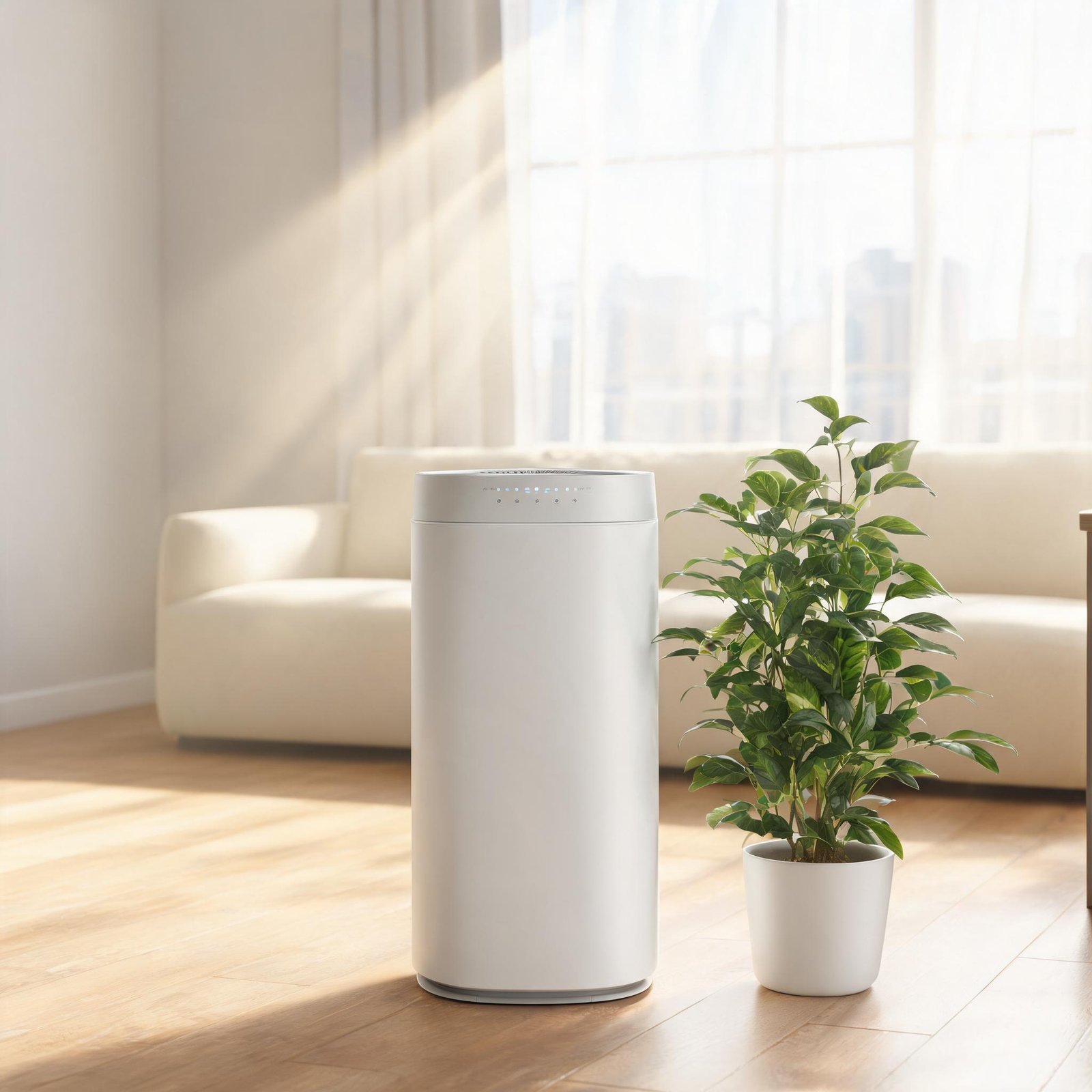
A good air purifier quietly does one job: it pulls pollen, pet dander, dust, and smoke out of the air you breathe all day. After digging through lab testing from Wirecutter and Consumer Reports, EPA guidance on air filtration, and thousands of owner reviews, we narrowed the field to the six best air purifiers of 2026 that actually earn their spot in your home. Whether you want a do-everything workhorse for a big living room or a whisper-quiet unit for a bedroom, there is a pick here for you.
Table of Contents
Our Picks at a Glance
- 🥇Top Pick: Coway Airmega AP-1512HH Mighty
- 🥈Best Value: Winix 5500-2
- 🥉Best for Large Rooms: Blueair Blue Pure 211+
- ⭐Best Budget: LEVOIT Core 300
- 📱Best Smart: LEVOIT Core 300S
- 🌿Best for Allergies: Honeywell HPA300
Our Verdict: The Coway AP-1512HH Mighty is our top pick — it is compact, quiet, and cleans a bedroom fast with true HEPA filtration and an Eco mode that adjusts to the air around it. If you are on a budget, the LEVOIT Core 300 delivers real HEPA for under $100, while the Blueair 211+ is the one to grab for a big open living space.
Why Trust ShoppingPicker
We cross-referenced hands-on lab testing from Wirecutter and Consumer Reports with EPA guidance on air filtration and thousands of real-world owner reviews. Every pick was evaluated on CADR, filter type (true HEPA vs. HEPA-type), room coverage, noise at each fan speed, and long-term filter replacement cost. We only recommend air purifiers we would run in our own homes.
How to Choose the Right Air Purifier
Room Size and CADR
The most common mistake is buying an air purifier that is too small for the room. Match the unit to your square footage, and check the CADR (Clean Air Delivery Rate) for dust, pollen, and smoke — the higher the CADR, the faster it cleans. A good rule of thumb: a purifier should deliver at least two-thirds of the room’s square footage in CADR. For a 300 sq ft bedroom, aim for a CADR of 200 or more.
Filter Type: True HEPA vs. HEPA-Type
Look for “true HEPA” (rated to capture 99.97% of particles down to 0.3 microns), not “HEPA-type” or “HEPA-style,” which is marketing language for a less effective filter. All six picks in this guide use genuine true HEPA filters. An activated-carbon layer on top of the HEPA is what actually tackles odors, smoke, and VOCs — HEPA alone does not remove gases.
Noise and Sleep Mode
If the purifier will live in a bedroom, noise matters. At their lowest setting, the quietest units run around 23–24 dB — quieter than a whisper — while high/turbo modes can hit 50+ dB, which is about as loud as a conversation. Look for a sleep mode that dims the lights and drops the fan at night.
Filter Replacement Costs
The purchase price is only half the story — replacement filters are an ongoing cost. Most true HEPA filters need changing every 6–12 months, at roughly $25–$80 per set depending on the model. A $99 purifier with $25 annual filters can cost less over three years than a $250 unit with $80 filter sets, so factor replacement cost into your decision.
Air Purifiers Compared at a Glance
| Model | Best For | Coverage | Filter | Price |
|---|---|---|---|---|
| Coway AP-1512HH Mighty | Top Pick | 361 sq ft | True HEPA + Carbon | ~$200 |
| Winix 5500-2 | Best Value | 360 sq ft | True HEPA + AOC Carbon | ~$160 |
| Blueair Blue Pure 211+ | Large Rooms | 540 sq ft | HEPASilent | ~$250 |
| LEVOIT Core 300 | Budget | 219 sq ft | True HEPA | ~$99 |
| LEVOIT Core 300S | Smart | 219 sq ft | True HEPA | ~$149 |
| Honeywell HPA300 | Allergies | 465 sq ft | True HEPA (3x) | ~$250 |
1. Coway Airmega AP-1512HH Mighty

- [Coverage] Designed to clean spaces up to 1,748 sq. ft. in 60 minutes
- [Four Stage Filtration System] Combination of a washable pre-filter, deodorization filter, Bipolar Device, and HEPA Filt…
- [Auto Mode] Constantly monitoring the air quality, the fan automatically adjustes to most effectively purifiy your space…
What We Like
- True HEPA + activated carbon, 4-stage filtration
- Covers up to 361 sq ft (AHAM rated)
- Eco mode auto-adjusts the fan to air quality
- Whisper-quiet 24 dB on the low setting
What Could Be Better
- Replacement filters run about $50, roughly twice a year
- No app or smart-home controls
- Ionizer defaults on (though it can be switched off)
Flaws but not dealbreakers: The replacement filters are not the cheapest and there is no app, but for a compact, quiet workhorse that cleans a bedroom in minutes, the Mighty is the air purifier we recommend most.
Best For: Most people who want a set-and-forget purifier for a bedroom or home office.
2. Winix 5500-2

- True-HEPA filter captures 99. 97% of airborne pollutants; dust mites, pet dander, pollen and other allergens as small as…
- Washable AOC Carbon Filter, made from activated carbon granulars for removal of household odors.
- PlasmaWave acts as a permanent filter to safely break down odor, allergens, chemical vapors and other pollutants – with …
What We Like
- True HEPA plus a washable AOC carbon pre-filter
- PlasmaWave technology (switchable on/off)
- Smart sensors with auto mode and sleep mode
- Covers up to 360 sq ft, frequently under $160
What Could Be Better
- PlasmaWave produces a trace of ozone (can be disabled)
- Boxy tower design takes up floor space
- No app connectivity
Flaws but not dealbreakers: PlasmaWave generates a trace amount of ozone and the tower is boxy, but for the price you get true HEPA, a washable carbon pre-filter, and auto mode — the best value air purifier we tested.
Best For: Budget-conscious buyers who still want true HEPA and auto mode.
3. Blueair Blue Pure 211+

- SIMPLE ONE-BUTTON CONTROL: Easily adjust fan as-needed with one button to ensure optimal air quality, including lowering…
- CLEAN AIR IN MINUTES: Blueair’s HEPASilent technology, delivers clean air, faster, and much more quietly than traditiona…
- ONE OF THE QUIESTEST AIR PURIFIERS: Quieter (31 dB) than whisper on low; ENERGY STAR rated – uses less energy (30W) than…
What We Like
- Cleans a 540 sq ft room in about 12.5 minutes
- Washable fabric pre-filter in five colors
- HEPASilent dual filtration for fast, quiet cleaning
- Simple one-button operation
What Could Be Better
- No auto mode or air-quality sensor
- Replacement filters cost more than rivals
- Large footprint for smaller rooms
Flaws but not dealbreakers: There is no auto mode or particle sensor and replacement filters are pricey, but if you have a big open living space, the 211+ moves serious air — the best large-room air purifier for the money.
Best For: Open-plan living rooms and large bedrooms up to ~540 sq ft.
4. LEVOIT Core 300

- WHY CHOOSE AHAM VERIFIDE AIR PURIFIERS: AHAM (Association of Home Appliance Manufacturers) is an ANSI-accredited organiz…
- HIGH-PERFORMANCE AIR PURIFICATION: A powerful 56W high-torque motor and 143 CFM CADR delivers fast, effective cleaning. …
- AHAM VERIFIDE, PROVEN PERFORMANCE: AHAM VERIFIDE with a CADR (Clean Air Delivery Rate) rating of 143 CFM for smoke, 153 …
What We Like
- True HEPA filtration for under $100
- Compact 360-degree cylindrical design
- 23 dB sleep mode
- 3-stage filtration: pre-filter + HEPA + carbon
What Could Be Better
- Only covers about 219 sq ft
- No smart features (that is the 300S)
- Replacement filters around $25 each
Flaws but not dealbreakers: It is a small-room unit with no app, but at under $100 the Core 300 delivers genuine HEPA filtration and a near-silent sleep mode — the best budget air purifier for dorms and nurseries.
Best For: Dorm rooms, nurseries, and small bedrooms on a budget.
5. LEVOIT Core 300S (Smart)
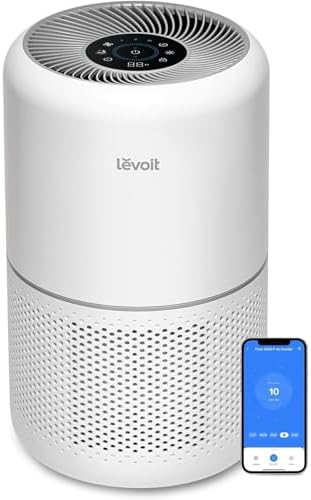
- 𝐖𝐇𝐘 𝐂𝐇𝐎𝐎𝐒𝐄 𝐀𝐇𝐀𝐌 𝐕𝐄𝐑𝐈𝐅𝐈𝐃𝐄 𝐀𝐈𝐑 𝐏𝐔𝐑𝐈𝐅𝐈𝐄𝐑𝐒: AHAM (Association of Home Appliance Manufacturers) is an ANSI-accredited organiz…
- 𝗔𝗛𝗔𝗠 𝗩𝗘𝗥𝗜𝗙𝗜𝗗𝗘 𝗙𝗢𝗥 𝗣𝗥𝗢𝗩𝗘𝗡 𝗣𝗘𝗥𝗙𝗢𝗥𝗠𝗔𝗡𝗖𝗘: The Core 300S-P is AHAM VERIFIDE with CADR (Clean Air Delivery Rate) ratings of 14…
- 𝐀𝐂𝐂𝐄𝐒𝐒 𝐀𝐍𝐘𝐖𝐇𝐄𝐑𝐄 𝐀𝐍𝐘𝐓𝐈𝐌𝐄: Simply ask Alexa or Google Assistant to control the air purifier when your hands are full. The …
What We Like
- Wi-Fi with Alexa and Google voice control
- Real-time PM2.5 sensor with auto mode
- VeSync app for scheduling and monitoring
- Quiet 24 dB sleep mode
What Could Be Better
- Still a ~219 sq ft single-room unit
- Full features require the app
- Filter replacement cost adds up over time
Flaws but not dealbreakers: It is still sized for a single room and leans on the app, but with a real PM2.5 sensor, auto mode, and voice control, the 300S is the best smart air purifier for the price.
Best For: Smart-home owners who want voice control and air-quality tracking.
6. Honeywell HPA300

- EXTRA LARGE ROOM AIR PURIFIER – Honeywell HPA300 HEPA Air Purifier helps provide fresher, cleaner air in minutes. Cleans…
- HELPS REDUCE ALLERGENS – This HEPA air purifier has 3 air cleaning levels including Turbo Clean. It helps capture the fo…
- EFFECTIVE AIR CLEANING AND CIRCULATION – The Honeywell HPA304 Air Purifier filters and circulates air in extra-large 465…
What We Like
- Covers up to 465 sq ft with 5 air changes per hour
- Triple true HEPA filters for high CADR
- Turbo clean mode for rapid air turnover
- A brand frequently recommended by allergists
What Could Be Better
- Loud on the high/turbo setting
- Bulky, utilitarian design
- Filter sets run $50–$80
Flaws but not dealbreakers: It is loud on turbo and looks like an appliance, but the HPA300’s triple-filter setup and strong CADR make it the best air purifier for allergy sufferers who need serious air turnover.
Best For: Allergy and asthma sufferers who prioritize filtration power.
The Final Verdict
For most people, the Coway Airmega AP-1512HH Mighty is the best air purifier of 2026 — it pairs true HEPA filtration with an Eco mode that quietly adapts to the air around it, and it cleans a bedroom fast. If you are watching your budget, grab the LEVOIT Core 300 for under $100. And if you are furnishing a big living room, the Blueair Blue Pure 211+ moves the most air for the money. Whichever you pick, change the filter on schedule — that is the single habit that keeps an air purifier working like new.
Frequently Asked Questions
Do air purifiers actually work?
Yes — when sized correctly and run consistently, a true HEPA air purifier measurably reduces airborne particles like dust, pollen, pet dander, and smoke. Independent lab tests (including those from Wirecutter and Consumer Reports) show real drops in particulate matter in a closed room. What they cannot do is remove everything: they are less effective against gases and odors unless they include a substantial activated-carbon filter.
Where should I place an air purifier?
Put it in the room where you spend the most time — usually the bedroom — and keep it at least a few inches from walls and furniture so air can circulate through all sides. For a 360-degree intake unit like the LEVOIT Core 300, the center of the room is ideal. Avoid tucking it in a corner or behind a couch, which chokes airflow and cuts cleaning performance.
How often do I need to change the filter?
Most true HEPA filters last 6–12 months, depending on how dirty your air is and how many hours a day you run the unit. Many purifiers have a filter-change indicator light; a good habit is to vacuum the pre-filter monthly and replace the HEPA filter roughly twice a year. Running the purifier 24/7 shortens filter life, so it is a trade-off between clean air and replacement cost.
Can an air purifier help with allergies and asthma?
Yes — a true HEPA purifier can meaningfully reduce the airborne allergens (pollen, dust mites, pet dander, mold spores) that trigger allergies and asthma. It is not a cure, but many allergists recommend a HEPA unit in the bedroom for overnight relief. The Honeywell HPA300 in this guide is a popular allergist-recommended choice for its high air turnover.
Should I run my air purifier all day?
For the best results, yes — air quality drops back down within hours of turning the unit off, and running continuously keeps particle levels consistently low. Most modern purifiers are energy-efficient (often under 50 watts) and have auto or sleep modes that lower the fan when the air is clean. If running 24/7, budget for more frequent filter changes.
What is the difference between HEPA and HEPA-type?
True HEPA filters are certified to capture at least 99.97% of particles down to 0.3 microns. “HEPA-type,” “HEPA-like,” or “HEPA-style” are unregulated marketing terms that usually mean a cheaper filter with lower capture efficiency. For allergy relief and smoke removal, insist on a genuine true HEPA filter — every pick in this guide uses one.
Do air purifiers remove smoke and odors?
A HEPA filter removes the fine particles in smoke, but gases and odors are handled by the activated-carbon layer, not the HEPA. Purifiers with a substantial carbon filter (like the Winix 5500-2 and Blueair 211+) do a decent job on cooking smells, wildfire smoke odor, and VOCs. For heavy or persistent odors, no portable purifier is a substitute for ventilation.
Disclosure: ShoppingPicker participates in the Amazon Services LLC Associates Program. As an Amazon Associate, we earn from qualifying purchases at no additional cost to you.
Sources & Further Reading
- Wirecutter (NYT): The Best Air Purifiers
- EPA: Guide to Air Cleaners in the Home
- Consumer Reports: Air Purifier Buying Guide