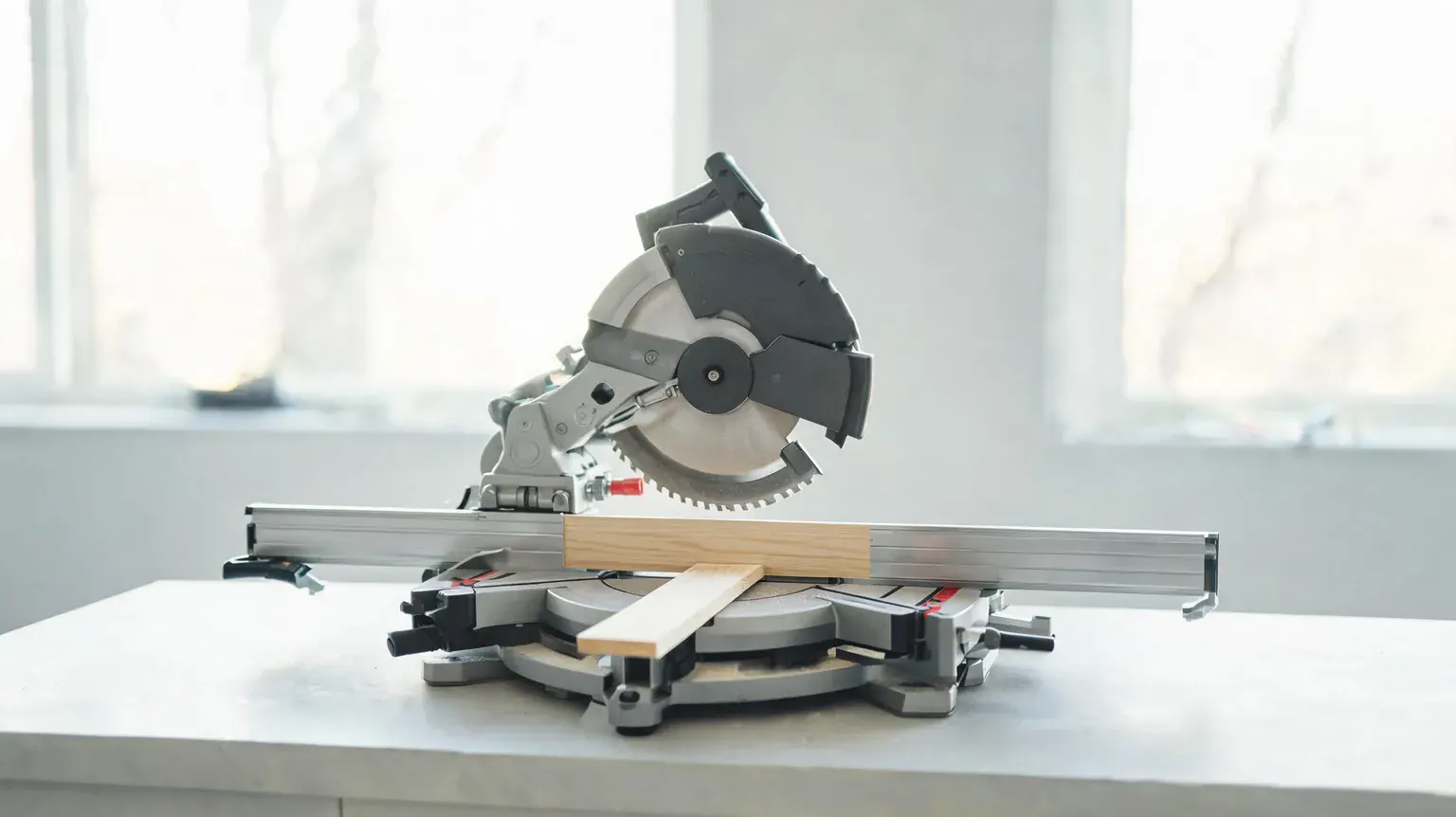
The best miter saws in 2026 are not the heaviest or the priciest — they are the ones that cut true, change angles fast and leave clean trim instead of firewood. We pulled Amazon’s live Power Miter Saws chart on October 4, 2026 and cross-checked it against the two most rigorous tool testers we could fetch: Popular Mechanics, whose authors put saws through a full test series, and Bob Vila, whose team cut on 13 saws for 27 hours. The result is seven picks from $169 to $739 — the category’s current #1 best seller included — plus the spec truths, failure modes and OSHA safety rules that separate a good purchase from a loud one.
Affiliate disclosure: As an Amazon Associate I earn from qualifying purchases. We earn commission from qualifying purchases made through links on this page. This never affects our rankings or what we recommend.
What’s in this guide
- What Amazon’s saw chart says
- The 7 picks (comparison table)
- Spec truth: capacity, motors, weight
- Price tiers: where paying more stops mattering
- Where we disagree with the testers
- How miter saws disappoint
- Safety: what OSHA actually says
- FAQs
- How we research these picks
- The seven picks in detail
What Amazon’s saw chart actually says
On October 4, 2026 we pulled the Power Miter Saws best-seller chart and read every candidate’s rank, price and spec data through Amazon’s product API. The headline: the current #1 best seller is the Metabo HPT C10FCG2 — a $169, 24-pound 10-inch single-bevel saw — with the Skil MS6305 ($249) at #2 and the DeWalt DWS780 (#6), DCS785B (#7) and DWS779 (#13) stacked behind it. The rest of the top ten tells the real story: compact 7-1/4-inch saws (#3), an 8-1/4-inch compact (#5), a 2-in-1 miter/table hybrid (#9) and — at #4 — a $20 laser-guide accessory. A chart alone decides nothing; a chart read properly tells you exactly which price tiers buyers actually choose.
Deeper down, the pattern matters for your wallet. Cheap compacts sell in volume to first-timers, while the 12-inch sliders that trim carpenters and woodworkers research — our picks at #6, #7 and #13 — hold their ground mid-table with nine-thousand-rating track records. And the premium lane is thin: the Makita LS1019L sits far outside the top 20, which is exactly what a $739 precision tool does on a volume chart. Volume picks the cheapest; this guide picks the ones worth owning at every tier.
The 7 best miter saws, ranked
Every pick was price-, stock- and rank-checked through Amazon’s product API on October 4, 2026, and each listing was read end to end — including the fine print, where this category hides its biggest surprises (single vs dual bevel, rail clearance, tool-only cordless listings). The comparison table below pulls live from the same API.
| Product | Standout spec | Price | Track record | Deal |
|---|---|---|---|---|
 Metabo HPT Metabo HPT 10-Inch Compound Miter Saw, 15-Amp, Single Bevel, C10FCG2 |
15-amp, 5,000 rpm motor; 24 lb body; 0-52° miter both ways – the category’s current #1 best sel | $169.00 $179.00 |
4.6 ★ 659 ratings #1 in Miter Saws |
6% OFF In Stock |
 EVOLUTION Evolution Power Tools R185SMS+ Sliding Miter Saw with Multi-Material Cutting, |
Sliding multi-material saw: cuts wood, plastic and metal with the included blade (7-1/4 in.) | $175.42 $199.00 |
4.5 ★ 988 ratings #14 in Miter Saws |
12% OFF In Stock |
 Skil SKIL 10" Dual Bevel Sliding Compound Miter Saw-MS6305-00 |
POWERFUL 15 AMP MOTOR – Delivers 4,800 RPM for quick, detailed cuts | $249.00 $279.99 |
4.6 ★ 2,242 ratings #2 in Miter Saws |
11% OFF In Stock |
 DEWALT DEWALT Miter Saw, 12 Inch Double Bevel Sliding Compound Miter Saw, Includes Bl |
Powerful 15 Amp, 3,800 rpm motor delivers extended power and durability | $399.00 |
4.8 ★ 9,059 ratings #13 in Miter Saws |
In Stock |
 DEWALT DEWALT 20V MAX XR 12 inch Double Bevel Sliding Miter Saw, Cordless, Tool Only |
Our largest cut capacity 20v max* miter saw – cut up to 14 in. horizontally, 6-1/2 in. baseboar | $499.00 $699.00 |
4.8 ★ 55 ratings #7 in Miter Saws |
29% OFF In Stock |
 DEWALT DEWALT Miter Saw, 12-inch Double Bevel Sliding Compound Miter Saw with XPS LED |
XPS LED shadow line for cut alignment; 15-amp, 3,800 rpm; 2×14 at 90° capacity | $649.00 |
4.8 ★ 2,513 ratings #6 in Miter Saws |
In Stock |
 Makita Makita LS1019L 10" Dual-Bevel Sliding Compound Miter Saw with Laser |
10" slide miter saw with the Crown molding cutting capacity (6-5/8" nested) of a 12" miter saw | $739.00 |
4.6 ★ 473 ratings #27 in Miter Saws |
Only 13 left in stock (more on the way). |
1. Metabo HPT C10FCG2 — The #1 best seller (best for most budgets)
Start where America starts: the C10FCG2 is the current #1 best seller in Amazon’s Power Miter Saws category, and it is not a fluke. Fifteen amps, 5,000 rpm, 0–52° miter both ways, a 45° bevel and a 24-pound second-generation frame built to move from closet to garage without a wrestling match. And the surprise feature: an Xact Cut LED shadow line that projects the blade’s kerf onto your pencil mark — a rarity at this price, as ToolGuyd noted when it covered this saw (“I never saw an LED shadow cut line feature on a miter saw at this price”). It is the saw for trim, flooring and light framing — and at $169 with a 5-year warranty, it leaves real money for blades and a stand. Know the trade: single bevel means flipping the board for the other side, and a non-sliding 10-inch blade has limits. For everyone else, this is the value benchmark.
What we like:
- The current #1 best seller in Amazon’s Power Miter Saws category at check time — verified on both the category chart and the listing’s own rank line
- 15-amp motor, 5,000 rpm no-load speed, 0–52° miter range left and right and a 0–45° bevel — real capacity for trim, flooring and framing cuts
- The Xact Cut LED shadow line projects the blade’s kerf onto your mark — ToolGuyd called it “a feature that’s typically reserved for more premium saws” and notes most DeWalt saws, even the DWS779, go without it
- 24 pounds with the second-generation compact frame: the lightest saw in this guide and the easiest to carry room to room
- Backed by Metabo HPT’s 5-year warranty, with a 659-rating, 4.6-star pool that is younger than the DeWalt giants but strong for its age
Flaws but not dealbreakers: Single bevel: cutting a bevel in the opposite direction means flipping the workpiece — the everyday trade against dual-bevel saws A non-sliding 10-inch blade means this is not the saw for wide crown or 2×12 stock — its sliders sit below A genuine entry-level machine at its core — ToolGuyd’s read is that “some users will need a larger saw,” and many owners eventually will
Skip it if: you need wide crown work or 2×12 rips in a single pass — the sliders below are waiting.
2. Evolution R185SMS+ — The multi-material specialist
One pick exists for the mixed-material jobs the others cannot touch: the R185SMS+ is a sliding multi-material saw built to cut wood, plastic and metal with the included blade — minimal heat, minimal sparks, no coolant. It slides (210 mm), bevels to 45° and miters to 50° on a compact 7-1/4-inch body, and at $175 it undercuts every other slider in this guide. For fencing, conduit, shelving and small steel work around the property, this is the tool that replaces two machines. For cabinet-grade woodwork, it is the wrong tool done right.
What we like:
- A multi-material saw first: cut wood, plastic and metal with the included blade per the listing — no coolant, minimal sparking, one machine
- Sliding action (210 mm slide), 45° bevel and 50° miter on a compact 7-1/4-inch body — the cheapest way into a sliding saw here
- A genuine problem-solver for mixed-material projects: fencing, conduit, shelving, small steel — without a second machine
- 988 ratings at 4.5 stars and #14 on the category chart: small beside the legacy saws, but a real community around it
Flaws but not dealbreakers: Blade and depth capacity trail the 10- and 12-inch saws — trimming out a house is not its job The cut quality on wood is good rather than cabinet-grade; fine finish work wants a dedicated wood saw Listing copy on the page mixes in specs from Evolution’s bigger metal saws — we verified only what the title and listing state for this model
Skip it if: wood is all you cut — the Skil below gives you more wood-cutting saw for $70 more.
3. SKIL MS6305-00 — The testers’ best value
Both of our test labs and this guide agree on one saw: Skil’s MS6305-00 is the value story of the category. Popular Mechanics updated its guide in May specifically to add it as Best Value after hands-on testing — praising clean, consistent cuts on a stable turntable, a 15-amp motor at 4,800 rpm, and swap-hands ergonomics no other test saw matched. It cuts 2×12 at 90° and 2×8 at 45°, carries an LED shadow line, and weighs under 40 pounds. You give up premium refinement and multiple bevel detents; you keep every cut that matters for $249.
What we like:
- Popular Mechanics’ Best Value pick: “At about half the price of most major brands, it delivers consistently clean cuts on a stable, well-constructed turntable.”
- “The only saw I tested that feels equally comfortable left- or right-handed” — a genuine ergonomics win from hands-on testing
- 2×12 crosscut capacity at 90° and 2×8 at 45°, 15-amp motor at 4,800 rpm, dual-bevel stops and 11 miter detents to 50° both ways
- LED shadow line for cut alignment and a 39.4-pound weight per the tester’s spec sheet — easy on the arms
Flaws but not dealbreakers: “Lacks the refinement and build quality of premium saws” — the testers’ own words; bevel changes use the rear knob, not multiple detents Dust collection and table hardware are a step behind the flagships A 2,200-strong rating pool at 4.6 — strong for the class, but the DeWalts carry multiples more history
Skip it if: you want decade-proven support pools or pro-grade dust management — that is the step up to the DeWalts.
4. DEWALT DWS779 — The best sliding saw for most people
If this guide had a default answer, it is the DWS779: a 12-inch dual-bevel slider that cuts 2×14 at 90°, takes crown molding to 7-1/2 inches nested, and carries the largest verified track record in this article — 4.8 stars across more than nine thousand ratings. It is the same family as the DWS780 below, minus the XPS light system, which most first-time buyers will not miss for $250. Fifteen amps, 3,800 rpm, a cam-lock miter handle with detent override, and a dust system that claims 75%+ capture. This is the sliding saw most people should bolt to a stand and keep for a decade.
What we like:
- 12-inch dual-bevel slider that cuts 2×14 lumber at 90° and 2×10 at 45° — the capacity that ends the “turn the board over” dance
- The largest track record in this guide: 4.8 stars across 9,059 ratings at check time
- Tall sliding fences handle crown molding up to 7-1/2 inches nested and base molding up to 6-3/4 inches vertically
- 15-amp, 3,800 rpm motor, cam-lock miter handle with detent override and a dust system the listing claims captures over 75% — plus the blade wrench and clamp in the box
Flaws but not dealbreakers: No XPS shadow light — that is the DWS780’s party trick at $250 more A rail slider needs rear clearance on the bench; it is not a glide or compact design At this weight and class, plan to bolt it to a stand for the best stability
Skip it if: you crave the shadow-line workflow or you cut on a tight bench — the 780 or the Makita fit better.
5. DEWALT DCS785B — The best cordless
For crews who work away from outlets, Popular Mechanics’ Best Cordless winner comes to Amazon: the DCS785B runs on the full DeWalt 20V MAX and FlexVolt battery range, cuts up to 14 inches horizontally, and its regenerative braking math promises up to 371 cuts in 3-1/4-inch MDF base molding per charge. PM’s testers found it held speed and power through their cut tests, stable on its included stabilizer bar, with a side dust port that fits small benches. The catch is honest: it is tool-only, cordless runtime has limits, and this listing’s pool is smaller. The deal at check time — $499 down from $699 — is what makes it a genuine alternative to the corded flagships.
What we like:
- Popular Mechanics’ Best Cordless pick: it “maintained speed and power really well during our cut tests,” and the stabilizer bar kept it “sturdy and stable”
- Runs on the full range of DeWalt 20V MAX and FlexVolt batteries, with regenerative braking math of up to 371 cuts in 3-1/4-inch MDF base molding per the listing
- Cut up to 14 inches horizontally, 6-1/2-inch baseboard standing and 6-1/2-inch crown nested — and its side dust port fits a smaller bench (a PM tester favorite detail)
- 29% off at check time ($699 to $499) with dust capture up to 97% claimed and wireless vacuum control built in
Flaws but not dealbreakers: Tool only — batteries and charger are sold separately, so budget for the platform you actually own Cordless runtime still trails corded saws for all-day cutting, as PM’s own cons list notes A smaller rating pool (55 at 4.8) on this tool-only listing — fewer long-term field reports than the corded classics
Skip it if: you are not already on the DeWalt battery platform — starting from zero doubles the real cost.
6. DEWALT DWS780 — The flagship workhorse
The saw both labs keep in the truck: Bob Vila’s 27-hour test team made the DWS780 its tested runner-up, with the verdict “this is a workhorse of a power miter saw.” Its XPS LED shadow line projects the blade’s shadow onto the board for alignment with nothing to calibrate, and it carries the same 2×14 capacity, 10 positive stops and 15-amp motor as the 779 — plus the refinement that 2,500 ratings at 4.8 support. It is heavy, it needs rail room, and it costs $250 more than its sibling; for daily trim work and a decade of service, that trade has a long list of defenders.
What we like:
- Bob Vila’s tested runner-up with a verdict from its tester: “I cut several types of boards and trim on the DWS780, and this is a workhorse of a power miter saw.”
- XPS LED shadow-line system projects the blade’s shadow for cut alignment with no laser to calibrate — an adjustment-free cutline per the listing
- The same 2×14 / 7-1/2-inch-nested-crown capacity as the DWS779, plus 10 positive miter stops, a 15-amp 3,800 rpm motor and 75%+ dust capture
- 2,513 ratings at 4.8 and the flagship support network — the saw pros keep in the truck
Flaws but not dealbreakers: The priciest corded pick here; Bob Vila’s own tester flags the 58-pound weight and the rail clearance it demands No laser guide — if you want a red line on the board, that is a different saw family You pay roughly $250 over the DWS779 for the light system and refinements; know which one you actually need
Skip it if: the light system does not justify the premium for you — the DWS779 cuts the same boards for less.
7. Makita LS1019L — The finish carpenter’s pick
Top of the ladder, and worth it for the right buyer: Makita’s LS1019L is a 10-inch slider with the crown capacity of a 12-inch saw (6-5/8 inches nested), riding on linear ball bearings engineered for “dead-on” accuracy. Its two-steel-rail design runs flush against a wall — real workshop square footage back in your pocket — and the direct-drive gearbox adds vertical capacity for baseboards and nested crown. It is the saw cabinet makers and finish carpenters graduate to, with a laser included and a compact 57.9-pound frame. For everyone else, it is $739 worth of refinement you may not need until you do.
What we like:
- A 10-inch saw with the crown-molding capacity of a 12-inch one (6-5/8 inches nested) — capacity without the bulk
- Linear ball-bearing rail system engineered for “dead-on” accuracy, with a 2-steel-rail design that lets it run flush against a wall
- Direct-drive gearbox for 5-1/4-inch vertical capacity, a laser included, and the most compact frame in its class at 57.9 pounds
- The finish carpenter’s pick: 4.6 stars across 473 ratings, and the top of our ladder for a reason
Flaws but not dealbreakers: The priciest pick here — an 85% premium over the DWS779 buys refinement, not capacity; if budget decides, stop lower A 10-inch blade still gives up depth capacity to the 12-inch flagships in thick timber Smaller pools and scarcer stock — only 13 units in stock at check time
Skip it if: you cut framing lumber a few weekends a year — stop at the DWS779 and save the difference.
Spec truth: capacity, motors and weight — as verified
These figures come from the live listings, the testers’ spec sheets and our own checks at check time. Where a manufacturer does not clearly publish a number, we show a dash instead of borrowing someone else’s estimate. Three things to notice before you compare: capacity numbers are always measured in a specific material at a specific angle (a “2×14 at 90°” claim says nothing about 45° cuts); weight decides who actually uses the saw — a 24-pound saw gets carried, a 65-pounder gets left in the shop; and rank is a buying signal, not a quality score, because cheap compacts sell in volume.
| Saw | Type | Blade | Verified capacity | Weight | Category rank | Price |
|---|---|---|---|---|---|---|
| Metabo HPT C10FCG2 | Single-bevel compound | 10 in | 0–52° miter both ways; 45° bevel | 24 lb | #1 | $169.00 |
| Evolution R185SMS+ | Sliding, multi-material | 7-1/4 in | 45° bevel; 50° miter; 210 mm slide | — | #14 | $175.42 |
| SKIL MS6305-00 | Dual-bevel sliding | 10 in | 2×12 at 90°; 2×8 at 45° | 39.4 lb (PM) | #2 | $249.00 |
| DEWALT DWS779 | Dual-bevel sliding | 12 in | 2×14 at 90°; 2×10 at 45° | — | #13 | $399.00 |
| DEWALT DCS785B | Dual-bevel sliding, cordless | 12 in | 14 in horizontal; 6-1/2 in baseboard | 51.7 lb | #7 | $499.00 |
| DEWALT DWS780 | Dual-bevel sliding | 12 in | 2×14 at 90°; 7-1/2 in crown nested | 58 lb (BV) | #6 | $649.00 |
| Makita LS1019L | Dual-bevel sliding | 10 in | 6-5/8 in crown nested; 5-1/4 in vertical | 57.9 lb | #27 | $739.00 |
Price tiers: where paying more stops mattering
$169–$249 — the entry tier. The chart’s #1 (Metabo) and #2 (Skil) live here, plus the multi-material Evolution. At this level you already get real 15-amp-class motors and honest detents; you give up dual-bevel convenience, sliding capacity, or both. Nothing worth owning in this category exists below roughly $140 — the $100 class is where “miter saw” starts meaning “approximate suggestions.”
$399–$499 — the serious band. The DWS779 and the cordless DCS785B. This is where 12-inch sliders with 2×14 capacity and decade-scale track records begin, and it is where most buyers should stop: every capacity that trim, flooring and framing ask for is available at $399. The cordless pick changes the trade to batteries and runtime, not capability.
$649–$739 — the professional tier. The DWS780 and the Makita LS1019L. Pay here for the shadow-line workflow, cabinet-grade smoothness, tighter footprints and brand-level support — not more board width. Above this band you are buying DTC brands, warranties or sheer mass, and the improvements stop tracking the dollars for a home shop. One budgeting note the charts never show: a $30–$50 dedicated finish blade on the $399 saw outperforms a $649 saw on its stock blade for trim — spend on blades before you spend on badges.
Where we disagree with the testers
Our sourcing this time is two of the most hands-on tool programs publishing: Popular Mechanics — where a former NYC carpenter put a shortlist through “a comprehensive series of tests” and the editors added the Skil and a Makita as category picks after additional hands-on testing — and Bob Vila, whose team cut on 13 saws for 27 hours across a $250–$750 range. Where their winners and ours diverge, you deserve the map.
Both labs crown a Bosch we cannot put on the list. Bob Vila’s Best Overall and Popular Mechanics’ top pick are the same family: Bosch’s GCM12SD glide saws, praised on both sides for the zero-clearance arm that lets them sit flush against a wall (“dust collection is outstanding,” Bob Vila’s testers add). We agree with the verdicts and still left Bosch out of the buyable list, because availability on Amazon at check time was a mess: the 10-inch CM10GD listing showed no featured offer, and the 12-inch saws were marketplace-seller affairs. If you can grab one locally at $629, the labs’ case is real — especially in a small shop.
Their budget picks are store exclusives; ours are buyable. Popular Mechanics’ Best Budget is a Ryobi and its Best Splurge a $1,099 Makita XGT — both Home Depot exclusives we could not verify at Amazon prices. Bob Vila’s value crown went to a 7-1/4-inch Craftsman kit, a smaller class of saw than its list’s headline picks. We translated the same value judgments onto the catalog you can actually check out here: the Metabo and Skil at the bottom, the LS1019L as the premium. That last one is a different flavor than PM’s XGT — a 10-inch compact with 12-inch crown capacity — and it is the one we would buy for cabinet work.
The labs also disagree with each other — and the math is interesting. Bob Vila’s team measured cordless runtime guidance at 150 to 275 cuts per charge; our DCS785B listing claims up to 371 cuts — in one specific material, at one specific size. Both can be true: material eats battery, and marketing picks the friendliest test. Plan around the lower number, and the cordless question answers itself: brilliant for trim days, corded for the rest.
How miter saws disappoint (and how to avoid it)
- “Max capacity” is a one-board trick. Every crosscut number is measured at 90° against friendly stock. Crown molding, nested cuts and 45° assemblies all shrink the envelope, so read vertical and nested figures before you commit — the spec-truth table above shows where each saw actually shines.
- Blade deflection and tearout are real. As Bob Vila’s team notes, 10- and 12-inch blades can deflect slightly under load; the fix is a sharp, matched blade — a 60-to-80-tooth finish blade for trim, a general-purpose 40-tooth for framing. Dull blades also cause kickback and strain the motor.
- Dust collection overpromises. “Captures over 75%” is the industry phrasing; in practice bags vary wildly and most spew fine dust. Hook a shop vacuum to the port when cutting indoors — wood dust is a recognized health hazard, not just a cleanup problem.
- Cordless math needs padding. The 371-cut claim is a best case in soft base molding; mixed building work lands closer to the 150–275 range testers cite. If a battery dies mid-window-run, you will remember it. Budget two batteries or a fast charger.
- Prices and listings move. In this category flash deals swing prices dramatically — dedicated deal trackers like ToolGuyd have watched the DWS780 drop from its $669 list to $449 and climb back — and family listings blur model numbers. Verify the exact model (DWS779 vs. DWS780, single vs. dual bevel) in the cart before you commit.
- Setup decides accuracy. Out-of-the-box fence alignment, rail slop and detent calibration vary; test-cut a scrap of 2×4 and adjust before your first trim piece. And bolt it down — testers repeatedly note that stability is what turns a saw into an accurate saw.
Safety: what OSHA actually says
This category spins saw blades at 3,800 to 5,000 rpm, so the safety conversation is not optional. Per OSHA’s woodworking eTool, machine-guarding violations — the OSHA standards at 29 CFR 1910.212 and the woodworking machinery standard at 1910.213 — “topped the list of citations” issued during inspections, and unguarded machines lead to “laceration, amputation, severed fingers, and blindness.” Read that list again: these are the injuries of the tabletop, not the racetrack.
The practical rules, straight from the same source plus every tester’s manual: keep the blade guard in place and moving freely; unplug the saw before changing blades; let the blade come to a full stop before lifting the arm; clamp or secure the workpiece and support long boards; keep hands clear of the blade path (including “left-of-blade” hands); wear eye and hearing protection; and control the dust, because OSHA treats wood dust as a health hazard. One OSHA note that surprised us: even a paused saw deserves unplugging during adjustments — the eTool is blunt that most incidents are procedure failures, not tool failures. Your saw’s manual is the final word; this section is the why.
Frequently asked questions
What is the best miter saw overall?
For most people who need capacity: the DEWALT DWS779 — a 12-inch dual-bevel slider with a nine-thousand-rating track record at $399. For most budgets: the Metabo HPT C10FCG2 — the category’s current #1 best seller at $169. For finish work: the Makita LS1019L. The right answer depends on the widest board you actually cut.
Should I get a 10-inch or a 12-inch saw?
A 10-inch saw handles trim, flooring and most framing cuts at a lighter weight; a 12-inch saw adds capacity for wide boards and tall crown — Bob Vila’s guidance sizes it as roughly a 2×8 crosscut at 90° versus a 2×4 at 45° for smaller blades, before sliding changes the math. If your projects keep pointing at crown molding and decks, buy the 12; if portability wins, the 10s here slide wider than their size suggests.
Sliding or non-sliding?
Sliding rails add cut width without a bigger blade — a 10-inch slider can crosscut 2×12-class stock per the Skil’s own spec. Non-sliding saws are lighter, cheaper and need no rear clearance. If you cut boards wider than a 2×6 with any regularity, slide.
Is a cordless miter saw worth it?
If you are already on the battery platform and work away from outlets: yes, and the DCS785B is the pick — PM’s testers came away impressed with its power and stability. If you cut in one shop, the corded saws deliver more for less, and never ask for a charger.
Which blade do I need for clean cuts?
For trim and finish work, a sharp 60-to-80-tooth blade; for framing, a 40-tooth general-purpose blade. Blade quality matters more than badge: a $40 finish blade on the Skil out-cuts a stock blade on saws costing three times as much. Replace or sharpen early — dull blades cause tearout, heat and kickback.
Do I need a laser or shadow line?
No — both are conveniences, not accuracy. Detents, sharp blades and calibration make accurate cuts; the XPS shadow line (DWS780) or LED shadow line (Skil) simply speeds up lining up. If your budget is tight, skip the light and buy the blade.
The bottom line
Buy the Metabo HPT C10FCG2 if value and portability lead your list — it is the chart-topper for a reason. Buy the Skil MS6305-00 if you want the testers’ own value verdict with sliding capacity. Buy the Evolution R185SMS+ if metal and plastic share your cutting list. Buy the DEWALT DWS779 as the no-regrets 12-inch slider, the DCS785B if the jobsite has no outlets, the DWS780 if you want the flagship both labs keep on the truck, and the Makita LS1019L if you are done compromising on finish work. Seven saws, one rule: buy for the widest board you actually cut, then spend the savings on blades.
How we research these picks
We are not a test lab, and this page does not pretend to be one. On October 4, 2026 we pulled live price, stock, listing and category-rank data for every saw through Amazon’s product API, read each listing end to end, and aggregated the published hands-on testing of two specialist programs — Popular Mechanics and Bob Vila — naming each inline wherever a claim comes from their testing. Safety guidance comes from OSHA’s woodworking eTool, not from us. Where a claim is the manufacturer’s alone (cut counts, dust percentages), we say so in the same sentence, and where a figure is not published we show a dash instead of a guess. Prices move; treat every figure as a snapshot of October 4, 2026. Our full process lives on our How We Test page.
Key sources
- OSHA — Woodworking eTool: machine-guarding citations, injury data and the 29 CFR 1910.213 machinery standard behind our safety section.
- Bob Vila — The Best Miter Saws, Tested: 13 saws, 27 hours of hands-on workshop testing with scored rubric.
- Popular Mechanics — The 7 Best Miter Saws of 2026, Tested: hands-on category picks and spec sheets, updated June 2026.
- ToolGuyd — Metabo HPT miter saw coverage: the Xact Cut shadow-line finding cited in pick #1, plus category pricing analysis.
More from our coverage: the best table saws for the rips a miter saw cannot make, the best chainsaws for the tree work before the trim work, and the best cordless power tool combo kits to start a battery platform.