The best riding lawn mowers for most homeowners in 2026 are the ones that fit the yard you actually have, not the biggest deck you can afford. We price-checked and spec-checked seven riding mowers sold on Amazon — gas lawn tractors and battery zero-turns from about $2,899 to $5,199 — read every live listing for engine, deck width, deck construction, transmission, battery capacity and claimed acreage, and compared our picks against Consumer Reports’ lab tests, Popular Mechanics’ tested reviews, a university agricultural-safety guide and an OSHA regulation. The short version: a 42-inch tractor handles up to about two acres, a 48- or 54-inch deck is for three acres and up, and the two things that decide whether you regret the purchase are the deck material and whether the machine can hold traction on your slope.
Affiliate disclosure: As an Amazon Associate I earn from qualifying purchases. We earn commission from qualifying purchases made through links on this page. This never affects our rankings or what we recommend.
What’s in this guide
- How we picked these riding lawn mowers
- The 7 best riding lawn mowers at a glance
- 1. Husqvarna TS 120 42-inch (best overall)
- 2. Husqvarna TS 140X 48-inch (best for 2–3 acres)
- 3. Husqvarna TS 375XD 54-inch (best premium tractor)
- 4. Husqvarna Z248F (best zero-turn)
- 5. EGO Power+ Z6 42-inch (best electric)
- 6. Greenworks 60V 54-inch MaximusZ (best large electric)
- 7. Greenworks 60V 42-inch CrossoverZ (best value)
- Deck size by acreage: 42, 48 or 54 inches?
- Tractor or zero-turn: which one for your yard?
- Mowing hills and slopes without a rollover
- Where the money goes: what each price band buys
- How our ranking differs from the big testers
- The failure patterns that show up after delivery
- Who should not buy a riding mower
- Do the marketing claims survive a reality check?
- FAQ
- The verdict
How we picked these riding lawn mowers
We are not a mower lab, and we did not run seven machines over seven lawns. Here is exactly what this guide is and is not. Every hard number — engine size and make, deck width and deck construction, transmission type, battery capacity, claimed acreage, price, discount and stock message — was read from the live Amazon listing for each mower on 20 September 2026. The independent test data comes from named sources: Consumer Reports, whose lab tests riding mowers for mulching, cutting evenness and handling and whose member survey produces the reliability rankings in this category; Popular Mechanics, which publishes the byline of the tester who ran each machine; and Family Handyman, which consulted working lawn-care experts. The safety guidance comes from a university agricultural-safety program and from OSHA’s ROPS regulation for tractors. Where a listing made a claim we could not check, we say so. You can read our full process on our how we test and choose products page.
We ranked the seven on six inputs: deck width and acreage fit (the single biggest mis-buy in this category), deck construction (stamped steel versus fabricated heavier gauge), engine and transmission (Briggs & Stratton versus Kawasaki, and hydrostatic versus pedal-operated), slope behaviour (traction aids and the fact that zero-turns and slopes are a bad combination), power source (gas versus battery running cost and maintenance), and the sales channel (what Amazon can actually deliver, warranty and return-wise).
Sourcing note: this is editorial analysis of listings, third-party lab tests and government or extension safety guidance, not our own lab data. Riding-mower prices are dealer-style prices and move slowly, but stock is genuinely intermittent on Amazon — several of these ship with a countdown. The numbers here are a snapshot from the date above.
The 7 best riding lawn mowers at a glance
Every mower below is sold on Amazon and was in stock when we checked. Prices are live figures from 20 September 2026. These are heavy freight items — expect a freight delivery window, not two-day shipping.
| Product | Standout spec | Price | Track record | Deal |
|---|---|---|---|---|
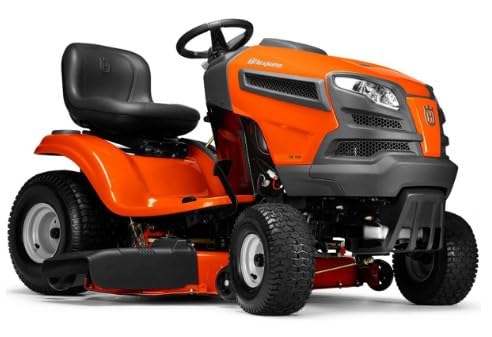 Husqvarna Husqvarna TS 120 (42") 19HP Briggs Lawn Tractor 970846301 |
42" stamped 2-blade deck; 19 HP Briggs & Stratton 540cc; pedal (hydrostatic) drive | $2,899.00 |
5.0 ★ 3 ratings #5 in Riding Lawn Mowers & Tractors |
Only 10 left in stock – order soon. |
 Husqvarna Husqvarna TS 140X (48") 24HP Briggs V-Twin Lawn Tractor 970846801 |
48" stamped 3-blade deck; 24 HP Briggs & Stratton 724cc V-twin; pedal drive | $3,699.00 |
5.0 ★ 4 ratings #62 in Riding Lawn Mowers & Tractors |
Only 15 left in stock – order soon. |
 Husqvarna Husqvarna TS 375XD Riding Lawn Mower 24Hp 54 inches Deck Differential Lock 970 |
54" fabricated 3-blade deck; 24 HP Kawasaki FR V-twin; hydrostatic + locking diff | $5,199.00 |
#49 in Riding Lawn Mowers & Tractors |
Only 1 left in stock – order soon. |
 Husqvarna Husqvarna Z248F (48") 23HP Kawasaki Zero Turn Lawn Mower |
48" fabricated 3-blade deck; 23 HP Kawasaki FR651V; Hydro-Gear ZT-2200 | $3,899.00 |
4.3 ★ 25 ratings #32 in Riding Lawn Mowers & Tractors |
Only 2 left in stock – order soon. |
 EGO Power+ EGO Power+ Z6 Zero Turn Electric Riding Lawn Mower, 42" Deck – ZT4214L |
42" deck; 6 × 56V ARC lithium; cuts up to 1.5 acres per charge; wide-frame balance | $4,938.00 $5,299.99 |
4.4 ★ 23 ratings #3 in Riding Lawn Mowers & Tractors |
7% OFF Available to ship in 1-2 days |
 Greenworks Greenworks 60V 54" MaximusZ Zero Turn Mower, (2)20Ah+(4)8Ah Batts + Fast Chgr |
54" deck; 60V system rated ~31 HP equivalent; up to 3.5 acres; 17,900 FPM blade speed | $4,999.99 |
#9 in Riding Lawn Mowers & Tractors |
Only 16 left in stock – order soon. |
 Greenworks Greenworks 60V 42" CrossoverZ Zero Turn Mower, (6) 8.0Ah Batts&600W Chgr |
42" deck; 60V system; 2.5 acres claimed; 8 mph; 4× quieter than gas | $2,999.99 |
— | Only 5 left in stock – order soon. |
1. Husqvarna TS 120 42-inch — best overall
The TS 120 is the mower we would put in front of most buyers: a 42-inch twin-blade stamped deck on a 19 HP Briggs & Stratton 540cc engine, with a pedal-operated transmission that Husqvarna frames as keeping both hands on the wheel, at $2,899. That last detail matters more than it sounds. A pedal-drive tractor is a different animal from the lever-and-clutch machines it replaced, and it is the reason a first-time rider can hold a straight line on a side slope instead of steering one-handed.
Family Handyman, which surveyed working lawn-care experts, names Husqvarna its favourite riding brand and credits the brand’s reliability to its Kawasaki engines — but be precise about what you are buying: the TS 120 and TS 140X below use Briggs & Stratton powerplants, not Kawasaki. The Kawasaki claim applies to the zero-turns and the TS 375XD in this guide. If the engine brand is the reason you chose Husqvarna, spend up; if the deck and the drive are the reason, this is the value.
What we like
- 42-inch twin-blade deck on a 19 HP Briggs & Stratton 540cc engine — the right size for 1 to 2 acres
- Pedal-operated transmission keeps both hands on the wheel for better control on slopes
- The cheapest way into a name-brand lawn tractor here, at $2,899
- Husqvarna is the brand both Family Handyman’s experts and Consumer Reports’ member data treat as a safe buy
What could be better
- A stamped deck, not a fabricated one — fine for a home lawn, less durable than the 10-gauge decks higher up
- A Briggs & Stratton engine, not the Kawasaki powerplant the brand’s reliability reputation is built on
- Only a handful of Amazon ratings (3), because most buyers in this class deal with a local dealer
- A 42-inch deck is genuinely too small once you pass about two acres
Flaws but not dealbreakers: a stamped deck and a Briggs engine rather than the Kawasaki people expect from the badge. As the entry point to a real 42-inch Husqvarna tractor at $2,899, it is the pick for a normal suburban lot.
2. Husqvarna TS 140X 48-inch — best for 2–3 acres
The TS 140X is the same family with the size problem solved: a 48-inch three-blade stamped deck driven by a 24 HP Briggs & Stratton 724cc V-twin, again with pedal drive, at $3,699. The V-twin is the important upgrade — a twin-cylinder engine runs smoother and holds blade speed in tall, wet grass far better than a single-cylinder, and on a 48-inch deck that is the difference between a clean cut and a stall.
For a two- to three-acre property this is the sweet spot: enough deck to finish the job in a reasonable afternoon, small enough to manoeuvre between trees and beds, and cheaper than either zero-turn here. If you have three acres and a slope, read the safety section before you choose between this and a zero-turn — the zero-turn turns tighter but the tractor holds a slope better.
What we like
- 48-inch three-blade deck on a 24 HP Briggs & Stratton 724cc V-twin — the acreage sweet spot
- V-twin smoothness and blade-speed retention in tall, damp grass
- Pedal-operated transmission for two-handed steering on slopes
- Cheaper than either zero-turn in this guide, with more deck than the Z248F costs you
What could be better
- Still a stamped deck rather than a fabricated one
- Four Amazon ratings is not evidence of long-term durability either way
- A 48-inch deck still needs a gap of about 50 inches to pass cleanly between beds
- No battery or electric option at this size in the Husqvarna line
Flaws but not dealbreakers: a stamped deck and a thin rating pool. For two to three acres on a lawn tractor budget, the 48-inch TS 140X is the most sensible money in this guide.
3. Husqvarna TS 375XD 54-inch — best premium tractor
The TS 375XD is the machine the independent testers single out, and the spec sheet explains why: a 24 HP Kawasaki FR-series V-twin, a 54-inch fabricated three-blade deck, hydrostatic drive and a locking differential, at $5,199. Popular Mechanics added it to its 2026 list as the residential premium pick and its tester called it “a formidable mower”, noting that despite the wide deck “it’s agile, with a very tight turning radius for a lawn tractor” and that the cut quality is good even in wet, heavy clippings.
The fabricated deck is the headline for anyone keeping a machine for a decade. Popular Mechanics describes it as “fabricated from heavy, 10-gauge steel” that “will withstand abuse and rust far longer than cheaper stamped decks.” Combine that with the locking differential — the feature that drives both rear wheels when one loses grip — and this is the mower in this guide best suited to a property with real slopes. Stock is the caveat: our check showed a single unit left.
What we like
- 54-inch fabricated 10-gauge three-blade deck that outlasts stamped decks, per Popular Mechanics
- 24 HP Kawasaki FR V-twin with hydrostatic drive and a locking differential for slope traction
- Popular Mechanics found it agile with a very tight turning radius for a lawn tractor
- Named as Popular Mechanics’ premium residential riding-mower pick in its July 2026 update
What could be better
- $5,199 — more than the Z248F zero-turn, and by far the most expensive way to cut three acres here
- Popular Mechanics flags a tight fit between the steering wheel and the seat for taller drivers
- Stock is intermittent: only one unit was available when we checked
- No Amazon rating pool at all — the tester review is the only evidence on the page
Flaws but not dealbreakers: the price, the tight driving position and intermittent stock. If you want the best tractor here for a sloped property and a long ownership, the TS 375XD is the one the testers also chose.
4. Husqvarna Z248F — best zero-turn
The Z248F is the zero-turn to buy if you have a big, mostly flat lawn and want the afternoon back: a 48-inch fabricated three-blade deck, a 23 HP Kawasaki FR651V two-cylinder engine and a Hydro-Gear ZT-2200 hydrostatic transmission, at $3,899. Zero-turns cut faster than tractors on open ground because they pivot on the spot, and this one pairs a fabricated deck with a genuine commercial-grade transmission name rather than an unbranded unit.
It also has the best evidence pool of any mower here — 4.3 stars from about 25 Amazon ratings — which in this category is a lot. But read the slope section before you buy a zero-turn for a hilly yard. A zero-turn steers by varying wheel speed, so on a wet slope the mower can lose traction and slide; that is why the university safety guidance tells riders to mow slopes up and down rather than across, and why the tractors with locking differentials stay in this guide for hills.
What we like
- 48-inch fabricated three-blade deck on a 23 HP Kawasaki FR651V engine
- Hydro-Gear ZT-2200 hydrostatic transmission — a named, serviceable commercial-grade unit
- The deepest Amazon rating pool here: 4.3 stars from about 25 ratings
- Cuts large, flat lawns dramatically faster than a lawn tractor
What could be better
- Zero-turns are the wrong tool on steep or wet slopes, where traction is the limiting factor
- No deck-height pedals and no steering wheel — a different driving skill to learn
- A fabricated 48-inch deck for $3,899, when the 54-inch TS 375XD costs $1,300 more but holds a slope better
- Nothing here for a lawn with a lot of trees: a zero-turn is fastest where it can run wide open
Flaws but not dealbreakers: it is the wrong machine for a steep, wet hill. For a large flat property where cutting time is the whole point, the Z248F is the zero-turn to buy.
5. EGO Power+ Z6 42-inch — best electric
The EGO Z6 is the electric pick, and it is the one that solves the category’s real annoyance rather than just the emissions. It runs on up to six 56V ARC lithium batteries, and the kit here includes six 6.0Ah packs that EGO says cut up to 1.5 acres on one charge, for $4,938 against a $5,299.99 list. The wide-frame design is specifically positioned for “exceptional balance on slopes”, which is an unusual claim to see on an electric and exactly the thing to check on a battery zero-turn.
The honest trade is acreage. EGO claims 1.5 acres on the included six batteries; the 60V Greenworks machines below claim 2.5 and 3.5 acres with their bigger battery sets. So the Z6 is the pick for a lawn around an acre to an acre and a half where you want no oil changes, no fuel cans and near-silent early-morning mowing — not for a five-acre field.
What we like
- Six 56V ARC lithium batteries included; EGO claims up to 1.5 acres per charge
- Wide-frame design marketed for exceptional balance on slopes — rare on a battery zero-turn
- No oil changes, no fuel, and quiet enough for early-morning mowing
- $4,938 against a $5,299.99 list, and it was one of the top-3 best sellers in its Amazon category when we checked
What could be better
- 1.5 acres is the smallest claimed range of the three electrics here
- A 42-inch deck, so it is a step down in width from the 48- and 54-inch gas machines
- Six batteries is a lot of packs to charge, store and eventually replace
- Rating pool is thin — 4.4 stars from about 23 ratings
Flaws but not dealbreakers: the 42-inch deck and a 1.5-acre claim that is a third of the Greenworks MaximusZ. For an acre or so, with no fuel and no engine maintenance, the EGO Z6 is the electric to buy.
6. Greenworks 60V 54-inch MaximusZ — best large electric
The MaximusZ is the electric that answers the acreage objection: a 54-inch deck driven by three brushless hub motors that Greenworks says hold a constant 17,900 ft/min blade tip speed, powered by two 20.0Ah suitcase batteries plus four 8.0Ah packs for a claimed 3.5 acres per charge, at $4,999.99. Greenworks compares the system to “the equivalent of a 31HP gas engine” — treat that as marketing, but the acreage figure is the one that matters, and 3.5 acres beats every gas machine here on paper.
The brushless hub motors are the interesting engineering choice. There is no belt and no blade clutch to slip or wear, and because each blade is driven directly the tip speed stays constant as the batteries drain rather than sagging as a gas engine does under load. What you give up is refuelling speed: gas takes two minutes and a can, and this takes a wall socket and time.
What we like
- 54-inch deck with a claimed 3.5 acres per charge — the largest electric range here
- Three brushless hub motors holding a constant 17,900 ft/min blade tip speed
- No belt, no blade clutch, no oil changes and no fuel to store
- $4,999.99 and the #9 best seller in its Amazon category when we checked
What could be better
- Recharging takes hours where a gas mower takes a fuel can — plan the mow around the battery
- The “31HP equivalent” comparison is a marketing equivalence, not a measured horsepower figure
- Six batteries to manage, and replacement packs are expensive
- No Amazon rating pool yet, so there is no owner evidence to lean on
Flaws but not dealbreakers: the recharge cycle and the battery count. If you want the biggest electric cut here and have the patience for charging, the MaximusZ is the one.
7. Greenworks 60V 42-inch CrossoverZ — best value
The CrossoverZ is the cheapest electric zero-turn here and the cheapest way into battery mowing at this size: a 42-inch deck on a 60V system with six 8.0Ah batteries, a claimed 2.5 acres per charge and an 8 mph top speed that Greenworks calls industry-leading, for $2,999.99. It also claims a constant 17,000 ft/min blade speed and runs 4× quieter than gas, with LED lights for mowing at the edges of the day.
This is the value call, and it comes with the usual value caveats: a stamped-grade deck rather than the fabricated decks on the gas machines, fewer batteries than the MaximusZ (so a shorter run time), and no Amazon rating pool at all. It is the machine for an acre or two of open lawn where you want electric running costs without the five-figure electric price.
What we like
- $2,999.99 — the cheapest riding mower here and the cheapest electric zero-turn we found
- 42-inch deck with a claimed 2.5 acres per charge and an 8 mph top speed
- 4× quieter than gas with LED lights for early or late mowing
What could be better
- 2.5 acres per charge is a third less than the MaximusZ for $2,000 less
- A shorter battery complement means a shorter useful run time before a recharge
- No Amazon rating pool, so reliability is unproven
- Six batteries to charge and store, and replacements are the hidden long-term cost of any electric
Flaws but not dealbreakers: fewer batteries and less acreage than the MaximusZ. As the cheapest way into an electric zero-turn, the CrossoverZ earns its slot.
Deck size by acreage: 42, 48 or 54 inches?
Deck width is the decision that is hardest to undo, so start here. The rule of thumb that has held up in every test list we read is straightforward: a 42-inch deck suits roughly one to two acres, a 48-inch deck roughly two to three, and a 54-inch deck three acres and up. The maths is about passes, not power — a 54-inch deck covers about 29 percent more ground per pass than a 42-inch deck, which is why a three-acre lawn that takes two hours on a 42-inch machine gets noticeably closer to an hour and a half on a 54.
- 42 inches — one to two acres, or any lawn where you must weave between beds and trees. The Husqvarna TS 120 and both Greenworks electrics here are 42-inch decks.
- 48 inches — two to three acres, the most common upgrade size. The Husqvarna TS 140X and Z248F are 48-inch machines.
- 54 inches — three acres and up, and best on open ground. The TS 375XD and Greenworks MaximusZ are 54-inch decks.
Two cautions. First, a bigger deck only helps if the ground is open; on a lawn full of obstacles a wide deck costs you more in trimming than it saves in passes. Second, deck width does not fix slope. A 54-inch deck on a machine that cannot hold traction is a bigger, heavier liability, which is the subject of the slope section below.
Tractor or zero-turn: which one for your yard?
A lawn tractor looks like a little car: steering wheel, pedals, deck underneath. A zero-turn steers with two lap bars that control the speed of each rear wheel independently, so it can pivot on the spot and finish a big open lawn in far less time. Consumer Reports draws the line the same way, grouping the category into “a traditional lawn tractor, a zero-turn-radius mower, or a rear-engine rider”, and it names the common factors in the top performers as “strong mulching performance, cutting evenness, and a smooth-handling ride.”
So the choice is mostly about your ground. A zero-turn is faster on open, relatively flat lawns and is the tool for estates and acreage. A tractor is easier to learn, easier to fit with a bagger or a tow-behind, and — because it steers with the front wheels and can be fitted with a locking differential — more predictable on slopes and when towing. If your property is hilly, buy a tractor. If it is flat and big, buy the zero-turn. If it is small, buy neither and spend the money on a good walk-behind mower and the storage to keep it tidy.
There is one more practical difference: attachments. Both types take baggers and mulch kits, but the tractor format is the one with a front hitch for a snow blade or blower on most models, which is why a tractor often gets bought as a year-round tool rather than a summer-only one. If you are fitting out the rest of the yard and garage at the same time, our home and outdoor upgrades roundup covers the smaller gear worth having.
Mowing hills and slopes without a rollover
This is the section that justifies buying the right machine rather than the biggest one. Overturns are the signature riding-mower accident, and they are almost always a slope problem. The agricultural-safety guidance we cite describes it plainly: an overturn “can occur with a riding lawnmower when the operator is mowing on a steep slope or embankment”, and in that kind of incident “the operator can be pinned under the mower or can come into contact with the mower’s blades.”
The same guidance gives the practical rule that applies to every machine on this page: “If you are mowing with a riding lawnmower, mow up and down the slope to reduce the risk of a rollover incident” — not across it, which is the opposite of what you would do with a walk-behind. Slower is safer, and the guidance says so explicitly. That single instruction removes most of the danger, and it is the reason a tractor with a locking differential is the right pick for a sloped property: on a side slope, traction is what keeps the machine planted.
Then there is the question every buyer asks: does a riding mower have a roll bar? The answer for consumer machines is no. OSHA’s tractor standard, 1928.51, requires roll-over protective structures on agricultural tractors: “ROPS shall be provided by the employer for each tractor operated by an employee”, and the rule covers tractors “of more than 20 engine horsepower” manufactured after October 25, 1976. Riding lawn mowers are not agricultural tractors and are not fitted with ROPS — which is precisely why behaviour, not hardware, is the protection. This is a spec-claim reality check in the opposite direction from usual: the safety feature you might assume is there is not, so do not rely on it.
Where the money goes: what each price band buys
Riding mowers are not discounted the way televisions are. The price is a fairly honest map of the deck, the engine and the drive, and the steps between the bands here are wide. This is what we saw reading the live listings.
- Around $2,900–$3,000. The entry band, and a good one: a 42-inch deck, a single-cylinder 19 HP engine and a name-brand tractor (Husqvarna TS 120), or a 42-inch electric zero-turn with a 2.5-acre claim (Greenworks CrossoverZ). What you do not get at this price is a fabricated deck or a twin-cylinder engine.
- $3,600–$4,000. The sweet spot for a homeowner with two to three acres. A 48-inch deck and a twin-cylinder engine on a tractor (TS 140X), or a 48-inch fabricated deck with a commercial-grade hydrostatic transmission on a zero-turn (Z248F). This is the band where the deck construction and the transmission stop being compromises.
- Around $4,900–$5,200. The premium band. A 54-inch fabricated 10-gauge deck with a Kawasaki V-twin and a locking differential in gas (TS 375XD), or a 54-inch brushless electric with a 3.5-acre claim (MaximusZ), or a slope-tuned 42-inch electric zero-turn (EGO Z6). Past about $5,000 you are buying deck material, engine make and traction hardware, not a different kind of cut.
Two running-cost footnotes. A gas tractor in this size burns roughly a gallon of fuel an hour under load and needs annual oil, plugs and blades; a battery machine costs a few cents an hour in electricity and needs no oil or fuel, but replaces batteries eventually and recharges slowly. And the hidden cost on all of them is the same one the listings never mention: a place to keep it. A 54-inch fabricated-deck tractor is a substantial object and wants a shed with a ramp.
How our ranking differs from the big testers
This is where a roundup earns its keep, because the strongest independent testing in this category does not point where an Amazon-first list points — and it is worth saying why. Consumer Reports’ lab and member-survey work ranks John Deere at the top, and its reliability reporting is blunter still: “Kubota earned exemplary reliability scores for lawn tractors, and Snapper got excellent marks for zero-turn-radius mowers. Meanwhile, John Deere received very good reliability scores from members in both categories.” None of those three brands sells a riding mower on Amazon in this price band. Kubota, Snapper and a dealer-serviced John Deere are all bought through a dealer network.
Popular Mechanics, which tests with a named byline, splits its picks the same way — its best gas tractor is a Cub Cadet Enduro XT1, its best entry-level is a John Deere S100, and its best gas zero-turn is a Toro TimeCutter, none of which is an Amazon listing. The one machine PM and we agree on is the Husqvarna TS 375XD, which PM added to its 2026 list as the premium residential pick and which we rank third here.
Family Handyman takes a third position: after consulting lawn-care experts it recommends the Husqvarna TS 242XD as the best riding mower for the money. We rank the TS 120 and TS 140X instead, because the 242XD’s availability on Amazon is intermittent and its 42-inch deck is the same width as the cheaper TS 120. That is a difference of sourcing, not of engineering. Where all four of us agree is the engine: Family Handyman credits Husqvarna’s reliability record to its “reliable and durable Kawasaki motors”, and the two machines here that actually carry a Kawasaki — the Z248F and the TS 375XD — are the two with the strongest independent backing.
The failure patterns that show up after delivery
Riding mowers rarely fail in the crate. They fail in the third season, in the same handful of places, and the pattern is the same across brands. Read across the category and this is what recurs.
- The deck rusts before the engine dies. This is exactly the stamped-versus-fabricated split the testers describe: a cheaper stamped deck “will withstand abuse and rust far longer” is the praise reserved for fabricated 10-gauge steel, which tells you what happens to the cheap ones. If you keep a mower ten years, the deck is the part that decides it.
- The blades stop cutting cleanly. The single most common complaint about any riding mower is that it started “tearing” grass rather than cutting it — almost always a dull or unbalanced blade rather than a mechanical fault, and the reason a second set of blades is the highest-value accessory.
- The battery pack loses capacity. On electrics the recurring regret is run time that shrinks over a few seasons, so the claim that mattered at purchase — 1.5 or 2.5 or 3.5 acres — is the number that quietly falls. Treat the claimed acreage as a first-year figure.
- It slides on the slope. Traction, not power, is the limiting factor on any slope, and the complaints follow the surface: a wet hill defeats wheels that grip fine when dry. This is why the locking differential on the TS 375XD matters and why the safety guidance says to mow up and down.
- The deck hits things it should clear. Under-deck clearance and deck-height range are the specs nobody reads until a mower scalps a hump or leaves an uncut ring around a tree.
- Assembly and delivery are harder than promised. These arrive as freight, often in more than one box, and the first hour is spent uncrating rather than mowing.
Who should not buy a riding mower
A riding mower is a $3,000 to $5,200 machine that needs a shed, a fuel or charging routine and, for most buyers, a trailer or a delivery. Skip it, or fix something else first, if any of the following is true.
- Your lawn is under about half an acre. A good walk-behind mower is faster to get out and cheaper to own; a riding mower earns its cost at roughly an acre and up.
- You have a steep, wet slope. Buy a tractor with a locking differential, or do not buy a rider at all — the safety guidance is unambiguous that overturns happen on slopes, and no consumer riding mower has a roll bar.
- You have nowhere to store it. A 54-inch fabricated-deck tractor needs real covered space.
- You want zero maintenance without understanding batteries. An electric riding mower trades oil and fuel for battery care and slow recharging.
- Per pick: skip the TS 120 if you have more than two acres; skip the TS 140X if you want a fabricated deck; skip the Z248F if your lawn is hilly or wet; skip the EGO Z6 if you need more than an acre and a half per charge; skip the MaximusZ and CrossoverZ if you cannot live with a recharge cycle; and skip the TS 375XD if $5,199 is more than the machine will earn back in time saved.
Do the marketing claims survive a reality check?
Riding-mower listings are full of bold numbers. Here are the four claims worth checking, and what they actually mean.
- “31HP equivalent”. The Greenworks MaximusZ compares its 60V system to a 31 HP gas engine. That is an equivalence marketing claim, not a measured output: the machine is not a 31-horsepower engine and does not behave like one when towing or in tall wet grass. The useful number on the same page is the 3.5-acre run time.
- “Kawasaki reliability”. Family Handyman credits Husqvarna’s record to its Kawasaki motors — but only two mowers in this guide actually have a Kawasaki engine (the Z248F and the TS 375XD). The TS 120 and TS 140X run Briggs & Stratton. If the engine brand is your reason for buying, check the listing rather than the badge.
- “Up to 1.5 / 2.5 / 3.5 acres per charge”. These figures are quoted for ideal conditions — dry, light grass, full batteries, no bagging. Bagging wet grass in late spring can cut a claimed range roughly in half. Treat every acreage claim as an optimistic upper bound.
- “Commercial-grade”. It means something specific when it comes attached to a named part — the Hydro-Gear ZT-2200 transmission on the Z248F is a real, serviceable unit — and close to nothing when it is a general adjective on the badge. Look for the part number.
What survives the check is genuinely useful: the fabricated 10-gauge deck on the TS 375XD, the named transmission on the Z248F, the brushless hub motors on the MaximusZ, and the fact that every source we cite treats deck material and slope behaviour, not engine badge, as the things that decide how a mower ages.
FAQ
What size riding mower do I need for 1 acre?
A 42-inch deck is the right size for about one to two acres. On a single acre a 42-inch tractor like the Husqvarna TS 120 will finish quickly, and a 30-inch or walk-behind machine is a legitimate alternative if the lawn is small or the access is tight.
Is a zero-turn or a lawn tractor better?
Zero-turn for large, flat, open lawns, where its ability to pivot cuts mowing time sharply. Lawn tractor for slopes and for towing, because it steers with the front wheels and can be fitted with a locking differential. Consumer Reports groups the category the same way: lawn tractor, zero-turn-radius, or rear-engine rider.
Can I use a riding mower on a slope?
Yes, within limits, and always up and down the slope rather than across it — that is the explicit instruction in the agricultural-safety guidance, and it is the single most effective thing you can do to avoid an overturn. Consumer riding mowers have no roll bar, so behaviour is the protection.
Are electric riding mowers worth it?
For an acre or two, yes: no oil, no fuel, quiet operation and low running cost. The trade-offs are recharge time and battery replacement. If you mow several acres in one session, a gas tractor still refuels faster than any battery pack recharges.
How long does a riding lawn mower last?
Family Handyman puts the working life of a riding mower at roughly 500 to 1,000 hours depending on the engine and how it is maintained. Deck material and storage do as much to decide that as the engine does — a fabricated deck kept dry outlasts a stamped deck left out in the rain.
The verdict
Buy the Husqvarna TS 120 42-inch if you have one to two acres and want a name-brand tractor at the lowest sensible price — or step to the TS 140X 48-inch if you have two to three acres and want the twin-cylinder engine. Choose the Z248F if your lawn is large and flat and cutting time is what you are buying, the TS 375XD if you have slopes and want the fabricated deck and locking differential the testers rate, or the EGO Z6 if an acre with no fuel and no oil changes is the appeal. The Greenworks MaximusZ is the electric answer for a bigger lawn, and the CrossoverZ is the cheapest way in. Whichever you choose, sort the slope direction and the storage before you order — those two details sink more riding mowers than any engine spec.