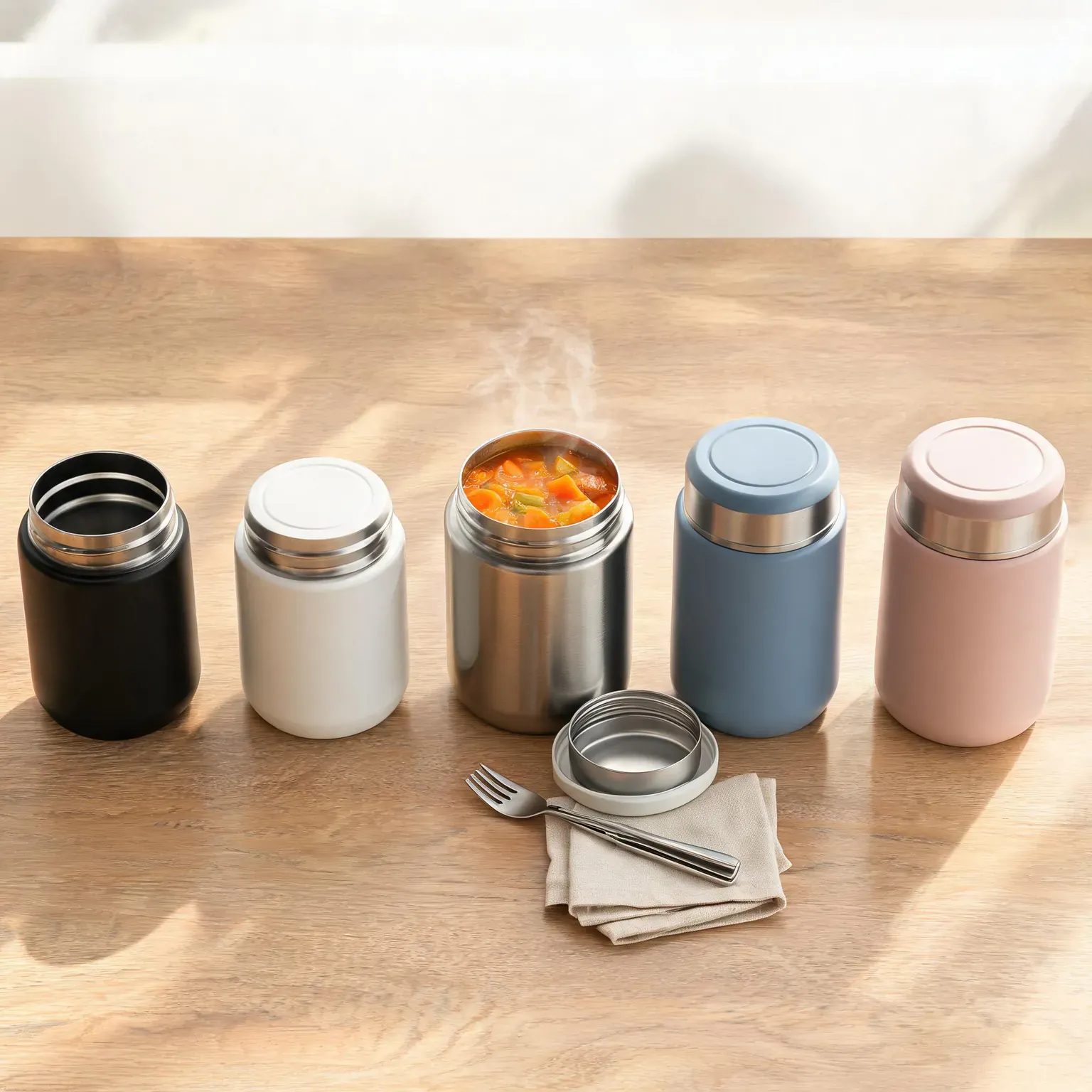
The best insulated food jars solve one narrow, daily problem: getting a genuinely hot — and genuinely safe — lunch to a desk, a job site, or a school cafeteria with no microwave in sight. We checked seven vacuum-insulated food jars sold on Amazon in 2026, read every manufacturer heat-retention claim against the live listing, and then tested those claims against the federal food-temperature rules that govern how long hot food can legally sit before it becomes a risk. The short version: only one jar here publishes a realistic hot-holding number, and the jar that keeps food hottest is not the one most roundups put first.
Affiliate disclosure: As an Amazon Associate I earn from qualifying purchases. We earn commission from qualifying purchases made through links on this page. This never affects our rankings or what we recommend.
What’s in this guide
- How we picked these food jars
- The 7 best insulated food jars at a glance
- 1. Thermos Stainless King (best overall)
- 2. Stanley Classic Legendary 24 oz (best for big appetites)
- 3. Hydro Flask 20 oz (best wide-mouth for soup)
- 4. YETI Rambler 16 oz (best build quality)
- 5. Zojirushi 17 oz (best heat retention)
- 6. Simple Modern Provision 12 oz (best small jar)
- 7. Goodful 16 oz (best budget)
- Sizes, mouths and lids: what actually changes the food
- The food-safety limit every jar listing ignores
- Where we disagree with the big reviewers
- Where paying more stops buying better
- The failure modes to watch for
- Who should skip these jars
- Frequently asked questions
- Sources and methodology
How we picked these food jars
We started from the food, not the flask. Every jar below was checked on its live Amazon listing on September 16, 2026, so the capacities, materials, item weights, warranty terms and rating counts here match what the page actually said that day. We then set those specs against the two kinds of evidence that exist for this category: the published food-safety rules from the MSU Extension temperature-danger-zone bulletin (which cites the USDA Food Safety and Inspection Service), the Healthline leftovers guidance reviewed by a registered dietitian, and the Washington State Department of Health food-safety myths page; and the handful of real hands-on tests that exist — Epicurious’ seven-thermos test and America’s Test Kitchen’s back-to-school gear guide, whose insulation numbers we used as our reference point for what a good vacuum seal should actually deliver.
Sourcing transparency: what this guide is and isn’t. We did not run our own thermal-chamber test, and we don’t claim to. What we did is read each live product listing (capacity, mouth diameter, material, item weight, dishwasher guidance, warranty text and rating count on September 16, 2026), compare those specs with the published food-safety rules and the hands-on testing named above, and check every “keeps food hot for X hours” claim against both the listing’s own fine print and the temperature those claims would have to hold to matter. Where our ranking differs from the big reviewers, we say so by name and explain why. Our full process lives on the How We Test & Choose Products page.
The 7 best insulated food jars at a glance
Every figure below was read off the live listing on September 16, 2026. The heat-retention column is the manufacturer’s own published claim, not our measurement — we flag where it is missing. Rating counts move week to week, so treat them as an order of magnitude rather than a precise score.
| Food jar | Capacity | Lid / mouth | Heat claim (listing) | Best for | Rating (Sep 16, 2026) |
|---|---|---|---|---|---|
| Thermos Stainless King | 16 fl oz | Wide mouth, folding spoon in lid | Hot 9 h / cold 14 h | Best overall | 4.6 / 7,000+ ratings |
| Stanley Classic Legendary | 24 fl oz | Wide mouth, integrated spork | Hot or cold 7 h | Best for big appetites | 4.7 / ~130 ratings |
| Hydro Flask Food Jar | 20 fl oz | Wide mouth, soft-grip lid | “For hours” — no figure published | Best wide-mouth for soup | 4.4 / 3,100+ ratings |
| YETI Rambler | 16 fl oz | Two-piece MagVent lid | “Until it’s time to eat” — no figure | Best build quality | 4.6 / ~340 ratings |
| Zojirushi Stainless Steel | 17 fl oz | Dimpled screw lid | “For hours” — no figure published | Best heat retention | 4.5 / 2,500+ ratings |
| Simple Modern Provision | 12 fl oz | Wide mouth, carry-handle lid | No hour figure published | Best small jar | 4.5 / 3,000+ ratings |
| Goodful Food Jar | 16 fl oz | Extra-wide mouth, handle lid | Hot up to 6 h | Best budget | 4.4 / 3,800+ ratings |
1. Thermos Stainless King — best overall

- Premium insulation: Take your favorite meals wherever you go with the Thermos Stainless King Food Jars; our food contain…
- Travel-ready: Equipped with a leak proof lid when closed and made with durable 18/8 stainless steel, our insulated lunch…
- Versatile usage: Our stainless steel insulated food jars include a foldable spoon and can be used as travel containers f…
The Stainless King is the jar we keep coming back to because it gets the two things that matter most right at once: it publishes a real heat number (hot for up to 9 hours, cold up to 14), and it puts the spoon inside the lid so there is nothing separate to forget. Epicurious reached the same conclusion after toting seven thermoses around New York City, naming the Thermos King its best all-inclusive pick and reporting that its “double-wall vacuum insulation kept our creamy squash soup hot from morning to lunch (roughly five hours), all while remaining cool to the touch externally.”
It is 16 fl oz in 18/8 stainless steel, dishwasher-safe on the top rack (Thermos recommends pre-filling with hot water for 5–10 minutes before you pack), and the lid doubles as a small insulated serving bowl — which is genuinely useful for soup because it lets the contents cool to an edible temperature without you holding a scalding steel cylinder. The twist is that this is one of the few listings in the category that says plainly what the jar can and cannot do; most competitors publish no hour figure at all.
What We Like
- Only pick here with a published heat figure that survives contact with reality: hot up to 9 hours, cold up to 14
- Folding stainless spoon lives in the lid, and the lid doubles as an insulated serving bowl
- Leak-proof when closed, with a pressure-relief stopper that stops soup spraying when you open it
- 18/8 stainless steel, exterior stays cool to the touch with hot food and sweat-free with cold
- Deepest rating pool of any jar here (7,000+), which is the best evidence available that the seals last
What Could Be Better
- Top-rack dishwasher only; the manufacturer still recommends hand-washing for best results
- 16 fl oz is a light-to-medium lunch — a big appetite will want the 24 oz class instead
- Some buyers report the seal on the 20 oz sibling size is less positive than on the 16 oz
- Needs a 5–10 minute hot-water pre-fill to hit its best numbers, which most listings never mention
Flaws but not dealbreakers: you have to remember the pre-fill, and the spoon adds a little weight to the lid. Neither is a reason to buy anything else at this price.
2. Stanley Classic Legendary 24 oz — best for big appetites

- KEEP IT HOT OR COLD: Our stainless steel food flasks for hot food are made with superior insulation that maintains tempe…
- MULTI-PURPOSE LEAK PROOF LID: The Stanley food jar with integrated spork is designed with a leakproof lid; The wide mout…
- EASY TO CLEAN: The wide mouth opening of the vacuum insulated food jar makes filling, pouring, and cleaning easy Every p…
If your lunch is a full portion of chili and rice rather than a cup of soup, the 24 oz Stanley is the one to buy. It is the largest jar in this guide, weighs 1.4 lb empty, and is backed by Stanley’s lifetime warranty — a term no competitor here matches. The integrated spork lives in the lid, the lid screws down hard enough to survive a backpack, and the whole thing is built from 90% recycled stainless steel with a finish that shrugs off a job-site life.
The catch is honest and worth saying out loud: the published claim is 7 hours hot or cold, which is two hours less than the Thermos, and the current Amazon listing carries only about 130 ratings. Stanley migrated this model to a new ASIN, so most of the 12,000-plus reviews that made the Classic Legendary famous still sit on the older listing. The jar did not get worse; the review pool simply restarted.
What We Like
- 24 fl oz — roughly 50% more food than every other jar here, and a genuine adult portion
- Lifetime warranty, the strongest term in the category
- Integrated spork in the lid and a wide mouth that makes filling, eating and cleaning easy
- Built from 90% recycled stainless steel; dishwasher-safe on the top rack
- Physically the most rugged jar here — it takes knocks that would dent a painted competitor
What Could Be Better
- Only 7 hours of claimed retention versus the Thermos King’s 9
- 1.4 lb empty — the heaviest jar in this guide, and noticeable in a day bag
- The new ASIN still has a thin rating pool (~130), so long-term reliability evidence is limited
- 24 oz is too much food for anyone who eats a light lunch
Flaws but not dealbreakers: the rating count looks alarming next to a 12,000-review legacy listing, but that is an ASIN migration artifact, not a quality signal. Buy it for capacity and the warranty.
3. Hydro Flask 20 oz Food Jar — best wide-mouth for soup

- 20 OZ AGAVE GREEN INSULATED FOOD JAR: A durable, leakproof insulated 8 oz. container for lunch and adventure, this compa…
- HOT STAYS HOT. COLD STAYS COLD. The ideal food container for hot and cold. The insulated thermal food jar keeps contents…
- LEAKPROOF: Say goodbye to leaky soups and messy munchies. The Hydro Flask food container is leakproof when closed. Toss …
The Hydro Flask is the jar we reach for when the lunch is wet. Its 20 oz body (590 ml) is the second-largest here, the soft-grip lid opens with a twist rather than a pull, and the pro-grade stainless interior genuinely does not carry flavour between meals — yesterday’s chili does not show up in today’s yoghurt. Everything, lid included, goes in the dishwasher, which is more than the Thermos or the Stanley will promise.
The trade-off is evidence. Hydro Flask publishes no heat-retention figure at all, and the rating pool tells a split story: buyers who love it describe soups and stews staying warm through a workday, while a meaningful minority report the opposite. That is the honest state of a jar with a 4.4 average and 3,100+ ratings — good, but not a sure thing the way the Thermos is.
What We Like
- 20 oz / 590 ml capacity — the sweet spot for a full bowl of soup or stew
- Fully dishwasher-safe, lid and jar, with no hand-wash caveat
- Wide mouth and soft-grip lid are easy to fill, open and clean
- No flavour transfer between meals — the strongest “pure taste” case in this guide
- Leak-proof when closed, so it survives being tossed in a bag
What Could Be Better
- No published heat-retention figure, so you are buying the brand’s reputation rather than a number
- Temperature retention is the most polarising theme in its reviews — some buyers call it useless for hot food
- 4.4 stars is the joint-lowest average here
- Durability reviews split too: years of service for some, a short life for others
Flaws but not dealbreakers: the inconsistent heat reports are the reason this is third and not first. If you pre-heat the jar with boiling water — Hydro Flask’s own instructions — the complaints largely disappear.
4. YETI Rambler 16 oz Food Jar — best build quality

- The Rambler 16 oz. Food Jar was designed to help you stay fueled wherever your adventure takes you
- MAGVENT LID – 100% leakproof when properly sealed, the two-piece lid vents out hot air as it opens and comes apart for e…
- 18/8 STAINLESS STEEL – Made with kitchen-grade stainless steel, so it’s puncture- and rust-resistant
YETI’s Rambler food jar is the one you buy if you care more about how a thing feels in year five than about the price tag in week one. The two-piece MagVent lid vents hot air as it opens — no pressure pop, no soup on your shirt — and it comes fully apart for cleaning. Kitchen-grade 18/8 stainless steel is puncture- and rust-resistant, and the whole jar, lid included, is dishwasher-safe.
It is also the most expensive jar here by a wide margin, and its rating pool is the smallest of the fully-established picks (~340 ratings) because it is a newer product. YETI publishes no hour figure — just “keeps cold food cold and hot food hot until it’s time to eat” — so you are paying for materials, tolerances and the lid design, not for a spec sheet.
What We Like
- MagVent two-piece lid vents pressure as it opens and dismantles for a genuinely clean wash
- Puncture- and rust-resistant 18/8 stainless steel with the best fit and finish here
- Fully dishwasher-safe, both jar and lid
- 100% leak-proof when properly sealed — the lid is the differentiator
- Best-in-guide durability reputation across its reviews
What Could Be Better
- The most expensive jar in this guide by a clear margin
- No published heat-retention figure, on a product that costs the most
- 16 fl oz, so it holds no more food than the cheaper Thermos
- Small rating pool (~340) because the model is relatively new
Flaws but not dealbreakers: you are paying YETI money for a lid and a warranty-quality feel. If you want the best heat number per dollar, the Thermos is above it.
5. Zojirushi Stainless Steel Food Jar 17 oz — best heat retention

- Eliminates the use of wasteful disposable containers, or the use of a microwave or refrigerator
- Dimples on the lid make it easier to grab and open
- Clear-coated finish reduces fingerprints and makes cleanup easy
Zojirushi is the name that keeps surfacing in independent testing, and it is the small, tall shape that does it: at 3⅝″ × 3⅝″ × 6″ and just 11 oz empty, this jar slides into a lunch bag that would choke on a wide Stanley. The dimpled lid is easier to grip than a smooth one, the clear-coated finish resists fingerprints, and on heat retention the reviews are unusually consistent — multiple buyers report food still hot after six to ten hours, which lines up with the brand’s reputation.
What the listing does not have is a published hour figure, a spoon, or a dishwashing promise: Zojirushi’s own copy is deliberately plain, and buyers report mixed experiences on value, cleaning and leak-proofing. It is a specialist tool — buy it for retention and footprint, not for features.
What We Like
- The most consistent heat-retention reports of any jar here, with buyers citing 6–10 hours
- Tall, narrow footprint (3⅝″ diameter) fits bags and cup holders that wide jars will not
- Lightest full-size jar at 11 oz empty
- Dimpled lid and clear-coated, fingerprint-resistant finish
- BPA-free, and designed to replace both a microwave and a fridge at lunchtime
What Could Be Better
- No published heat figure, no spoon in the lid, and no bowl-lid
- Reviews are mixed on value for money and on leak-proofing
- 17 oz fills a narrow column, so solid food is harder to eat straight from the jar
- Cleaning is more fiddly than the dishwasher-safe picks
Flaws but not dealbreakers: this is the jar for soup, curry and porridge on a cold commute. If you want to eat a solid lunch out of the container with one utensil, look at the Thermos instead.
6. Simple Modern Provision 12 oz — best small jar

- INSULATED FOOD JAR FOR HOT & COLD MEALS: The Provision thermos keeps soup, oatmeal, and smoothie bowls at the temperatur…
- LEAK PROOF & DISHWASHER SAFE: A leak proof lid keeps soups and smoothie bowls contained in a lunch bag, backpack, or wor…
- STAINLESS STEEL WITH BUILT-IN HANDLE: A convenient handle makes the Provision easy to carry to work or the car, and the …
At 12 oz and 9.76 oz empty, the Provision is the lightest and smallest jar in this guide, and the carry handle built into the lid is the detail that makes it work for children: buyers report kids opening it themselves, and the same reviews note it holds milk or yoghurt cold for about six hours. It is food-grade 304 (18/8) stainless steel inside, made without BPA, lead or phthalates, and it is dishwasher-safe.
Serious Eats named the Provision line its best food thermos, citing insulation and dishwasher-safety, which is a strong endorsement for a jar this cheap. The honest caveat is durability: reviews split between “lasts for years” and “broke on first use”, which is what you would expect at the bottom of the price band.
What We Like
- Lid handle makes it genuinely child-friendly — kids can open it themselves
- Lightest jar here (9.76 oz empty) and the easiest to pack
- Food-grade 304 (18/8) stainless steel, no BPA, lead or phthalates
- Dishwasher-safe with a leak-proof lid
- Cheapest way into a properly insulated jar
What Could Be Better
- 12 oz is a snack or a small child’s lunch, not an adult portion
- Durability is the most divided theme in its reviews
- No published heat-retention figure
- Narrower lid opening makes it slower to fill than a 20–24 oz jar
Flaws but not dealbreakers: at this price a shorter service life is a fair trade. Treat it as a first jar or a kid’s jar, not a buy-it-for-life container.
7. Goodful 16 oz — best budget

- HOT OR COLD FOR HOURS ON END: Features a vacuum insulation technology to retain both hot and cold food. Keeps contents h…
- PREMIUM CONSTRUCTION: Crafted with double wall stainless steel for ultimate durabilty and long-lasting quality.
- LEAKPROOF LID: The screw-on lid is leakproof and the food jar itself is sweatproof so you can place the food jar in a pu…
The Goodful is the jar to buy when the budget is the constraint and you still want a real double-wall vacuum container. It publishes the number most cheap jars hide — hot for up to 6 hours, cold for 12 — and it carries the largest rating pool of any budget pick here (3,800+). The carry handle is built into the lid so it hooks onto a bag strap, the mouth is extra-wide for easy filling, and it fits standard cup holders.
The concessions are real but predictable at this price: the finish is hand-wash only, 6 hours of heat is the shortest claim in this guide, and the listing does not name a warranty. For a commuter whose lunch is eaten within four hours of packing, none of that matters.
What We Like
- Publishes real numbers — hot up to 6 hours, cold up to 12 — instead of vague marketing copy
- Largest rating pool of any budget jar here (3,800+ ratings at 4.4 stars)
- Carry handle in the lid and an extra-wide mouth for easy filling
- Leak-proof and sweat-proof, and it fits standard cup holders
- Cheapest jar here that actually specifies its insulation performance
What Could Be Better
- 6 hours of heat retention is the shortest claim in this guide
- Hand-wash only — no dishwasher, unlike the top three picks
- No warranty stated on the listing
- Plain build quality next to the YETI or Stanley
Flaws but not dealbreakers: hand-washing a single jar takes about thirty seconds. This is the pick if you want honest insulation for the least money.
Sizes, mouths and lids: what actually changes the food
Three specifications decide whether a jar works for your lunch, and none of them is the star rating.
- Capacity sets the meal, not the jar. 10–12 oz is a snack or a child’s lunch; 16–17 oz is a normal adult soup or a light grain bowl; 20–24 oz is a full adult portion. A jar that is too small gets packed with too little food, and the food goes cold faster because the air gap insulates almost nothing.
- Mouth width decides how you eat. A wide mouth lets you fill from a ladle, eat with a spoon, and clean with a sponge. A narrow mouth holds heat marginally better and fits tighter bags, but you will decant solid food onto something else.
- The lid is where the design lives. A spoon-in-lid (Thermos) means nothing to forget; a bowl-lid means you can let soup cool without holding hot steel; a vented lid (YETI’s MagVent) means no pressure spray when you open it. Lid gaskets are also the first thing to fail on any jar, which is why seal quality shows up in reviews more than any other spec.
Spec-claim reality check. While reading these listings we found the identical sentence — that the insulation “effectively blocks temperature conduction and convection, keeping food warm for 10 hours and cold for 10 hours” — on three unrelated jars from three different brands. That is boilerplate from a marketplace copy template, not a test result from any of them, and it is exactly the kind of number you should discount when no lab is named. The claims we trust here are the ones with a specific hour count tied to a specific jar (Thermos 9/14, Stanley 7, Goodful 6) and the ones an independent tester has reproduced.
The food-safety limit every jar listing ignores
Here is the thing no product page will tell you: how long food stays hot and how long food stays safe are two different clocks, and the second one is shorter. Perishable food has to stay at or above 140 °F to stay out of what food-safety agencies call the danger zone. The MSU Extension bulletin puts it plainly: the danger zone “is the range of temperatures between 40 °F and 140 °F, which has been shown to promote and encourage the growth of bacteria in perishable foods,” and the rule that follows is to “store hot perishable foods at or above 140 °F.”
The discard rule is the one that matters for a packed lunch. Healthline, in guidance reviewed by a registered dietitian, states that “to keep foods out of the danger zone, refrigerate or freeze leftovers within 2 hours,” tightening to one hour once the ambient temperature passes 90 °F. The Washington State Department of Health adds the same limit from the other direction: if food is left out where it is 90 °F or hotter, “food should be refrigerated or discarded within just 1 hour.”
What this means for a food jar is simple arithmetic. A jar that holds soup at 150 °F for three hours is doing real work. A jar that lets it slide to 120 °F by hour two is holding your lunch in the danger zone, and no amount of good insulation marketing changes that. This is why the published hour figures matter, why we flag every jar here that hides one, and why the pre-fill trick — hot water in the jar for 5–10 minutes before you pack — is the single highest-value habit in this whole guide. Zojirushi’s advice to reheat to at least 165 °F before packing, which Healthline also gives, exists for the same reason: start hot, stay hot, stay safe.
Where we disagree with the big reviewers
Four well-known outlets have ranked food jars, and we do not match all of them. That is not a quibble about taste — each disagreement is about what “best” should mean.
- Wirecutter puts Zojirushi first. Its food-thermos review, behind the New York Times paywall, says it compared 22 thermoses, tested 10, and concluded the Zojirushi is best on heat retention. We agree on retention — that is why Zojirushi is our #5 rather than lower — but we rank it below three jars that publish a heat figure, include a spoon and go in a dishwasher. Retention is one axis; lunch is several.
- Serious Eats names the Simple Modern Provision its best food thermos, citing insulation and dishwasher-safety. We like the Provision and it is our best small jar, but its ratings split hard on durability (“lasts for years” versus “broke on first use”), and 12 oz is a snack for most adults. It wins its size class, not the category.
- The Spruce Eats has named the Stanley Classic Legendary its best overall and the Thermos FUNtainer its best-for-kids pick. We put the Stanley second because its published claim (7 hours) is shorter than the Thermos King’s (9) and it is the heaviest jar here. Capacity is the one axis where Stanley wins outright.
- Epicurious, oddly, is the outlet we agree with most, and the one most shoppers have never read: its seven-thermos test singled out the Thermos King for keeping soup hot across roughly five hours of real commuting. That matches our #1 pick rather than the higher-profile rankings above it.
The pattern is worth noticing: the outlets with the widest reach tend to rank on a single axis — retention, or price, or brand. A jar has to hold heat, seal, open cleanly and fit the food you actually eat. We ranked on all four.
Where paying more stops buying better
Nothing in a vacuum flask is expensive to make. The price you pay buys three things in roughly this order: the quality of the vacuum seal, the lid mechanism, and the brand on the side. That gives the category a clean set of tiers.
- Budget (roughly $15–25). You get a real double-wall stainless jar with a 6-hour heat claim and no warranty. This is where the Goodful and the Simple Modern Provision sit, and it is an entirely reasonable place to stop if your lunch is eaten within four hours of packing.
- Mid (roughly $25–40). This is the value peak of the category. Here you get a published 9-hour heat claim, a spoon in the lid, dishwasher-safe parts and 7,000+ ratings of reliability evidence. The Thermos Stainless King defines this tier, and nothing above it gets materially better at holding soup hot.
- Premium (roughly $45 and up). You are buying materials, lid engineering, warranty length and brand. YETI’s MagVent lid and Stanley’s lifetime warranty are real, but neither makes the food hotter than the mid tier, and neither publishes a heat number the mid tier does not already beat.
Our stopping point is the top of the mid tier. Past roughly $40 you are buying lid mechanics, durability confidence and the logo — worth it for a specific job, but the food comes out at the same temperature as a jar that costs half as much.
The failure modes to watch for
We read the customer-review summaries on each listing and the pattern is consistent across brands. These are the six ways a food jar actually disappoints people.
- The gasket stops sealing. The single most common complaint theme. On the Thermos King, buyers report that the 20 oz size does not seal as positively as the 16 oz — some say it seals perfectly, others say it does not. A tired gasket is also the usual cause of a leak into a bag.
- Warm-in-the-morning, cold-by-noon. The second big theme, and it clusters on jars with no published heat figure. The Hydro Flask reviews split almost evenly between “stays warm” and “doesn’t keep food warm at all”. Almost always the fix is pre-heating the jar — which those listings mention nowhere.
- Short service life at the bottom of the price band. The Simple Modern Provision reviews divide between “lasts for years” and “broke after first use”. Cheap jars can be excellent value or a one-semester purchase; the ratings will not tell you which one you got.
- Pressure spray on opening. Sealed hot soup builds pressure. Jars without a vent or a pressure-relief stopper spray when they open. Thermos addresses this with an explicit relief stopper; YETI with its venting MagVent lid.
- Cleaning nooks. Reviewers on the Zojirushi flag cleaning as a mixed experience, and hand-wash-only budget jars add friction every single day. Dishwasher-safe jars with removable gaskets win on this measure on day 400, not day 4.
- Capacity that flatters the listing. A 12 oz jar filled to the brim holds 12 oz of liquid and far less of anything solid. If the listing pushes a small jar as an adult lunch, the reviews will tell you otherwise.
Who should skip these jars
- Skip every jar here if you have a microwave at lunch. A microwave reheats hotter, faster and for free; a vacuum jar only holds heat you already had.
- Skip the Thermos Stainless King if you eat a large or solid lunch — 16 oz of curry will not fill you, and a wide-mouth jar is easier for rice and pasta.
- Skip the Stanley Classic Legendary 24 oz if you walk or cycle to work; 1.4 lb empty is a lot to carry for one meal.
- Skip the Hydro Flask if inconsistent heat reports would bother you. The Thermos publishes a number; Hydro Flask does not.
- Skip the YETI Rambler if value is the deciding factor. You can get equal heat performance for half the money.
- Skip the Zojirushi if you want to eat straight from the container with a spoon — it is a narrow, deep flask built for soup and porridge, not a bowl.
- Skip the Simple Modern Provision and the Goodful if you need a full adult lunch or a dishwasher-safe jar; both are small-jar and lighter-duty picks.
Frequently asked questions
How long does an insulated food jar actually keep food hot?
Between six and nine hours for the jars in this guide, and the range is wide because the claims are. Only four of the seven publish a number: Thermos says 9 hours hot, Stanley 7, Goodful 6, and the rest publish nothing at all. Two habits close much of the gap — fill the jar with hot water for 5–10 minutes before you pack, and pack food as hot as you safely can.
Is food from a food jar safe to eat after five hours?
Only if it stayed at or above 140 °F. Perishable food left between 40 °F and 140 °F for more than two hours — one hour above 90 °F — should be discarded rather than eaten. If the jar is doing its job, five hours is fine; if the food has cooled to room temperature, it is not.
Should I buy a 16 oz or a 24 oz jar?
16 oz is a normal adult soup or a light grain bowl; 24 oz is a full meal for a big appetite. Small jars also cool faster because a small volume of food surrounded by air loses heat quickly. If you are between sizes, buy the larger one and fill it properly — a half-empty big jar beats a packed small one.
Can I put a food jar in the dishwasher?
Mostly, but check the specific listing. The Hydro Flask and YETI jars are fully dishwasher-safe, lid included. The Thermos and Stanley are top-rack only and the manufacturers still recommend hand-washing. The Goodful is hand-wash only. Never submerge a lid gasket in boiling water or flexible seals will harden faster.
Does a more expensive jar keep food hotter?
No — past roughly $40 you are paying for lid engineering, materials and warranty length rather than heat. The $30-class Thermos publishes a longer hot-holding claim (9 hours) than two jars that cost considerably more. Spend up for the lid you want, not for a hotter lunch.
Sources and methodology
Product data (capacity, mouth type, materials, item weight, dishwasher guidance, warranty text and rating counts) was read from each live Amazon listing on September 16, 2026. Food-safety and temperature rules come from the MSU Extension bulletin “Keeping Foods Out of the Temperature Danger Zone” (which cites the USDA Food Safety and Inspection Service), the Healthline leftovers guidance, and the Washington State Department of Health food-safety myths page. Hands-on testing and category context come from Epicurious’ “Tested and Approved: The Best Food Thermos” (seven thermoses carried around New York City) and America’s Test Kitchen’s back-to-school gear guide. Rankings from other outlets are named and linked where we disagree with them; Wirecutter’s food-thermos review sits behind the New York Times paywall, so we cite its stated conclusion rather than its detail.
Two of the sources above are bot-protected and would not render for our scripts, so we name their published findings rather than quoting them: The Spruce Eats’ hot-food-thermos roundup and Serious Eats’ four-best-food-thermoses test. Prices and rating counts move week to week; the food-temperature rules do not. For how we work, see How We Test & Choose Products.
Related reading: the best lunch boxes, the best electric lunch boxes, and how we test and choose products.