Smart home security in 2026 is cheap, capable and quietly easy to get wrong. Smart home security no longer means a professional installation and a multi-year contract: a 14-piece alarm kit, a Wi-Fi deadbolt and a solar 4K camera now cost less than one installed system used to, and all of them are same-week Amazon purchases. The difference between a system that protects your home and one that just texts you comes down to a handful of settings, one subscription decision, and a realistic idea of what each device can and cannot do. Below we rank the seven devices we would actually buy, show what the listings do and do not publish, and mark the point where paying more stops buying more protection.
As an Amazon Associate I earn from qualifying purchases. We earn commission from qualifying purchases made through links on this page. This never affects our rankings or what we recommend. Read our affiliate disclosure.
In this guide
- Our picks at a glance
- Compare the seven picks
- The 7 best smart home security devices for 2026
- Spec truth: what each listing actually publishes
- What you get at each price tier
- Where our ranking disagrees with other testers
- The failure modes to expect
- Manufacturer claims vs the NIST and FTC baseline
- 8 settings to change today
- How we test and choose
- Frequently asked questions
- Sources
Our picks at a glance
- Best overall system: Ring Alarm 14-Piece Kit (newest model) — $329.99
- Best no-contract system: SimpliSafe 11 Piece Wireless Home Security System Gen 3 with Wireless — $244.99
- Best smart lock: Schlage Encode Smart WiFi Deadbolt Lock with Century Trim — $229.00
- Best value smart lock: Yale WiFi Smart Lock Deadbolt with Keypad — $169.99
- Best outdoor camera: Tapo 4K Outdoor Pan/Tilt Wireless Security Camera — $115.99
- Best video doorbell: Ring Battery Doorbell — $99.99
- Best indoor camera: Ring Pan-Tilt Indoor Cam (newest model) — See all around your home or — $59.99
Compare the seven picks
| Product | Standout spec | Price | Track record | Deal |
|---|---|---|---|---|
 Ring Ring Alarm 14-Piece Kit (newest model), Wireless smart home or business securi |
A great fit for 2-4 bedroom homes, this Alarm Kit includes one Base Station, two Keypads, eight | $329.99 |
#1 in Alarm Systems |
In Stock |
 SimpliSafe SimpliSafe 11 Piece Wireless Home Security System Gen 3 with Wireless Indoor H |
Simple to set up. Seriously secure. Get ready to protect right out of the box. Just plug in the | $244.99 $335.45 |
#111 in Home Security Systems |
27% OFF In Stock |
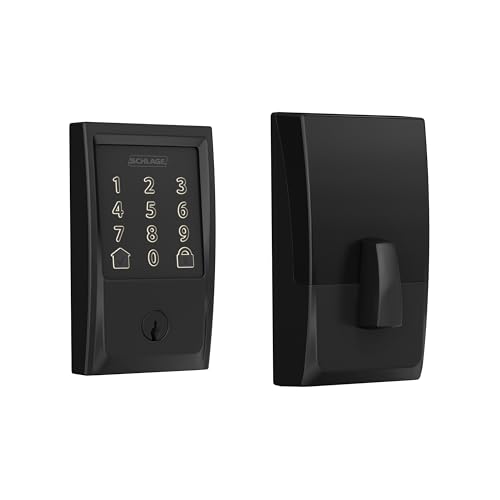 SCHLAGE Schlage Encode Smart WiFi Deadbolt Lock with Century Trim, Matte Black |
ANYWHERE ACCESS: With built-in WiFi compatibility, you can easily and securely connect your Sch | $229.00 |
#2 in Deadbolts |
In Stock |
 Yale Security Yale WiFi Smart Lock Deadbolt with Keypad, Keyless Entry, Black Suede |
MORE WAYS TO ENTER: Hands full of groceries? This keyless entry door lock recognizes when you’r | $169.99 $259.99 |
#13 in Deadbolts |
35% OFF In Stock |
 Tapo Tapo 4K Outdoor Pan/Tilt Wireless Security Camera, Solar Charging, C660 KIT |
THIS MAY BE THE PERFECT HOME SECURITY CAMERA – It combines 4K resolution, 360° pan/tilt coverag | $115.99 $169.99 |
#3 in Surveillance Video Recorders |
32% OFF In Stock |
 Ring Ring Battery Doorbell, Home or business security with Head-to-Toe video, Live |
See more at your home or business — Get 66% more vertical coverage with the latest version of R | $99.99 |
#4 in Surveillance Systems |
In Stock |
 Ring Ring Pan-Tilt Indoor Cam (newest model) — See all around your home or business |
Find your perfect angle — Pan 360° around your home or business and tilt up and down, all in th | $59.99 |
#7 in Cameras & Monitors |
In Stock |
The 7 best smart home security devices for 2026
Ring Alarm 14-Piece Kit — the best complete system
Ring’s 14-piece kit is the fastest way to put a complete, expandable alarm system into a 2–4 bedroom home. It is the most expensive single purchase on this page, and the only one that replaces a contract-locked professional install.
What we like
- A complete 2–4 bedroom kit out of the box: base station, two keypads, eight contact sensors, two motion detectors and a range extender
- Arm and disarm from the Ring app, and see every Ring device alongside the alarm
- Optional 24/7 professional monitoring is month-to-month, so you are not signing a multi-year contract
Flaws but not dealbreakers
- Cellular backup, remote arming and voice arming through Alexa all need a Ring Protect plan, sold separately
- Sensor add-ons are bought individually, so a larger home pushes the real cost past the sticker price
Who should skip it: Skip it if you rent and cannot mount contact sensors on doors and windows, or if you want remote features that work without any subscription at all.
SimpliSafe 11-Piece Gen 3 — the best no-contract alternative
SimpliSafe bundles 11 pieces, including a wireless indoor HD camera, for less than the Ring kit, and its monitoring is explicitly no-contract. SafeWise’s testers, who have evaluated alarm systems since 2013, name SimpliSafe their best overall pick.
What we like
- Eleven pieces including a Smart Alarm wireless indoor camera, with a base station that needs no wiring or drilling
- No-contract monitoring: self-monitor for free, or add professional monitoring month-to-month
- Motion sensors cover a 35-foot, 90-degree field and are designed to tolerate pets under 60 lbs
Flaws but not dealbreakers
- The Amazon rating pool is a fraction of Ring’s — roughly 400 ratings against close to 30,000 on the Ring Alarm kit
- Two-way audio with monitoring agents and cloud video clips both depend on an active plan
Who should skip it: Skip it if you want the largest possible user-review history behind the purchase, or if you already own Ring cameras and want a single app for everything.
Schlage Encode Smart WiFi Deadbolt — the best lock for a front door
Schlage’s Encode is the lock we would put on a front door: built-in Wi-Fi so there is no hub to buy, a real keypad, and a BHMA-certified residential rating the listing states is the highest available.
What we like
- Built-in Wi-Fi means no hub or bridge, and it works with Alexa and Google Home
- Manage up to 100 access codes, view lock history, and set a built-in alarm for door movement or forced entry
- BHMA-certified for security, durability and finish — the listing claims the highest residential rating from BHMA’s testing
Flaws but not dealbreakers
- At $229 it is the most expensive lock here and the only one with no discount at the time of writing
- Four AA batteries last about six months with typical use, so budget for replacements twice a year
Who should skip it: Skip it if your door has a non-standard bore or backset, or if this is a back door that does not need keyless entry.
Yale Assure Lock 2 — the best value keyless deadbolt
Yale’s Assure Lock 2 connects straight to 2.4 GHz or 5 GHz Wi-Fi with no hub, supports phone and Apple Watch control, and was discounted 35% at the time of writing.
What we like
- No hub or bridge: it joins 2.4 or 5 GHz Wi-Fi directly and is driven from the Yale Access app
- Hands-free auto-unlock, DoorSense to confirm the door is actually shut, and unlimited shareable access codes
- Grade 2 BHMA certification, rated from −22°F to 140°F
Flaws but not dealbreakers
- The lowest-rated pick on this page — 3.7 stars from roughly 1,400 ratings, against 4.3 or better for the other two locks
- The Yale Access app layer is limited to the US and Canada, so remote app features stop working outside those countries
Who should skip it: Skip it if you want the highest customer satisfaction in this roundup — the 3.7-star rating is the weakest here, discount or not.
Tapo C660 4K Solar — the best outdoor camera
The C660 is the only outdoor camera here that never touches a wall outlet or a monthly fee: a 4K sensor, 360° pan, 98° tilt, a solar panel and a 10,000 mAh battery, storing clips on a microSD card at no cost.
What we like
- 4K resolution with 360° pan and 98° tilt, plus motion tracking that follows the subject
- Solar panel and 10,000 mAh battery — rated to keep running on 45 minutes of sunlight a day
- Person, vehicle and pet detection with no subscription, and microSD storage up to 512 GB
- IP65 weatherproofing and dual-band 2.4/5 GHz Wi-Fi
Flaws but not dealbreakers
- 24/7 continuous capture needs a microSD card or the H500 CentralHub (sold separately); the camera alone records event clips
- The solar panel needs a genuinely sunny mounting spot — a shaded porch will drain the battery
Who should skip it: Skip it if you cannot mount anything on the outside of your home, or if you need 24/7 recording without buying a card or a hub.
Ring Battery Doorbell — the best video doorbell
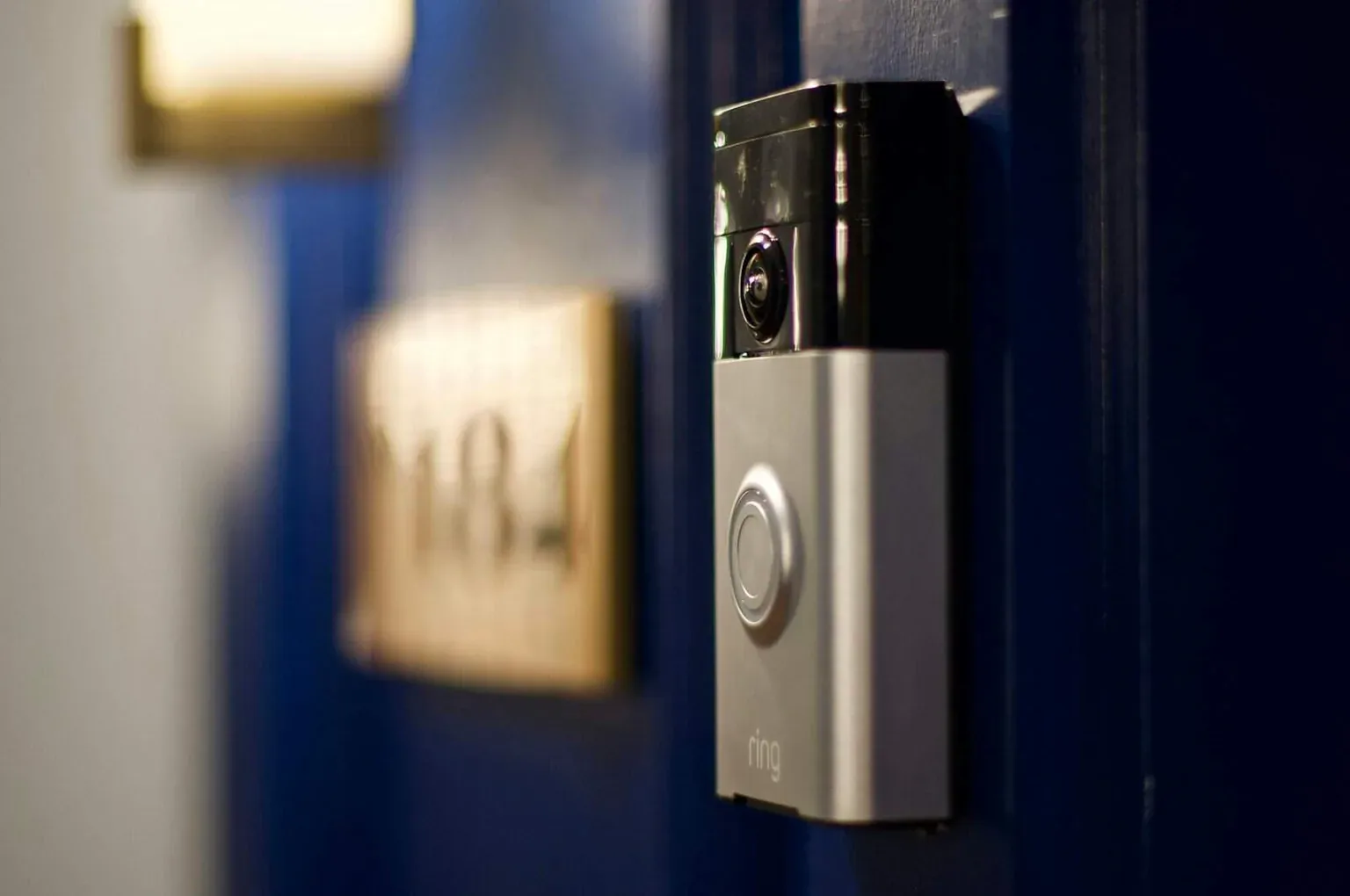
Ring’s newest battery doorbell adds head-to-toe video — 66% more vertical coverage than the previous version — and installs without touching your doorbell wiring.
What we like
- Head-to-toe video and a built-in battery that recharges over USB-C, so no wiring is needed
- Live View and two-way talk from the Ring app, with real-time motion alerts
- Custom Alexa announcements on Echo devices
Flaws but not dealbreakers
- Person and package alerts, and any recorded history, require a Ring Protect subscription
- Battery doorbells need periodic recharging, so mount it somewhere you can reach
Who should skip it: Skip it if you already run a wired doorbell you are happy with, or if you refuse to pay a subscription for recorded clips.
Ring Pan-Tilt Indoor Cam — the best indoor camera
Ring’s Pan-Tilt Indoor Cam is the cheapest way to add real indoor coverage — 360° pan, colour night vision, and by far the deepest rating pool on this page.
What we like
- 360° pan coverage with tilt, so one camera covers a whole room
- HD video with colour night vision, plus two-way talk
- The deepest rating pool here — 4.7 stars from roughly 45,900 ratings
Flaws but not dealbreakers
- 24/7 recording and person or package alerts require a Ring Protect subscription
- It is an indoor-only camera with no weatherproofing
Who should skip it: Skip it if you need outdoor coverage, or if you want local storage without a subscription.
Spec truth: what each listing actually publishes
Every roundup quotes the same headline numbers. Here is what the live Amazon listings actually state — and the spec each one leaves out, which is usually the number that decides whether a device suits your home.
| Pick | What the listing does publish | What it does not publish |
|---|---|---|
| Ring Alarm 14-Piece Kit | 14 pieces: 8 contact sensors, 2 motion detectors, 2 keypads, base station, range extender; month-to-month monitoring available | No radio range per sensor and no sensor battery-life figure are published |
| SimpliSafe 11-Piece Gen 3 | 11 pieces including an indoor HD camera; motion rated to 35 ft with a 90° field of view; pets under 60 lbs tolerated | The listing bullets publish no camera resolution and no sensor battery life |
| Schlage Encode Deadbolt | Built-in Wi-Fi with no hub; up to 100 access codes; roughly six months on four AA batteries; door thickness 1-3/8 in to 1-3/4 in | No wireless protocol is named, and encryption is described only as “secure, encrypted connection” |
| Yale Assure Lock 2 | 2.4 GHz or 5 GHz Wi-Fi with no hub; Grade 2 BHMA certified; rated −22°F to 140°F | No battery-life figure in months and no radio protocol named |
| Tapo C660 4K Solar | 4K resolution; 360° pan and 98° tilt; 10,000 mAh battery; solar panel rated at 45 minutes of sun a day; IP65; microSD up to 512 GB | No frame rate and no published night-vision range are stated |
| Ring Battery Doorbell | Head-to-toe video (66% more vertical coverage than the previous version); USB-C rechargeable built-in battery | The bullets publish no resolution figure and no battery-life hours |
| Ring Pan-Tilt Indoor Cam | 360° pan with tilt; HD video with colour night vision; plug-and-place install | Resolution is stated only as “HD”, with no pixel count or tilt angle published |
What you get at each price tier — and where to stop
Smart home security is unusual in that the hardware gets cheap fast while the recurring cost stays stubborn. Here is what each bracket actually buys in 2026.
- Under $100: a single device. The Ring Pan-Tilt Indoor Cam ($59.99) or the Ring Battery Doorbell ($99.99) covers one room or one door — useful, but on Ring hardware the recorded clips still sit behind a Ring Protect plan.
- $100–$180: real outdoor coverage or real keyless entry. The Tapo C660 ($115.99) adds 4K, 360° and solar with no subscription, and the Yale Assure Lock 2 ($169.99) adds a keyless deadbolt with a Grade 2 BHMA rating.
- $180–$260: pro-grade locks and multi-piece kits. The Schlage Encode ($229.00) claims the highest residential BHMA rating, and the SimpliSafe 11-piece kit ($244.99) includes an indoor camera with no-contract monitoring.
- $300 and up: the flagship kits. The Ring Alarm 14-Piece Kit ($329.99) buys piece count, a range extender and one-app ecosystem — not more protection per dollar.
- Where to stop: past roughly $300–$350 of hardware, extra money buys packaging, finish and ecosystem rather than materially better protection. What does keep costing is monitoring: Security.org lists Ring Alarm at $19.99 a month and SimpliSafe at $22.99 a month, both month-to-month — and it notes many insurers discount premiums by two to 15 percent for a professionally monitored system, which is worth one call to your agent.
Where our ranking disagrees with other testers
We do not pretend this ranking is the only defensible one. Here is exactly where we differ, and why.
- SafeWise (tested since 2013, 25+ in-home tests) crowns SimpliSafe best overall and labels Ring “best value”; we put Ring first and SimpliSafe second. SafeWise is ranking the service experience, and their write-up credits SimpliSafe with crisp video and real-time interventions from monitoring agents. We rank the hardware for people buying from Amazon: the Ring kit carries close to 30,000 ratings against SimpliSafe’s roughly 400, and Ring keeps every device in one app. If service quality outranks ecosystem, buy SimpliSafe — both appear on SafeWise’s shortlist and ours, which is the useful part.
- Most tester lists lead with ADT, Vivint or Frontpoint; none of those three are on Amazon the way these are. They are multi-year-contract, professionally installed services, and SafeWise ranks them for cameras or installation rather than for value. We deliberately limited this page to kit you can buy, install and cancel yourself.
- On cameras we lead with a no-fee camera rather than a subscription ecosystem. The Tapo C660 records to a microSD card with no monthly fee, which no Ring camera here does. That is a different priority from reviewers who rank cameras by app polish.
The failure modes to expect
None of these devices is fragile, but six problems come up again and again with this class of hardware. Knowing them in advance is the difference between a system you trust and one you disable at 2 a.m.
- The subscription gap. Features advertised as smart — recorded history, person and package alerts, remote arming, cellular backup — sit behind a paid plan on most Ring hardware. Check the listing bullet before you assume a feature is included.
- Wi-Fi band mismatches. Cameras and locks that only speak 2.4 GHz are the classic cause of a device that drops offline. Both the Yale lock and the Tapo C660 advertise dual-band 2.4/5 GHz support for exactly this reason.
- Solar and battery realities. The Tapo C660’s own spec asks for 45 minutes of direct sun a day; a shaded porch will not deliver it. Locks are no better: Schlage rates four AA batteries at about six months of typical use.
- Pet-triggered false alarms. Motion sensors are specified for pets under 60 lbs. A heavier or more active animal will set them off, and constant notifications are how people end up ignoring a real alert.
- Hub and ecosystem lock-in. Add-on sensors, Zigbee accessories and vendor apps quietly keep you inside one brand. Buy the ecosystem you are willing to stay in.
- The discount is not a satisfaction signal. The Yale Assure Lock 2 is the cheapest lock here at 35% off, and it is also the lowest-rated pick at 3.7 stars from about 1,400 ratings. A deep discount on a thin rating pool deserves a second look.
Manufacturer claims vs the NIST and FTC baseline
Security claims are the easiest thing in this category to overstate, so here is the standard we check them against, and two claims worth reading closely.
- The baseline is public. NIST’s Cybersecurity for IoT Program publishes NISTIR 8425, the “Profile of the IoT Core Baseline for Consumer IoT Products”, alongside NIST IR 8259r1 for manufacturers — the activities a vendor is expected to perform from pre-market through post-market. A device that cannot tell you how it updates is behind that baseline.
- The network matters as much as the device. The FTC’s consumer guidance is blunt: encrypt the network with WPA3 or WPA2, change the router’s default administrative username, password and network name, and treat WPA and WEP as outdated and insecure. A hardened router does more for these devices than any single camera.
- “BHMA certified” is not one grade. Schlage states the Encode carries the highest residential security, durability and finish rating from BHMA; Yale states Grade 2 BHMA certification for the Assure Lock 2. Both claims can be true at once — Grade 1 outranks Grade 2, so “certified” alone does not mean the two locks are equivalent.
- A pledge is not an audit. The Tapo listing notes that Tapo is a signatory of CISA’s Secure-by-Design pledge. That is a real commitment and a good sign, but it is a pledge about intent, not a certification that the hardware passed a specific test.
- Where UL fits. UL Solutions positions cybersecurity as a design-stage requirement for connected products rather than an afterthought: building security in “is a critical component needed to unlock the vast potential of IoT and OT innovation”. That is the standard language to listen for — security by design, not security by sticker.
8 settings to change today
Buying the hardware is the easy half. These eight changes are what turn a box of gadgets into a system, and the first four come straight from the FTC’s guidance for home networks.
- Change the router’s default administrative username, password and network name to something unique that does not contain your name, address or the router brand.
- Switch Wi-Fi encryption to WPA3 Personal, or WPA2 Personal if WPA3 is not offered. If your router only lists WPA or WEP, update its firmware or replace it.
- Replace the default password on every camera, lock and hub before it joins the network.
- Check for and apply firmware updates across cameras, locks and the base station — Tapo’s own listing tells buyers to confirm firmware in the app for best performance.
- Turn on two-factor authentication in each manufacturer account that offers it, so a leaked password is not enough on its own.
- Decide the subscription question before you buy, not after: work out which features you need and what they cost per month.
- Mount cameras to cover entry points — front door, back door, driveway — and check for blind spots rather than pointing them at neighbours.
- Test the system once a month: trigger a sensor, confirm the alert reaches your phone, and check every battery.
How we test and choose
This is a buying guide built from live product listings and published third-party testing, not a laboratory test. We pull specifications, prices, availability and rating pools directly from Amazon’s product API and the live listings on the date shown on this page, and we cite independent testers and institutional guidance for the security claims we cannot verify ourselves. Where we lean on another tester’s hands-on work — SafeWise’s alarm-system testing, for example — we say so and link the source.
What we do not do: we have not physically installed or lab-tested the devices on this page, we do not invent experts or measurements, and we do not publish a star rating for our own verdict. Prices move constantly, so treat every figure here as a snapshot and check the live price before buying. Our full method, including what we do not claim, is on our how we test page.
Frequently asked questions
Is Ring or SimpliSafe better for most homes?
Both offer month-to-month monitoring and both are on SafeWise’s shortlist. Ring leads here on ecosystem and track record — roughly 30,000 ratings on the 14-piece kit — while SimpliSafe leads on pieces per dollar and an explicitly no-contract plan. Pick Ring if you want one app for every device; pick SimpliSafe if the contract is your deciding factor.
Do these cameras work without a subscription?
The Tapo C660 does: it records to a microSD card up to 512 GB with no monthly fee. The Ring Battery Doorbell and Ring Pan-Tilt Indoor Cam need a Ring Protect plan for recorded history and for person or package alerts, so budget for that before buying into the Ring ecosystem.
Are smart locks actually secure?
Look at the BHMA grade rather than the marketing. Schlage states the highest residential security, durability and finish rating for the Encode; Yale states Grade 2 certification for the Assure Lock 2. Grade 1 is the higher rating, so the two are not equivalent even though both are “certified”.
What is the cheapest way to start?
One camera at one entry point. The Ring Pan-Tilt Indoor Cam is $59.99 and the Ring Battery Doorbell is $99.99; the doorbell covers the door most burglars actually use, while the indoor camera covers a room. Add the alarm kit later once you know you will use it.
Sources
Institutional and testing sources we consulted for this guide, alongside the live Amazon listings read on September 20, 2026.
- NIST Cybersecurity for IoT Program — NISTIR 8425 consumer IoT baseline and NIST IR 8259r1 manufacturer guidance (National Institute of Standards and Technology).
- How To Secure Your Home Wi-Fi Network — encryption and router-password guidance (U.S. Federal Trade Commission, consumer advice).
- Cybersecurity services — security-by-design guidance for connected products (UL Solutions).
- 7 Best Home Security Systems of 2026 — hands-on alarm-system testing since 2013 (SafeWise).
- The 2026 Guide to Home Security Systems — monitoring costs, contract terms and insurer discounts (Security.org).
Prices, availability and rating pools are snapshots read from the live Amazon listings and Amazon’s product API on September 20, 2026; they will move. As an Amazon Associate we earn from qualifying purchases.